

More news on this day
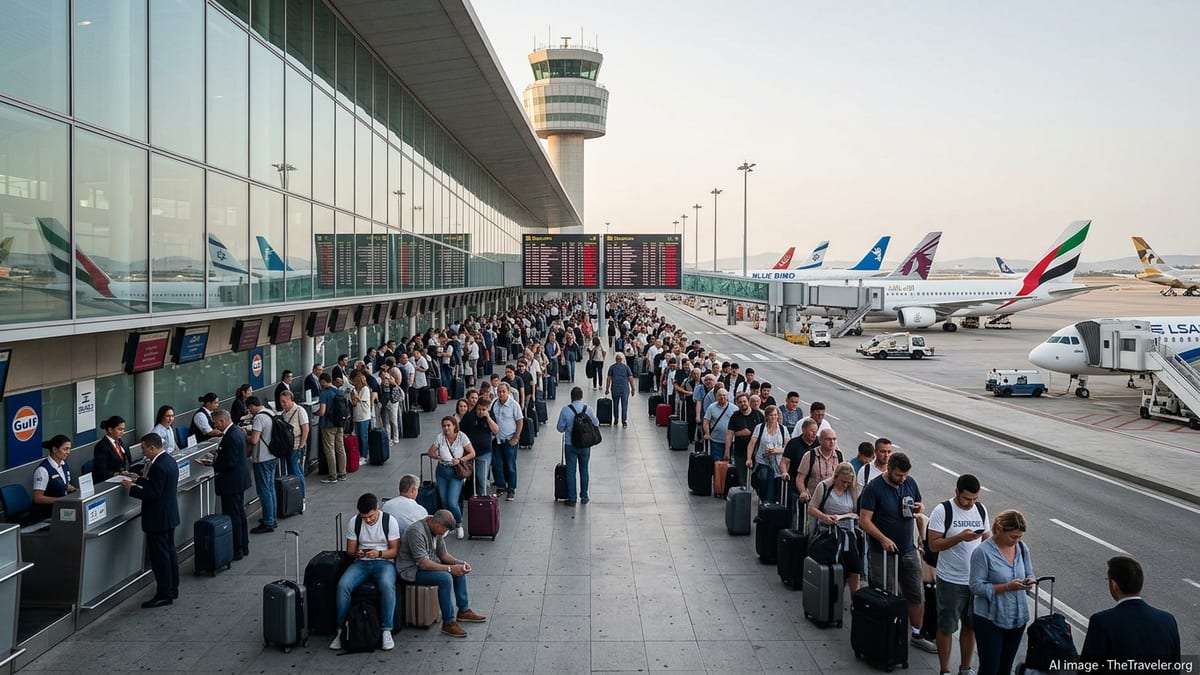
Barcelona El Prat International Airport was plunged into travel chaos on Thursday as Emirates, Qatar Airways, El Al, Blue Bird and Etihad scrapped 21 flights and triggered more than 300 delays, disrupting some of Spain’s busiest long haul and regional routes and stranding thousands of passengers at the height of the spring travel season.
Middle East Airspace Crisis Hits Catalan Hub
The disruption at Barcelona is the latest ripple effect from sweeping airspace closures and restrictions across the Middle East, which have forced major Gulf carriers to ground or reroute large parts of their global networks. Emirates, Qatar Airways and Etihad, which normally funnel passengers between Europe, Asia, Africa and Australasia through their hubs in Dubai, Doha and Abu Dhabi, all scaled back operations into Spain, with Barcelona among the hardest hit airports.
Airport data and airline operation updates on Thursday showed a cluster of cancellations on routes linking Barcelona with Dubai, Doha, Abu Dhabi and Tel Aviv. These long haul services, typically operated by widebody aircraft and carrying large numbers of transfer passengers, are critical to Barcelona’s role as a southern European gateway for travelers connecting between Latin America, the Mediterranean and the Asia Pacific region.
El Al and leisure carrier Blue Bird, which both serve Barcelona from Tel Aviv, also canceled flights as Israeli airspace restrictions and operational constraints reverberated across European schedules. The loss of these services has severed one of Spain’s principal direct links with Israel, forcing passengers onto fragmented itineraries via secondary hubs or postponing travel altogether.
While some short haul and point to point routes at Barcelona continued to operate, knock on effects from aircraft and crew being out of position, combined with congestion at alternative hubs, rapidly cascaded into delays on domestic services to Madrid, Bilbao, Seville and Palma de Mallorca, as well as European routes to Paris, London, Rome and Frankfurt.
Twenty One Cancellations and Hundreds of Delays
By late afternoon local time, airport operations staff reported that 21 arrivals and departures operated by Emirates, Qatar Airways, Etihad, El Al and Blue Bird had been canceled outright. These included multiple daily rotations on the Barcelona to Dubai and Barcelona to Doha routes, a key Etihad link to Abu Dhabi, and several Tel Aviv services that normally carry a mix of leisure, business and visiting friends and relatives traffic.
On top of the cancellations, more than 300 flights across the day were delayed at Barcelona, many by more than an hour. Even services not directly operated by the affected airlines were impacted, as air traffic flow restrictions, slot changes and the need to reroute aircraft around closed airspace squeezed already tight European schedules.
Ground handling teams at El Prat faced mounting pressure as aircraft arrived late from elsewhere in Europe, while departing flights waited for connecting passengers whose inbound services had been disrupted. Airlines warned that delays could stretch into the late evening and potentially into the following day, as the knock on effect of missed rotations rippled through aircraft and crew rosters.
Spain’s national and regional aviation authorities said they were monitoring the situation closely but stressed that primary responsibility for rebooking and care obligations lay with the airlines. However, they acknowledged that the concentration of long haul cancellations on a handful of global carriers had magnified the impact on Barcelona compared with many other Spanish airports.
Passengers Face Long Queues, Reroutes and Overnight Stays
Inside Barcelona’s terminals, passengers for the affected Gulf and Tel Aviv flights woke up to a day of uncertainty. Many only learned of cancellations after arriving at the airport, joining long queues at airline desks as they sought rerouting options, refunds or hotel accommodation. Others received last minute notifications on airline apps, leaving them scrambling to adjust plans from homes and hotels across Catalonia.
Travelers bound for Asia, Australia and East Africa were among the worst affected, as the grounding of multiple Middle Eastern connections dramatically reduced same day alternatives. With Dubai, Doha and Abu Dhabi functioning at reduced capacity and struggling with their own backlogs, many Barcelona passengers found themselves rebooked via European hubs such as Paris, Frankfurt, Amsterdam and London, often with much longer travel times and additional stops.
Passengers on El Al and Blue Bird services between Barcelona and Tel Aviv faced similarly limited options. Seats on remaining indirect routes via European capitals quickly sold out or surged in price, while some travelers opted to postpone trips entirely. Those already in transit reported extended layovers, missed onward connections and uncertainty about when they would reach their final destinations.
At check in and transfer desks, airline staff worked through growing lines well into the afternoon, arranging hotel vouchers for stranded travelers, issuing meal coupons and trying to prioritize families with children, elderly passengers and those with urgent reasons to travel. Announcements in Spanish, Catalan and English repeatedly urged passengers to verify their flight status online and avoid coming to the airport without a confirmed rebooking.
Impact on Spain’s Long Haul Connectivity
The scale of Thursday’s disruption has highlighted just how dependent Barcelona’s long haul network has become on Gulf and Middle Eastern carriers. Over the past decade, airlines such as Emirates, Qatar Airways and Etihad have helped turn El Prat into a powerful intercontinental hub, linking Spain to emerging markets in Asia, the Indian Ocean, the Pacific and parts of Africa through fast one stop connections.
Barcelona’s air traffic intelligence reports show that these carriers routinely operate with strong load factors on routes to Dubai, Doha and Abu Dhabi, while Israeli airlines and leisure operators connect the city to Tel Aviv with robust year round demand. The sudden removal of this capacity, even temporarily, exposes the vulnerability of Spain’s connectivity when geopolitical shocks hit key transit regions.
Tourism analysts warned that prolonged disruption could weigh on inbound visitor numbers from markets that rely on Middle Eastern connections, particularly in Southeast Asia, India, Australasia and parts of the Middle East itself. Conference organizers and corporate travel managers also expressed concern about the reliability of international access to Barcelona, a city that competes aggressively for high value events and investment.
At the same time, Spanish and European carriers have limited ability to plug the gap quickly, as most operate their long haul fleets at high utilization levels and face their own operational challenges. Any decision to add extra rotations or launch new nonstop routes would likely take weeks or months to implement, leaving a near term shortfall in available seats on some of Barcelona’s most important intercontinental corridors.
What Travelers Through Barcelona Should Expect Next
With airspace closures in parts of the Middle East expected to remain in flux over the coming days, aviation experts cautioned that Barcelona passengers should brace for continued volatility. Even if Emirates, Qatar Airways, El Al, Blue Bird and Etihad begin restoring limited services, it will take time to clear existing backlogs and return aircraft and crews to normal rotations.
Travel advisers urged passengers with upcoming flights touching Barcelona and any Middle Eastern or Israeli hub to monitor airline communications closely and to check their booking status before traveling to the airport. Flexible ticket policies introduced by many carriers in response to the crisis may allow free date changes or rerouting, but availability will remain constrained on peak days and popular routes.
For those already caught up in Thursday’s turmoil, the immediate priority is securing a confirmed alternative, even if it involves longer routings or overnight stops. Airport staff in Barcelona indicated that rebooking options were more plentiful for intra European and domestic services than for long haul journeys, leading some travelers to accept temporary returns to Madrid or other Spanish cities while they awaited onward seats.
As the situation in the Middle East evolves, airlines and regulators alike will be under pressure to improve real time communication and to coordinate contingency plans that minimize disruption at major European gateways such as Barcelona. Until then, passengers planning to pass through El Prat in the coming days are being advised to build in extra time, prepare for possible schedule changes and keep a close eye on the status of flights operated by any carrier that normally uses Middle Eastern airspace.