

More news on this day
Indonesia’s domestic aviation network was hit by fresh turmoil this week as Batik Air suffered 36 flight cancellations and dozens more delays across Jakarta, Makassar, and Manado, disrupting travel for hundreds of passengers on some of the country’s busiest routes.
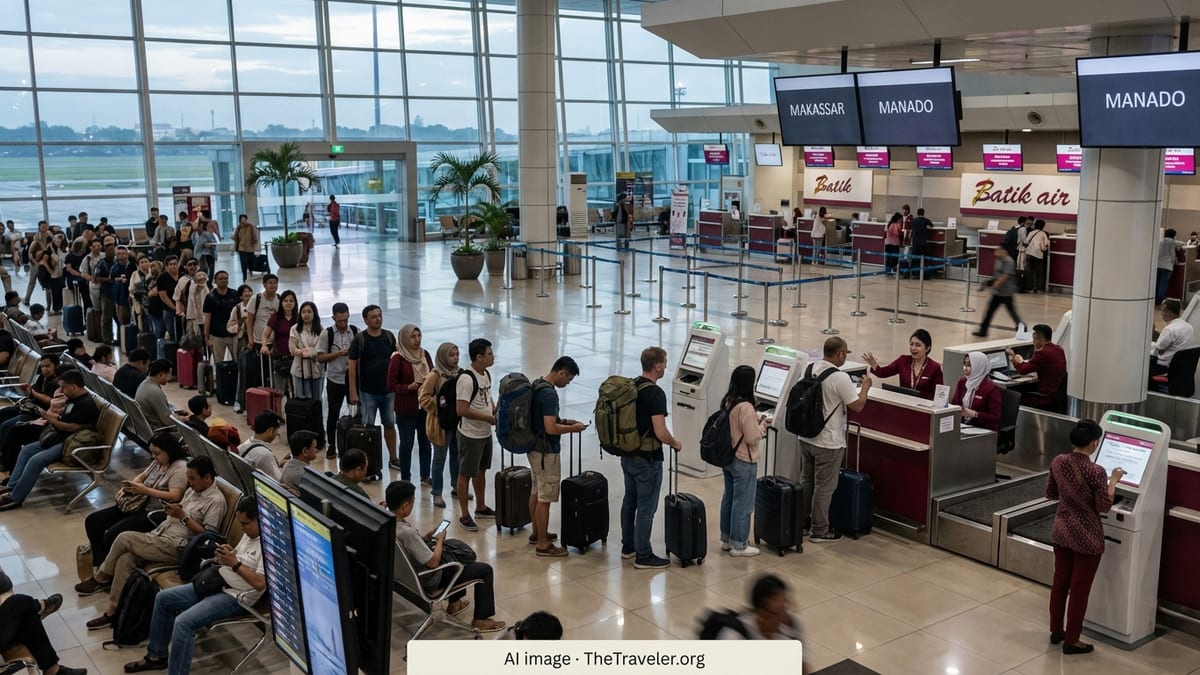
Major Hubs in Jakarta, Makassar, and Manado Bear the Brunt
The latest wave of disruption has centered on Soekarno Hatta International Airport in Jakarta, Sultan Hasanuddin International Airport in Makassar, and Sam Ratulangi International Airport in Manado, three airports that anchor Indonesia’s domestic connectivity. Operational data from recent days show clusters of cancellations and rolling delays on key trunk routes linking Jakarta with Makassar and Manado, as well as onward services into eastern Indonesia.
At Jakarta’s Soekarno Hatta, early morning departures once again proved to be a pressure point. Several Batik Air services to Manado and Makassar either left significantly behind schedule or were scrubbed altogether, creating a backlog of passengers that spilled over into later flights. Similar patterns emerged in Makassar, where Batik’s role as a key transit carrier for eastern Indonesia meant that a single cancelled rotation often cascaded into multiple missed connections.
In Manado, a growing tourism and business gateway to North Sulawesi, the disruption underscored how vulnerable regional centers are to network instability. With only a limited number of daily flights to Jakarta and other major cities, the cancellation of even a handful of services left travelers with few alternatives. For those trying to connect to international flights out of Jakarta, the knock-on effects were immediate and costly, forcing last-minute hotel stays and expensive rebookings on rival carriers.
Passengers Stranded as Cancellations Pile Up
Across the three hubs, the tally of 36 Batik Air cancellations in a short time frame left hundreds of travelers scrambling for answers. Social media posts and local media reports described long queues at airline service desks, with passengers complaining of limited information, conflicting updates on departure boards, and uncertainty over compensation and accommodation.
Some travelers reported learning of their flight’s cancellation only after arriving at the airport, with check in counters still displaying scheduled departure times. Others described being held at the gate for hours as departure estimates were repeatedly pushed back, only for the flight to be called off altogether. For families traveling with children and elderly passengers, the lack of clear communication compounded already stressful conditions in crowded terminal areas.
The timing of several cancellations during early morning and late night waves also amplified the disruption. Public transport options to and from airports in Jakarta and Makassar are more limited during these hours, and last minute hotel availability near the terminals quickly tightened as stranded passengers sought overnight stays. Many travelers opted to sleep in terminal seating areas rather than risk missing rebooked departures the following day.
Operational Strain and Network Fragility at Batik Air
While Batik Air has not issued a detailed public breakdown of each affected flight, recent operational patterns across Indonesia point to a mix of contributing factors. Aviation analytics for the past month show the airline repeatedly appearing among the most disrupted carriers whenever bad weather, congestion, or air traffic control restrictions hit Jakarta and other major hubs. When those external pressures collide with tight scheduling and limited spare aircraft, even relatively minor delays can escalate quickly across the network.
Flight tracking data on the Jakarta to Manado route, for example, reveal a string of late arrivals followed by outright cancellations in mid February. Several consecutive days saw the same early morning Batik Air service from Jakarta scrubbed, after multiple previous rotations landed well behind schedule. That pattern suggests a system operating with little slack: once one aircraft falls out of position, subsequent flights are either heavily delayed or cancelled outright as the carrier struggles to realign crews and equipment.
Industry observers say this fragility is not unique to Batik Air, but is especially visible because of the airline’s scale and its focus on high density domestic routes. With demand rebounding strongly since late 2025, many Indonesian carriers have been pushing aircraft utilization higher, adding frequencies and minimizing ground time to capture revenue. The trade off is a reduced ability to absorb shocks, whether from tropical downpours over Jakarta or temporary runway constraints at outstation airports.
Weather, Congestion, and a Stretched Indonesian Air System
The latest Batik Air turmoil comes against a broader backdrop of repeated disruption events across Indonesia’s skies in recent weeks. On multiple days in January and early February, national tallies registered more than a thousand flight delays and dozens of cancellations across Jakarta, Bali, Surabaya, Makassar, and Yogyakarta, with Batik Air frequently among the hardest hit airlines. These events have often coincided with heavy rain, low visibility, and thunderstorms over Java and Sulawesi, conditions that quickly reduce runway throughput at already congested hubs.
Jakarta’s Soekarno Hatta International, in particular, has repeatedly ranked among Asia’s most delay prone major airports as passenger volumes surge above pre pandemic levels. When arrival and departure banks bunch up in peak morning and evening waves, even minor weather related restrictions can trigger hour long queues for takeoff and landing slots. Airlines that rely heavily on tight turnarounds and cross utilization of aircraft, such as Batik Air, are especially exposed when those delays ripple from one rotation to the next.
Makassar’s Sultan Hasanuddin International and Manado’s Sam Ratulangi face their own constraints. Both serve as critical gateways for eastern Indonesia, but have fewer runways and more limited apron space than Jakarta. As traffic has grown, especially to popular destinations in Sulawesi, Maluku, and Papua, ground handling and air traffic systems have come under strain, leaving less margin to recover when a major carrier like Batik Air experiences a burst of technical or crew related issues.
Impact on Tourism, Business Travel, and Regional Connectivity
The cumulative effect of repeated waves of cancellations and delays is beginning to weigh on Indonesia’s tourism and business sectors. Jakarta to Manado and Jakarta to Makassar are not only vital domestic trunk routes, they are also key feeders into onward services to smaller cities and resort areas. When Batik Air cancels a morning departure from Jakarta, passengers connecting in Makassar or Manado to destinations such as Ternate, Sorong, or Jayapura can find their entire travel chain disrupted.
For leisure travelers, this can mean losing precious days of holiday time, forfeited hotel nights, and missed tours or dive trips in regions that market themselves as pristine, hard to reach escapes. Local tourism operators in North Sulawesi and South Sulawesi have voiced concern that persistent reliability issues may deter repeat visitors and push travelers to choose destinations with more stable air links in neighboring countries.
Business travelers and government officials, meanwhile, face their own challenges. Indonesia’s economic and administrative life is still heavily centralized in Jakarta, making reliable air bridges to regional capitals essential. When Batik Air and other carriers struggle to maintain timetables, day trips turn into unscheduled overnights, and critical meetings or site visits are postponed. Over time, the perception of unreliable domestic air transport can weigh on investment decisions, particularly in sectors such as energy, mining, and infrastructure that depend on frequent travel to remote regions.
Regulators Under Pressure to Address Reliability
The latest disruptions have intensified scrutiny on Indonesia’s aviation regulators and airport operators. Officials at the Ministry of Transportation and the Directorate General of Civil Aviation have in recent months pledged to improve on time performance monitoring, scrutinize airline scheduling practices, and enhance coordination between air traffic control, airports, and carriers during peak travel periods. However, consumer groups argue that passengers continue to bear the brunt of repeated operational crises with little recourse.
Under Indonesian regulations, airlines are required to provide compensation, meals, and in some cases hotel accommodation depending on the length and cause of delays or cancellations. In practice, passengers often report inconsistent application of these rules, particularly when disruptions stem from a mix of weather and operational factors. The latest wave of Batik Air cancellations has renewed calls for clearer enforcement mechanisms, more transparent reporting of delay causes, and stronger penalties for carriers that chronically underperform on reliability.
Airport authorities at Jakarta, Makassar, and Manado are also facing questions about infrastructure readiness. With traffic at Soekarno Hatta returning to, and in some cases surpassing, pre pandemic levels, aviation experts argue that capacity enhancements need to accelerate to keep pace. That includes not only physical expansion, but also investment in more advanced air traffic management tools, upgraded apron and taxiway layouts, and better real time information systems for passengers during disruption events.
What Travelers Can Do Amid Ongoing Uncertainty
For passengers planning to fly on Batik Air routes touching Jakarta, Makassar, or Manado in the coming weeks, travel experts recommend building in extra time and considering contingency plans. Booking the earliest feasible departure of the day can provide more rebooking options if a flight is cancelled, while avoiding tight domestic to international connections may reduce the risk of missed long haul services. Monitoring flight status through multiple channels, including airport boards and independent tracking apps, can also help travelers react more quickly when schedules start to slip.
Travelers are also advised to familiarize themselves with their rights under Indonesian aviation rules and to document any out of pocket expenses resulting from cancellations or long delays, such as hotel stays, meals, or ground transport. While compensation policies can be complex and outcomes vary, having receipts and a clear timeline of events makes it easier to file claims with the airline or, if necessary, raise complaints with consumer protection bodies.
Despite the recent turmoil, Batik Air remains a central player in Indonesia’s domestic aviation landscape, and most flights still operate without major incident. Yet the spike in cancellations and delays affecting Jakarta, Makassar, and Manado has underscored how quickly the country’s stretched air network can unravel when conditions turn against it. Until deeper structural issues around capacity, scheduling, and resilience are addressed, travelers on these routes may need to factor persistent uncertainty into their plans.