

More news on this day
Direct air links between Sri Lanka and Malaysia are set for a fresh boost as Batik Air confirms it will resume Kuala Lumpur–Colombo services on March 30, 2026, restoring a key corridor for tourism and business travel across South and Southeast Asia.
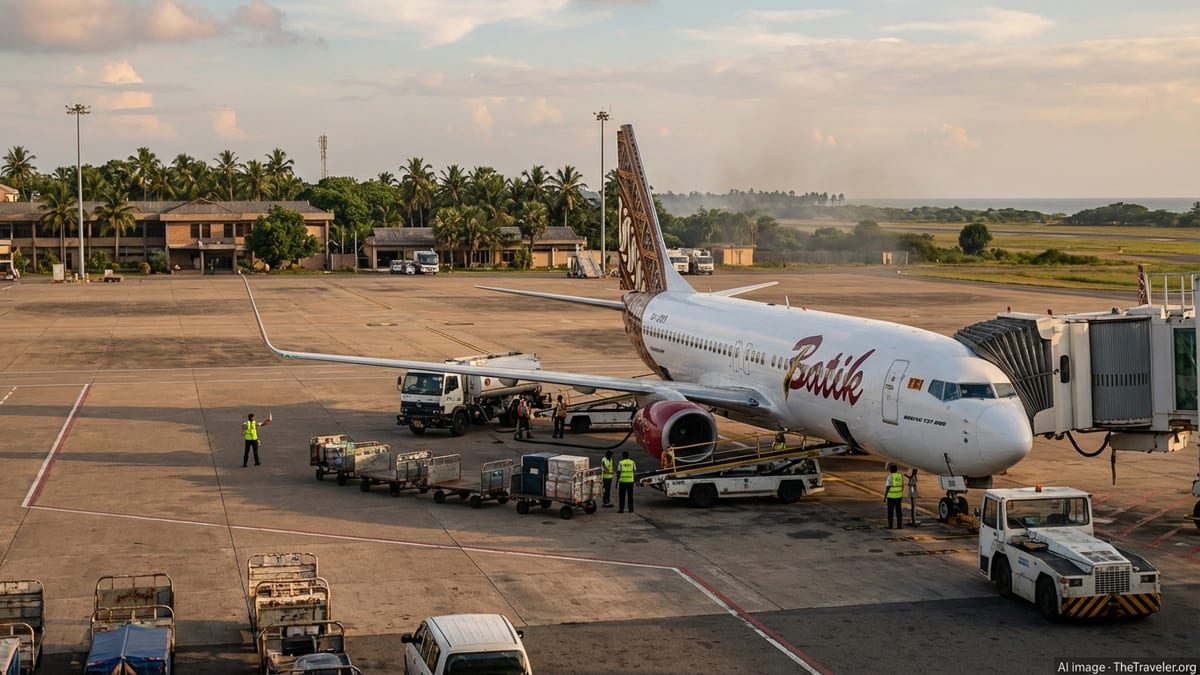
Four Weekly Flights Put Colombo Back on Batik Air’s Map
Malaysia-based Batik Air will restart operations between Kuala Lumpur International Airport and Colombo’s Bandaranaike International Airport with four weekly frequencies, according to recent schedule filings and local aviation officials. The move follows an earlier postponement of a planned relaunch in December 2025, which left the exact restart date in doubt for several months.
The new services, currently published under flight number OD297 and related rotations, are planned with a flight time of around three and a half to just under four hours, using single-aisle Boeing 737 aircraft configured for regional routes. For Sri Lankan travelers, this restores a familiar option to reach Malaysia’s capital directly, while for Malaysian and broader ASEAN markets it revives a convenient entry point into Sri Lanka’s beaches, heritage sites and wildlife reserves.
The four-times-weekly pattern positions Batik Air alongside other carriers already present on the Colombo–Kuala Lumpur corridor, but officials in Colombo say the added capacity could prove significant in the shoulder and peak seasons. With the airline’s network strategy centered on Kuala Lumpur as a hub, the reinstated link also connects Sri Lanka back into a much wider grid of routes spanning East Asia, Australia and the broader Asia–Pacific region.
From False Start to Firm Date After December Delay
Batik Air’s return to Sri Lanka comes after a stop-start year of planning. The carrier had initially floated an 11 December 2025 restart, with four weekly services proposed between Kuala Lumpur and Colombo. Those plans were quietly shelved late last year, with industry reports at the time noting that the restart had been halted and that a revised commencement date was still under review.
The fresh March 30 launch now gives trade partners and travelers a clear target, ending months of uncertainty in a market that has been steadily rebuilding since the pandemic. Travel agents in Colombo and Kuala Lumpur say advance clarity on schedules is critical for selling inclusive packages, particularly to long-haul markets that rely on smooth regional connections to reach Sri Lanka.
The resumption also aligns with a broader wave of capacity rebuilding and new route announcements across Malaysia’s aviation sector in 2026. Several Malaysian carriers are ramping up regional and long-haul operations, with Kuala Lumpur once again pitching itself as a competitive hub for one-stop itineraries between South Asia, East Asia, Australia and the Middle East. Against that backdrop, Batik Air’s Colombo flights are a relatively small but strategically important piece of the puzzle.
Tourism Hopes Rise on Both Sides of the Indian Ocean
Tourism officials in Sri Lanka and Malaysia are betting that Batik Air’s relaunch will translate into tangible visitor growth in both directions. Sri Lanka sees Malaysia not only as a source market in its own right, but also as a high-potential transit gateway for travelers from Indonesia, Thailand, Australia and even parts of East Asia who may be more inclined to include Sri Lanka as an add-on when convenient connections are available via Kuala Lumpur.
For Malaysia, a restored link to Colombo reinforces its ambition to remain a preferred Southeast Asian hub for South Asian travelers, complementing existing services operated by other airlines on the same route. With Sri Lanka promoting its mix of culture, nature and value for money in the post-crisis recovery phase, travel industry executives say that every additional seat between Colombo and key regional hubs can have an outsized impact on arrivals.
Industry observers also note the potential for outbound growth from Sri Lanka into Malaysia and beyond. Families heading to theme parks and shopping in Kuala Lumpur, medical travelers bound for Malaysian hospitals and students connecting to universities across the region are all expected to benefit from the renewed choice on the route. The timing of the restart, just ahead of the mid-year travel period in many markets, is seen as advantageous for building momentum.
Hub Connectivity: One Ticket to a Wider Batik Air Network
Batik Air’s value proposition on the Colombo–Kuala Lumpur sector extends beyond point-to-point traffic. As a full-service carrier within the Lion Air Group, the airline has spent recent years deepening its connectivity at Kuala Lumpur International Airport through a mix of its own routes and partnerships. Its network now spans dozens of destinations across Southeast Asia, South Asia, North Asia and Australia, supported by Boeing 737 and Airbus A330 aircraft.
For Colombo-based travelers, this opens one-stop options to cities such as Jakarta, Bangkok, various secondary Malaysian destinations and selected points farther afield, often on a single ticket with through check-in and coordinated connections. Batik Air’s interline and codeshare arrangements with major Gulf, European and Asian carriers further widen that reach, giving Sri Lankan travelers alternative paths to markets that might otherwise require more complex routings.
Travel consultants say that having a mix of low-cost and full-service options between Colombo and Kuala Lumpur helps them tailor itineraries to different budgets and expectations. While fare levels for the relaunched Batik Air flights have not yet been widely published, the carrier has historically used promotional pricing and inclusive baggage allowances to capture market share when reopening or expanding routes.
Competitive Pressure and Passenger Choice on a Busy Corridor
The Colombo–Kuala Lumpur route is already one of South Asia’s more competitive city pairs, with multiple airlines offering non-stop services and several others providing one-stop alternatives via regional hubs such as Singapore and the Gulf. Analysts note that Batik Air’s return will likely intensify price competition and scheduling options, particularly on popular departure days for migrant workers, students and leisure travelers.
For passengers, that competition typically translates into better deals and more flexibility, especially during peak holiday periods when flights historically sold out weeks in advance. Additional capacity can also help stabilize fares in shoulder seasons, encouraging spontaneous trips and short-break tourism between Sri Lanka and Malaysia.
Airport operators on both ends are watching load factors closely as the March 30 start date approaches. If the four weekly services secure strong performance, the precedent from past years suggests that Batik Air could consider scaling up frequencies or adjusting schedules to capture connecting traffic more effectively. For now, aviation stakeholders describe the confirmed relaunch as a welcome sign of confidence in Sri Lanka’s recovery and in the enduring appeal of direct links between Colombo and Kuala Lumpur.