

More news on this day
Travelers flying out of Baton Rouge Metropolitan Airport on March 8, 2026, faced an abrupt wave of disruption as four flights were delayed and 12 canceled, snarling connections through major hubs in Atlanta, Houston, Dallas and Washington, D.C. and sending passengers scrambling for last-minute alternatives across the country’s already strained air network.
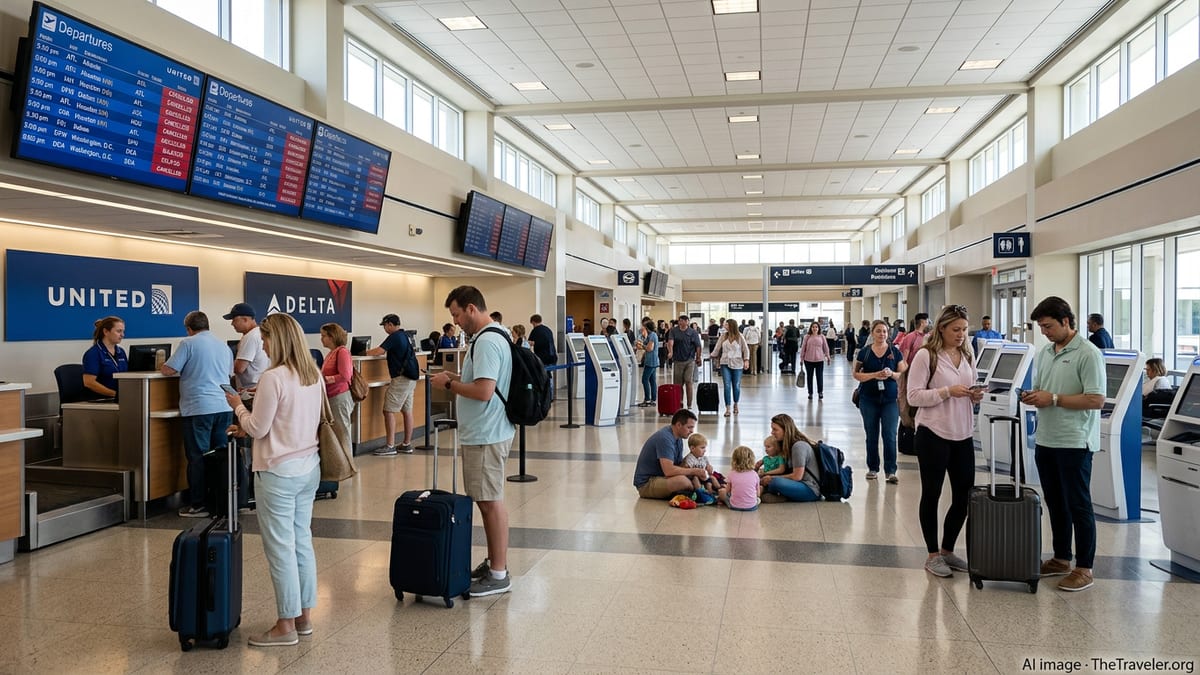
Disruptions Hit a Small but Strategic Gulf South Airport
The cancellations and delays at Baton Rouge Metro, while modest in absolute numbers, landed at one of the worst possible moments for travelers. The airport is a key feeder into the nation’s biggest hubs rather than a final destination, meaning every scrapped departure risks breaking two or three onward connections. With many flights operating near capacity because of spring travel and the knock-on effects of recent severe weather, those margins vanished quickly.
On Sunday, March 8, Baton Rouge saw a mix of light rain locally, but the bigger story for air traffic was the lingering turbulence in the national aviation system after a week of storms, airspace constraints and staffing pressures across multiple carriers. Combined with heavy demand, the result was a fragile schedule where a single operational problem at a hub could cascade back into regional airports.
By early afternoon, departures to key hubs were either delayed or taken off the board entirely, affecting links into Hartsfield-Jackson Atlanta International Airport, George Bush Intercontinental in Houston, Dallas-Fort Worth and Washington-area airports used by Baton Rouge travelers. For many passengers, that meant not only a lost departure, but the collapse of tightly timed itineraries built around these connection points.
Airport officials in Baton Rouge emphasized that the airfield itself remained open and operating, with no safety issues reported. The challenge, they said, lay in airline network decisions as carriers attempted to consolidate schedules, reposition aircraft and free up crews in response to the wider national disruption.
Ripple Effects from Major Hubs in Atlanta, Houston, Dallas and Washington
The pain for Baton Rouge passengers was magnified by problems at the very hubs they rely on most. Airlines throughout the United States have spent the weekend juggling aircraft and crews after severe weather and low ceilings triggered extensive delays and ground stops at major airports, including Atlanta, one of the busiest connecting points in the world. When those hubs trim flights, spoke cities like Baton Rouge often lose out first.
In Atlanta, a combination of residual storms, congested airspace and overtaxed carrier schedules left airlines cancelling or delaying scores of flights. Houston and Dallas, both critical for Gulf South and transcontinental connectivity, also reported uneven operations as carriers dealt with backlogs and tried to preserve long-haul departures. Washington-area airports, meanwhile, have been contending with tight capacity and slot constraints that leave little room to absorb additional rerouted traffic.
For Baton Rouge travelers, that translated into a wave of rebookings that pushed them onto remaining seats out of larger hubs. Many were advised to travel overland to New Orleans, which offers more nonstop options, or to accept routing through more distant hubs such as Charlotte, Denver or Chicago when space became available. In some cases, travelers found that the only same-day solution involved a combination of driving several hours, flying overnight and accepting multiple layovers.
Airline analysts note that smaller markets like Baton Rouge typically have limited daily frequencies to each hub. Cancel one or two of those flights and entire business trips, family visits and international itineraries can unravel. With national on-time performance already under pressure, the Baton Rouge disruption offered a snapshot of how quickly regional schedules can be sacrificed to keep the biggest trunk routes running.
What Baton Rouge Passengers Are Facing on the Ground
Inside the Baton Rouge terminal on Sunday, the immediate impact was seen at airline counters, where long lines formed as customers attempted to rebook before remaining options disappeared. With only a handful of departures to each major hub, competition for the few open seats was intense. Airline agents prioritized passengers with tight international connections, travelers stranded overnight and those with medical or family emergencies, but even they faced hard limits imposed by full flights further up the network.
Many travelers reported being offered itineraries that departed from other airports entirely, most often New Orleans, Houston or Dallas. That created an additional logistical headache: arranging last-minute ground transportation, securing parking and, in some cases, booking hotels en route. Ride-share prices spiked on the highway corridor between Baton Rouge and New Orleans as demand rose sharply through the day.
The disruptions also highlighted a familiar dilemma for Baton Rouge residents who often weigh the convenience of their local airport against the redundancy offered by larger hubs. While BTR’s smaller size usually means shorter security lines and easier parking, it also means fewer backup options when things go wrong. With no extra later flights to absorb cancellations, passengers who missed a single departure frequently found that their only viable alternative required leaving from another city.
By late afternoon, some travelers opted to scrap air plans entirely and drive to their final destinations in Texas, Mississippi and Alabama. Others, facing missed cruises and conferences, spent the day on the phone with airlines, hotels and travel insurers to salvage parts of their trips and recover costs where possible.
How to Protect Your Trip When Flying Through BTR Hubs
For passengers looking ahead to upcoming travel from Baton Rouge, the latest disruptions underline the value of building flexibility into any itinerary that relies on a single daily flight to a major hub. Travel agents and airline experts consistently recommend booking earlier departures in the day when possible, as morning flights are less exposed to rolling delays and aircraft that are already out of position.
They also advise leaving generous connection times when routing through Atlanta, Houston, Dallas or Washington, particularly during peak seasons like spring break and major holiday periods. While a 45-minute layover can technically satisfy airline rules, it leaves little buffer if your first leg out of Baton Rouge pushes back even slightly. A connection of 90 minutes or more may be the difference between making it to your destination and spending a night in a hub hotel.
Travelers are urged to download their airline’s mobile app before leaving home and to enable alerts for gate changes, departure time shifts and standby opportunities. When widespread disruption hits, rebooking through an app or website can be faster than waiting in line at the airport counter, especially at a smaller facility with limited staffing. Some carriers now allow customers to self-select alternative flights or even nearby departure airports when their original itinerary is canceled.
Finally, seasoned fliers point to the importance of travel insurance that explicitly covers delays and cancellations, as well as flexible hotel and car rental reservations. While policies vary, coverage can help offset the costs of unexpected overnight stays, extra ground transfers and nonrefundable bookings that are lost when a key connecting flight is removed from the schedule.
What to Expect in the Coming Days
Looking beyond Sunday’s disruption, aviation planners say the key question for Baton Rouge travelers will be how quickly airlines can restore regular patterns through Atlanta, Houston, Dallas and Washington. If those hubs clear their backlogs and return to more normal operations, Baton Rouge flights should follow suit, with carriers reinstating standard frequencies and rebalancing aircraft assignments across their networks.
However, the current episode illustrates how fragile the system can be when bad weather, limited staffing and surging demand collide. Even as skies clear, ripple effects can linger for several days in the form of sporadic delays, altered departure times and last-minute equipment changes. Passengers holding tickets from Baton Rouge in the coming week are advised to monitor their bookings closely and consider reconfirming seat assignments as aircraft types shift.
Local officials stress that Baton Rouge Metro continues to invest in infrastructure and customer service to remain competitive within the Gulf South. Still, they acknowledge that the airport’s fortunes are closely tied to the performance of the big hubs it depends on. As airlines continue to refine schedules for the spring and summer seasons, travelers here can expect occasional bouts of turbulence in the form of cancellations and delays whenever the national system comes under strain.
For now, the events of March 8 serve as a pointed reminder that even a relatively small disruption in a feeder market can have outsized consequences for travelers whose journeys depend on everything going right across a chain of busy connecting airports.