

More news on this day
Thailand is sharpening its focus on high-value health and wellness travel ahead of 2026, with BDMS Wellness Clinic emerging as a pivotal platform in a broader national push to build an integrated wellness ecosystem and capture surging demand for preventive, medical, and spa tourism.
Get the latest news straight to your inbox!
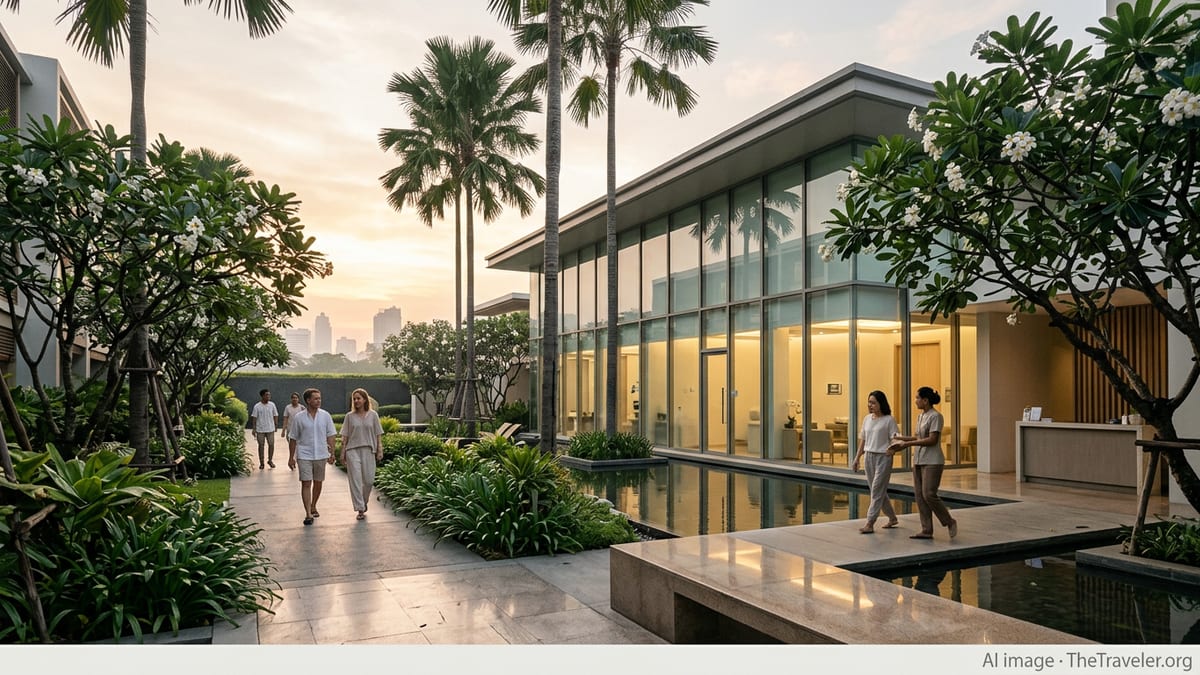
A Growing Health Economy Meets Tourism Strategy
Publicly available information indicates that Thailand’s health tourism sector has expanded rapidly in recent years, driven by visitors seeking everything from spa retreats to complex medical procedures. Recent market analyses describe a combined medical and wellness tourism segment measured in the hundreds of billions of baht, with projections for double-digit growth as global travelers look for destinations that combine high clinical standards with resort-style recovery environments.
Government policy documents and local media coverage describe a coordinated shift toward a broader "health economy" that would see medical and wellness activities account for a rising share of gross domestic product. Targets circulated in national discussions include ambitions for health-related industries to contribute a significantly larger share of GDP over the next decade, supported by specialized visas, upgraded infrastructure, and closer links between hospitals, hospitality brands, and wellness operators.
This policy emphasis intersects with tourism planning under the "New Thailand" vision for 2026, which promotes value over volume and places health-conscious travelers among the country’s key priority segments. Tourism strategy statements highlight health and wellness as one of the most promising thematic pillars, alongside nature-based and cultural experiences, positioning Thailand as a destination where travelers can recover, reset, and explore within a single trip.
Analysts note that the timing aligns with broader global trends. International wellness and medical tourism markets are projected to expand strongly toward 2030, and Thailand is frequently cited by industry research firms as one of the top Asian destinations poised to benefit from this demand, thanks to its combination of advanced hospitals, traditional healing heritage, and competitive pricing.
BDMS Wellness Clinic as Ecosystem Orchestrator
Within this shifting landscape, Bangkok Dusit Medical Services, Thailand’s largest private healthcare group, has been building what it describes in public communications as a comprehensive wellness platform. BDMS Wellness Clinic in central Bangkok, alongside the Mövenpick BDMS Wellness Resort Bangkok, has been positioned as a flagship for preventive care, longevity programs, and health-focused hospitality that cater to both domestic clients and international visitors.
Reports from regional healthcare industry coverage describe BDMS Wellness Clinic as a technology-forward facility that uses advanced diagnostics, laboratory analysis, and connected devices to deliver detailed health assessments and personalized prevention plans. The clinic’s model emphasizes early risk detection, lifestyle optimization, and long-term health management rather than short episodic treatment, aligning closely with what wellness travelers increasingly seek.
Recognition at regional healthcare award programs in 2025 placed further spotlight on the clinic, with juries citing its role in redefining health promotion and wellness tourism standards. Commentaries around these awards portray BDMS Wellness Clinic as both a showcase for Thai medical expertise and a testbed for integrated services that combine clinical protocols with spa, nutrition, fitness, and mental wellbeing components.
Industry observers suggest that this flagship is functioning as an orchestrator within a wider BDMS network that spans major tourism gateways and secondary cities. Through partnerships with resorts, mixed-use developments, and regional hospitals, the group is building a pipeline that can route international wellness travelers from initial digital contact through comprehensive check-ups in Bangkok and onward to recovery or retreat stays in coastal and upcountry destinations.
Linking Clinics, Resorts, and Regions Into a Wellness Network
Partnership announcements over recent years show how BDMS is extending its reach into established tourist areas. One high-profile initiative involves the planned medical and wellness center at Laguna Phuket, an integrated resort complex that already draws long-stay and high-spending visitors. The future facility is slated to offer regenerative medicine, preventive cardiology, sports medicine, rehabilitation, aesthetics, dermatology, and mental health services, effectively embedding advanced healthcare within a beachside community environment.
Similar collaborations are emerging in other tourism nodes as Thai hospitality groups reorient their portfolios toward health. Dusit International, for example, has publicized agreements with fertility, laboratory, and holistic care providers to create integrated health and wellness offerings across select properties. These moves, while independent, feed into a nationwide pattern in which hotels, resorts, and clinics align services to serve wellness-oriented travelers who expect clinical quality alongside resort comforts.
Regional tourism strategies further reinforce this network effect. Recent analyses of wellness planning for Phuket, Chiang Mai, and Bangkok point to a differentiated yet complementary approach: island destinations are focusing on detox retreats and wellness festivals, the northern highlands on nature-based recovery and traditional therapies, and the capital on diagnostic excellence and specialized treatment. Within this mosaic, BDMS clinics and partner hospitals provide the medical backbone that can reassure international patients about standards of care.
Market research indicates that secondary wellness travelers, who add health experiences to a broader holiday itinerary rather than traveling solely for treatment, are an increasingly important segment. Packages that combine screenings or minimally invasive procedures in Bangkok with restorative stays at resorts in Phuket, Krabi, or Hua Hin are expected to grow in popularity as airlines add capacity and tourism flows normalize through 2026.
Traditional Thai Medicine and Preventive Care Drive Differentiation
The evolving wellness ecosystem is not limited to high-tech diagnostics. Policy papers and regional news reports describe a multi-year plan by Thailand’s Public Health Ministry to elevate traditional Thai medicine, herbal therapies, and indigenous spa practices as core parts of the national wellness offer. The strategy, running through the middle of this decade, aims to formalize standards, support product development, and encourage wellness centers to integrate Thai modalities into modern service menus.
Official tourism narratives increasingly highlight Thai massage, herbal compress therapies, local spa rituals, and plant-based cuisine as unique assets that distinguish Thailand from competing wellness destinations. At the same time, accreditation programs and quality stamps are being developed to reassure overseas visitors about safety, hygiene, and professional training, especially in facilities that mix traditional techniques with contemporary clinical services.
BDMS Wellness Clinic’s focus on prevention, lifestyle medicine, and long-term health management complements this policy direction. Public descriptions of the clinic’s programs reference nutrition planning, exercise physiology, sleep optimization, and stress management, all of which can be layered with traditional therapies delivered through partner resorts or specialized centers. This hybrid model allows Thailand to present a holistic wellness narrative that connects science-based medicine with cultural heritage.
Industry forecasts suggest that by 2026, travelers will increasingly seek integrated experiences that blend medical check-ups, mental wellbeing, and culturally rooted relaxation in a single itinerary. Thailand’s combination of advanced private hospital groups, a deep spa and wellness culture, and a maturing regulatory framework for traditional medicine leaves it well positioned to compete in this premium segment.
Looking Toward the 2026 Wellness Tourism Peak
Tourism data for early 2026 already shows international arrivals rebounding strongly, and travel authorities are steering marketing efforts toward higher-spending, experience-driven visitors. Health and wellness offerings are central to this push, with campaigns spotlighting Thailand as a place to "come back better" through tailored care, outdoor activity, and stress relief in tropical settings.
Economic briefs on the medical tourism sector project that revenue from international patients could rise substantially over the coming decade, especially if Thailand maintains its reputation for quality and service while deepening ecosystem partnerships. Business presentations and investment outlook reports frequently cite medical and wellness tourism as a structural growth driver that can support hotel occupancy, aviation demand, real estate development, and health technology adoption.
Within this larger picture, BDMS Wellness Clinic is set to remain a flagship and innovation hub, refining models for preventive care, data-driven health management, and cross-border patient services. Its role in linking hospitals, resorts, and digital health platforms illustrates how a single operator can help orchestrate a national wellness ecosystem that aligns clinical rigor with the expectations of international travelers.
As 2026 approaches, Thailand’s health tourism story is less about isolated spas or individual hospitals and more about the emergence of a connected, nationwide wellness landscape. If current plans take shape as envisioned, BDMS and its peers will be central to transforming the country’s longstanding appeal into a comprehensive proposition that promises visitors not just a memorable holiday, but measurable gains in long-term wellbeing.