

More news on this day
A domestic American Airlines departure at Charlotte Douglas International Airport faced an unusual setback when a dense swarm of bees settled on one of the aircraft’s engines, prompting a ground delay while crews waited for the insects to disperse safely.
Get the latest news straight to your inbox!
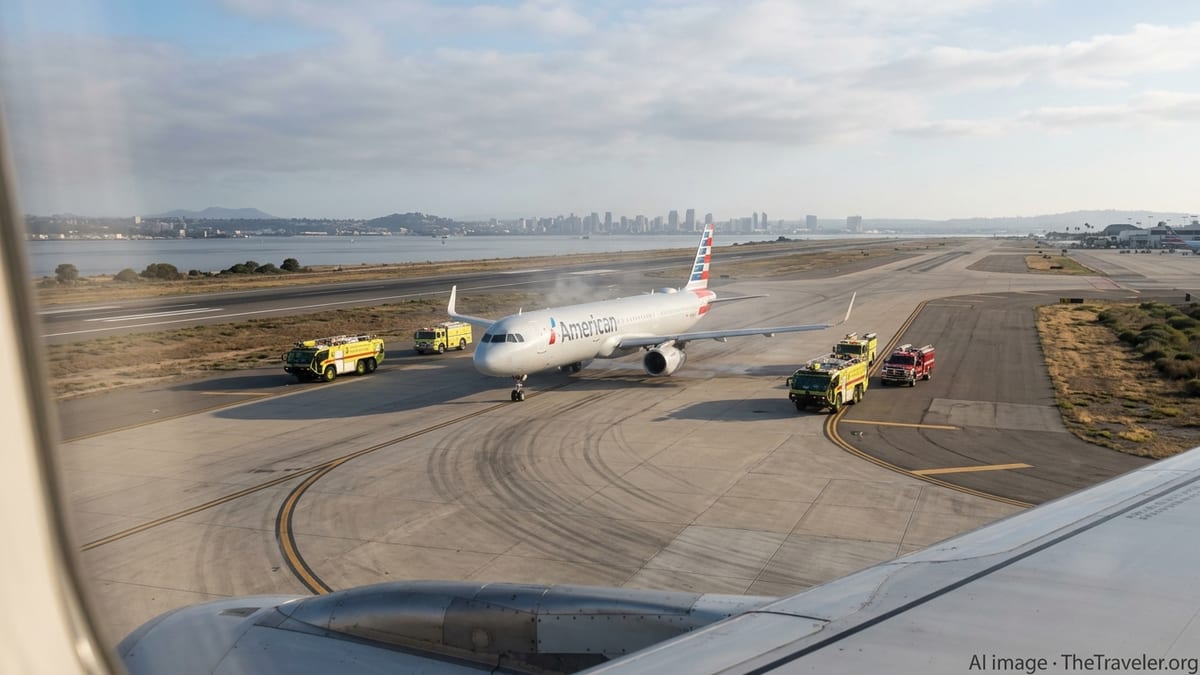
Unusual Wildlife Encounter on the Ramp
Reports from Charlotte Douglas International Airport indicate that the incident unfolded while the American Airlines aircraft was parked at a gate preparing for departure. As boarding and ground servicing were underway, a large swarm of bees began clustering around, and then directly on, one of the jet engines.
Publicly available photos and passenger accounts shared through local and national media coverage show thick clusters of bees covering portions of the engine cowling and nearby surfaces. Airline personnel halted final departure preparations while ramp staff assessed how to handle the concentration of insects in an active operating area.
According to published coverage, the aircraft remained at the gate while the airline coordinated with airport operations to ensure that any action taken would not endanger ground workers, passengers, or the bees themselves. No injuries were reported, and there were no indications of damage to the aircraft.
The event added a new chapter to an already long list of operational challenges faced by major U.S. hubs, but observers noted that such a concentrated bee swarm directly on an engine remains rare even at large airports.
Delay, Deplaning and Passenger Disruption
As the bee swarm persisted around the engine, the departure was delayed and passengers were kept onboard while the situation was evaluated. Based on multiple media reports, the aircraft ultimately remained on the ground long enough that the airline began adjusting schedules and considering alternative options for the affected travelers.
Public reports indicate that passengers were eventually asked to deplane, turning what was expected to be a routine departure into a prolonged wait at the gate. Some travelers described extended delays and rebookings as the airline worked through its standard procedures for a flight that could not immediately depart on its assigned aircraft.
For many on board, the disruption was compounded by missed connections at one of American Airlines’ largest hubs. Charlotte often functions as a key transfer point for domestic and international itineraries, so even a single grounded aircraft can ripple through onward journeys, particularly during peak travel periods.
While precise delay times varied among accounts, publicly available information suggests that the bee-related interruption stretched well beyond a typical short hold, requiring passengers to adjust plans and, in some cases, seek later departures.
How Airports Handle Bee Swarms
Incidents involving bees and other insects are not entirely new to aviation, but they are infrequent enough that they attract broad attention when they occur on a visible part of the aircraft such as an engine. Industry guidance generally favors caution in starting engines or moving aircraft when thick swarms are present near air intakes or moving parts.
According to information shared by aviation and environmental groups, many airports maintain informal or formal relationships with local beekeepers or pest-management specialists who can respond when swarms appear in sensitive areas. Removal typically involves encouraging the bees into a container or waiting for the swarm to relocate naturally, rather than using chemicals in proximity to aircraft and personnel.
In Charlotte’s case, publicly available reporting indicates that crews opted to wait for the swarm to move on rather than risk injuring the bees or creating additional hazards on the ramp. That approach aligns with broader trends in airport wildlife management, which increasingly emphasize non-lethal and ecologically sensitive methods when feasible.
Experts note that bee swarms are often transient, with clusters forming temporarily as colonies seek new nesting sites. When this happens in an airport environment, the priority is to keep people and aircraft safe while allowing trained responders time to relocate or monitor the insects.
Spotlight on Ramp Safety and Wildlife Risks
The bee swarm in Charlotte highlights how even small animals or insects can affect tightly choreographed airport operations. Ramp areas around gates host a mix of high-powered equipment, moving vehicles, fuel operations and passenger boarding, leaving little margin for unexpected obstructions at or near critical components like engines.
Aviation safety material published by regulators and trade groups emphasizes that foreign objects, including organic matter, must be kept clear of engine intakes to reduce the risk of ingestion or damage. While insects are far less likely than larger wildlife to cause serious harm to turbine components, a dense swarm on engine surfaces creates uncertainty that airlines are reluctant to ignore.
The incident also underscores the importance of communication between flight crews, ramp workers and airport operations when unusual wildlife situations arise. Delaying a flight can be costly and disruptive, but the operational logic typically favors holding the aircraft rather than attempting to depart with a potential risk unresolved.
For passengers, episodes like this can feel perplexing or frustrating, especially when the cause of the delay seems far removed from typical weather or technical issues. However, publicly available information on similar events suggests that airlines and airports view wildlife encounters as safety-sensitive and therefore subject to conservative decision-making.
Growing Attention to Bees and Airport Environments
Beyond the immediate disruption, the Charlotte bee swarm arrives amid rising public interest in pollinator health and environmental stewardship. Airports across the United States and abroad have hosted beekeeping projects on unused land, positioning hives at the edges of airfields or in buffer zones as part of broader sustainability initiatives.
Published coverage of those programs notes that bees can coexist with airport operations when carefully managed, even providing a symbolic link between high-intensity transportation hubs and the surrounding ecosystems. At the same time, the Charlotte case illustrates how unmanaged swarms in active operating areas can pose logistical challenges.
Observers suggest that this type of incident may prompt further discussion about how large hubs incorporate pollinator management into their wildlife plans. Options could range from closer partnerships with local beekeeping organizations to enhanced monitoring of swarm activity during key seasons.
For now, the bee-covered engine in Charlotte stands as a striking example of how nature occasionally intersects with commercial aviation in unexpected ways, turning a routine departure into a story about safety, schedules and the small creatures that share the airfield environment.