

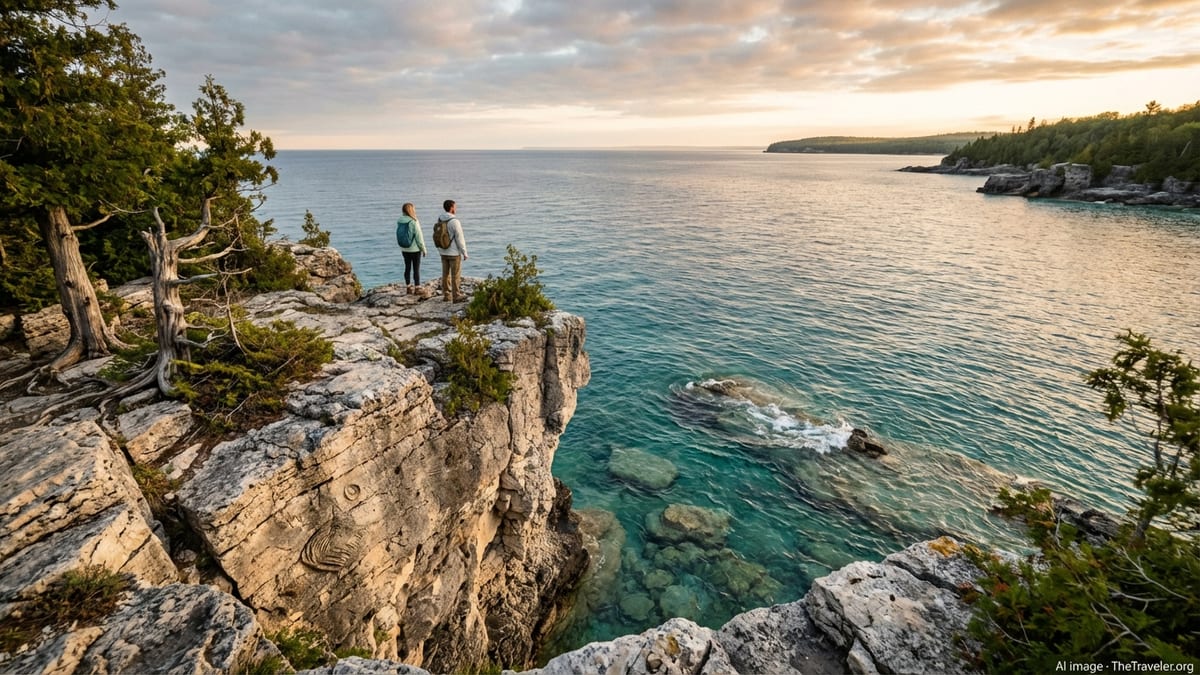
Bluish cliffs plunging into turquoise water, wind-sculpted cedars clinging to rock, and starry skies far from city lights make Bruce Peninsula National Park one of Ontario’s most dramatic landscapes.
For first-time visitors, though, its popularity, reservation systems, and rugged terrain can feel intimidating. This beginner guide walks you through what to expect, how to plan, and how to enjoy the park’s highlights without feeling overwhelmed.
Getting to Know Bruce Peninsula National Park
Bruce Peninsula National Park protects a rugged slice of the Niagara Escarpment on the Bruce Peninsula in Ontario, roughly four hours by car northwest of Toronto. Perched between the deep waters of Georgian Bay and the shallower expanse of Lake Huron, the park is famous for sheer limestone cliffs, wave-worn grottos, and clear water that appears an almost tropical blue on sunny days. Much of the park feels wild and remote, even though it sits close to the small harbour town of Tobermory.
First-time visitors are often surprised by how compact but heavily visited the core attractions are. The most iconic spots, such as the Grotto, Indian Head Cove, and Halfway Log Dump, lie within a relatively small coastal zone that absorbs the majority of day-use traffic. The remainder of the park includes inland forests, lakes such as Cyprus Lake, and quieter stretches of shoreline that reward those who explore beyond the postcard views.
Bruce Peninsula National Park is managed by Parks Canada, and access is tightly controlled to protect fragile shoreline ecosystems. This means that many aspects of your visit, particularly in the warm months, are governed by timed parking reservations and seasonal operating schedules. Understanding these systems before you arrive is key to a relaxed first trip.
The park is open year-round, but services, road access, and facilities vary widely between summer, shoulder seasons, and winter. For a first visit focused on hiking and shoreline scenery, most beginners will find late spring through early autumn the most straightforward time to explore, provided they book well in advance.
When to Go and How Far Ahead to Plan
High season at Bruce Peninsula National Park typically runs from late June through early September, with peak crowds clustered around summer weekends and holiday periods. During these times, day-use parking at the Grotto and Halfway Log Dump is offered by reservation in defined time blocks, and frontcountry camping at Cyprus Lake is usually fully booked well in advance. If your first visit falls in this window, build your plans around what you can successfully reserve rather than assuming you can simply show up.
For a more relaxed experience, many first-timers prefer late May to mid June or mid September to mid October. Spring brings cooler temperatures, variable weather, and lingering mud on trails, but far fewer visitors. Early autumn often offers comfortable hiking conditions, vivid fall colour in the mixed forests, and slightly easier reservations, though popular weekends can still sell out quickly. Water temperatures remain cold for much of the year, so plan for scenic shoreline time rather than true swimming unless you are prepared for frigid conditions.
Parks Canada publishes annual reservation launch dates for camping and key services. For the 2026 warm season, bookings for Cyprus Lake Campground, backcountry camping along the Bruce Trail within the park, and reservable parking at the Grotto and Halfway Log Dump open the morning of February 2. First-timers hoping for weekend dates in July or August should be ready to book as soon as reservations launch, as these time slots can disappear within minutes.
Winter and shoulder-season visits require a different style of planning. Some facilities close or operate on reduced hours, but winter camping in yurts at Cyprus Lake and limited backcountry experiences continue, with separate reservation windows. Snow, ice, and short daylight hours demand additional preparation, so most beginners are better off targeting their first visit for the snow-free season unless they already have winter hiking experience.
Reservations, Fees, and Logistics for Day Visitors
One of the most confusing aspects for first-time visitors is the system of timed parking reservations at the park’s most famous shoreline. To protect the fragile cliffs and limit congestion, drive-in day visits to the Grotto area and Halfway Log Dump between roughly May and October usually require advance parking bookings for specific four-hour windows. You pay for both entry and parking through a Parks Canada reservation account, and the confirmation you receive functions as your permit for that time block.
Arriving without a reservation in high season almost always means you will be turned away from the access roads to these areas, regardless of how early you show up. The park gates monitor vehicles against the day’s booking lists, and local roads are patrolled to prevent illegal stopping or shoulder parking. As a beginner, treat these reservations as non negotiable and build the rest of your day around the time block you secure.
In addition to the park-managed lots at the Grotto, Halfway Log Dump, and the inland day-use areas like Singing Sands, you may encounter municipal or private parking zones around Tobermory and the peninsula. For example, parking at popular viewpoints such as the Big Tub Lighthouse in Tobermory has moved to a reservation model managed by the local municipality, reflecting the overall pressure on coastal sites in the area. These systems are separate from national park permits, so you will need to check requirements and pay for each area individually.
Day-use entry fees to Bruce Peninsula National Park vary by visitor type and are charged per person or by family group, with daily caps for vehicles. Parking lot machines and online booking systems quote current rates, and fees are subject to periodic adjustment. If you plan to visit multiple national parks during your trip, consider whether a Parks Canada Discovery Pass is cost-effective, while remembering that day-use fees and parking reservations are distinct components of your visit.
Staying Overnight: Camping and Nearby Options
For many first-time visitors, camping at Cyprus Lake Campground is the classic way to experience Bruce Peninsula National Park. The campground sits inland from the cliffs and offers unserviced, forested sites in several loops, along with a small cluster of yurts near the lakeshore. From most campsites, you can hike directly to the Grotto area, avoiding the need to compete for day-use parking, though you still share the trails with other visitors.
Cyprus Lake offers basic but comfortable amenities for a semi-wilderness experience. Expect potable water taps, flush toilets, and a central shower building rather than full hookups or luxury facilities. Sites include a fire pit and picnic table, and are subject to quiet hours overnight. The campground enforces rules around firewood, noise, and maximum numbers of people and camping units per site, all designed to balance visitor enjoyment with the park’s ecological protection.
Camping reservations are mandatory from roughly May through October. Stays are typically limited to about two weeks, and campers must arrive and check in within posted hours. After-hours registration is available for those who arrive late but already have a booking, with clear instructions posted at the Cyprus Lake office, although access to the campground is restricted overnight. If you are new to camping, consider visiting midweek outside holiday periods, when the atmosphere is often quieter and staff have more time to answer questions.
Beyond the national park campground, the surrounding Bruce Peninsula offers a mix of private and Indigenous-run campgrounds, cabins, motels, and small inns, especially near Tobermory and in communities farther south. Indigenous-managed parks such as Cape Croker Park, on the eastern shore of the peninsula, provide additional camping opportunities with their own fee structures and reservation systems. For a first visit, some travellers choose to stay in a motel or cabin and visit the park on a series of day trips rather than committing to campground life.
Essential Trails and Highlights for First-Time Hikers
The park’s most famous sights sit along a rugged stretch of the Bruce Trail, a long-distance footpath that follows the Niagara Escarpment. Beginners should understand that even short distances here can feel demanding, with sections of uneven rock, roots, and steep drop-offs. Proper footwear and realistic expectations about pace are more important than aiming for a long mileage total.
From the Cyprus Lake area, a network of trails loops around the lake and out to the Georgian Bay shoreline. The classic route to the Grotto and Indian Head Cove typically involves walking through forest before emerging onto the bare rock of the escarpment. Distances vary depending on which campground loop you start from, but many visitors spend their entire four-hour parking block or a half day enjoying just this section, exploring rock formations, taking photos, and watching the waves crash below.
Farther south along the coast, Halfway Log Dump offers a different mood, with a steep descent to a cobble beach backed by cliffs. The water here can be especially clear and intense in colour, and the rocky shoreline encourages quiet wandering rather than swimming for most people. Inland, shorter trails around Cyprus Lake and other day-use areas like Singing Sands on the Lake Huron side provide easier walking on flatter ground, along with boardwalks through wetlands and sandy shores suitable for families with young children.
Trail conditions change with the seasons and weather. Heavy rain can leave sections muddy and slippery, while strong winds create dangerous waves and spray along the cliff edges. Before setting out, stop at the Parks Canada visitor centre in Tobermory or check recent advisories for trail closures, bear activity notices, or other temporary restrictions. For a first visit, build your day around one or two main hikes rather than attempting to tick off every viewpoint on the map.
Safety, Wildlife, and Responsible Visiting
Bruce Peninsula National Park is beautiful but unforgiving in places. The combination of sheer drops, slick rock, and cold water has led to serious accidents and rescues over the years. As a beginner, the best safety strategy is to treat the cliffs with absolute respect. Stay well back from edges, especially when rocks are wet or icy, and avoid climbing or scrambling beyond signed and established routes. Jumping or diving into the water from cliffs is strictly prohibited and extremely dangerous due to cold temperatures, hidden rocks, and unpredictable currents.
Cold water is the second major risk. Even on hot summer days, the deep waters of Georgian Bay remain frigid, and an unexpected fall or extended swim can lead to cold shock and hypothermia. If you plan to enter the water at all, do so cautiously from safer shoreline access points, and keep your time in the bay short. Weak or inexperienced swimmers should use lifejackets and stay in shallower, more sheltered spots, such as sections of Cyprus Lake or the warmer shores on the Lake Huron side.
On land, you share the park with black bears, smaller mammals, and a variety of reptiles and birds. While sightings are often brief, your behaviour around food and waste has a lasting impact on wildlife. Parks Canada promotes a “Bare campsite” policy, meaning all food and scented items must be stored in your vehicle or secure containers when not actively in use. Feeding animals, even indirectly by leaving scraps or garbage exposed, is illegal and can result in fines, as well as harm to the animals themselves.
Responsible visiting also includes staying on marked trails to protect sensitive vegetation and soil, respecting quiet hours in campgrounds, and following posted rules about fires, alcohol, and cannabis. Drones and fireworks are not permitted in national parks. If you travel with pets, keep them leashed at all times for their safety and to reduce stress on wildlife. Preparing ahead with basic knowledge of park regulations helps keep your first visit focused on scenery, not enforcement interactions.
Weather, Gear, and Accessibility Considerations
Weather on the Bruce Peninsula can shift quickly, influenced by the surrounding waters and the escarpment’s elevation. Even in summer, mornings can be cool and foggy, with afternoon sun strong enough to burn exposed skin on the open rock. Wind is a constant factor along the cliffs, amplifying the chill near the water and making lightweight layers and windproof jackets invaluable. Always check the forecast for Tobermory or the park area on the morning of your visit and prepare for conditions to feel cooler than inland towns.
For a first trip, pack sturdier gear than you might think necessary for the short distances on the map. Closed-toe hiking shoes or boots with good grip are recommended, as smooth-soled sandals and casual sneakers struggle on wet limestone. Bring a daypack with water, snacks, sun protection, a light insulating layer, and a small first-aid kit. Even if you plan only a short walk from the parking lot, cell reception can be unreliable in some pockets, so do not rely solely on your phone for navigation or emergency contact.
Accessibility at Bruce Peninsula National Park varies by site. Some facilities, such as the main Parks Canada visitor centre in Tobermory, offer accessible parking, paved paths, and accessible washrooms. Inland areas, including parts of the Cyprus Lake Campground and certain boardwalk sections, can be navigated by visitors with mobility aids, although surfaces range from compacted gravel to boardwalk and may include modest slopes. In contrast, the rocky shoreline around the Grotto and Indian Head Cove is inherently challenging and generally not considered accessible due to uneven boulders, steep sections, and lack of railings.
If you or someone in your group has mobility or sensory needs, it is worth contacting the park in advance or reviewing their site-specific accessibility information to choose locations that best fit your requirements. Even if the most famous viewpoints are not practical to reach, the park and surrounding peninsula offer alternative experiences, from scenic drives and short lookouts to quieter beaches and interpretive displays.
The Takeaway
Visiting Bruce Peninsula National Park for the first time is as much about preparation as it is about scenery. This is a place where deep blue water and pale cliffs reward every step, but also a park where popularity and fragile ecosystems demand planning, patience, and respect. Understanding the seasonal rhythms, reservation systems, and basic safety considerations before you arrive will transform your trip from stressful scramble into memorable escape.
For most beginners, success looks like securing a timed parking or campsite reservation, choosing one or two key hikes, and leaving plenty of buffer in the day for weather, crowds, and simply sitting with the view. Build your plans around what the landscape and the park’s protections can reasonably support, rather than trying to recreate every photo you have seen. In doing so, you will not only enjoy your own experience more, but also help ensure that the cliffs, forests, and wildlife of the Bruce Peninsula remain intact for future first-timers.
Whether you camp under the cedars at Cyprus Lake, wander the cobbles at Halfway Log Dump, or simply stand back from a cliff edge listening to waves pound the rock, your first visit will likely not be your last. Many travellers find themselves drawn back in different seasons, exploring new corners of the park and deepening their connection to this stretch of Ontario’s escarpment coast. With thoughtful planning and a beginner’s respect for the elements, Bruce Peninsula National Park can become a rewarding and repeatable part of your Canadian travels.
FAQ
Q1. Do I really need a reservation to visit the Grotto in summer?
Yes. In the main warm season, access by car to the Grotto parking area normally requires a timed parking reservation. Arriving without one usually means being turned away or redirected to other areas of the park.
Q2. How far is the hike from Cyprus Lake Campground to the Grotto?
Most routes from Cyprus Lake to the Grotto and Indian Head Cove take roughly 45 minutes to 1 hour of walking each way for an average hiker, depending on your campsite loop, pace, and trail conditions.
Q3. Is the water safe for swimming at Bruce Peninsula National Park?
The water is generally clean but very cold, especially in Georgian Bay. Short, cautious swims from safer shoreline access points are common, but cliff jumping is prohibited and dangerous.
Q4. Can I visit Bruce Peninsula National Park as a day trip from Toronto?
It is possible but demanding. Driving from the Greater Toronto Area takes about four hours each way in good conditions, so many visitors prefer to stay at least one night on or near the peninsula.
Q5. What kind of footwear should I bring for my first visit?
Sturdy closed-toe shoes or hiking boots with good grip are strongly recommended. The limestone is uneven and can be slippery when wet, making casual sandals or flimsy sneakers risky.
Q6. Are there food services inside the park?
Food services within the park itself are limited. Many visitors bring their own meals and snacks for the day, then rely on restaurants, grocery stores, and cafes in Tobermory or nearby communities.
Q7. Is Bruce Peninsula National Park family-friendly for young children?
Yes, with planning. Shorter trails, beaches like Singing Sands, and inland areas are suitable for families. Close supervision is essential near any cliffs or rocky shorelines.
Q8. What is the best time of year for a first visit?
Late spring and early autumn often balance lighter crowds with pleasant hiking conditions. Summer offers the warmest weather but requires early reservations and patience with crowds.
Q9. Can I see the Northern Lights from Bruce Peninsula National Park?
Occasionally, aurora displays are visible when conditions are right, but they are not guaranteed. The area is known more reliably for dark skies and excellent stargazing.
Q10. Do I need special equipment for a winter visit?
Yes. Winter conditions can include deep snow, ice, extreme wind, and very limited daylight. Proper winter clothing, traction devices, and experience with cold-weather hiking are important for safety.