

More news on this day
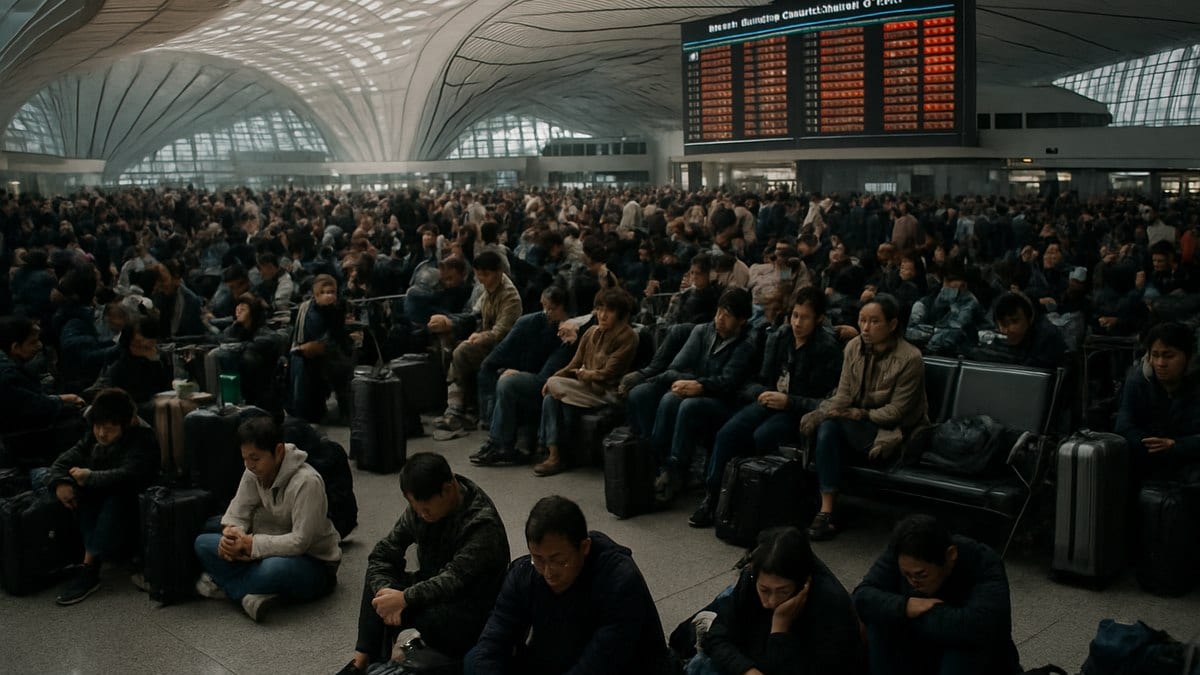
Hundreds of travelers have been left stranded at Beijing Daxing International Airport as a wave of flight cancellations ripples through China’s already stressed aviation network, disrupting domestic and international connections at one of Beijing’s key global gateways.
Get the latest news straight to your inbox!
Severe Disruptions Hit Beijing’s Newest Gateway
Recent operational data from flight tracking platforms and regional aviation reports indicate that Beijing Daxing International Airport has seen a sharp spike in cancellations and delays, with hundreds of passengers unable to depart as scheduled. The disruption is part of a wider bout of instability across China’s air travel system, but the situation at Daxing has been particularly visible due to the airport’s role as a growing hub for both domestic and long haul routes.
On peak disruption days in early April 2026, aggregated tracking data shows that China’s main hubs, including Beijing, Shanghai and Guangzhou, recorded hundreds of cancellations and thousands of delays in a single 24 hour period. Within that broader picture, Daxing has experienced clusters of same day cancellations on key north south and regional routes, leaving travelers queueing at service counters for rebookings and overnight accommodation.
Publicly available information suggests that the cancellations at Daxing have affected a mix of large state controlled airlines and smaller regional carriers. Domestic routes to major cities such as Guangzhou, Shenzhen and Kunming appear to have been among the hardest hit, compounding the impact on connecting passengers with onward international itineraries.
The operational turmoil has been reflected in departure boards dominated by delay notices, with some flights removed from schedules only shortly before boarding times. For travelers already at the airport, the late timing of cancellation decisions has limited options to reroute on alternative services, contributing to growing crowds in departure halls and at airline service desks.
Wider Asia Pacific Turbulence Amplifies Local Chaos
The difficulties at Beijing Daxing are not occurring in isolation. Aviation data and regional coverage point to a broader Asia Pacific disruption pattern that has intensified in late March and early April, including extensive delays and cancellations at major hubs in Thailand, Japan, Hong Kong, Malaysia and the Middle East. Temporary airspace constraints and network imbalances have forced multiple carriers to cut or reroute services, removing aircraft and crews from their normal rotations.
Reports on recent disruption days indicate that hundreds of flights have been canceled and several thousand delayed across Asia Pacific, stranding large numbers of travelers at connecting hubs. As aircraft and crews end up out of position, the knock on effects extend into China’s domestic network, increasing the likelihood that flights into and out of Daxing will be delayed or scrubbed, even when local weather is not a primary factor.
China’s own route structure magnifies the problem. Many international travelers use Beijing, Shanghai or Guangzhou as transit points between regional Asian cities and long haul destinations in Europe, North America and the Middle East. When cancellations reduce capacity on feeder routes, airports like Daxing can see surges of stranded transit passengers whose onward segments no longer match revised schedules.
Operational analysts note that these cascading effects are typical of highly utilized hub and spoke systems, where a missed aircraft rotation at one end of a route can eventually result in a shortage of planes and crew at another. At Daxing, this dynamic has translated into sudden gaps in the day’s schedule, as carriers remove flights they can no longer operate reliably.
Impact on Passengers at Beijing Daxing
For passengers on the ground, the disruption at Beijing Daxing has translated into long queues, overnight stays in terminal seating areas and a scramble for limited hotel rooms around the airport. Social media posts and local coverage describe concourses crowded with travelers sitting on suitcases, charging phones and refreshing airline apps while waiting for new departure information.
Families with children, elderly travelers and those with mobility challenges appear to be among the most affected, particularly when cancellations are announced late at night and rebooking options are pushed to the following afternoon or evening. Travelers with tight onward connections, including those heading to Europe or Southeast Asia, have reported missed tours, cruise departures and business meetings as a result of the extended delays at Daxing.
Those transiting China without a local mobile number or language skills face added complications when flights are canceled, especially when self service rebooking tools are limited or overloaded. Publicly available travel advisories emphasize the importance of carrying printed copies of itineraries, booking references and travel insurance details to simplify rebooking and claims in such scenarios.
At the same time, some passengers have managed to secure alternative routes by shifting to Beijing Capital International Airport or rerouting through secondary Chinese hubs. This option is generally easiest for travelers on flexible tickets or those whose airlines have interline agreements that allow rebooking on partner carriers. For many economy passengers on restrictive fares, however, choices remain constrained by availability and fare rules.
How Airlines and Regulators Are Responding
Published coverage of China’s recent aviation volatility indicates that airlines have been adjusting schedules across multiple days in an attempt to stabilize operations. Some carriers have proactively trimmed frequencies on lower demand routes and consolidated flights to free up aircraft and crews for the busiest corridors through Beijing, Shanghai and Guangzhou, including services to and from Daxing.
Public notices from airport operators and official data feeds point to efforts to smooth peak hour congestion by spreading departures and arrivals more evenly across the day. At Daxing, this can involve retiming flights by one or two hours, which may reduce immediate cancellations but can still create lengthy layovers for connecting passengers whose itineraries were built around previous schedules.
Aviation analysts following the disruption argue that the current wave of cancellations underlines the sensitivity of China’s rapidly recovering air travel market to external shocks. Aircraft and crew utilization has risen sharply with resurgent demand, leaving less slack in the system when unexpected airspace, weather or operational issues arise. As a result, localized disruptions at one or two hubs can quickly cascade into multi day problems for passengers at airports like Beijing Daxing.
Industry commentary also highlights the growing role of real time data tools in managing such crises. Flight tracking platforms, airport dashboards and crowd sourced delay maps are increasingly used by travelers and media to gauge the scale of operational problems, often revealing the extent of cancellations at hubs such as Daxing before official daily summaries are published.
What Travelers Using Beijing Daxing Should Do Now
For travelers planning to pass through Beijing Daxing in the coming days, publicly available guidance from consumer advocates and aviation experts emphasizes proactive preparation. Checking flight status repeatedly in the 24 hours before departure, enabling airline app notifications and verifying that contact details are up to date can help ensure that passengers receive early warning if their flight is retimed or canceled.
Travel specialists suggest building longer connection windows when itineraries route through Beijing or other major Chinese hubs during periods of instability. Where possible, booking all segments on a single ticket with one airline group increases the chances that missed connections will be reprotected at no additional cost, rather than treated as separate journeys.
Passengers are also advised to review fare conditions and local consumer protection rules related to cancellations and long delays. While compensation standards vary by jurisdiction and ticket type, many airlines provide meal vouchers, hotel stays or alternative transportation when significant disruptions are attributable to controllable operational factors. Carrying receipts for food, transport and accommodation can simplify reimbursement claims after the trip.
For now, the situation at Beijing Daxing remains fluid, with further cancellations possible as airlines continue to rebalance their schedules across China and the wider Asia Pacific region. Travelers connecting through the airport in early April may wish to build extra flexibility into their plans, keep essentials in carry on luggage and be prepared for the possibility of extended time on the ground before they can move on to their final destinations.