

More news on this day
In Beijing, policymakers, economists, and business leaders from across the Global South are converging to debate the future of international finance, with emerging economies using the summit to press for stronger cooperation, new payment systems, and greater independence from traditional Western-led institutions.
Get the latest news straight to your inbox!
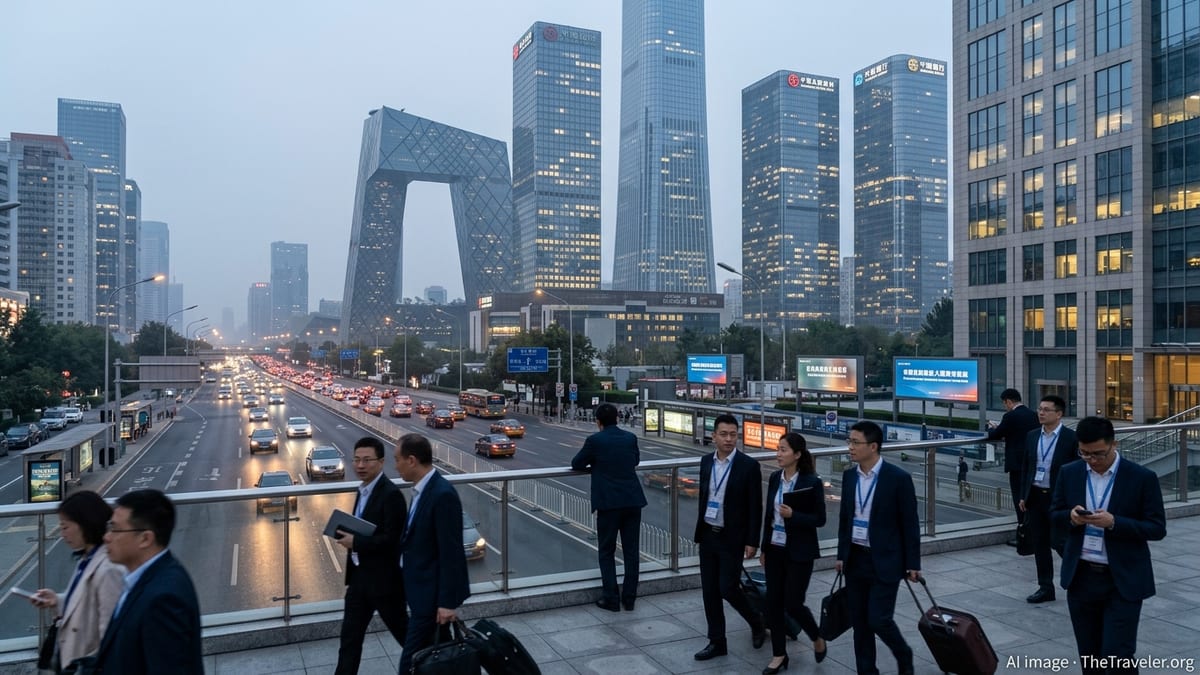
Beijing Signals a More Assertive Global South
The Beijing gathering comes at a moment when developing and middle-income countries are reassessing their place in the global financial order. Publicly available analyses show that many of these economies have grown more vocal about the risks of overreliance on the United States dollar, pointing to vulnerability to sanctions, interest rate swings, and capital flight that they do not control.
The summit agenda reflects that shift in tone. Discussions highlighted how emerging economies now account for a rising share of global output and trade, yet remain constrained by funding channels and rules largely shaped in the last century. Participants emphasized the need for financial arrangements that better align with their development priorities, including infrastructure, climate resilience, and digital connectivity.
Observers note that China’s role as host reinforces this narrative. Beijing has become a major bilateral lender and a key trading partner for Asia, Africa, and Latin America, and it is positioning itself as a bridge between established financial centers and a more multipolar network of emerging markets.
Regional forums held in China in recent months, including high-level economic and investment meetings in Boao and Beijing, have already framed cooperation, openness, and innovation as central themes for Asia and its partners. Reports from these events indicate that officials and experts are increasingly speaking in terms of shared resilience and collective security in finance rather than purely national strategies.
De-Dollarization and the Search for Monetary Autonomy
A central thread running through the Beijing summit is the acceleration of de-dollarization efforts across the Global South. Research on cross-border transactions shows a growing preference for settlements in local currencies and in the Chinese yuan, particularly among countries facing direct or indirect exposure to sanctions and geopolitical tensions.
Analysts tracking China’s external lending and trade finance note a marked increase in the use of the yuan in energy, commodities, and infrastructure deals. Separate studies describe how more than a fifth of cross-border transactions among some developing economies already bypass the dollar entirely, illustrating how alternative channels are moving from the margins toward the mainstream.
The summit’s panels on payment systems and currency cooperation explored a range of options, from expanding bilateral swap lines and regional reserve pools to experimenting with central bank digital currencies. Previous initiatives associated with groupings such as BRICS and the Shanghai Cooperation Organization, including cross-border payment platforms anchored in digital currencies, served as reference points for what more coordinated action could look like.
Despite these moves, published commentary continues to stress that the dollar remains the dominant global currency by a wide margin. The mood in Beijing, however, reflects a growing consensus that a gradual diversification of invoicing, reserves, and financing instruments is both possible and desirable for many emerging economies.
Emerging Economies Push for New Institutions and Tools
Beyond currency questions, the Beijing summit is also focused on institutions. Many participants argue that existing multilateral lenders and regulatory bodies have been slow to adapt to a world in which emerging markets are central to global growth. They point to unmet needs in sustainable infrastructure, energy transition, and social investment that require new approaches to risk-sharing and governance.
In this context, the experience of newer banks and funds, including those created by coalitions of developing countries, has been closely scrutinized. The performance of entities associated with regional forums and with blocs such as BRICS is being used as a case study in how alternative development finance can be structured, from project selection to local-currency lending.
Reports indicate that Chinese policy banks and funds tied to initiatives across Asia, Africa, and Latin America are increasingly experimenting with more flexible financing terms and blended instruments. Analysts suggest that lessons from these models are feeding into discussions in Beijing about how to scale up South-South cooperation without replicating the vulnerabilities seen in earlier waves of debt accumulation.
The summit is also examining regulatory cooperation, particularly in areas such as green taxonomy, sustainable bonds, and digital asset oversight. Participants from emerging markets are seeking a greater role in shaping standards that will govern the flows of capital they hope to attract over the next decade.
Travel, Tourism, and Beijing’s Role as a Financial Hub
The summit adds a distinct financial and geopolitical dimension to Beijing’s appeal as a travel and business destination. For visitors, the city’s transformation into a hub for high-level economic dialogue complements its established reputation for culture, history, and technology.
Recent coverage of China’s financial landscape underscores how major Chinese cities are being positioned as gateways for international capital into Asian and emerging markets. Beijing’s role as a policy center, combined with the connectivity of nearby financial hubs, has turned the wider region into a strategic base for investors and institutions seeking exposure to the Global South.
For travel and business travelers, this means that major conferences and summits are increasingly combined with site visits, industry roadshows, and project inspections across China and beyond. Airlines and hospitality providers are tailoring offerings to coincide with these high-profile events, while local authorities promote cultural itineraries and regional excursions to extend stays.
The current summit is expected to generate additional demand for premium accommodation, conference facilities, and corporate services, particularly in districts close to government, financial, and technology clusters. This reinforces Beijing’s positioning as a city where financial strategy, policy debate, and international tourism intersect.
What a More Multipolar Financial System Means for Travelers
For travelers and internationally active businesses, the themes under discussion in Beijing may translate into practical changes in the years ahead. Increased use of local currencies and digital payment platforms could reduce foreign exchange costs along some routes, while also introducing new options for cross-border transfers and investment.
Observers point out that as more trade and investment flows are denominated in currencies other than the dollar, banks and payment providers will likely expand their offerings in those units. This could affect everything from credit card pricing and remittance fees to the structure of multi-currency accounts used by frequent travelers and remote workers.
At the same time, a more fragmented or multipolar system could require travelers to pay closer attention to regulatory developments and financial stability in different regions. Currency volatility, changing sanctions regimes, and evolving capital controls may shape practical decisions about where to hold savings, how to insure trips, and which routes to favor.
For now, the Beijing summit serves primarily as a signal: emerging economies are not only key destinations for tourism and investment, they are also seeking a more decisive role in writing the rules that govern global finance. How far and how fast their vision advances will be a central storyline for travelers and investors watching the world economy over the coming decade.