

More news on this day
Hundreds of passengers were left stranded at Beirut’s Rafic Hariri International Airport on March 6 as at least 24 flights were delayed and eight cancelled, disrupting services by Royal Jordanian, EgyptAir, Transavia, Qatar Airways, Flydubai, TAROM, Air France and other carriers operating across Beirut, Cairo, Dubai, Paris and wider regional hubs.
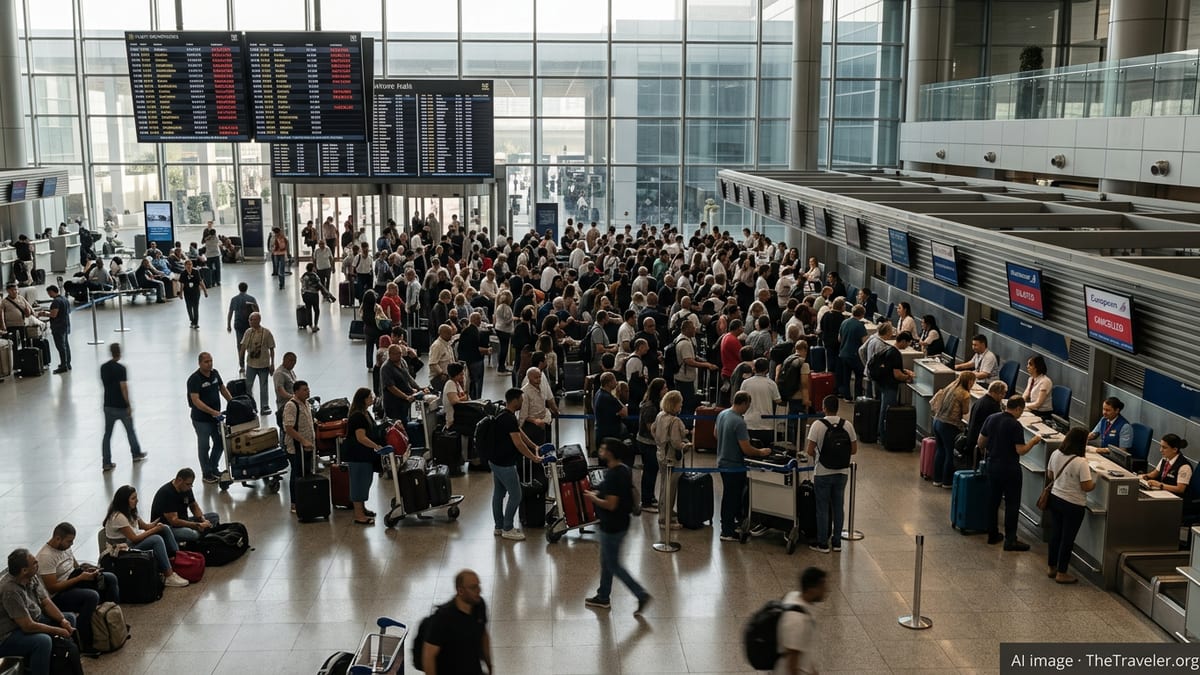
Major Disruptions Hit Beirut’s Only International Gateway
The wave of disruption at Beirut–Rafic Hariri International Airport came amid already fragile regional air operations, transforming the country’s sole commercial gateway into a scene of overnight queues, crowded departure halls and confused travelers scrolling through constantly changing departure boards. Airport staff and ground handlers were seen fielding questions from anxious passengers as status screens flipped repeatedly between scheduled, delayed and cancelled.
Airport data and airline updates indicated a day marked by rolling operational changes rather than a single blanket shutdown. While the terminal remained open and security checks continued as normal, the thinning movement on the runways told a different story, with aircraft parked for longer than usual and several inbound rotations scrubbed altogether.
The cancellations and delays at Beirut compounded broader pressure on a network already strained by recent airspace restrictions and rerouting across the Middle East. Flights that did operate often did so with extended block times to circumnavigate sensitive areas, leaving downstream schedules vulnerable to knock-on delays well into the evening.
Multiple Airlines and Routes Affected Across the Region
Airlines serving Beirut from key regional hubs bore the brunt of the disruption. Royal Jordanian was among the most heavily affected, with Beirut–Amman rotations delayed or cancelled, leaving passengers in both cities scrambling for scarce alternative seats as connections onward to Europe and North America fell apart.
EgyptAir services linking Beirut and Cairo also suffered, as the carrier continued to juggle a reduced regional operation. Travelers bound for onward connections through Cairo reported missed onward flights to African and Asian destinations, with some rebooked a full day later due to limited capacity and high demand.
Low cost and hybrid carriers were not spared. Flydubai’s Beirut–Dubai services saw delays and cancellations that rippled through Dubai’s role as a connecting super-hub, while Transavia and TAROM passengers reported last minute schedule changes affecting links between Beirut and European cities including Paris and Bucharest. National flag carrier Air France, already operating a trimmed schedule into Lebanon, cancelled further flights, leaving those headed for Paris Charles de Gaulle seeking seats on Middle East Airlines or other regional partners.
Qatar Airways also faced operational headwinds, adjusting services in and out of Beirut as it navigated evolving regional airspace constraints. Passengers connecting through Doha on long haul routes to Europe and Asia described abrupt rebookings, hotel vouchers and extended layovers as airlines worked to consolidate loads and rebuild viable schedules.
Passengers Face Long Waits, Uncertain Timelines and Limited Options
Inside Beirut’s terminal, the practical impact on passengers was immediate and visible. Families slept on benches or on the floor near departure gates, while solo travelers paced the concourses waiting for fresh information. Check in counters for the most affected carriers saw long, slow moving lines as staff attempted to process rebookings, issue meal vouchers and explain evolving policies on refunds and credits.
With eight outright cancellations and more than two dozen delays, options for same day re routing were limited. Some passengers with urgent travel needs opted to purchase last minute seats on Middle East Airlines or remaining operating services at significantly higher fares, while others resigned themselves to overnight stays in airport hotels or with relatives in Beirut until new departure times could be confirmed.
Travel agents in the city reported a surge in calls from stranded travelers and their families overseas, seeking clarity on whether to wait out the disruption or cancel plans entirely. Many were reluctant to abandon trips with nonrefundable accommodation or tour bookings at their destinations, particularly in Dubai and Paris, and instead sought any available routing, even if it involved multiple stops and lengthy detours.
For those already mid journey, the situation was equally fraught. Passengers arriving in Cairo, Dubai or Paris to discover their onward leg to Beirut cancelled described confusion about baggage handling, transit visas and overnight accommodation, especially where flights were operated under code shares between regional and European partners.
Airlines Adjust Schedules as Regional Tensions Pressure Airspace
The Beirut disruptions did not occur in isolation. Over the past week, a series of airspace restrictions and rapidly shifting risk assessments have forced carriers across the Middle East to adjust routings, extend block times and in some cases suspend entire city pairs. Lebanon’s location at the crossroads of east west traffic has magnified the impact on Rafic Hariri International Airport.
Air France, Qatar Airways and several regional operators have all recently announced temporary suspensions or reductions of flights to Beirut, as well as to other sensitive destinations including Tel Aviv, Baghdad and certain Gulf hubs. Greek carrier Aegean and other European airlines have similarly thinned their Middle Eastern schedules, citing operational and security considerations.
Industry analysts note that such cascading disruption is characteristic of a network under acute stress. When a portion of regional airspace becomes constrained or unpredictable, airlines are forced into complex rerouting, which in turn consumes extra fuel, aircraft time and crew hours. The resulting squeeze on resources quickly translates into late arriving aircraft, missed connection banks and, ultimately, cancellations on shorter feeder routes such as Beirut–Amman or Beirut–Cairo.
Despite the turmoil, Beirut’s airport has remained technically open, with local authorities emphasizing that runway and terminal operations continue under heightened monitoring. However, the patchwork of airline specific decisions on where and when to fly has created an uneven picture for travelers, with some routes operating almost normally while others are effectively suspended.
What Travelers Need to Know if Flying Through Beirut Now
For passengers with upcoming itineraries involving Beirut, Cairo, Dubai or Paris, travel advisors are urging a more cautious approach than usual. Travelers are being encouraged to check flight status repeatedly in the 24 hours before departure, rather than relying on a single confirmation issued at time of booking, as schedules are updated frequently throughout the day.
Flexible tickets, travel insurance that covers disruption and a willingness to accept alternative routings are proving decisive in getting some passengers moving while others remain grounded. In many cases, airlines are waiving change fees or offering credit vouchers, but seat availability on remaining services is tight, especially around traditional peak departure banks from Beirut.
Passengers connecting through the region are also being advised to build in longer layovers to reduce the risk of missed onward flights if an initial sector is delayed. For those already stranded in Beirut, airport officials and airline staff have been directing travelers to customer service desks within the terminal to arrange rebookings and, where policies allow, hotel accommodation and meals during extended waits.
With regional tensions still fluid and airlines signaling that schedule adjustments may continue in the coming days, the situation at Beirut’s Rafic Hariri International Airport remains fragile. For now, hundreds of passengers are caught in the middle of a complex operational puzzle that stretches far beyond Lebanon’s borders, linking departure boards in Beirut to knock on effects in Cairo, Doha, Dubai, Paris and beyond.