

More news on this day
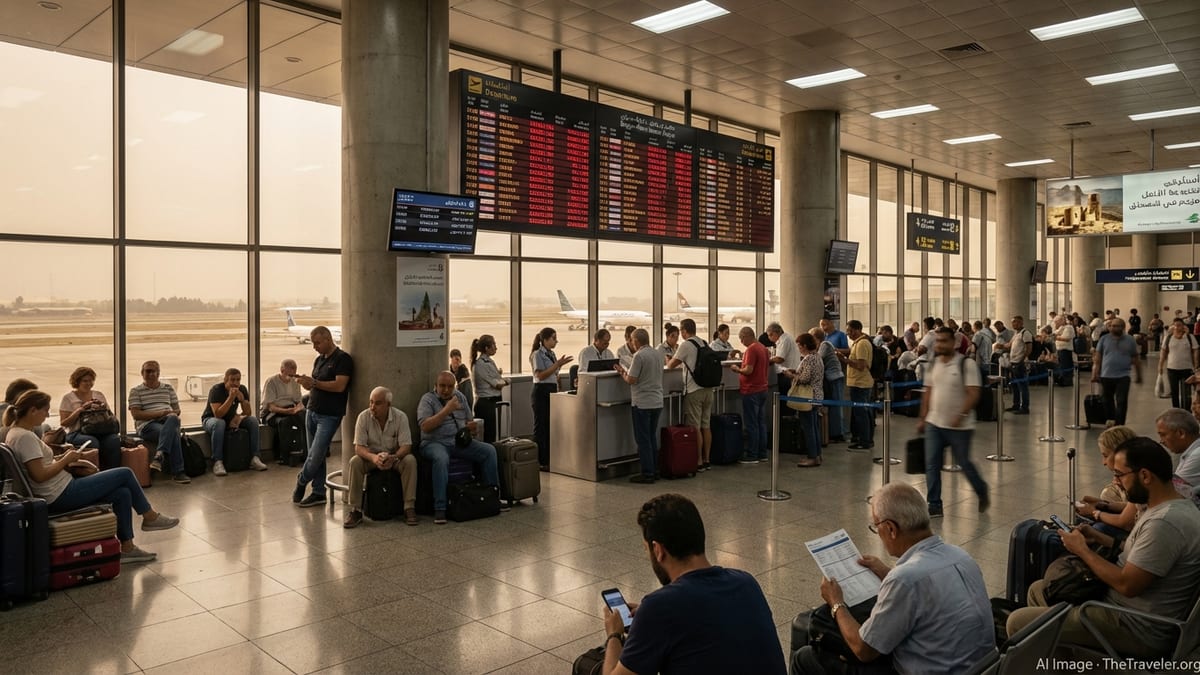
Passengers at Beirut Rafic Hariri International Airport on March 11 found themselves stranded in packed departure halls as EgyptAir, Royal Jordanian and Qatar Airways cut at least 14 flights and delayed many more amid widening airspace restrictions across the Middle East.
Get the latest news straight to your inbox!
Regional Conflict Ripples Through Beirut’s Only International Gateway
The latest wave of disruption hit Beirut Rafic Hariri International Airport early Tuesday, as airlines adjusted schedules in response to fast-changing security assessments and partial airspace closures from the Gulf to the Levant. Airport officials said operations remained technically open, but acknowledged that a rising number of cancellations and rolling delays were hitting key regional and long-haul routes.
Flights linking Beirut with Cairo, Amman and Doha were among the hardest hit, with services operated by EgyptAir, Royal Jordanian and Qatar Airways scrubbed or held on the ground for hours. Connections onward to major hubs including London, Paris and other European cities were also affected as aircraft and crews were stranded out of position across the region.
Airline representatives described the moves as precautionary, citing the need to keep aircraft out of congested or restricted air corridors while military tensions remain high. For travelers, the result was the same: lengthy queues at airline desks, crowded cafés and improvised sleeping areas as departure boards flickered between “scheduled,” “delayed” and “cancelled.”
The disruption in Beirut coincides with widespread flight cuts across the Middle East, as carriers navigate evolving no-fly zones and slot restrictions. EgyptAir has already suspended or reduced numerous services from Cairo to Gulf and Levant destinations, while Qatar Airways and Royal Jordanian are operating sharply limited networks pending further guidance from aviation authorities.
Fourteen Cancellations, Dozens of Delays Hit Core Regional Routes
By late afternoon, airport sources and passenger tracking data indicated that a combined total of at least 14 flights operated by EgyptAir, Royal Jordanian and Qatar Airways serving Beirut and its main partner cities had been cancelled, with additional rotations significantly delayed. The cuts focused on short- and medium-haul sectors between Beirut and Cairo, Amman and Doha, but knock-on effects were felt across wider networks.
Outbound flights from Beirut to Cairo on EgyptAir were among the first to be pulled from the schedule, with corresponding inbound services also cancelled, leaving travelers bound for Africa, Europe and North America scrambling to rebook longer-haul connections. Royal Jordanian’s Beirut–Amman shuttle, normally a high-frequency link to the Jordanian capital and its global network, operated on a reduced basis, with some rotations delayed into the night.
Qatar Airways, already operating a restricted timetable to and from Doha, cancelled selected Beirut services entirely, while others departed with long ground holds as crews waited for clearance to transit approved corridors. Passengers booked onward to London and other European destinations through Doha reported involuntary overnight stays or last-minute rerouting through alternative hubs.
Airport staff said that while the official count of 14 cancellations captured the day’s headline disruption, the true impact was wider, given missed connections and aircraft that did not arrive to operate later flights. Several regional services took off hours behind schedule, further compressing turnaround times and straining crews working at the limits of duty regulations.
Travelers Stranded Between Beirut, Cairo, Amman, Doha and London
The operational turmoil translated into a difficult day for passengers across several continents. In Beirut, travelers bound for Cairo and onward African and European destinations described being called to the gate, only to watch their flight status slip into “delayed” and then “cancelled” with little advance warning.
At Cairo International Airport, where EgyptAir has already been managing dozens of cancellations linked to the regional security situation, knock-on disruption from Beirut-bound services compounded existing chaos. Passengers heading from Cairo to Beirut, Doha and Amman found themselves competing for scarce seats on remaining departures, while some were advised to postpone nonessential travel altogether.
In Amman, Royal Jordanian passengers reported long lines at transfer desks as Beirut connections were scrapped or heavily delayed, complicating itineraries to London, other European capitals and North American cities. Travelers transiting through Doha faced similar uncertainty, with Qatar Airways juggling a skeleton schedule to maintain a limited number of long-haul connections to London and other major hubs.
Lebanese nationals returning from business or family trips, expatriates working in the Gulf, and tourists trying to exit the region all found themselves at the mercy of fast-changing operational decisions. With hotel rooms near airports filling quickly and same-day alternatives limited, many travelers resorted to overnight stays in terminal seating areas.
Operational and Safety Pressures Drive Airline Decisions
Airline officials stressed that the disruption was driven primarily by safety and regulatory considerations, as carriers coordinated with national civil aviation authorities to avoid sensitive airspace. With several regional states tightening or fully closing their skies to commercial overflights, crews have been forced onto longer and more complex routings, increasing fuel requirements and limiting the number of viable frequencies each day.
For EgyptAir, Royal Jordanian and Qatar Airways, the challenge has been to balance the need to maintain vital links with Beirut, Cairo, Amman and Doha against the operational realities of a fragmented sky. Each cancellation or extended delay reflects not only security concerns but also the downstream effect on aircraft rotations, maintenance windows and crew duty hours.
Industry analysts noted that Beirut’s reliance on a relatively small group of regional carriers leaves it particularly exposed when those airlines pull back capacity. With many European and Asian carriers also trimming or suspending services to the wider region, Beirut Rafic Hariri International Airport has fewer options to backfill lost seats or quickly reroute stranded passengers.
Despite the day’s turmoil, international aviation agencies said they were closely monitoring the situation and remained in contact with national regulators. However, they cautioned that as long as military tensions and airspace restrictions persist, airlines will continue to make short-notice adjustments to protect passengers and crews, even at the cost of severe commercial disruption.
What Passengers Can Expect in the Coming Days
Travel experts warned that the disruption seen in Beirut, Cairo, Amman and Doha on March 11 is unlikely to be a one-off. With regional conditions still volatile and air traffic control units periodically rerouting or limiting flows, schedules published days or even hours in advance may not reflect actual operations on the day of travel.
Passengers holding tickets with EgyptAir, Royal Jordanian or Qatar Airways for journeys touching Beirut or connecting hubs such as Cairo and Doha have been urged to monitor their bookings closely using airline apps and customer service channels. Many carriers have introduced temporary flexibility policies, allowing travelers to change dates or reroute itineraries without standard penalties, subject to availability.
At Beirut Rafic Hariri International Airport, authorities have appealed for patience and encouraged passengers not to arrive excessively early for flights until they have confirmed departure times. Ground handling companies and security staff have been instructed to prioritize vulnerable travelers, including families with young children, elderly passengers and those with medical needs, as queues and waiting times lengthen.
For now, regular flyers between Beirut, Cairo, Amman, Doha, London and other major cities are bracing for more uncertainty. Until airspace restrictions ease and carriers can restore predictable timetables, the departure board at Beirut’s sole international gateway is likely to remain one of the clearest barometers of how deeply the region’s instability is reshaping the everyday realities of travel.