

More news on this day
Hundreds of passengers were left isolated at Beirut–Rafic Hariri International Airport on Sunday as EgyptAir, Qatar Airways and Royal Jordanian recorded at least 16 cancellations and seven significant delays on routes linking the Lebanese capital with Cairo, Doha, Amman and other regional hubs amid the ongoing Middle East airspace crisis.
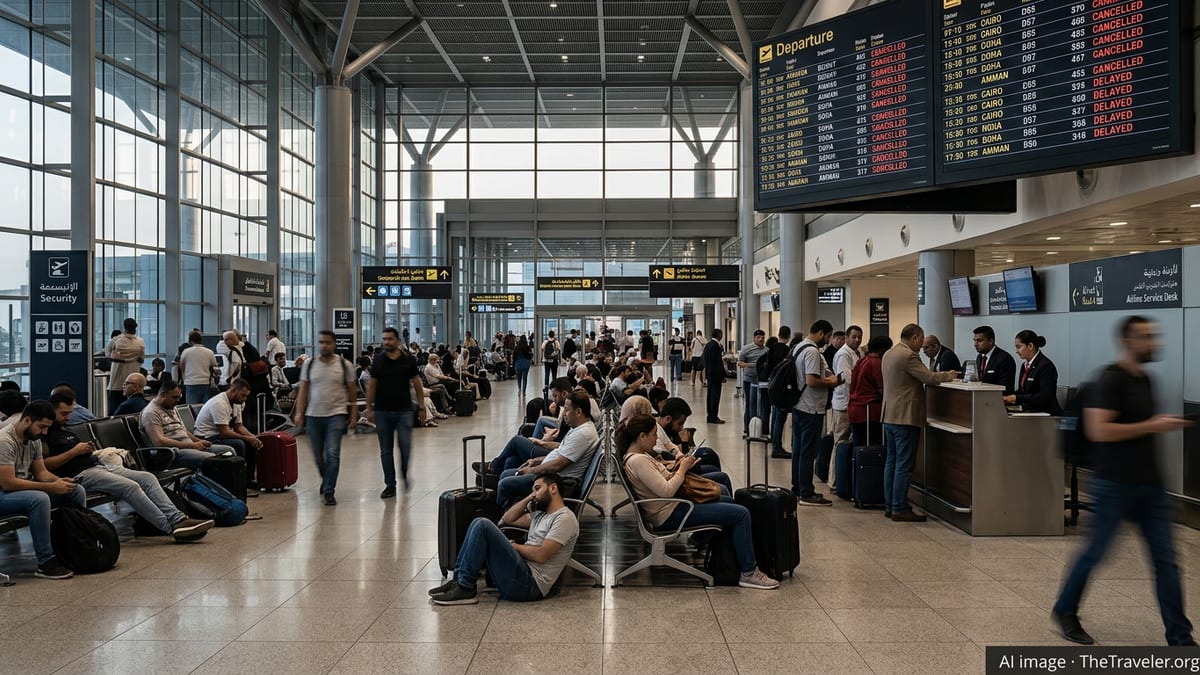
Wave of Cancellations Strands Passengers in Beirut
By early afternoon on March 8, airport display boards in Beirut showed a patchwork of red as multiple flights operated by EgyptAir, Qatar Airways and Royal Jordanian were marked cancelled or severely delayed. Airport staff said the disruption affected at least 16 departures and arrivals operated or codeshared by the three carriers, including key connections to Cairo, Doha and Amman that usually funnel travelers onward to Europe, Africa and Asia.
The cancellations follow more than a week of turmoil in regional aviation triggered by airspace closures and security concerns across the Gulf and eastern Mediterranean. Lebanon’s main gateway, already operating under a fragile security and economic climate, has become a chokepoint for travelers trying to reroute around shuttered hubs and suspended routes across the Middle East.
Passengers reported waiting overnight in terminal halls with little clarity on whether alternative flights would materialize. Many had started their journeys in Africa, Europe or the Gulf, only to find themselves unexpectedly stuck in Beirut as connecting services to and from Cairo, Doha and Amman were scrubbed from schedules at short notice.
Airport staff and ground handlers described mounting logistical challenges, with check-in counters repeatedly reopening and closing as airlines adjusted their plans in response to shifting airspace permissions and security advisories issued over the weekend.
EgyptAir Holds Beirut Route Amid Wider Regional Suspensions
Egypt’s flag carrier has been at the center of the unfolding disruption. After initially suspending services from Cairo to a broad list of Middle Eastern destinations in late February, EgyptAir announced only a gradual and selective resumption of flights this week, prioritizing heavily trafficked routes to Dubai and Dammam while keeping a tight cap on services to higher‑risk air corridors.
Industry sources said EgyptAir has continued to operate Beirut as a constrained route, with last‑minute operational reviews leading to repeated day‑of‑departure cancellations. On Sunday, several Cairo–Beirut rotations were pulled from the schedule, compounding the difficulties for passengers already delayed by earlier suspensions of flights to Doha, Amman and other Gulf cities.
Travel agents in Beirut and Cairo said rebooking options on EgyptAir have been limited, with many displaced passengers told they may have to wait several days for confirmed seats. Some agencies reported having to reroute travelers via European hubs when available, often at additional cost and with extended transit times that stretch trips by 24 hours or more.
EgyptAir has urged passengers to monitor their booking status closely and avoid heading to airports without confirmed reissued tickets. However, intermittent internet access for some stranded travelers and a surge in calls to customer service have made it difficult for many to secure up‑to‑date information in real time.
Qatar Airways’ Limited Return Leaves Gaps on Beirut–Doha Corridor
Qatar Airways’ network remains constrained following the closure and only partial reopening of Qatari airspace in recent days, and Beirut has been one of the destinations impacted by the carrier’s cautious return. While the airline has begun operating a limited schedule out of Doha to selected cities under temporary authorizations, Beirut continues to see frequent last‑minute cancellations and rolling delays.
Passengers who had booked Beirut–Doha connections for onward travel to Europe and Asia reported receiving cancellation notifications only hours before departure, leaving them with little time to arrange alternatives. Others arrived at the airport to find their flights still listed as “scheduled” on some screens, even as check‑in staff informed them that operations had been suspended pending further guidance from Doha.
Travelers described crowded scenes at transfer desks as Qatar Airways staff attempted to process rebookings on the handful of flights still operating from Doha to secondary hubs, or onto other carriers where interline agreements allowed. Some stranded passengers said they had been advised to seek accommodation at their own expense while waiting for updates on repatriation flights and newly added services.
The uncertainty over Qatar Airways’ Beirut schedule has also disrupted the plans of Lebanese expatriates and foreign workers trying to reach the Gulf. Many rely on the Beirut–Doha corridor as a primary gateway to jobs in Asia, Africa and Australasia, and the suspension of regular commercial frequencies has left them juggling expired visas, missed work commitments and mounting accommodation costs.
Royal Jordanian Cuts Beirut Links Despite Amman Airspace Reopening
Royal Jordanian, which had initially signaled a quicker normalization of services after Jordan reopened its airspace, has continued to cancel Beirut–Amman flights on a rolling basis, according to airport staff and travel agents. On Sunday, several of the airline’s scheduled rotations between the two capitals did not operate, removing a key short‑haul link that normally serves as a vital connection for passengers heading to North America and Europe.
The cancellations have been particularly disruptive for travelers who had pieced together itineraries using Beirut–Amman segments as a bridge to long‑haul flights operated by Royal Jordanian and its alliance partners. With Amman functioning as one of the relatively more stable hubs in the current crisis, the loss of predictable connections from Beirut has forced many to consider costly last‑minute alternatives via Istanbul, Larnaca or European cities.
Royal Jordanian has publicly emphasized its willingness to offer flexible options for affected passengers, including free date changes and, in some cases, refunds or rerouting on later flights. Yet travelers at Beirut airport said the practicalities of accessing those options have been complicated by long queues at ticketing counters and overwhelmed call centers in both Lebanon and Jordan.
Local travel agencies reported that some Beirut‑origin passengers have been advised to wait for day‑by‑day updates rather than receive immediate confirmed changes, reflecting the airline’s dependence on evolving regional airspace assessments and security advisories that can alter operational plans within hours.
Human Impact: Families Separated and Travel Plans in Disarray
Behind the statistics, the disruption at Beirut airport has left families separated and travel plans in tatters. Parents trying to reunite with children abroad, migrant workers heading back to jobs in the Gulf, and tourists attempting to exit the region all found themselves sleeping on plastic chairs or the terminal floor as they waited for news from airline desks.
Some passengers recounted having already endured lengthy detours before reaching Beirut. One family who had departed from North Africa via Cairo described a cascade of cancellations that first shut down their planned connection through Doha, then forced them onto an EgyptAir flight to Beirut, only for their onward Qatar Airways service to be abruptly cancelled as they reached the gate.
Volunteer groups and airport staff have tried to ease conditions by distributing basic refreshments and helping travelers navigate shifting schedules, but resources are limited. With hotel availability around the airport tightening and prices rising, many stranded passengers have opted to remain inside the terminal rather than risk losing their place in line for potential last‑minute seats.
Psychological stress has grown as the crisis drags on. Travelers reported anxiety over expiring visas, missed medical appointments and looming work deadlines, while others worried about relatives in conflict‑affected areas who were counting on them to deliver essential supplies or financial support once they arrived.
Authorities Urge Patience as Regional Aviation Slowly Reconfigures
Lebanese aviation authorities have urged passengers to stay in close contact with their airlines and to avoid unnecessary trips to the airport until their flights are confirmed, acknowledging the severe strain on facilities and staff caused by the ongoing disruptions. Officials noted that the situation remains fluid, with regional airspace permissions and security assessments changing daily as governments respond to the wider Middle East crisis.
Airline executives and industry analysts say carriers like EgyptAir, Qatar Airways and Royal Jordanian face an intricate balancing act as they attempt to restore connectivity while avoiding congested or potentially risky air corridors. Each new advisory or airspace notice can trigger revisions to flight plans, leading to last‑minute cancellations or retimings that ripple through complex networks and leave passengers stranded far from their intended destinations.
For now, Beirut–Rafic Hariri International Airport remains both a lifeline and a bottleneck. While some flights continue to operate and a trickle of travelers manage to depart, scores more remain in limbo, watching departure boards flicker between “scheduled,” “delayed” and “cancelled” as airlines weigh safety considerations against mounting pressure to get people moving again.
With no firm end date to the airspace turmoil, aviation officials and travel industry figures are advising passengers to build in extra days for regional journeys, maintain flexible itineraries and, where possible, secure refundable tickets or alternative routing options before setting out for Beirut or other affected hubs.