

More news on this day
The United Kingdom has widened its global travel safety net, adding Belarus to a roster of high‑risk destinations that already includes Russia, Libya, Mali and Haiti, as the Foreign, Commonwealth & Development Office (FCDO) maintains advisories affecting 69 countries amid what officials describe publicly as a more volatile security environment worldwide.
Get the latest news straight to your inbox!
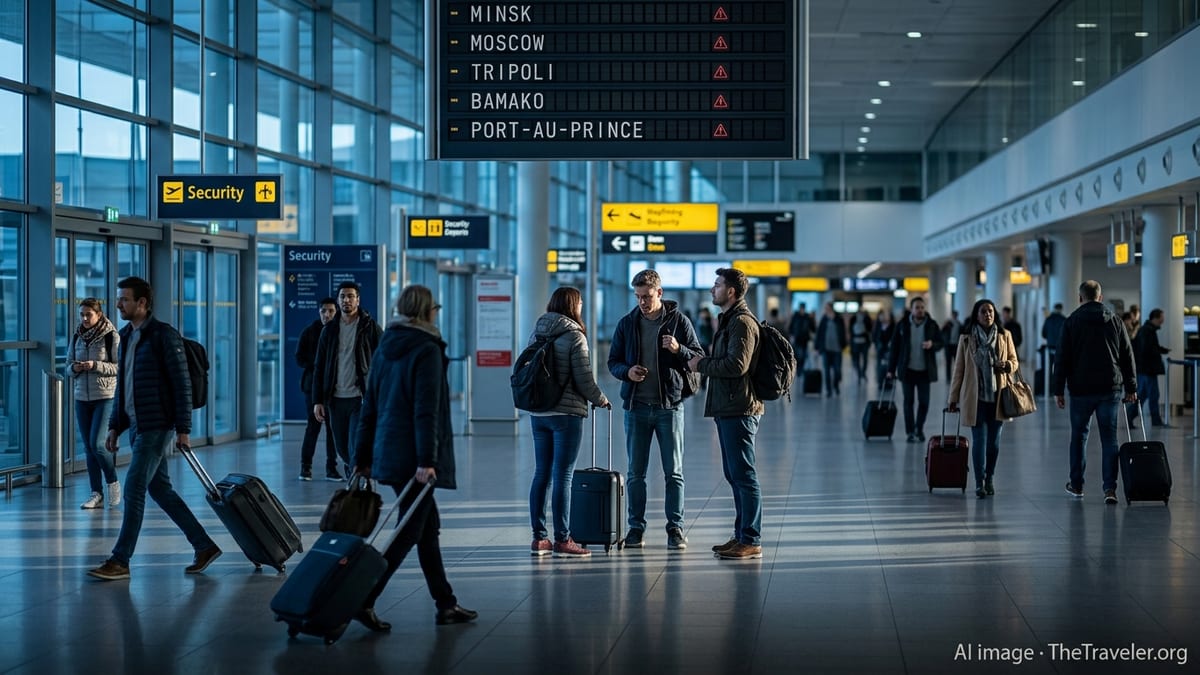
Belarus Moves Into the Highest-Risk Tier
The latest FCDO update places Belarus alongside Russia in the category where UK nationals are advised against all travel or all but essential travel, reflecting concern over regional security and the country’s role in the ongoing conflict in neighbouring Ukraine. Publicly available government information highlights risks linked to potential military activity, heightened political tensions and the possibility of sudden border closures or flight disruptions affecting travellers in and around Belarus.
Belarus has already been subject to a range of Western sanctions, and commercial air links have been significantly reduced in recent years. Airlines adjusted routes after widely reported incidents in Belarusian airspace and increasing scrutiny of the country’s aviation oversight. Travel industry reporting indicates that many carriers continue to route around Belarus, lengthening some Europe to Asia flight times and limiting options for travellers who might otherwise have transited through Minsk.
Security analysts cited in open-source commentary note that Belarus now appears in the same conversation as other European or near-European destinations considered high risk, such as parts of Russia and Ukraine. For leisure travellers, the practical effect is that Belarus has moved from niche destination to generally off-limits in many standard travel insurance policies, which often exclude cover where official advice is against travel.
Russia, Libya, Mali and Haiti Remain Flashpoints
Russia remains one of the most prominent countries on the UK’s highest alert list, given the continuing war in Ukraine, domestic security concerns and restrictions on independent information. Travel advisories underscore the risks of arbitrary detention, limited consular access and unpredictable changes in regulations that can affect foreign nationals. Many tour operators removed Russia from their programmes after 2022, redirecting demand to alternative cultural and city-break destinations.
Libya, Mali and Haiti continue to feature among the most complex security environments covered by UK travel advice. In Libya and Mali, reports from multilateral agencies and non-governmental organisations describe an ongoing mix of armed conflict, terrorism, crime and political instability, with heavily restricted movement outside limited urban areas. In Haiti, international coverage points to a severe gang violence crisis, widespread kidnappings and a deteriorating humanitarian situation that has led several governments to renew or strengthen their own travel warnings.
These four states illustrate the range of risk factors now influencing official advisories, from international conflict and state fragility to organised crime and breakdowns in public order. For travellers, the result is that large parts of North and West Africa, sections of Eastern Europe and parts of the Caribbean are now effectively off the map for non-essential visits, at least for the near term.
Sixty-Nine Countries Under Advisory: How the Map Has Shifted
While the precise wording of advisories varies, current FCDO guidance touches 69 countries where UK travellers face some form of heightened caution, from partial regional warnings to nationwide advice against all travel. The figure underscores how significantly the global risk map has changed over the past decade, driven by overlapping crises that include armed conflict, climate-driven disasters, public health emergencies and political upheaval.
Some countries on the list, such as Syria, Yemen and Afghanistan, have been associated with extreme travel risk for years. Others, including parts of the Sahel and Horn of Africa, have seen conditions worsen more recently as insecurity spreads and state institutions struggle to maintain control beyond capitals. In still other cases, such as parts of Central and South America, advisories focus less on open conflict and more on crime, kidnapping and localised unrest.
Not every flagged state is subject to a sweeping prohibition. In several destinations, the UK’s stance differentiates between safer urban centres or resort areas and border regions where insurgency, trafficking or cross-border tensions are more acute. Nevertheless, the headline number of 69 affected countries signals to travellers that caution is no longer confined to a handful of obvious hotspots.
What the New Alerts Mean for Travellers and Insurance
For British travellers and residents abroad, the FCDO’s expanded risk map has tangible consequences. Many travel insurance policies are written to exclude cover if someone visits a destination or region against official advice. Industry commentary notes that when a country moves into the “advice against all travel” category, claims related to trips taken after that point are frequently declined, leaving travellers exposed to potentially significant medical or repatriation costs.
Tour operators and airlines also closely track FCDO advisories when deciding whether to operate routes and packages. Large travel companies often cancel organised tours as soon as a country is placed under advice against all but essential travel, offering refunds or rebookings to alternative destinations. Independent travellers may find that scheduled flights continue in some cases, but local ground services, insurance cover and consular support are more constrained.
For those with family, business or humanitarian ties in affected countries, the latest changes add a layer of complexity to already difficult journeys. Advisories typically encourage anyone who still needs to travel to review their documentation, register contact details with relevant embassies where possible and maintain flexible itineraries in case commercial options are withdrawn at short notice.
Checking If Your Destination Is Affected
With the number of countries covered by some form of UK advisory now standing at 69, travel planners are being urged in public guidance to check official information at multiple stages: when booking, before departure and again during a trip. The FCDO’s public portal allows users to search by country, review security assessments and sign up for email updates as situations evolve.
Travel risk consultants point out that even destinations not on the high-risk list can face sudden disruptions due to protests, extreme weather or health concerns. Recent years have seen examples of once-stable tourist favourites facing unexpected unrest, reinforcing the message that advisories are dynamic tools rather than static labels.
For now, the addition of Belarus to the highest-risk ranks alongside Russia, Libya, Mali and Haiti is a reminder of how rapidly geopolitical and security conditions can change. As the global count of countries under UK travel advisory rises to 69, travellers are being encouraged through public information campaigns to build risk checks into their planning as routinely as they compare airfares or hotel reviews.