

More news on this day
Belém in Brazil and Iquitos in Peru are set to bookend one of the world’s most exclusive river routes in 2026, as Hapag-Lloyd Cruises prepares a new Amazon expedition season linking the Atlantic gateway city with the remote Peruvian upriver hub.
Get the latest news straight to your inbox!
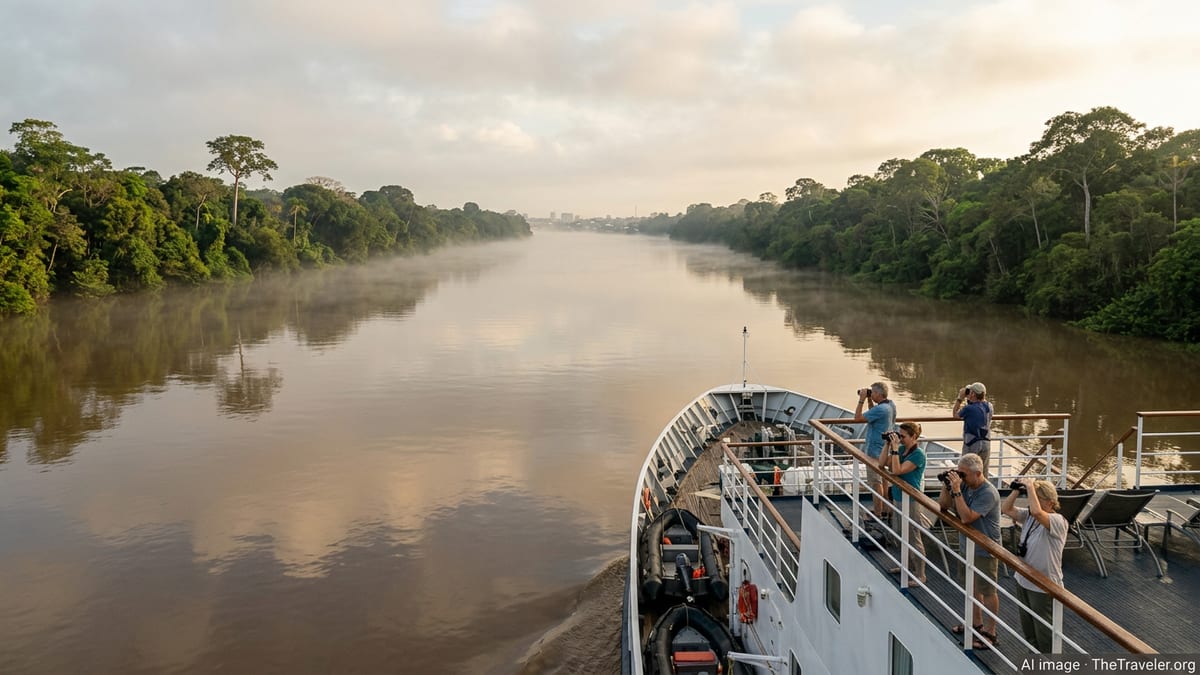
Amazon Expedition Season Takes Shape for 2026
Publicly available information from Hapag-Lloyd’s schedules shows that its small expedition ships will again sail the Amazon between Belém and Iquitos in 2026, building on recent seasons that established the company as a specialist on this complex river. The voyages are marketed as intensive expedition cruises, combining open-sea segments with deep-river navigation through the world’s largest rainforest.
The 2026 season includes at least one upstream itinerary from Belém to Iquitos and one downstream itinerary in the opposite direction, both operated with the HANSEATIC fleet. Planning documents and trade material describe these as “Expedition Amazon” sailings, with Belém serving as the Atlantic gateway and Iquitos as the turnaround port deep inside Peru’s Amazon basin.
Industry coverage notes that Hapag-Lloyd is positioning these voyages at the top end of the expedition market, with relatively small passenger numbers, shallow-draft hulls and a strong focus on nature and science content. The line also highlights more than two decades of experience navigating the Amazon, including on predecessor expedition vessels, as a key selling point for the 2026 program.
Key Itineraries Between Belém and Iquitos
Destination overviews released by the line indicate that the 2026 Amazon season will feature an upstream expedition from Belém to Iquitos in March, followed shortly afterward by a downstream journey from Iquitos back toward the Atlantic. A representative upstream itinerary is promoted as an 18-day “Expedition Amazon” program, traveling from the Pará River estuary past river communities, blackwater tributaries and the major junction at Manaus before pushing into Peru.
In parallel, a downstream option running from Iquitos to Belém in late March and April 2026 is detailed in agent factsheets as another 18-day or 21-day expedition. These sailings are structured to maximize time in remote stretches of the river, with sea days largely confined to the repositioning legs along the Brazilian coast to or from Belém.
Pricing information circulated through trade partners places entry-level per-person fares in the high five-figure range in local currency, starting around the equivalent of 20,000 euros per person for longer itineraries including flights. The premium reflects both the logistical complexity of operating far inland and the relatively low capacity of the expedition ships, which are typically limited to around 200 to 230 guests on Amazon voyages.
Onboard Experience and Expedition Activities
Details published in current brochures and online previews emphasize that the Belém–Iquitos voyages are structured as full expedition cruises rather than conventional river sailings. Guests travel on purpose-built expedition ships equipped with fleets of Zodiac inflatables, which are used for daily outings on smaller channels, flooded forests and remote landing sites inaccessible to larger craft.
The onboard program highlights wildlife viewing, rainforest ecology and regional culture, with lecture-style presentations and briefings complementing time ashore. Reports indicate that landings often focus on birdlife, pink river dolphins, Amazonian plant species and the contrast between wide “river sea” sections and narrow, jungle-fringed tributaries such as the Rio Negro.
Cabin descriptions and service outlines show a strong luxury positioning, including all-day cabin service, complimentary non-alcoholic beverages, and additional amenities in higher suite categories. Publicly available images and ship data describe extensive observation decks, bow viewing areas and indoor lounges designed to maximize river scenery even during tropical showers.
Belém and Iquitos: Strategic Amazon Gateways
The 2026 season underlines the complementary roles of Belém and Iquitos in Amazon tourism. Belém, located near the mouth of the river system on Brazil’s Atlantic coast, functions as the primary maritime access point for ocean-going expedition ships. Its port infrastructure allows vessels arriving from Europe or other South American coasts to provision and embark guests before turning inland along the Pará and Amazon channels.
Iquitos, by contrast, is a landlocked river city deep in Peru’s Amazon, reachable only by air or river. Cruise documentation and destination profiles highlight Iquitos as one of the few urban centers that can accommodate an international expedition vessel of this size so far upriver, making it a logical turnaround port for the most extended itineraries.
Regional media coverage of recent calls by HANSEATIC vessels to Belém indicates that these stopovers can draw local attention, with high-end expedition ships viewed as a niche segment compared with mainstream Caribbean and South Atlantic cruising. For international travelers, the combination of a Brazilian coastal gateway and an isolated Peruvian endpoint positions the route as a once-in-a-lifetime journey that traverses multiple cultures and ecosystems in a single trip.
Booking Windows, Practical Considerations and Sustainability
Travel trade releases and booking tools show that the 2026 Belém–Iquitos expedition departures are already open for reservations, with some materials flagging early-booking incentives and limited cabin categories. Given the low overall capacity and the growing interest in small-ship expedition cruising, specialists suggest that peak-season Amazon sailings can fill well in advance of departure, particularly balcony cabins and suites.
Prospective guests are advised by publicly available guidance to pay close attention to flight logistics, as Iquitos is primarily accessed via domestic or regional air connections, while Belém is served by Brazilian and some international carriers. Many packages bundle charter or scheduled flights, pre- and post-cruise hotel nights and transfers, which can simplify connections across borders and into remote regions.
Sustainability messaging features prominently in Hapag-Lloyd’s Amazon communications, with repeated references to limited passenger numbers, strict landing protocols and close coordination with local regulations. The company presents its Amazon program as a controlled way to experience a highly sensitive environment, emphasizing education, low-impact Zodiac operations and adherence to protected-area rules as part of its 2026 season narrative.
For travelers considering an Amazon journey in 2026, the Belém–Iquitos expeditions sit at the intersection of luxury, remoteness and environmental awareness. The combination of small-ship comfort, long river segments and rare access to upper Amazon ports positions these sailings as a focal point of next year’s South American expedition calendar.