

More news on this day
Belgium faces a week of coordinated industrial action in March that is expected to disrupt flights, rail services and city transport, leaving travelers scrambling to adjust plans and prompting fresh guidance from airlines, rail operators and tourism officials.
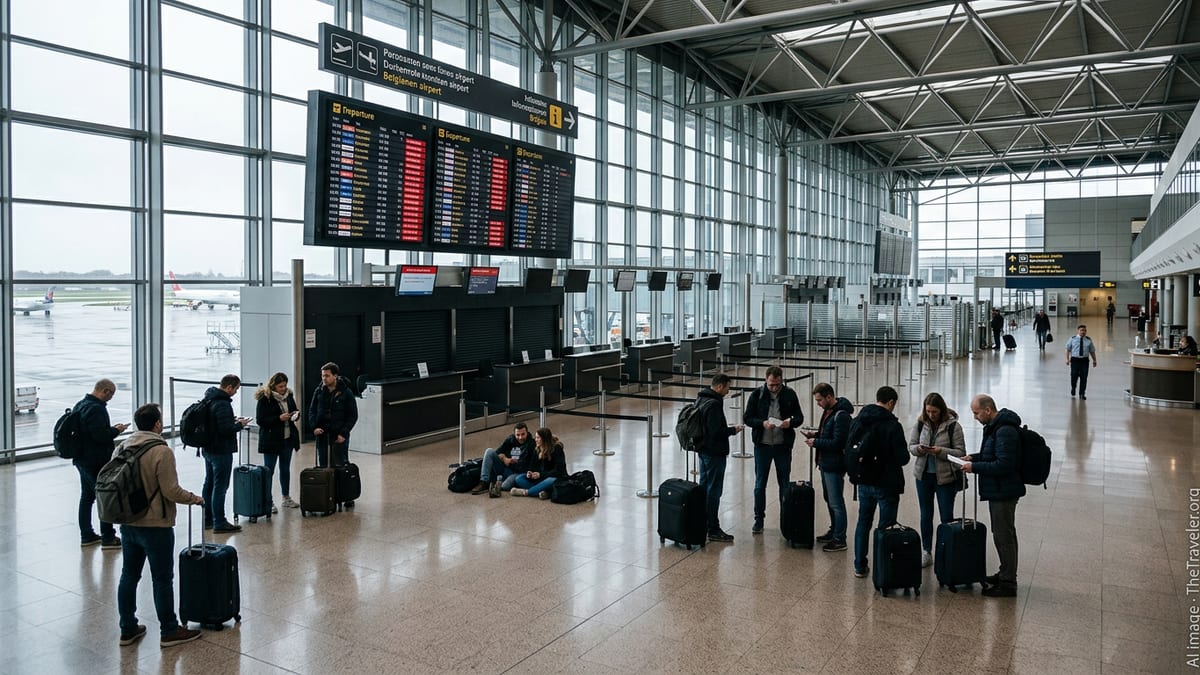
Nationwide Industrial Action Targets Key Transport Hubs
Belgium’s three main trade union confederations have called a national day of action for Thursday 12 March 2026, capping a four-day period of disruption that begins with a rail strike on Sunday night. The coordinated walkouts are part of a wider campaign over pay, working conditions and pension reforms, and they are expected to hit the country’s transport network particularly hard.
From the evening of Sunday 8 March through the end of Wednesday 11 March, services on the national rail operator SNCB will be heavily reduced, affecting domestic routes and some international trains. Disruption will then spill into Thursday as unions stage marches and demonstrations in Brussels and other cities, with transport workers among those taking part.
Public transport authorities in Brussels, Flanders and Wallonia warn that tram, metro and bus services could range from significantly reduced to almost completely halted on the day of the national strike. Local authorities also anticipate road congestion around protest routes and government districts, compounding difficulties for travelers trying to move between airports, train stations and city centers.
The timing of the walkouts coincides with a busy period for business travel and early spring tourism, increasing the likelihood that visitors will face last minute changes, crowding on the limited services that do run, and difficulty securing alternative routes.
Brussels Airport Cancels All Departures on 12 March
Brussels Airport has taken the unusual step of cancelling all departing passenger flights on Thursday 12 March in anticipation of severe staffing shortages linked to the industrial action. Security screeners, ground handling staff and other operational workers are expected to join the strike, making it impossible for the hub to guarantee safe and orderly departures.
Airport management said the decision was made in consultation with airlines to provide clarity to passengers and to avoid day‑of‑travel chaos at the terminals. Inbound flights may still operate on a reduced basis, but carriers are already adjusting schedules and repositioning aircraft, and many round‑trip services are likely to be cancelled or consolidated.
Brussels Airlines, the largest carrier at the airport, has warned customers that most of its schedule on 12 March will be affected, with knock‑on changes on surrounding days as aircraft and crews are displaced. Other European and long‑haul airlines are introducing flexible rebooking policies for passengers due to depart from Brussels during the strike.
Travelers holding tickets for 12 March are being urged not to come to the airport unless specifically advised that their flight is operating. Instead, they are told to monitor airline communications, check booking apps frequently and consider moving travel to earlier or later dates where possible.
Rail and Urban Transport Disruptions Across Belgium
The rail strike that runs from late on 8 March to the end of service on 11 March is expected to significantly curtail services across the Belgian network. While a legally required minimum service will keep a limited number of trains running, many routes will see sharply reduced frequencies and some regional lines may not operate at all.
SNCB has said it will publish adapted timetables and lists of running trains shortly before each strike day, but cautions that capacity will be tight, especially during peak hours and on lines serving Brussels. International connections including Eurostar, Nightjet and other cross‑border services are also expected to face alterations, with some trains cancelled and others operating on modified schedules.
In Brussels, the public transport operator STIB anticipates major disruption to metro, tram and bus lines, with only partial services possible on 12 March. Similar warnings have been issued by De Lijn in Flanders and TEC in Wallonia, raising the prospect that many stations and key interchange points will be difficult to reach by public transport.
For travelers, this means that journeys to and from airports, major rail hubs such as Brussels Midi, and popular visitor destinations may take substantially longer than usual or require multiple changes, including taxis, shared transfers or walking between stations and hotels.
Guidance for Air Passengers Affected by the Strike
Airlines serving Belgium are encouraging passengers to act early if their travel falls between 8 and 13 March. Many carriers have introduced fee‑free changes for tickets touching Brussels on 12 March, allowing customers to move their itineraries within a specified date range or reroute via other European hubs if seats are available.
Travelers whose flights are cancelled are typically entitled to a choice between rebooking at the earliest opportunity, rebooking for a later date, or a refund, depending on the carrier’s policy and applicable regulations. However, limited capacity around the strike period means that same‑week alternatives may be scarce on popular routes, particularly long‑haul services.
Passenger rights specialists advise travelers to keep documentation of all communications with airlines and to avoid making nonrefundable onward arrangements until new flights are confirmed. Those with tight connections onward from Brussels, such as separate low‑cost tickets or train links, are being urged to allow additional buffer days or to consider flying directly to their final destination where feasible.
Travel insurance policies may provide coverage for additional accommodation, meals or alternative transport in the event of strike‑related delays and cancellations, but terms vary widely. Policyholders are advised to review exclusions related to industrial action and to contact their insurers before incurring major extra costs.
Practical Tips for Travelers in Belgium During the Walkouts
Tourism bodies and consular services are advising visitors who cannot change their plans to build flexibility into their itineraries during the strike period. Arriving a day earlier than necessary for important events, flights or train connections, and avoiding last‑minute same‑day transfers, can significantly reduce the risk of missed departures.
As rail and local transport options will be limited, travelers may wish to look into alternatives such as intercity coaches, shared shuttles, or car hire, keeping in mind that demand for these services is also likely to spike. For short urban journeys, walking or using bicycles and shared scooters can be faster than waiting for infrequent buses or trams, especially around central Brussels.
Officials also warn of the potential for large public demonstrations in the capital on 12 March, with road closures, diversions and heavy police presence around government and business districts. Visitors are advised to factor these into travel times, follow local guidance on avoiding protest hotspots, and allow extra time to reach stations and airports.
For those already in Belgium, checking real‑time information through operator apps, station boards and local media will be essential, as service levels may change at short notice. Hotels and guesthouses in major cities are accustomed to strike‑related disruption and can often provide up‑to‑date advice on the most reliable routes to airports and train stations.