

More news on this day
Belgium’s rail network is facing one of its most disruptive periods in recent years, as a nationwide strike and a series of planned engineering works combine to derail travel plans and unsettle the country’s tourism industry at the start of the busy spring season.
Get the latest news straight to your inbox!
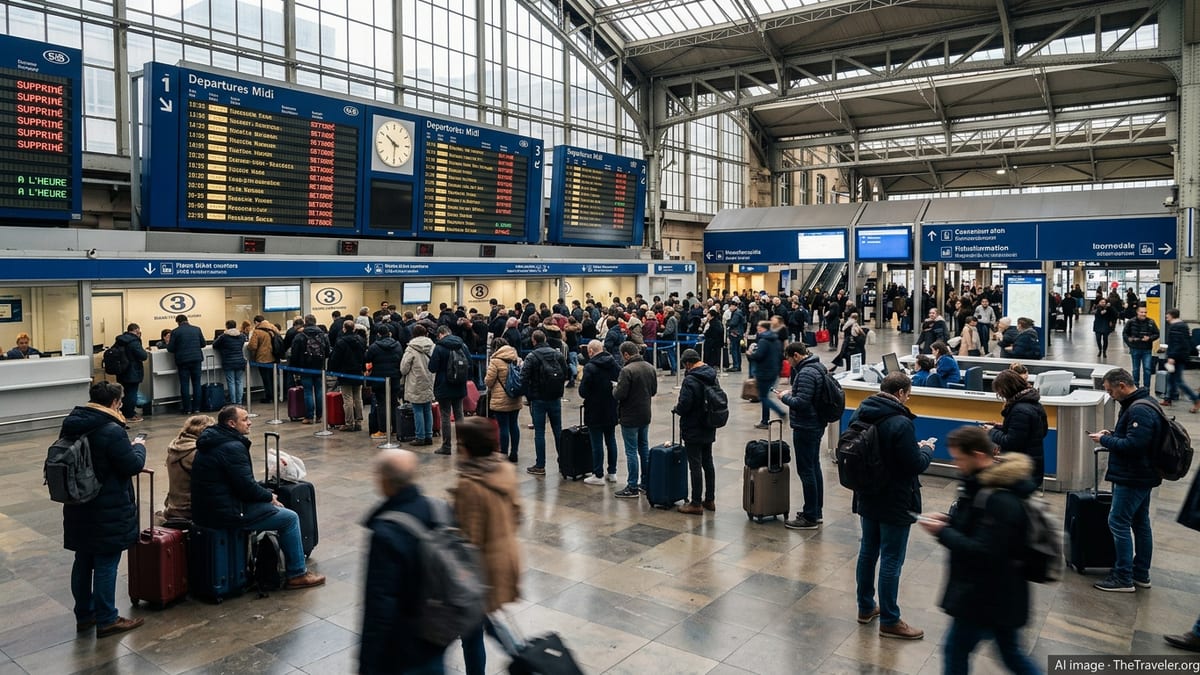
Nationwide Strike Brings Network Close to Standstill
Publicly available strike trackers and local coverage indicate that Belgium is experiencing a multi‑day national rail strike from 8 to 11 March 2026, affecting services operated by SNCB/NMBS and infrastructure managed by Infrabel. Large parts of the timetable have been suspended, with only a reduced skeleton service operating on key axes where sufficient staff have confirmed availability.
The work stoppage follows a broader pattern of industrial action in Belgium’s rail sector, including a nine day strike in early 2025 and a series of shorter walkouts linked to pay, staffing levels and working conditions. Recent strikes across the wider public transport system in late 2025 already tested the resilience of passengers and operators, and the latest action has once again left stations crowded and departure boards dominated by cancellations.
While some intercity routes continue to run at reduced frequency, many regional connections have been withdrawn entirely during the strike window. International trains are also affected, with services that rely on Belgian domestic tracks forced to adjust schedules, limit frequencies or cancel selected departures.
Holidaymakers and City Break Visitors Scramble for Alternatives
The disruption is hitting visitors at a sensitive time, as early spring city breaks to Brussels, Bruges, Ghent and Antwerp typically begin to pick up ahead of Easter. Online travel forums and social media posts in recent days show tourists revising itineraries, cutting day trips and in some cases cancelling hotel reservations when they discover that their planned rail journeys fall on strike days.
Travelers arriving at Brussels Airport and Charleroi Airport are particularly affected. Although a minimal train service continues to link Brussels Airport with the capital, frequencies are lower, journey times are longer and some connections to secondary cities have been dropped. In practice, many arriving passengers are turning to airport coaches, regional buses, shared shuttles and rental cars, adding congestion on key road corridors around Brussels and Antwerp.
Popular excursion routes are also disrupted. The main corridor linking Brussels and Ghent to the North Sea coast has already been affected by recent and upcoming infrastructure works that temporarily suspend traffic between Bruges and coastal resorts on selected weekends, and the current strike is compounding uncertainty for travelers hoping to combine city stays with day trips to the seaside.
Tourism Businesses Face Wave of Cancellations and Higher Costs
Tourism operators report that the rail crisis is translating quickly into lost revenue. Hotel and guesthouse managers in cities such as Bruges and Ghent have described a spike in last minute cancellations and shortened stays, particularly from international guests who had planned to rely on trains to move between destinations. Some establishments are relaxing cancellation policies or offering credits to retain goodwill and encourage rebooking later in the year.
Guided tour companies and attractions that depend heavily on day trippers from Brussels and other cities are also feeling the strain. Publicly available booking data on ticketing platforms shows lower occupancy on scheduled tours during the strike period, and operators are incurring extra costs to arrange private coach transfers or to rebook clients onto dates outside the disruption window.
City tourism boards have in recent years promoted Belgium’s dense rail network as a sustainable way to explore the country, and the current wave of disruption threatens to undercut that message. Industry observers note that repeated strikes and unplanned cancellations may push some visitors toward car based itineraries or neighboring countries where long distance rail has faced fewer recent stoppages.
Network Upgrades Intensify Short Term Pain
The current crisis is unfolding against a backdrop of major infrastructure works and modernization projects across Belgium’s core rail network. Infrabel has been carrying out extensive track renewals and signaling upgrades on busy corridors, including the line linking Brussels and Ghent with the North Sea coast and the approaches to Brussels Airport. These projects have required temporary weekend closures and reduced services, with replacement buses standing in for trains on certain sections.
In recent months, publicly available information from rail industry outlets has highlighted the completion of the nationwide rollout of the European Train Control System on Belgium’s main network. The program is designed to improve safety and capacity in the long term, but commissioning and testing phases have added further planned disruptions to an already stretched timetable.
Transport analysts point out that this overlap of industrial action and planned engineering work concentrates disruption into short but intense periods. For tourists, the distinction between strike related cancellations and upgrade related closures is often unclear, reinforcing a general perception that train services are unreliable, even when the underlying causes differ.
Travel Advice for Affected Passengers
Passenger organizations and travel advisers are encouraging visitors to Belgium to verify timetables repeatedly in the days leading up to travel, as strike related schedules are often finalized only shortly before services run. Many journeys that remain technically possible may require additional changes, longer layovers or a combination of train and bus segments.
For essential trips during the strike window, travelers are being urged to allow significantly longer transfer times to and from airports, especially for morning flights when reduced early services can be critical. Where feasible, flexible tickets and hotel bookings that can be amended without penalty are recommended, given the risk of last minute timetable changes.
For tourists planning visits later in March and April, experts suggest checking for upcoming maintenance blocks on key leisure routes to the coast and to cross border destinations, as Belgium’s rail modernization program will continue to require periodic suspensions. At the same time, rail operators and infrastructure managers emphasize through public communications that these investments aim to deliver a more reliable and higher capacity network in the coming years, which remains central to the country’s sustainable tourism strategy.