

More news on this day
Belgium is grappling with a fresh wave of rail disruption as rolling strikes, minimum-service timetables and major engineering works combine to derail travel plans and unsettle the country’s tourism industry in the early months of 2026.
Get the latest news straight to your inbox!
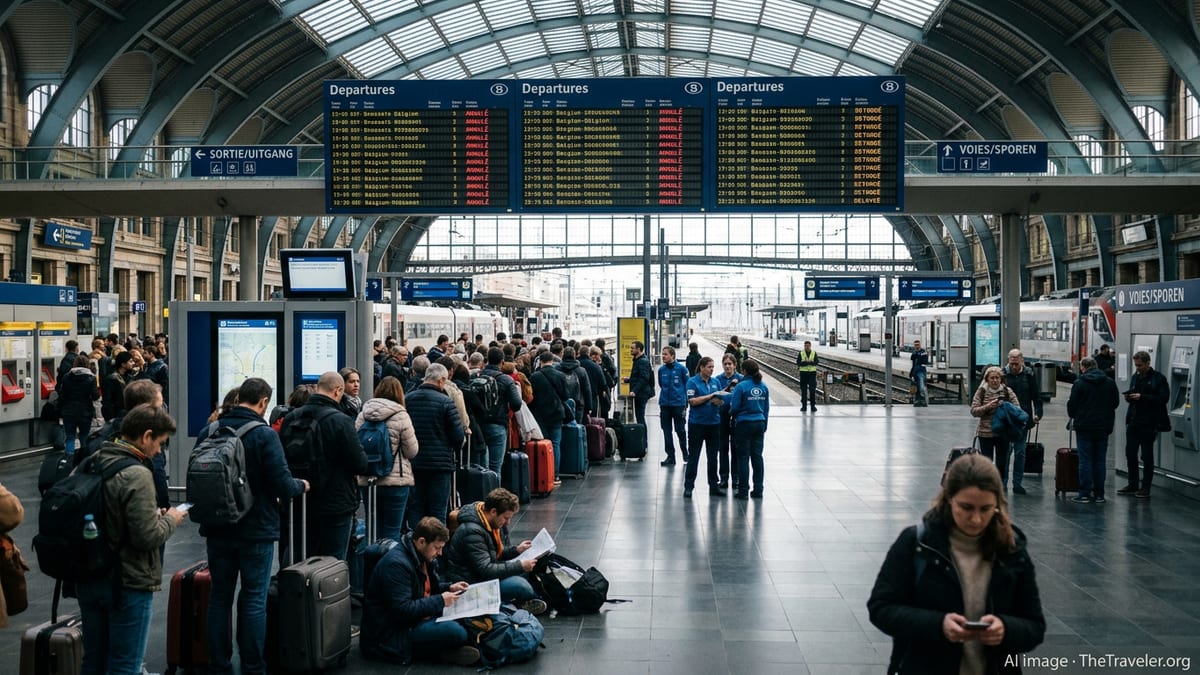
Strike Calendar Creates Prolonged Rail Turbulence
Publicly available timetables and travel advisories show that Belgian rail services are facing a dense sequence of industrial action in early 2026, including a multi day rail strike from 8 to 11 March and a separate nationwide strike day on 12 March that is expected to affect wider transport and public services. These follow on from a three day national rail walkout in late January and broader public sector strikes at the end of 2025, leaving little recovery time for passengers and operators.
Rail operator SNCB and infrastructure manager Infrabel are operating reduced “minimum service” schedules during these actions, prioritising core intercity routes between Brussels and major cities such as Antwerp, Ghent and Bruges. Even where trains continue to run, frequencies are cut, services are unevenly spaced through the day and rolling stock is often crowded, according to traveller reports and operator notices.
International services are feeling knock on effects. While high speed brands such as Eurostar and other international operators generally maintain their own services, access to and from Belgian hubs and cross border regional lines to destinations including Lille, Luxembourg, Maastricht and Aachen has been repeatedly disrupted. Travellers who depend on local connections before or after an international train are facing the greatest uncertainty.
Union federations have framed the actions as a response to cost cutting measures, staff shortages and pension reforms, while passenger and tourism groups warn that repeated strikes risk eroding confidence in rail as a reliable backbone for domestic and international travel to and within Belgium.
Engineering Works Add To Peak Season Disruptions
Beyond industrial action, major infrastructure projects are also constraining capacity on key leisure corridors. Published notices from Infrabel and regional media report that rail services between Bruges and the Belgian coast were fully suspended over the final weekend of January for extensive track works, with replacement buses standing in for trains on one of the country’s busiest tourist lines.
In Brussels, engineering on the heavily used North Midi junction, which carries a high proportion of national and international traffic through the capital, has led to repeated weekend closures and diversions. Travel bulletins describe “severe disruption” during these works, with trains rerouted around the city and journey times extended, complicating itineraries for visitors who rely on direct, through running links between airports, city centres and regional destinations.
On top of domestic projects, Belgium’s ongoing roll out of the European Train Control System and other signalling upgrades on high speed approaches into Brussels is affecting scheduling margins for international trains. Industry coverage has noted that delays in retrofitting some fleets risk reducing network capacity if equipment deadlines are not met, prompting authorities to extend some implementation dates in order to avoid a large scale loss of traffic.
For travellers, the combined effect is that disruption is no longer limited to isolated strike days. Instead, a patchwork of engineering blockades, diversionary routings and intermittent industrial action is producing a sense of rolling instability on the rail network, complicating long term planning for tour operators and event organisers.
Tourism Industry Faces Booking Volatility
Tourism organisations and trade publications report that the current rail turbulence is resonating far beyond station concourses. City break packages built around rail access to Brussels, Bruges, Ghent and Antwerp, as well as coastal resorts and theme attractions, depend on predictable train timetables for both inbound and domestic segments.
Travel advisers describe a surge in itinerary changes and contingency planning for trips scheduled through late winter and spring, particularly around the March strike window. Visitors are lengthening layovers, building in extra nights near major hubs and requesting flexible ticketing so that they can adjust departure days if rail services are cut back at short notice.
Accommodation providers near airports and in cities with alternative transport options, such as Brussels and Antwerp, appear to be benefiting from last minute demand from travellers seeking a buffer against missed trains or early morning flights. By contrast, smaller towns that rely heavily on rail access report weaker forward bookings when strikes or works are announced, as some visitors postpone trips or switch to destinations perceived as easier to reach.
Tour operators that specialise in rail based touring across multiple European countries are also monitoring developments closely. Belgium is a pivotal node for itineraries linking the United Kingdom, France, the Netherlands and Germany, and ongoing instability on Belgian tracks is prompting route adjustments and, in some cases, the substitution of coach segments for shorter rail hops.
Travelers Turn To Workarounds And Alternative Modes
Recent online discussions among travellers show a growing reliance on alternative transport solutions when Belgian trains are disrupted. Long distance bus operators on corridors such as Brussels to Amsterdam or Brussels to Paris have reported higher interest around announced strike days, while car rental and car sharing services experience spikes in demand from passengers unwilling to risk missed connections.
Within Belgium, regional bus networks and urban transit systems in cities like Brussels, Ghent and Antwerp provide partial back up on some routes, but capacity and coverage are limited compared with the national rail grid. On national strike days, local buses, trams and metro lines can also be affected, reducing the effectiveness of this safety net.
Officials have encouraged passengers to consult real time journey planners and operator apps on the day before and the day of travel, as minimum service plans can evolve based on staff availability. Experienced travellers recommend allowing significant extra time for platform changes, missed connections and crowded trains, particularly when connecting to flights or fixed time events.
For some visitors, the uncertainty is pushing them toward point to point air travel between nearby capitals, even for relatively short distances that rail would normally dominate. Aviation industry data in Europe over recent years have already indicated resilience in short haul demand where rail reliability is questioned, a trend that, if reinforced, could undermine climate and modal shift goals in Belgium and its neighbours.
Outlook For Spring And Summer Rail Travel
Looking ahead, labour relations on the Belgian railways remain a central variable for travel planners. Trade union statements indicate that protest actions could continue into the coming months if disputes over funding, staffing and pension reform are not addressed. At the same time, infrastructure works are scheduled well in advance, meaning additional weekend closures and line blockades are already on the calendar for later in 2026.
Tourism industry groups and passenger advocates are calling for clearer, earlier communication about both strikes and planned engineering, arguing that timely information can help visitors and businesses adapt without cancelling trips altogether. Travel industry bulletins highlight best practices such as publishing strike timetables several days in advance, expanding rail replacement bus capacity on key leisure routes and coordinating messaging across operators and tourism boards.
For now, travellers intending to use Belgium’s rail network in 2026 are being advised by travel agencies and public information campaigns to build flexibility into their plans. Recommendations include booking refundable or changeable tickets where possible, avoiding tight same day rail to flight connections during known strike periods and considering overnight stays in gateway cities to provide a buffer.
Despite the turbulence, Belgium remains well connected by rail in European terms, and on non strike days the network continues to offer dense, relatively fast links between major cities and neighbouring countries. The extent to which repeated disruption will alter visitor perceptions, and whether it will accelerate shifts toward other modes or alternative destinations, is likely to be a key issue for the country’s tourism strategy over the coming seasons.