

More news on this day
Hundreds of passengers were left stranded across Belgium on Thursday as a 24-hour national strike forced Brussels Airport and Brussels South Charleroi Airport to cancel 151 flights and delay 12 more, disrupting operations for Ryanair, easyJet, British Airways, Iberia, SAS, Vueling Airlines, United Airlines and several other carriers.
Get the latest news straight to your inbox!
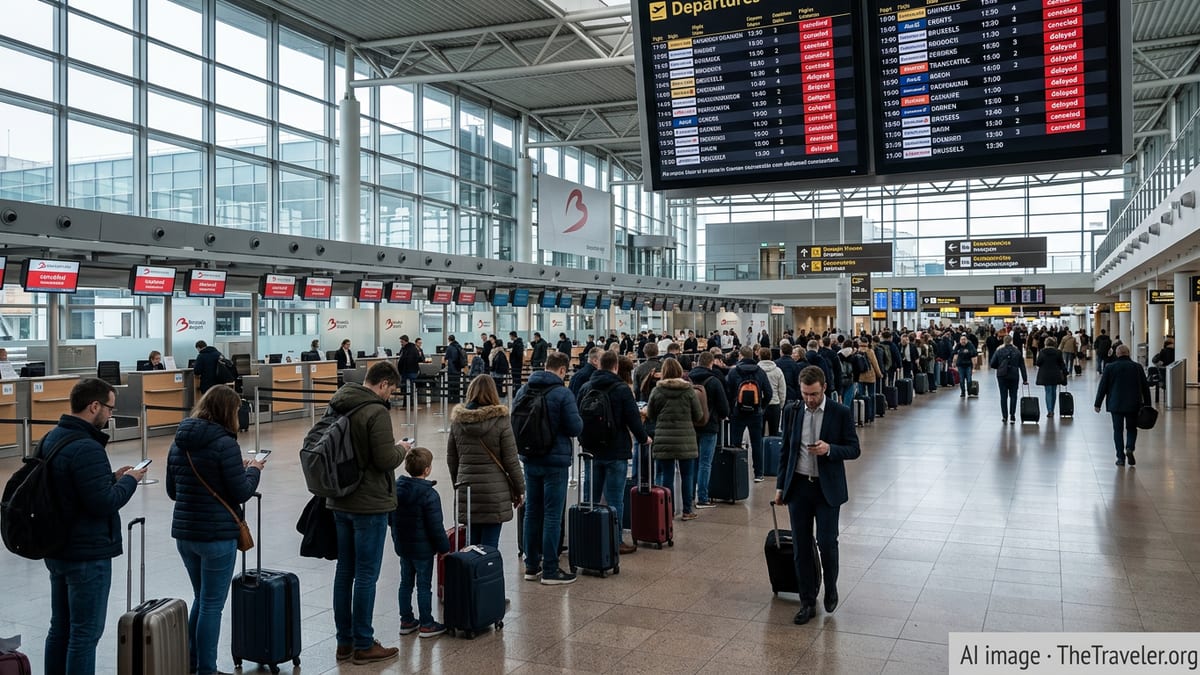
National Strike Brings Belgium’s Air Traffic to a Standstill
The nationwide walkout, called by Belgium’s largest trade unions, targeted both public and private sectors and quickly rippled through the country’s aviation network. Security screeners, baggage handlers, ground staff and air traffic controllers joined the action, leaving airports without the minimum staffing levels required to operate normally.
Brussels Airport confirmed that no regular departing passenger flights would operate during the strike period, while warning that some inbound services would also be scrapped or heavily delayed. Brussels South Charleroi Airport went even further, announcing a complete shutdown of commercial traffic for the day, with all arrivals and departures grounded.
The sweeping cancellations affected a broad mix of short and long haul routes across Europe and beyond. Airlines adjusted schedules in the days leading up to the strike, but many travelers still learned only at the last minute that their flights were no longer operating, triggering scenes of confusion at check in desks and information points.
Ryanair, easyJet, British Airways and Others Forced to Axe Services
Low cost carriers were among the hardest hit, particularly at Charleroi, which serves as a major base for Ryanair and Vueling. Dozens of Ryanair services connecting Belgium with Spain, Italy, Eastern Europe and Mediterranean leisure destinations were canceled outright after the airport confirmed it could not safely process passengers.
At Brussels Airport, a mix of legacy and budget airlines scaled back or completely removed their schedules for the strike day. British Airways and Iberia axed flights to London and Madrid, while Scandinavian flag carrier SAS cut links to Copenhagen and Stockholm. Vueling and easyJet reduced operations on routes to Barcelona, Geneva and other European hubs.
Transatlantic operations also felt the impact. United Airlines trimmed its Brussels schedule and encouraged passengers due to depart on the strike date to rebook on alternative days without change fees. Other long haul carriers adjusted departure times or consolidated flights, but some services were still forced to turn back or divert when staffing levels fell below critical thresholds.
Passengers Face Long Queues, Missed Connections and Costly Rebookings
For travelers, the disruption translated into a day of long queues, improvised rerouting and unexpected overnight stays. Many passengers arrived at the terminals to find departure boards filled with red “canceled” notices and only a handful of flights still showing as scheduled, often with unspecified or rolling delays.
Those booked on point to point services were left negotiating with airlines for refunds or alternative dates. Under European passenger rights rules, carriers must offer rebooking or reimbursement when flights are canceled, but the national strike was classified by many airlines as an extraordinary circumstance, limiting eligibility for additional compensation.
Travelers with onward connections were particularly vulnerable. Passengers due to connect in London, Frankfurt or Madrid reported losing entire itineraries when the first leg from Brussels or Charleroi was grounded. Some airlines arranged hotel accommodation and meal vouchers, but capacity in nearby hotels quickly came under pressure as stranded customers searched for last minute rooms.
Rail alternatives also became congested. With domestic trains and some cross border services running reduced schedules or facing delays of their own, switching from air to rail was not always straightforward, complicating contingency plans for both business and leisure travelers.
Airlines and Airports Urge Travellers to Check Status Before Leaving Home
In the hours before the strike took full effect, airlines and airport authorities issued repeated advisories urging passengers not to travel to the airport without checking the latest status of their flights. Carriers including Ryanair, British Airways, easyJet and United pushed app notifications and emails encouraging voluntary rebooking on dates outside the strike window.
Several airlines had already introduced flexible change policies in anticipation of the disruption, allowing ticket holders to move their travel free of charge within a defined period around 12 March. Despite those measures, the scale of the cancellations still caught many travelers off guard, especially those who had not seen or understood the earlier warnings.
Airport operators stressed that safety and security were the primary reasons behind the sweeping shutdowns. Without sufficient security staff to screen passengers and baggage, and with air traffic control capacity significantly reduced, attempting to maintain even a skeleton schedule risked generating chaotic queues and last minute cancellations throughout the day.
Fresh Reminder of Belgium’s Vulnerability to Industrial Action
The latest wave of cancellations adds to a growing list of strike related disruptions that have hit Belgian aviation in recent years. Previous general strikes have already forced temporary closures at Charleroi and heavily curtailed departures from Brussels, leaving airlines and travelers wary of booking around days flagged for industrial action.
Industry groups warned that the repeated shutdowns risk undermining Belgium’s reputation as a reliable gateway for both business and leisure travel. Tour operators and corporate travel managers may increasingly route passengers through neighboring hubs in the Netherlands, Germany or France on days when labor unrest is anticipated.
For now, operations are expected to gradually normalize once the 24 hour strike ends, but airlines have cautioned that aircraft and crew displacement will continue to cause knock on delays into the following day. With unions signaling that further protests remain possible if negotiations with the government stall, passengers using Brussels and Charleroi in the coming months are being advised to monitor labor developments closely when planning their trips.