

More news on this day
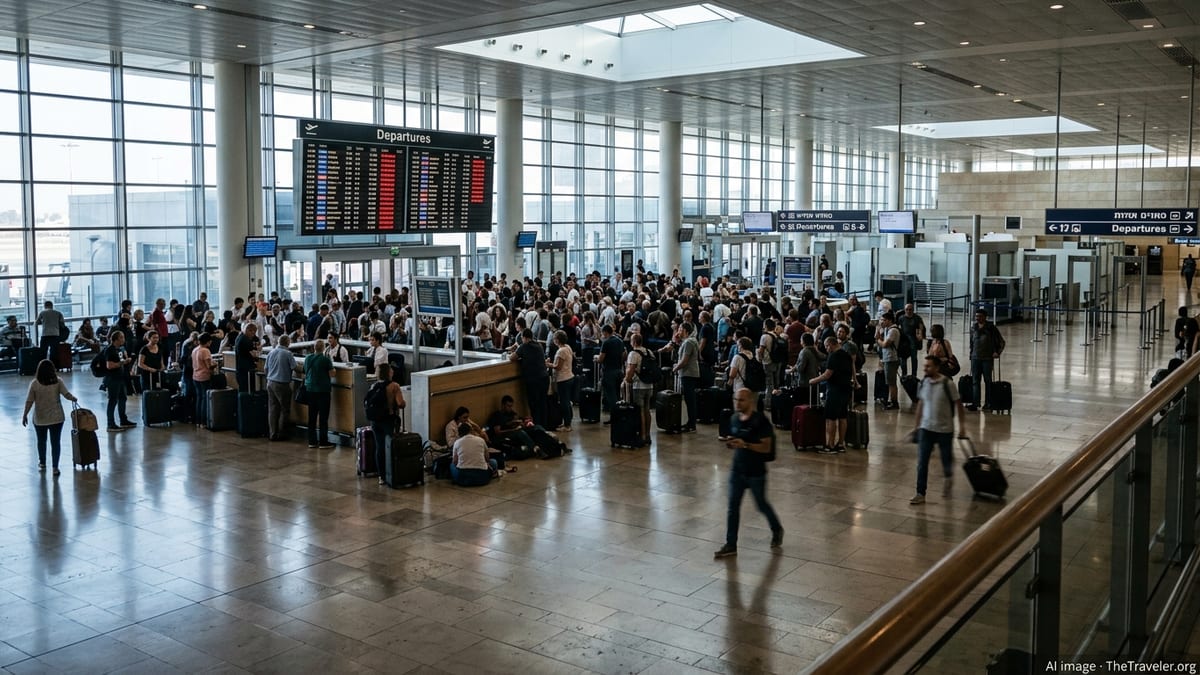
Ben Gurion Airport is facing one of its most severe disruptions in years, as mass cancellations of flights to the United States, Europe and Asia trigger mounting travel chaos for passengers trying to enter and leave Israel amid the widening Iran conflict.
Get the latest news straight to your inbox!
Wave of Cancellations Hits Key Long-Haul Routes
Publicly available flight data and airline advisories on March 23 show that departures from Tel Aviv to major US gateways remain heavily curtailed, with numerous services outright canceled and others operating at sharply reduced capacity. Several international carriers had already suspended Tel Aviv routes in late February and early March as airspace closures rippled across the region, and the latest escalation has deepened the disruption.
Coverage from multiple outlets indicates that US airlines continue to cancel most or all services to Ben Gurion, forcing travelers to abandon direct options and piece together complex detours via Europe or nearby countries. Israeli carriers are still operating select long-haul flights, but with reduced schedules and tight passenger caps, leaving limited seats and frequent last-minute changes.
Connections to Europe have also been hit hard. While a handful of European flag carriers maintain restricted operations, many have trimmed frequencies, downgraded aircraft or canceled rotations outright on short notice. Travelers report sudden scrapping of flights to major hubs such as Paris, Amsterdam and Frankfurt, often after long waits at the airport as airlines reassess security assessments and airspace conditions.
Services linking Israel to key Asian gateways are similarly constrained. Reroutings to avoid conflict zones have lengthened flight times and raised operational costs, prompting some airlines to pause Tel Aviv operations altogether. For passengers, that translates into repeatedly reissued itineraries, involuntary stopovers and a scramble for scarce alternative seats during what has become a rolling global disruption in Middle East–connected air travel.
Security Concerns and Airspace Restrictions Drive Disruption
The turmoil at Ben Gurion is unfolding against the backdrop of the 2026 Iran war, which has triggered missile and drone strikes across the region and prompted rapid shifts in aviation risk assessments. Publicly available information on the conflict notes that Iranian attacks have previously damaged aircraft at Ben Gurion, prompting Israeli authorities to cap outbound passenger numbers and reconfigure airport operations for heightened security.
In parallel, multiple Middle Eastern states have imposed temporary or rolling airspace restrictions, closing or constricting key corridors that normally carry traffic between Europe, Africa and Asia. Analysts tracking the crisis report thousands of daily cancellations across the wider region in March, with knock-on delays and diversions affecting airlines that do not even serve Tel Aviv but rely on the same overflight routes.
Carriers that continue to operate into Israel are being forced into more southerly or circuitous routings, often adding hours to scheduled flight times and increasing fuel and crew costs. These adjustments, combined with security protocols at Ben Gurion itself, have led to highly unstable schedules. Flights that appear as operating one day can be pulled from departure boards the next, contributing to confusion among travelers and ground staff.
Industry observers note that the situation remains highly fluid, with risk assessments subject to sudden change after each new round of strikes or diplomatic developments. This volatility limits airlines’ ability to publish reliable forward schedules, further eroding passenger confidence and complicating planning for those with urgent reasons to travel.
Stranded Travelers Face Complex and Costly Detours
Reports from passenger forums and social media paint a chaotic picture for travelers trying to reach or depart Israel since late February. Many describe being stranded in the United States or Europe after return flights to Tel Aviv were canceled and rebookings pushed into April or beyond. Others recount overnight stays at transit hubs, repeated boarding gate changes and abrupt cancellations after boarding had begun.
For those determined to travel, the most viable options now often involve multi-leg itineraries routed through secondary airports in Greece, Cyprus or other Mediterranean and Balkan countries. Travelers describe flying first to a European hub still served by Israeli or regional carriers, then connecting onward to Tel Aviv on smaller airlines that are maintaining limited services into Ben Gurion.
These workarounds come at a financial cost. With demand far outstripping supply on remaining routes, airfares on some one-way itineraries to or from Israel have surged into the four-figure range. Even where airlines have issued Middle East unrest waivers, publicly posted terms frequently limit no-fee changes to specific travel dates or require rebooking on the same carrier group, leaving many passengers paying significant fare differences or turning to third-party options.
Travelers already in Israel are also facing difficult choices. Some are opting to leave the country via land crossings to neighboring Egypt or Jordan and then flying onward from regional airports that still have more stable connections to Europe or Asia. Others are postponing trips indefinitely as the prospect of additional cancellations and extended layovers makes non-essential travel increasingly unattractive.
Airlines Deploy Waivers but Capacity Remains Tight
Major international airlines serving the region have rolled out a series of travel waivers in response to the crisis, allowing affected passengers to change dates, adjust routings or seek refunds. Public postings by US and European carriers show that these waivers typically cover travel through at least the end of March, with some extending further depending on the evolution of the conflict.
However, these policies have offered only partial relief. Many waivers allow itinerary changes without change fees but still require passengers to pay any fare difference, which can be substantial given the limited number of seats available on active routes. In other cases, airlines are prioritizing rebooking on their own metal or alliance partners, leaving travelers with few options when those networks are also trimming services to Tel Aviv.
In practice, this means that some passengers with canceled nonstop flights to Ben Gurion are being rebooked on complex routings via multiple hubs, with tight connection windows and exposure to additional points of failure. Others who accept refunds are then left searching the open market for replacement flights, only to find that remaining capacity has largely been snapped up or priced beyond reach.
At Ben Gurion itself, reduced outbound capacity is visible in quieter-than-normal check-in areas for long-haul departures, contrasted with crowded customer service lines as travelers attempt to salvage disrupted itineraries. Ground handling and security operations are under strain as airlines adjust schedules with little lead time, creating operational bottlenecks even on days when the runway is not at full utilization.
Uncertain Outlook for Spring and Summer Travel
Economic and aviation analysts tracking the 2026 Iran war warn that the disruption to Ben Gurion is unlikely to ease quickly. Assessments published in recent days suggest that air travel on key Middle East corridors could remain severely constrained until at least May, with knock-on effects on summer holiday traffic already being felt in booking patterns for Europe and Asia.
Forward schedules from global distribution systems show many carriers keeping Tel Aviv capacity sharply reduced deep into the northern spring, a reflection of both immediate security concerns and broader uncertainty about regional airspace access. Some airlines have removed Tel Aviv from their online booking engines for weeks at a time, while others are selling tickets but caution that schedules remain subject to further change.
For travelers, the practical implications are clear. Those with non-essential trips to or from Israel in the coming weeks are being advised, through airline advisories and travel agency alerts, to consider postponement or to retain maximum flexibility on dates and routings. Those who must travel are urged to build in extra time for potential disruptions, keep close track of schedule changes and be prepared for sudden shifts in departure and arrival airports.
As the regional crisis continues to evolve, Ben Gurion Airport remains a highly symbolic and operational focal point of the broader aviation shock. The combination of targeted flight cancellations, constrained long-haul capacity and volatile security conditions has turned what was once one of the Middle East’s most reliable hubs into a case study in how quickly geopolitical risk can upend global travel networks.