

More news on this day
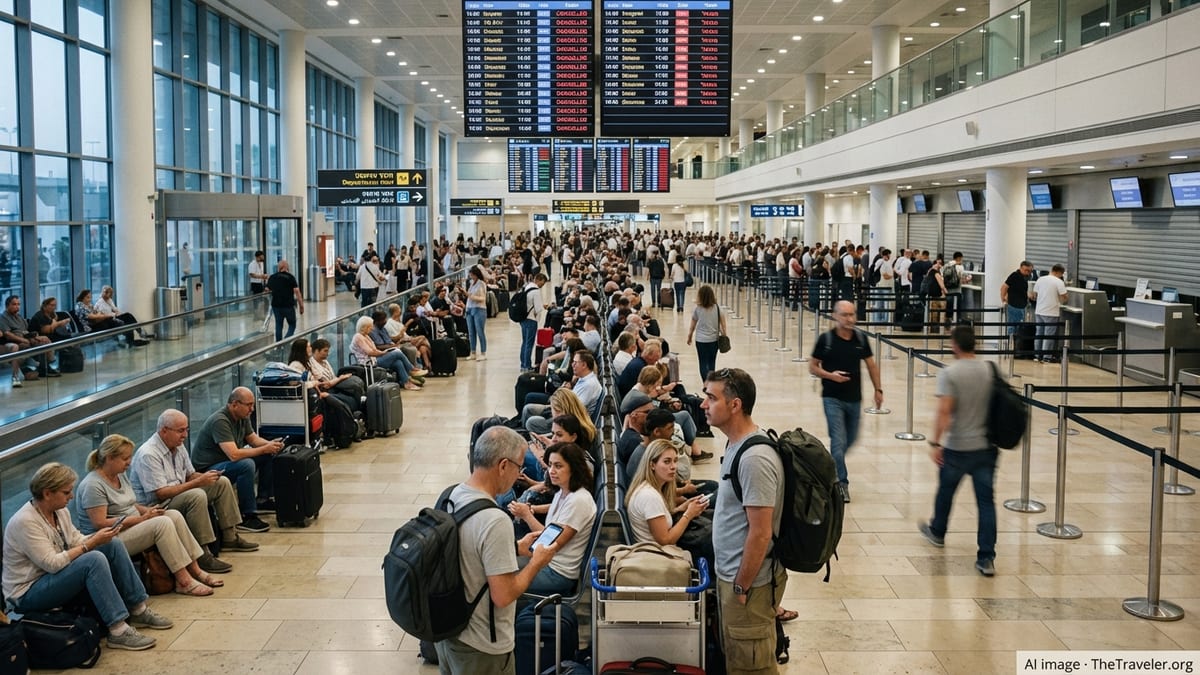
Hundreds of passengers were left stranded at Ben Gurion International Airport on March 9 as at least 119 flights to and from Tel Aviv were canceled or severely disrupted, with services on key routes to Paris, Newark, London, New York and other major hubs halted amid Israel’s ongoing security crisis and regional airspace restrictions.
Airspace Shutdown Ripples Across Global Networks
The latest wave of cancellations followed the closure and only partial, tightly controlled reopening of Israeli airspace after intensified hostilities linked to Operation Roaring Lion, the joint Israel–United States campaign targeting Iranian military assets. Authorities closed the skies to most commercial traffic on February 28, triggering cascading disruptions across airlines and alliances that rely on Tel Aviv as both a destination and a connection point.
While Ben Gurion has begun operating on a limited basis for select arrivals and tightly capped departures, capacity remains a fraction of normal schedules. Aviation data providers and industry analysts report that Israel is among the hardest hit markets in the wider Middle East, with nearly half of all scheduled arrivals canceled on peak disruption days and further cuts being added on a rolling basis as the security outlook evolves.
Carriers with long-haul links to Europe and North America have shouldered a particular burden, as operators scramble to reroute aircraft, reposition crews and adjust schedules to comply with evolving restrictions on overflights across parts of Iran, Iraq, Syria and the Gulf region. For travelers, the result has been a patchwork of sudden cancellations, extended layovers and uncertain rebooking options stretching well into late March.
El Al, Israir and KlasJet Slash Operations
Israel’s flag carrier El Al confirmed on March 9 that it had canceled all regular scheduled departures, including flights operated by its leisure subsidiary Sundor, through March 14. The suspension covers both outbound and corresponding inbound services, effectively freezing much of the airline’s regular network and forcing the extension of earlier emergency measures designed around repatriation and ad hoc “recovery” flights.
El Al, along with smaller Israeli operators Israir and Arkia, has focused on limited-capacity flights approved under strict guidelines set by aviation and security authorities. Departing passengers are subject to quotas on each flight, advanced online check-in requirements and, in many cases, declarations that they will remain abroad for at least 30 days, reflecting concern over the strain that potential return waves could place on emergency infrastructure.
Charter and wet-lease operators such as KlasJet, which typically serve peak-season traffic, corporate groups and sports teams, have also been forced to stand down aircraft as Ben Gurion’s operating window narrowed. The sharp pullback has removed important flexibility from the system, eliminating backup capacity that might otherwise have helped absorb stranded travelers when scheduled airlines canceled services on short notice.
United, Aegean and Other Foreign Airlines Pull Back
Foreign carriers have moved aggressively to suspend Tel Aviv services until conditions stabilize. United Airlines has extended its cancellation of flights between the United States and Tel Aviv through March 21, affecting marquee routes from Newark and other key hubs just as spring travel demand typically begins to build. The airline is offering flexible rebooking and rerouting options for affected customers, but many eastbound itineraries still involve complex detours or long waits for open seats.
In Europe, Aegean Airlines has announced successive rounds of cancellations, scrubbing flights to and from Tel Aviv until at least March 20 as well as suspending services to Lebanon, Iraq, the United Arab Emirates and Saudi Arabia into late March. The cuts strip Athens and other Aegean gateways of much of their usual connectivity into the Eastern Mediterranean and Gulf, reducing options for travelers hoping to reach Israel indirectly via regional hubs such as Athens, Larnaca or Dubai.
Other international airlines serving Ben Gurion, including major transatlantic and European network carriers, have maintained only skeletal operations or paused service entirely pending further guidance from insurers and safety regulators. For passengers booked on routes like Tel Aviv to Paris, London, Newark or New York, that has meant a growing list of cancellations, last-minute schedule changes and, frequently, the need to piece together multi-stop alternatives through cities such as Amman, Istanbul or Athens.
Passengers Stranded and Travel Plans Upended
The immediate human impact of the 119 cancellations and related cuts has been visible in crowded check-in halls and departure areas at Ben Gurion and at overseas airports from Paris Charles de Gaulle to Newark Liberty and London Heathrow. Some travelers have been turned back before check-in, notified by airlines via app or text that their flights had been scrubbed; others arrived to find departure boards dominated by red “canceled” notices.
Families, business travelers and tour groups alike have faced days-long delays as they attempt to secure replacement tickets on the few flights still operating. In recent days, emergency repatriation flights operated by Israeli carriers have helped bring some stranded citizens home from European cities including Rome, Berlin and Athens, but these flights typically run full and prioritize passengers displaced by earlier cancellations, leaving limited room for those affected by the newest schedule cuts.
Travel agents and online booking platforms report a surge in customer support requests as people seek refunds, vouchers or alternative itineraries. Airlines are generally offering fee-free changes within specified travel windows, but fare differences and limited seat availability are leaving many travelers out of pocket or forcing them to postpone trips altogether. For some would-be visitors and immigrants planning long-term relocations to Israel, the closure has delayed carefully orchestrated moves involving jobs, housing and schooling.
Uncertain Outlook for Spring Travel to Israel
With security authorities warning that the situation could shift quickly, airlines are planning in short increments, typically publishing cancellations and revised schedules just days or a couple of weeks in advance. El Al’s blanket suspension of regular flights through March 14, Aegean’s extensions deeper into the month and United’s halt through March 21 underline the industry’s expectation that normal operations to Ben Gurion are unlikely to resume before late March at the earliest.
Industry analysts say much will depend on the trajectory of Operation Roaring Lion and the stability of regional airspace corridors that are essential for safe, efficient routings between Israel, Europe and North America. Even once restrictions ease further, the ramp-up is expected to be gradual, with limited arrival and departure slots at Ben Gurion and heightened security screening adding time and complexity for both airlines and passengers.
For travelers with upcoming trips to Tel Aviv and beyond, the advice from carriers and travel experts is consistent: avoid last-minute airport arrivals, monitor airline apps and email closely, and consider flexible bookings that allow date or route changes without heavy penalties. Until flight schedules to and from Ben Gurion stabilize, journeys linking Tel Aviv with major cities such as Paris, Newark, London and New York are likely to remain unpredictable, with cancellations and rolling operational limits continuing to shape the travel landscape.