

More news on this day
Hundreds of passengers were left stranded at Israel’s Ben Gurion International Airport today as at least 85 flight cancellations and several delays rippled across major routes to Europe, North America and Asia, disrupting services operated by El Al, United Airlines, KlasJet, Israir, Aegean Airlines and other carriers.
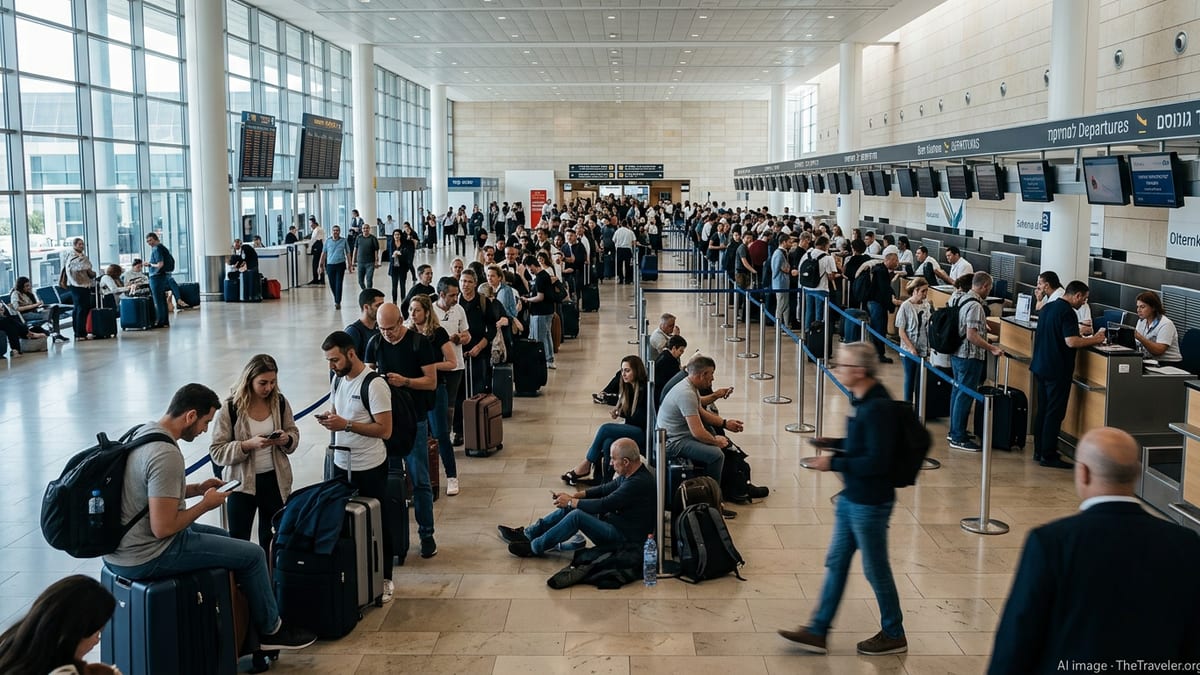
Heavy Cancellations Hit Israel’s Main International Gateway
The fresh wave of disruption struck Ben Gurion on Tuesday as airlines continued to navigate tight security constraints and unpredictable airspace restrictions linked to the ongoing regional conflict. Operational data reviewed by industry analysts showed 85 scheduled flights scrapped outright and at least eight more facing significant delays, a sharp setback just as the airport had been trying to scale up limited services after an extended shutdown.
Departures and arrivals connecting Tel Aviv with Paris, London, Milan, Athens, Rome, Newark and Bangkok were among the hardest hit, with knock-on effects spreading across onward connections in Europe and the United States. The cancellations affected a mix of flag carriers, leisure operators and charter specialists, underscoring how fragile the recovery of Israel’s international air links remains.
Airport staff reported long queues forming from the early hours as passengers discovered their flights had disappeared from departure boards or been pushed back repeatedly. Many travelers arriving from other cities on separate tickets found themselves stuck airside, unable to rebook onward journeys as remaining seats on the few operating services were quickly snapped up.
By late afternoon, the impact was visible across the terminal complex, where departure halls were crowded with families camped on the floor beside suitcases and business travelers working from laptops while they waited for updated information. Despite additional ground staff brought in to manage the pressure, officials acknowledged that contingency planning was being tested to its limits.
El Al, United and Regional Carriers Bear the Brunt
Israel’s flag carrier El Al once again found itself at the center of the disruption, with multiple rotations to key hubs such as London Heathrow, Paris Charles de Gaulle, Rome Fiumicino, Milan Malpensa and Newark Liberty canceled or extensively delayed. The airline has been leading efforts to rebuild an air bridge to and from Israel in recent days, mounting extra services and repatriation-style flights, but its already stretched schedule left little room to absorb fresh shocks.
United Airlines, which serves the lucrative transatlantic link between Newark and Tel Aviv, also faced cancellations and late-running departures, leaving US-bound passengers scrambling for scarce alternatives via Europe. The carrier has already been operating a reduced timetable during the crisis, and Tuesday’s disruption further complicated crew planning and aircraft rotations on both sides of the Atlantic.
Smaller operators and charter specialists were not spared. Lithuanian-based KlasJet, which has been using its VIP-configured fleet for special missions and ad hoc operations into Israel, saw several movements scrubbed as flight clearances tightened and slots were reallocated. Israeli leisure carrier Israir and Greek airline Aegean, both important connectors between Tel Aviv and Mediterranean destinations such as Athens and key resort gateways, also canceled a string of services to and from Greece and Western Europe.
Aviation experts noted that the broad mix of affected airlines illustrates how Ben Gurion’s recovery is being shaped not just by domestic decisions but also by the risk assessments of foreign regulators and carriers. Even when Israel’s own aviation authorities allow operations, airlines and insurers are carrying out their own daily reviews of routings, crew layovers and aircraft positioning before deciding whether to operate.
Passengers Stranded Between Continents as Routes Unravel
For passengers, the operational complexity translated into a day of confusion and mounting frustration. Travelers bound for Paris and London reported being turned away at check in or learning of cancellations only after arriving at the airport, forcing them to seek overnight accommodation in already busy Tel Aviv hotels or stay in the terminal while they waited for later flights to be confirmed.
Those traveling to and from secondary European cities such as Milan and Athens faced even steeper challenges, as cancellations on their direct services meant re-routing via multiple hubs with limited availability. Some reported being offered itineraries that would take more than 24 hours and involve long connections in cities like Rome, Frankfurt or Istanbul, if seats could be found at all.
Long-haul passengers connecting between Asia and North America via Israel were particularly vulnerable. Routes touching Bangkok and other Asian gateways rely heavily on precise timing to maintain onward links; when Ben Gurion’s schedule collapsed, many of these carefully choreographed journeys fell apart. Several travelers attempting to reach Bangkok from North America via Tel Aviv found themselves stranded mid-route, while others heading to the United States were advised to rebook through European hubs at their own expense.
Families with young children and elderly travelers were among those worst affected by the uncertainty. Volunteer organizations that have been assisting stranded passengers since the start of the crisis reported a renewed surge in demand for food, blankets and translation support as Tuesday’s wave of cancellations unfolded.
Ongoing Conflict Keeps Airspace on a Knife Edge
The latest disruptions at Ben Gurion come against the backdrop of a broader aviation crisis across the Middle East, where the war involving Israel, Iran and regional actors has prompted recurring closures and restrictions in multiple flight information regions. Airspace corridors frequently used by airlines serving Tel Aviv have been subject to sudden shutdowns, forcing carriers to reroute, extend flight times or cancel services altogether.
In recent days, Israeli authorities have allowed a gradual resumption of outbound flights after an earlier full shutdown, but operations remain tightly controlled and subject to short-notice changes based on security assessments. The result is an environment in which airlines are often reluctant to commit aircraft and crew, particularly on overnight rotations or services requiring extended ground time in Israel.
Regulators and international aviation bodies continue to review overflight guidance for the broader region, weighing the risks posed by missile activity and military operations. Some carriers that halted all flights to Israel during the initial phase of the conflict have yet to return, while others are operating only a skeletal schedule focused on essential routes and repatriation needs.
Industry analysts warn that until there is a clear political and security breakthrough, Ben Gurion will remain susceptible to sudden bouts of disruption similar to Tuesday’s chaos. The sporadic nature of the restrictions makes it difficult for airlines to rebuild reliable timetables or for passengers to plan trips with confidence.
Travelers Urged to Reconfirm Flights and Expect Disruptions
With cancellations and delays now a recurring feature of travel to and from Israel, airlines and airport authorities are urging passengers to reconfirm their flights shortly before departure and to avoid heading to the airport without written or digital confirmation that their service is operating. Some carriers have temporarily relaxed change fees and fare rules to give customers more flexibility as schedules evolve day by day.
Travel agents and online booking platforms report a spike in last-minute changes, as customers switch to routings that avoid the region entirely or opt for more expensive but perceived safer alternatives. Corporate travel managers are also re-evaluating itineraries for staff, with many companies placing nonessential trips to Israel and neighboring countries on hold.
At Ben Gurion itself, additional customer-service desks and information points were set up to help rebook passengers affected by Tuesday’s wave of cancellations. However, with capacity severely constrained and demand for available seats high, many travelers left the airport facing uncertain timelines and mounting costs for accommodation and alternative transport.
For now, the message from airlines and authorities is that further short-notice changes cannot be ruled out. As long as regional tensions remain elevated and airspace decisions hinge on overnight security developments, passengers using Ben Gurion Airport should be prepared for more days like this one, where a single security directive can upend plans across Paris, London, Milan, Athens, Rome, Newark, Bangkok and beyond.