

More news on this day
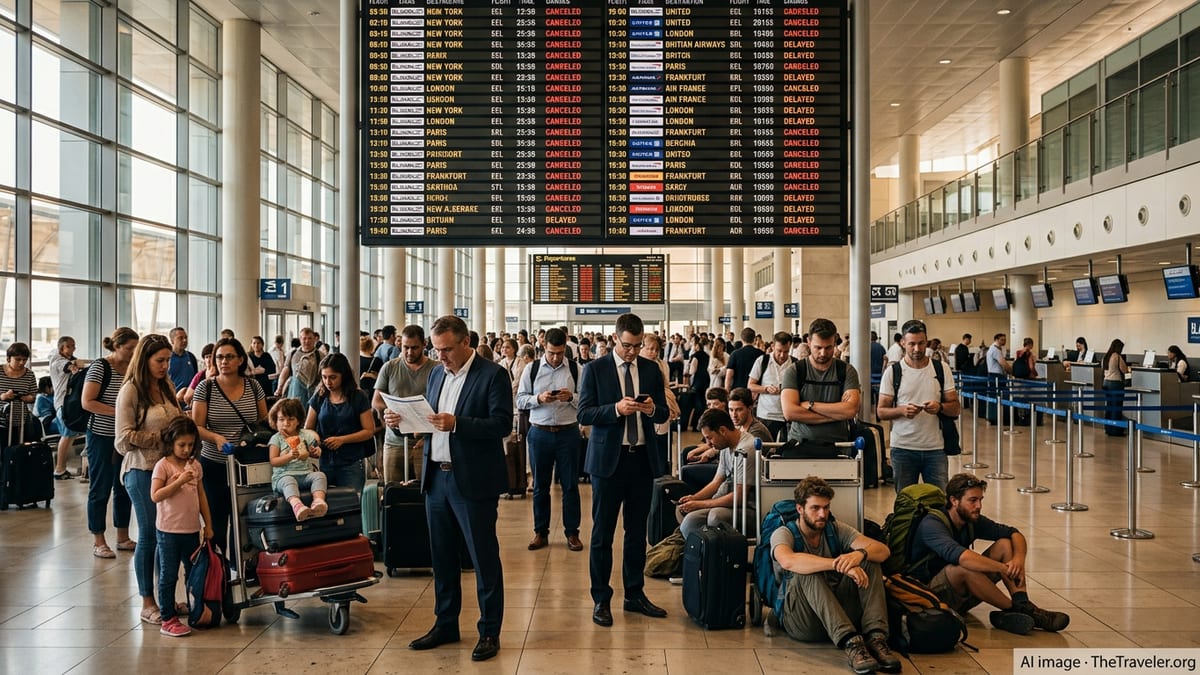
A new bout of disruption at Tel Aviv’s Ben Gurion Airport has left hundreds of passengers stranded or rerouted on Wednesday, as at least 27 flights were cancelled and 13 delayed on routes linking Israel with major US and European gateways including New York, London, Paris and Frankfurt.
Get the latest news straight to your inbox!
Wave of Cancellations Snarls Key International Routes
Data from live flight boards and passenger-rights trackers on March 12 indicate a concentrated spike in cancellations and long delays on departures and arrivals at Ben Gurion, affecting both Israeli flag carrier El Al and major foreign airlines operating long-haul and European services. While disruption has become more common since repeated security flare-ups around Israel’s main airport, the latest cluster has hit some of the most in-demand corridors for business and family travel between Israel, Western Europe and the United States.
Among the hardest-hit routes are Tel Aviv services to and from New York, London, Paris and Frankfurt, where multiple flights were either grounded outright or departed with extended delays. Industry analysts say that, although total volumes are smaller than during full airspace shutdowns seen in 2025 and early 2026, the timing of today’s problems during peak midweek travel is amplifying the impact on connections and onward itineraries.
Airport officials have not reported a single triggering incident such as a security closure or technical failure, suggesting a mix of operational constraints at individual carriers, aircraft and crew rotations still recovering from earlier regional turbulence, and knock-on effects from winter-weather disruption and industrial actions across parts of Europe.
El Al, United and European Flag Carriers Under Pressure
El Al, which has shouldered a larger share of Israel’s international traffic since several foreign airlines scaled back during periods of heightened regional tension, has once again found itself at the center of today’s turmoil. The carrier has been running dense schedules to North American and European hubs, and any aircraft taken out of rotation or late inbound arrival can quickly cascade into cancellations or last-minute rebookings for passengers.
United Airlines, one of the key US carriers linking Tel Aviv with New York and other American cities, has also seen its operations repeatedly disrupted over the past two years amid shifting security assessments and regional airspace closures. Even when flights are able to operate, re-routed flight paths around sensitive areas have increased block times, narrowing the margin for on-time operations and leaving services more vulnerable to delay.
On the European side, British Airways and Air France continue to walk a tightrope between commercial demand for Tel Aviv services and risk management concerns. Both carriers have periodically suspended or reduced flights to Israel during escalations, only to face heavy booking pressure when routes are restored. That stop-start pattern has complicated fleet and crew planning and appears to be contributing to irregular operations on days like today when wider European networks are also contending with congestion and weather-related disruption.
Travelers to Tel Aviv, London, Paris, Frankfurt and New York Struggle to Rebook
For passengers, the immediate consequences have been long queues at service desks in Tel Aviv and at connecting hubs such as London Heathrow, Paris Charles de Gaulle, Frankfurt and New York area airports, as travelers scramble to secure scarce alternative seats. With some airlines already operating reduced frequencies into Israel, options to rebook on the same day are limited, particularly for nonstop transatlantic flights.
Families traveling between Israel and Europe for school holidays, as well as business travelers with packed schedules, have reported overnight layovers being imposed with little warning. Some passengers are being offered reroutings via secondary hubs or indirect itineraries that add several hours to total journey time. Others have opted to delay trips altogether rather than navigate complex, multi-stop rebookings that might still be vulnerable to further disruption.
Israel-based travel agents say they are seeing renewed nervousness among clients planning spring and early summer trips, especially those who endured repeated cancellations after last year’s missile strike on the vicinity of Ben Gurion and subsequent multi-day airport shutdown. Many are now building in extra buffer days at the start or end of their journeys, or choosing flexible fares that allow last-minute changes without heavy penalties.
Rights, Compensation and What Passengers Can Do Now
Consumer advocates stress that travelers caught up in today’s wave of cancellations and delays should be aware of their rights, which vary depending on the airline, the itinerary and the cause of disruption. For flights departing from the European Union or operated by EU-based carriers such as Air France or British Airways, passengers may be protected under EU air passenger regulations that mandate assistance and, in many cases, financial compensation for long delays and cancellations not caused by extraordinary circumstances.
On US-operated services, rules focus more on rebooking and refunds than on fixed compensation amounts, but airlines like United are generally obliged to offer either a new itinerary at the earliest opportunity or a refund if a flight is cancelled. El Al and other non-EU, non-US airlines apply their own contract-of-carriage conditions, though many have adopted policies that mirror or partially align with European norms for significant schedule disruptions.
Advisers recommend that affected travelers document everything, including boarding passes, rebooking offers and any hotel or meal receipts, and follow up with written claims once they reach their destination. They also urge passengers with upcoming trips through Ben Gurion to monitor flight status closely via airline apps and airport information boards, allow extra time at the airport, and consider earlier departures or more generous connection windows when planning journeys that depend on tight links between Tel Aviv and major European or US hubs.
Persistent Volatility Clouds Outlook for Israel’s Air Links
While operations at Ben Gurion have largely normalized after past full closures, the pattern of recurring disruption highlights how fragile Israel’s international air connectivity remains. Each new bout of cancellations and delays reinforces perceptions among airlines and travelers alike that flying to and from Tel Aviv still carries an above-average risk of last-minute change, even on flagship routes to cities like London, Paris, Frankfurt and New York.
Airline planners note that some foreign carriers continue to limit exposure by trimming frequencies, using smaller aircraft or keeping restart timelines conservative on Tel Aviv routes. That in turn concentrates demand onto remaining flights, leaving little slack in the system when irregular operations strike. El Al, Arkia and Israir have stepped in to fill some of the gaps on regional and European sectors, but capacity to long-haul destinations is harder to scale up quickly.
For now, industry observers expect a stop-start pattern to persist, with days of relatively smooth operations punctuated by sudden clusters of cancellations when regional tensions spike, weather disrupts European hubs or staffing imbalances ripple through airline networks. Today’s tally of 27 cancellations and 13 delays at Ben Gurion may not match the scale of last year’s full airport shutdowns, but it underlines that travelers on the Israel to US and Europe corridors should continue to build flexibility into their plans.