

More news on this day
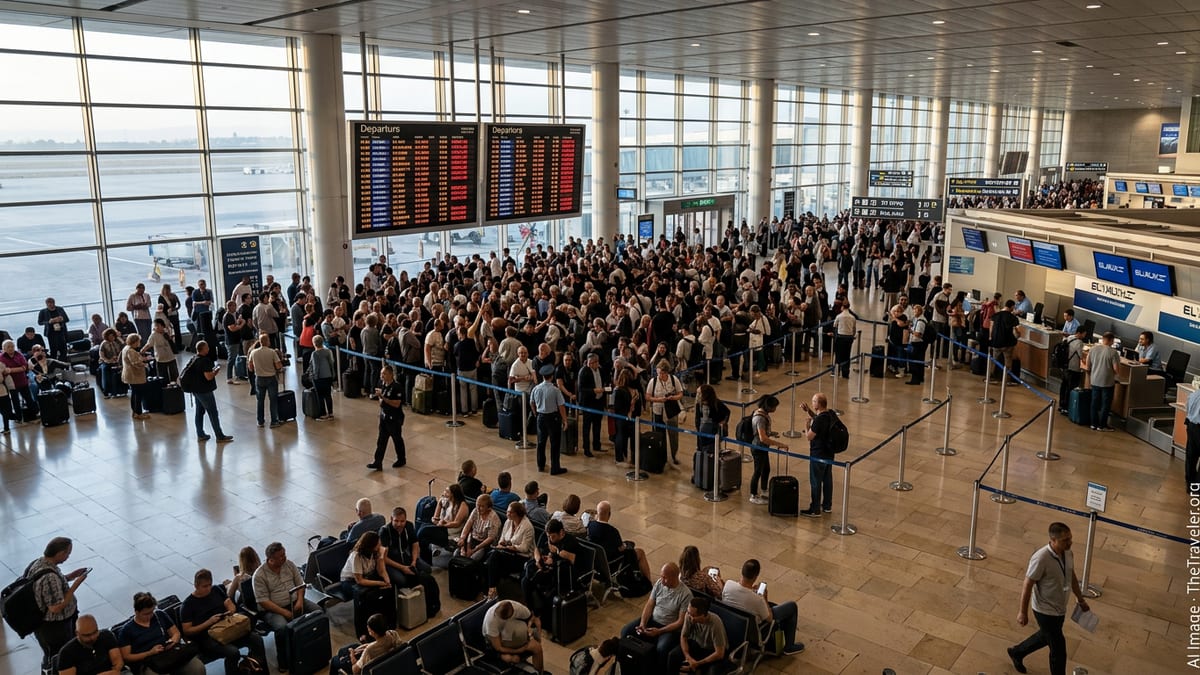
Ben Gurion Airport descended into fresh travel chaos on Sunday as El Al, United Airlines, KlasJet, Israir and British Airways collectively scrubbed 24 flights and delayed at least five more on key long-haul routes to New York, London, Paris and Dubai, leaving thousands of passengers facing overnight queues, missed connections and mounting uncertainty.
Wave of Cancellations Hits Key Long-Haul Routes
Airport information boards at Israel’s main international gateway told a stark story throughout Sunday, with lines of red "canceled" and "delayed" notices replacing scheduled departures to major hubs. Operations to New York, London, Paris and Dubai bore the brunt, as a mix of safety concerns, aircraft repositioning and knock-on disruption from wider Middle East airspace restrictions forced airlines to pare back their schedules.
Flag carrier El Al, which has been operating an intense program of rescue and repatriation services in recent days, was among the hardest hit. Several of its regular commercial departures to New York, London and Paris were removed from the board to free up aircraft and crews for government-coordinated recovery flights, while remaining services ran heavily oversold or subject to last-minute retiming.
United Airlines, which flies between Tel Aviv and its US hubs, joined El Al in canceling services to New York after a week in which US carriers have repeatedly adjusted operations to Israel in response to changing security assessments and evolving airspace routings. Seats on surviving departures were scarce, and many travelers reported being rebooked days later or routed via European gateways running at limited capacity.
British charter specialist KlasJet and Israeli leisure carrier Israir, both important players in ad hoc and seasonal lift between Tel Aviv, Europe and the Gulf, also scratched multiple flights. British Airways, which links Ben Gurion with London Heathrow, canceled and delayed services as it juggled aircraft availability and crew duty times already stretched by regional detours and earlier suspensions.
Regional Conflict and Airspace Limits Ripple Through Ben Gurion
The disruption in Tel Aviv did not occur in isolation. Airlines across the Middle East and Europe have spent the past week navigating closures and restrictions affecting swathes of airspace as tensions in the region intensified, forcing carriers to suspend routes, divert over longer corridors and prioritize evacuation and repatriation missions over regular commercial flying.
Ben Gurion, which only recently reopened to wider international traffic after a temporary shutdown, has faced an especially volatile operating environment. Routes that once followed direct paths now require fuel-heavy detours, while last-minute military or regulatory decisions can abruptly close corridors that airlines mapped out just hours earlier. That volatility has made planning consistent long-haul schedules extremely difficult.
Carriers serving Tel Aviv have responded by trimming frequencies, consolidating flights and holding aircraft in reserve for government-backed rescue operations, particularly to and from North America and Western Europe. While that strategy has improved flexibility for emergency planning, it has also translated into sudden cancellations even on days when the skies above Israel remain technically open for civil aviation.
The knock-on effects are felt well beyond Israel. Disruptions at European hubs in recent days, including Amsterdam and Paris, have cut connection options for passengers trying to reach Tel Aviv from North America and Asia. With Gulf super-connectors also operating reduced networks through Dubai and other key hubs, Ben Gurion’s role as a gateway has been constrained just as demand for outbound and inbound travel remains highly volatile.
Passengers Confront Long Queues, Sparse Information
For passengers on the ground at Ben Gurion, Sunday’s operational decisions translated into long queues at airline service desks, crowded departure halls and an atmosphere of confusion. Many travelers learned of their cancellations only after arriving at the airport, describing scenes in which agents struggled to rebook entire planeloads onto a handful of available alternatives.
Families headed to New York and other US destinations found themselves particularly hard hit, as reduced schedules by both Israeli and American carriers left few open seats. Some were offered itineraries involving overnight hotel stays and multi-stop routings via secondary European cities, while others were told the earliest available space might be several days away.
Passengers bound for London and Paris also faced uncertainty. With British Airways and other European carriers recalibrating their regional operations, rebooking options often depended on finding spare capacity on partner airlines or connecting through hubs that themselves were dealing with weather disruptions, staffing shortages and their own backlogs from the wider Middle East crisis.
Dubai-bound travelers, a growing segment in Israel’s outbound market, encountered a different set of challenges. Reduced frequencies on services linking Tel Aviv with the Gulf meant that even when flights operated, they did so with little slack in capacity. Overbookings and missed connections cascaded across networks, leaving many would-be passengers in Tel Aviv on standby lists with no firm departure time.
Airlines Balance Rescue Missions and Commercial Schedules
Behind the scenes, carriers serving Ben Gurion are being forced into difficult trade-offs. El Al has publicly prioritized bringing stranded Israelis home, rolling out fixed-fare rescue flights from more than 20 cities, including New York, London and Paris. That strategy has required reallocating widebody aircraft and crews from regular commercial rotations, reducing flexibility on scheduled departures and contributing to cancellations.
Israir and other Israeli operators have also been pressed into service for short-haul shuttle missions from nearby regional gateways where nationals and residents have been gathering. While these operations are critical to the government’s broader air-bridge strategy, they strain already thin fleets and complicate the restoration of a predictable timetable on core leisure and business routes.
Foreign airlines such as United Airlines and British Airways, meanwhile, must reconcile their obligations to ticketed passengers with corporate risk assessments and national regulatory guidance. Travel advisories from the United States, the United Kingdom and other countries have warned their citizens to weigh the risks of travel through the region, prompting carriers to maintain conservative schedules and, in some cases, to pivot toward repatriation charters rather than open-market sales.
Charter and ACMI providers like KlasJet occupy yet another niche, supplying aircraft on flexible contracts to governments, corporations and tour operators. In the current environment, demand for short-notice lift has soared, but unpredictable approvals and slot availability at Ben Gurion can turn planned operations into last-minute cancellations, feeding the visible instability on the departures board.
What Travelers Should Expect in the Coming Days
With geopolitical conditions and airspace permissions changing day by day, airline planners have been cautious about promising a quick return to normal at Ben Gurion. While rescue and repatriation missions are expected to continue, regular commercial timetables to New York, London, Paris and Dubai are likely to remain fragile, with abrupt cancellations and rolling delays an ongoing risk.
Industry analysts say that even if regional tensions ease, crew rostering, aircraft positioning and coordination with foreign regulators will take time to stabilize. The backlog of displaced passengers will also weigh on capacity, as airlines allocate seats first to those already holding tickets before opening new sales on high-demand routes.
Travelers with imminent plans to fly from Tel Aviv are being urged to monitor their bookings closely, use airline apps for real-time updates and avoid heading to the airport without written confirmation that their flight is operating. Flexible tickets and travel insurance with disruption coverage, once considered optional extras on familiar city pairs like Tel Aviv to New York or London, are suddenly becoming essential tools for managing risk.
For now, the scenes at Ben Gurion underline how quickly global aviation links can fray when regional security crises intersect with tightly run airline schedules. As airlines juggle rescue operations with the demands of regular commerce, passengers on some of Israel’s most important international routes are likely to continue bearing the brunt of the turbulence.