

More news on this day
Dozens of Umrah and Hajj pilgrims from Bengaluru have been left stranded across Saudi Arabia and key Gulf transit hubs after sudden West Asia airspace closures forced airlines to cancel or turn back flights, deepening India’s fast‑widening aviation crisis.
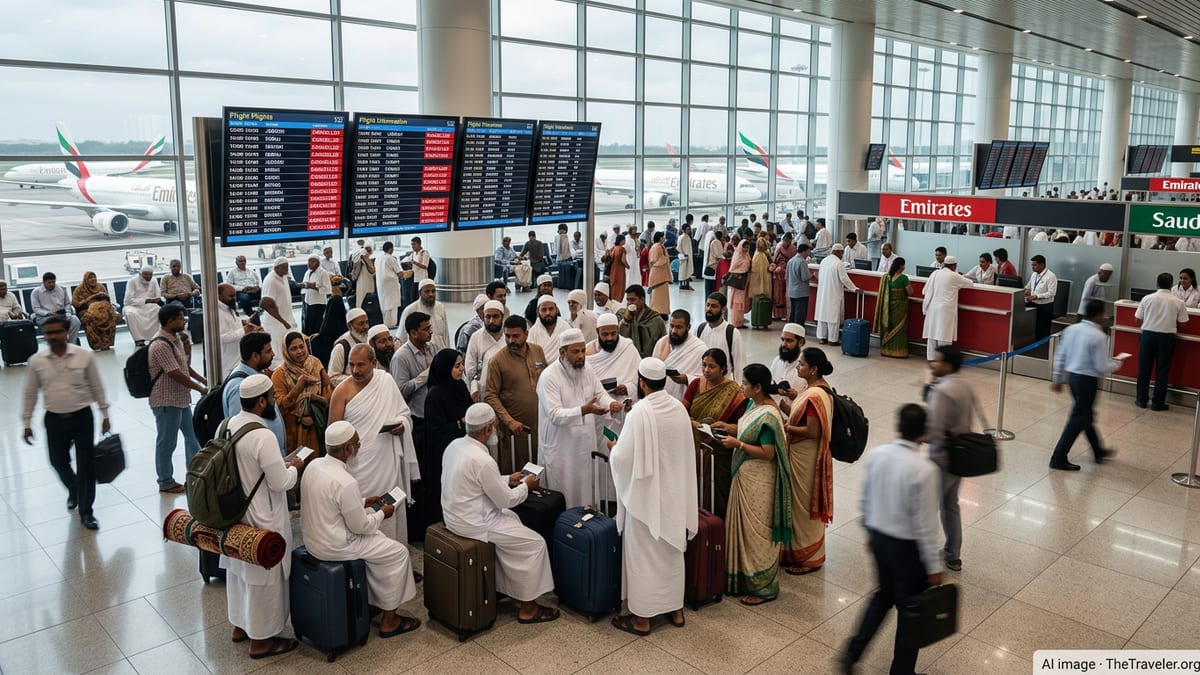
Mass Cancellations Hit Bengaluru’s Gulf and Pilgrim Routes
Bengaluru’s Kempegowda International Airport, one of India’s busiest gateways to the Gulf, has been grappling with rolling cancellations and diversions since late last week as the Iran–US–Israel conflict triggered sweeping airspace restrictions across West Asia. Airlines operating from the city to Dubai, Abu Dhabi, Jeddah, Riyadh and other key transit points have thinned out schedules or suspended services altogether, severing a critical lifeline for religious travelers and migrant workers.
Data compiled by India’s civil aviation authorities shows Bengaluru among the hardest hit metros, with dozens of westbound departures scrubbed or rerouted over the past three days. On some days, the airport has recorded more than 70 cancellations across international services, part of a nationwide tally that has crossed a thousand disrupted flights in less than a week as carriers pull out of at least 11 high‑risk airspaces in the region.
With major Gulf hubs either closed or operating under stringent restrictions, options for safe, economically viable detours remain limited. Airlines have experimented with longer routings via the Arabian Sea and Central Asia, but many services from Bengaluru to the Middle East have been halted entirely, leaving passengers at the city’s terminals facing long queues, last‑minute cancellations and few immediate alternatives.
Among the worst affected are Umrah and future Hajj pilgrims who rely on direct or one‑stop connections from Bengaluru to Jeddah or Medina. Many had timed their journeys around school holidays and work leave, only to find their outbound or return legs abruptly axed as conflict spread and aviation regulators moved to shield civilian aircraft from the risk of missile or drone activity.
Pilgrims Stranded in Medina as Savings Run Dry
In Medina, a group of around 50 pilgrims from Bengaluru has become emblematic of the unfolding crisis. The travelers, including elderly passengers, women and young children, were due to fly home in the early hours of March 2, but their flight was cancelled amid tightening airspace closures and subsequent schedule overhauls by multiple Gulf carriers.
Relatives in Bengaluru say the group, many of whom funded the pilgrimage through years of small savings, has been forced to extend hotel stays and cover unexpected food and transport costs as they wait for clarity from airlines and travel agents. With each passing day, their budgets are eroding, raising concerns that some may struggle to afford even basic necessities if the disruption continues.
Family members have described frantic calls to airline helplines, local agents and Indian consular staff as they seek rebooking options or refunds. In some cases, pilgrims were offered seats on relief flights routed via other Indian cities, though limited capacity and fast‑changing approvals have made such options uncertain. Others have received only generic advisories to “wait for further updates,” with little indication of when regular services might resume.
For the pilgrims themselves, the emotional toll has been severe. Many had undertaken Umrah with the expectation of a short, spiritually focused visit before returning to work or caregiving responsibilities in Bengaluru. Instead, they now face an open‑ended stay in a conflict‑shadowed region, watching news of missile strikes and airspace closures while juggling rising expenses and anxiety back home.
Regulators and Airlines Scramble to Contain Safety Risks
India’s Directorate General of Civil Aviation has issued successive advisories urging carriers to avoid identified high‑risk corridors over the Persian Gulf and parts of West Asia as tensions escalated. The regulator has highlighted a “significant escalation in security risks” to civil aviation, pushing airlines to adjust routings or suspend services entirely until a clearer risk picture emerges.
National carrier Air India and low‑cost operators such as IndiGo, Air India Express, Akasa Air and SpiceJet have collectively cancelled or suspended hundreds of flights to the UAE, Qatar, Saudi Arabia, Kuwait, Oman and Bahrain in recent days. Several westbound long‑haul flights to Europe and North America that normally overfly the region have been re‑planned on longer, fuel‑heavy routes, while many services linking Indian cities like Bengaluru directly to Gulf hubs remain grounded.
For airlines, the balance between operational continuity and passenger safety has become increasingly complex. Longer diversions add hours to flight times and significantly raise fuel and crew costs, threatening already thin international margins. At the same time, any incident involving civilian aircraft in a conflict zone would have catastrophic human and reputational consequences, leaving carriers with little choice but to err on the side of suspension.
Airport operators across India, including Bengaluru’s, have shifted to an operational alert footing, readying facilities for unscheduled turn‑backs and diversions if outbound flights lose access to planned airspace once airborne. Ground teams have been tasked with managing stranded travelers, arranging temporary accommodation where possible and coordinating with airline staff as schedules are repeatedly redrawn.
Relief Flights Offer Limited Lifeline for Stuck Passengers
As the crisis stretches into a fourth day, Indian authorities and airlines have begun stitching together a patchwork of relief operations aimed at easing the backlog of stranded passengers. IndiGo has scheduled special services from Jeddah to multiple Indian cities on March 3, subject to evolving airspace permissions, while other carriers explore corridor‑safe routings for select repatriation flights.
Officials in New Delhi say they are working closely with Indian missions in Saudi Arabia and the wider Gulf to identify vulnerable passengers, including elderly pilgrims, families with small children and workers whose visas or employment contracts may be nearing expiry. Priority lists are being coordinated with airlines to ensure that limited seats on relief services go first to those in greatest need, though the demand far outweighs available capacity.
For Bengaluru pilgrims stuck in Medina and other Saudi cities, the announcement of relief flights has brought cautious optimism but not yet certainty. Travel agents report that many of their clients are willing to accept indirect routings or arrivals at alternative Indian airports if it means returning home soon, even if they must then make their own way back to Bengaluru by domestic connections or overnight buses.
However, the fluid nature of clearances means plans can unravel rapidly. On March 3, several Dubai‑bound flights from Indian metros, including an Emirates service from Bengaluru, were forced to return shortly after take‑off as regional airspace restrictions were tightened once more, underscoring the fragility of even carefully crafted contingency routes.
Uncertain Timeline Clouds Hajj Planning and Future Travel
Beyond the immediate disruption, the prolonged closure of swathes of West Asian airspace is casting a shadow over Hajj planning for thousands of prospective pilgrims in Karnataka and beyond. Travel agencies in Bengaluru say they are fielding a surge of calls from clients worried about whether their summer departures will go ahead, what routes will be available, and how much prices might rise if airlines are forced to operate longer, more expensive itineraries.
Many agents have paused new Hajj and Umrah bookings or are inserting stronger force majeure clauses into contracts, warning customers that dates, routings and even departure airports may change at short notice. Some are advising families to delay nonessential travel through Gulf hubs until there is a sustained easing of tensions and clearer guidance from regulators and carriers.
Industry analysts caution that even if hostilities recede within weeks, the aviation system will take longer to fully normalize. Aircraft and crew placements have been heavily disrupted, and airlines will likely prioritize clearing backlogs of stranded passengers and restoring core routes before rebuilding discretionary capacity such as seasonal pilgrim charters from cities like Bengaluru.
For now, Bengaluru’s Umrah and would‑be Hajj pilgrims remain in limbo, caught between spiritual aspirations and geopolitical realities thousands of kilometres away. Their predicament highlights how swiftly religious travel and everyday mobility can be upended when conflict intersects with one of the world’s busiest aviation corridors, and how dependent India’s outbound travelers have become on the stability of West Asian skies.