

More news on this day
Normal flight operations at Berlin Brandenburg Airport have been brought to a standstill after a warning strike halted all regular departures and arrivals, stranding passengers and forcing airlines to scramble for alternative arrangements.
Get the latest news straight to your inbox!
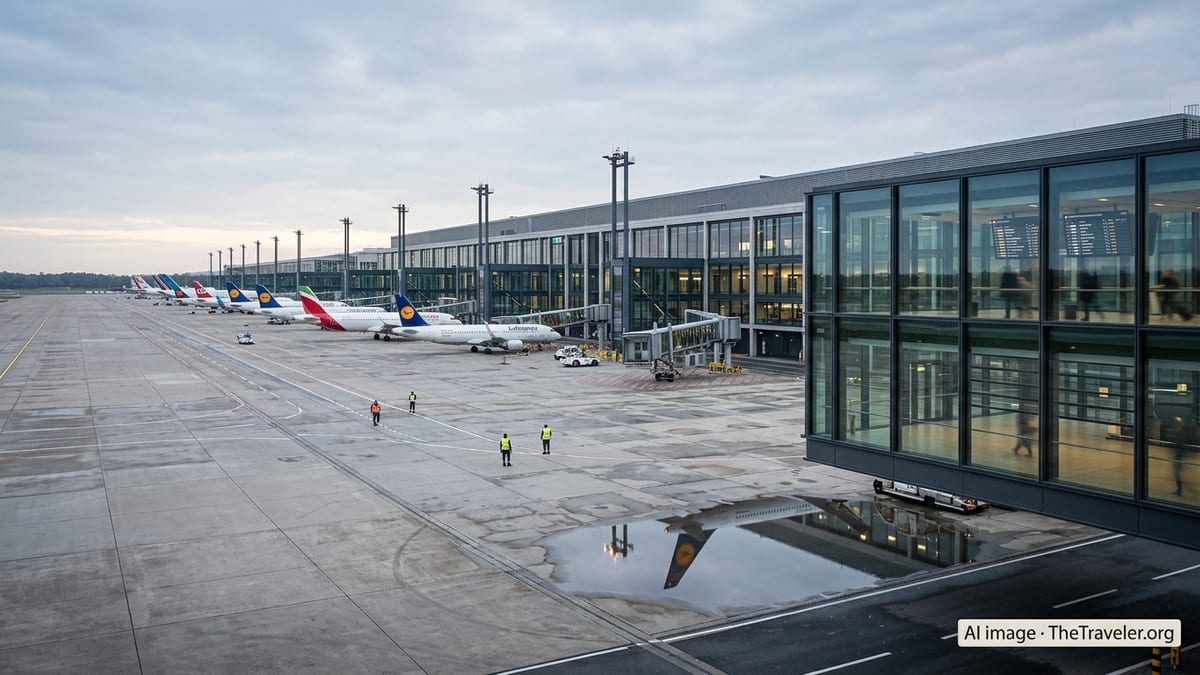
What Is Happening at Berlin Brandenburg Airport Today
Publicly available information indicates that a warning strike called by the Verdi union has led to a complete shutdown of regular passenger flight operations at Berlin Brandenburg Airport. Reports shared by travelers and local media ahead of the action stated that no scheduled commercial flights would depart from or arrive at the airport during the strike period.
The walkout affects critical airport functions, including security checks, ground handling and emergency services, making it impossible to maintain normal operations. Berlin Brandenburg Airport communications cited safety and the lack of essential staff as reasons regular flight movements could not go ahead while the strike is underway.
Flight tracking platforms and airline updates show a near-total wipeout of the day’s schedule, with departures and arrivals listed as canceled rather than delayed. Limited non-regular operations, such as repositioning flights or technical movements, may still appear, but these do not restore normal passenger service.
The strike comes at a busy travel period, with many passengers heading in or out of the German capital for business trips, holidays and family visits. The disruption adds to a recent pattern of weather-related shutdowns and industrial action that has repeatedly tested the resilience of Berlin’s main airport.
Who Is Striking and Why Operations Are Fully Halted
According to union announcements and published coverage, the strike has been initiated as a warning action in an ongoing dispute over pay and working conditions for airport and ground staff. Verdi has been pushing for higher wages and improved terms in light of inflation, rising living costs and the pressures of post-pandemic air travel recovery.
While many past strikes in Germany have resulted in partial disruptions, the situation at Berlin Brandenburg today is markedly more severe because key safety-related roles are affected. Reports from local outlets and passenger advisories explain that firefighting and rescue crews at the airport are participating in the strike, which means that statutory safety requirements for takeoffs and landings cannot be met.
As a result, the airport has announced that regular commercial traffic is suspended for the duration of the action. This goes beyond longer queues or scattered cancellations and amounts to a one-day freeze in normal flight operations. Airlines that had hoped to operate a limited schedule have had to cancel or reroute instead.
The dispute is part of a broader wave of labor tensions across Germany’s transport sector, including nationwide airport stoppages and separate airline-specific strikes in recent months. For travelers, this has translated into a more unpredictable environment in which otherwise routine trips can be disrupted at short notice.
Impact on Passengers, Airlines and the Wider Network
The immediate impact for passengers is the cancellation of flights into and out of Berlin, with many travelers learning only in the final 24 to 48 hours that their plans would not go ahead. Social media posts and travel forums are filled with accounts of people being informed that their flights are canceled, often with limited guidance on rebooking options or compensation procedures.
Airlines serving Berlin have responded with a mix of automatic rebooking, voucher offers and advice to request refunds where no reasonable alternative is available. Some carriers are offering to route passengers via other German or European hubs, while others are urging travelers not to come to the airport at all and instead manage their bookings online or through call centers.
The strike at Berlin Brandenburg also has knock-on effects across the European aviation network. Aircraft and crews scheduled to start or end their day in Berlin are now out of position, which can trigger further delays and cancellations at connecting airports. In some cases, flights from other cities have been canceled solely because their return leg to Berlin cannot operate.
Travelers already in Berlin face difficult choices over how to continue their journeys. Anecdotal reports describe passengers turning to long-distance trains, buses and rental cars to reach other airports such as Frankfurt, Munich or Hamburg, in the hope of finding available seats there. Given recent weather disruptions and other strikes, rail and road alternatives may also be heavily booked.
What Travelers Should Do If They Are Affected
Publicly available guidance from airlines, consumer organizations and travel rights groups stresses that passengers should first check the status of their booking directly with their airline or travel agency. Many carriers are issuing flexible rebooking policies that allow travelers to change to later dates or different routes without additional fees, subject to seat availability.
Passengers whose flights have been canceled are generally entitled under European air passenger regulations to choose between a refund of the unused ticket portion or re-routing at the earliest opportunity, taking into account practical constraints. In practice, re-routing may not be immediate given the scale of cancellations and limited spare capacity on alternative services.
Travel experts recommend documenting all communications with airlines, keeping receipts for any additional expenses such as overnight accommodation or alternative transport, and checking whether travel insurance policies offer further coverage in the event of strike-related disruption. Some policies exclude industrial action, while others provide partial reimbursement.
Those who have not yet started their journey are advised to avoid traveling to Berlin Brandenburg Airport while the strike is in effect, as terminal facilities may be crowded despite the lack of flights. Instead, passengers are encouraged to monitor airline apps, email alerts and official information channels for updates on when normal operations will resume and how their bookings will be handled.
When Normal Operations Could Resume and What to Expect Next
The current action has been announced as a time-limited warning strike, meaning that regular operations are expected to resume after the end of the strike window. However, experience from previous disruptions at Berlin Brandenburg and other German airports shows that recovery is rarely instantaneous, as aircraft, crews and passengers must be brought back into alignment.
Travel coverage of earlier shutdowns at the airport, including weather-related suspensions this winter, indicates that even once runways reopen and staff return to duty, airlines may need several hours or more to stabilize schedules. This can result in residual delays, re-timed departures and long queues at check-in, security and baggage reclaim.
Observers of Germany’s aviation sector note that the underlying wage dispute has not yet been fully resolved, raising the possibility of further industrial action if negotiations stall. While unions often use one-day warning strikes to increase pressure at the bargaining table, longer or repeated walkouts cannot be ruled out in the weeks ahead.
For travelers planning to pass through Berlin in the near term, the situation underscores the importance of building flexibility into itineraries, allowing extra time for connections and staying informed about potential strike dates. With labor talks ongoing and the busy spring and summer travel seasons approaching, Berlin Brandenburg Airport is likely to remain under close watch from both airlines and passengers.