

More news on this day
Senator Bernie Sanders’ recent air travel, from private jets on his “Fighting Oligarchy” tour to reports of premium cabin commercial flights with carriers such as Delta Air Lines, is reigniting debate over whether a self-described democratic socialist can realistically avoid the trappings of elite travel while running a high-intensity national campaign.
Get the latest news straight to your inbox!
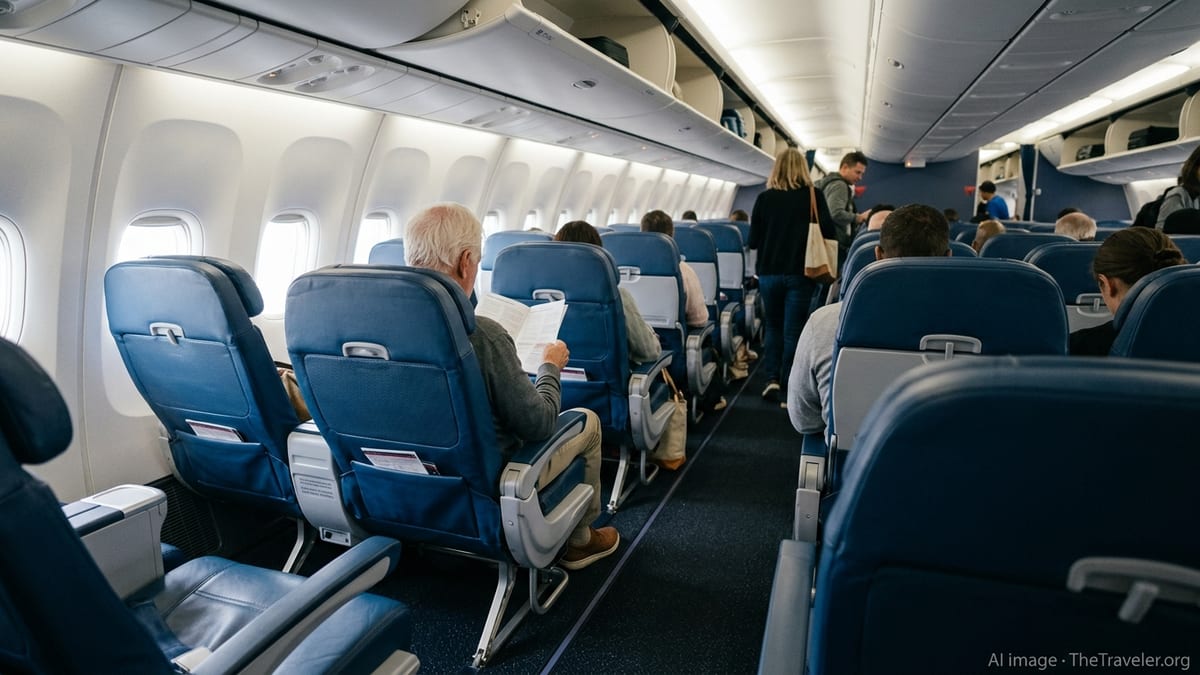
From Coach Rhetoric to Premium Cabins
Bernie Sanders has built much of his political brand on criticizing economic inequality, corporate power and the lifestyles of the ultra-wealthy. That image has long emphasized frugality and an everyman sensibility, including frequent references to working-class struggles with the cost of everyday necessities and basic travel.
As his national profile has grown, however, Sanders’ travel patterns have shifted into the spotlight. Publicly available campaign finance records and recent media coverage show that his team relies on a mix of commercial airlines and chartered aircraft to move quickly across the country. Reports indicate that this has included seats in first or business class cabins on major U.S. carriers, including Delta, especially when schedules are tight or distances long.
The gap between Sanders’ egalitarian rhetoric and the optics of flying in premium cabins lies at the heart of the current controversy. For critics, seeing a democratic socialist at the front of the plane, separated from economy passengers by a curtain and a pricing wall, appears to undercut his message about shared sacrifice and class solidarity.
Supporters counter that in the modern American political system, rapid and comfortable air travel is a practical necessity for a senator in his eighties running a grueling, multi-stop tour, and that judging his agenda by seat assignments risks trivializing structural debates about power and wealth.
The ‘Fighting Oligarchy’ Tour and Jet Debate
The latest wave of scrutiny followed Sanders’ 2025 “Fighting Oligarchy” tour, a multi-state swing through districts that voted for Joe Biden in 2020 but later elected Republican House members. Coverage from outlets across the political spectrum noted that Sanders and Representative Alexandria Ocasio-Cortez used chartered private jets for portions of the tour, with Federal Election Commission filings indicating more than two hundred thousand dollars in private air travel during the first quarter of 2025.
Images and video of the pair boarding or exiting business jets circulated widely on social media and cable news. Commentators and political opponents seized on the visual contrast: politicians railing against oligarchs and climate impacts while traveling on some of the most carbon-intensive and expensive forms of air transport available.
Separate reporting highlighted that Ocasio-Cortez flew first class on at least one commercial flight to a Sanders event, further fueling accusations of “champagne socialism” and sparking questions about whether Sanders and his allies were applying different standards to their own mobility than to the lifestyles they criticize.
In interviews following the coverage, Sanders has defended the travel arrangements as a function of the demanding schedule and the logistics of reaching multiple cities in a single day. He has argued that the focus should remain on policies affecting working- and middle-class Americans, not on the mode of transportation chosen to deliver that message.
Is Flying First Class Incompatible With Socialism?
The question of whether a socialist can sit in first class without betraying core principles is more philosophical than procedural. Flying in Delta’s premium cabin, for example, typically means wider seats, more legroom, priority boarding and upgraded service, purchased at a significant price premium over economy fares or secured through loyalty benefits.
Critics argue that for a politician centering class inequality, choosing such benefits reinforces the idea that elites enjoy comfort denied to ordinary travelers. They see the first-class cabin not just as a travel product but as a symbol of a tiered society in which money buys insulation from the inconveniences and indignities of modern air travel.
Others suggest that intent and context matter more than the seat number. They point out that Sanders’ policy agenda includes higher taxes on the wealthy, stronger labor protections and expanded social programs, positions that run counter to the interests of many affluent travelers who routinely fly in premium cabins. From this perspective, purchasing a more comfortable seat for a long workday or an older body does not erase decades of advocacy on behalf of lower-income Americans.
For many voters, the issue may come down to perceived authenticity. Frequent images of a self-described socialist in visibly elite settings, whether in a Delta first class cabin or on the stairs of a private jet, risk blurring the distinction between pragmatic travel choices and the broader lifestyle of the political class.
Campaign Logistics, Carbon Footprints and Public Perception
Beyond questions of ideological purity, Sanders’ travel patterns intersect with broader concerns about climate responsibility and the environmental impact of frequent flying. Aviation is a significant source of greenhouse gas emissions, and private jets generate far more emissions per passenger than commercial economy seats.
Watchdog groups and commentators have noted that progressive politicians calling for aggressive climate action face heightened scrutiny when using private aviation or flying first class, because these options carry a larger carbon footprint. Reports on Sanders’ tour have therefore focused not only on costs and optics but also on whether such travel aligns with the movement’s calls for collective emissions reductions.
Campaign strategists and transportation analysts acknowledge, however, that the modern American electoral map and media environment reward candidates who appear in person in multiple regions in rapid succession. Charter flights and premium cabins can reduce fatigue, allow for more events in a single day and offer greater reliability when commercial schedules are tight or disrupted.
This tension between logistical efficiency and symbolic consistency is not unique to Sanders. Political figures across the spectrum regularly face questions about whether their travel choices match their stated values on climate, inequality or public spending, particularly when images from airport lounges or first-class cabins go viral.
What the Controversy Reveals About Voters and Travel Expectations
The discussion around Sanders and Delta first class illuminates broader expectations that voters place on politicians’ personal choices. In an era of intense scrutiny, travel has become another arena in which authenticity and relatability are tested, often in real time through passengers’ photos and social media posts.
For some travelers, seeing a familiar political figure in the front of the plane reinforces a sense of distance between elected officials and everyday life, regardless of that official’s policy record. For others, spotting a national figure on a regular commercial flight, even in first class, may signal relative normalcy when compared with heads of state or business leaders who rely exclusively on private jets.
In the travel sector, the episode underscores how airline cabins have evolved into visible markers of status and identity. The distinction between economy and first class is not merely about comfort; it is a shorthand for debates about privilege, fairness and who gets to bypass the inconveniences of crowded terminals and tight seats.
As Sanders continues to travel for his work in the Senate and for issue-based tours, the cameras are likely to keep rolling. Whether his next flight is in Delta coach, first class or aboard a chartered jet, the broader controversy suggests that in contemporary politics, no boarding pass is just a boarding pass anymore.