


AI trip planners have moved from novelty to serious tools. In 2026, travelers are asking Gemini, ChatGPT, Kayak and a wave of specialist apps to build entire vacations, from the first flight search to the last museum ticket. Yet anyone who has compared an AI itinerary with a real map or opening calendar knows the results can swing from impressively accurate to quietly dangerous. This guide compares the most widely used AI travel itinerary planners, based on how they handle real routes, live prices, opening hours and on-the-ground limitations.
Get the latest updates straight to your inbox!
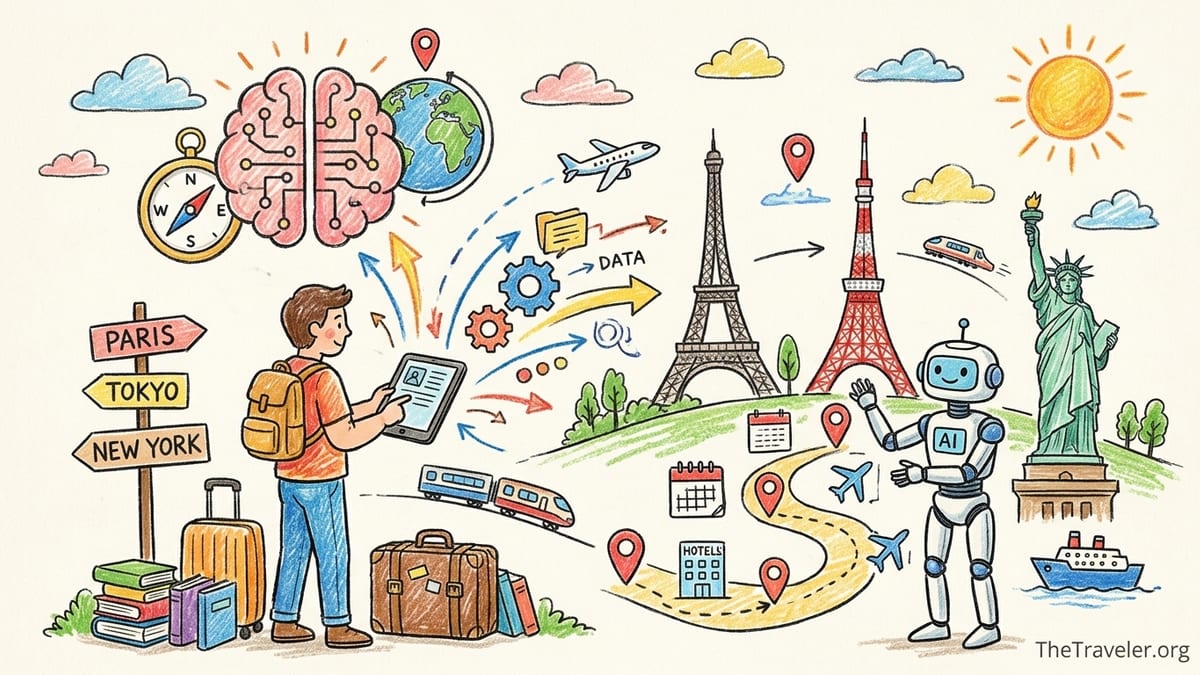
The surge in AI trip planning and why it matters now
AI is no longer a fringe tool in travel planning. A 2024 edition of MMGY’s Portrait of American Travelers reported that roughly one in three active leisure travelers had already used generative AI such as ChatGPT to plan some part of a trip, and close to four in ten of those users asked it specifically to build itineraries. That translates into millions of people handing their daily schedules, and often their budgets, to algorithms.
Search interest has followed. Independent rankings that track web traffic to AI travel tools show that, over 2025 and 2026, usage has concentrated around a small group of names: Google’s new AI mode in Search, general chatbots like ChatGPT and Gemini, and dedicated planners such as Mindtrip, Layla, Wonderplan and GuideGeek. Several comparison sites that monitor organic traffic put Mindtrip, Wanderboat and Trip Planner AI among the fastest-growing pure-play travel planners this year, while Kayak’s AI and Google’s own tools dominate where live prices are essential.
This surge matters because the bar has risen. Early AI itineraries were little more than reorganized blog posts. In late 2025 and 2026, the leading tools have bolted on direct connections to flight search engines, hotel inventories and live maps. Google’s AI mode in Search, for example, now pulls in prices from more than 300 airlines and travel sites and can complete certain hotel bookings without leaving the chat interface. That shift from “advice” to “action” makes accuracy about distance, time and availability far more consequential.
At the same time, travel providers and tourism boards are experimenting with their own AI layers. From destination chatbots that answer questions about a city’s events, to airlines using AI to package weekend escapes, the ecosystem around planning is becoming denser and more automated. Understanding what AI does well, and where it still fails basic reality checks, is now part of traveling responsibly.
How we tested today’s AI itinerary planners
To compare the current generation of AI planners, we looked at three broad categories of tools. First were general-purpose chatbots that people already use for everything else: ChatGPT in its paid tiers, Claude and Google’s Gemini. Second were search-integrated planners, most notably Google’s AI mode in Search and Kayak’s AI assistant, which sit directly on top of live flight and hotel databases. Third were dedicated trip planning apps such as Mindtrip, Layla, Wonderplan, Wanderlog and GuideGeek, which promise structured itineraries, maps and collaborative features.
We then put these tools through a set of practical tests that mirror how real travelers plan. For route accuracy, we asked each tool to design a self-drive loop in a region where distances are often underestimated, such as a day trip from Detroit to Michigan’s Great Lakes Shipwreck Museum and back. We then compared the suggested drive times against a current map. This mirrors a real case shared in a ChatGPT user forum in late 2024, where an itinerary underestimated the driving time from Detroit to the museum by several hours, compressing what is closer to a full-day journey into a half-day outing.
To examine budgets and live prices, we requested price-sensitive itineraries that mix air, rail and accommodation. A typical test prompt asked for a five day trip from New York to Paris in March with a total budget of about 3,000 US dollars for two people, including economy flights and a mid-range hotel. We checked whether tools that claim live pricing, such as Google AI mode and Kayak AI, actually returned fares similar to those visible in regular flight search on the same afternoon, and whether dedicated planners that lack direct integrations made clearly labelled estimates or blurred the line between guesses and live data.
For opening hours and practical constraints, we focused on destinations with complex schedules and booking rules. We asked AI tools to plan a two day visit to the Louvre and Versailles from central Paris in peak season, and a weekend covering the Uffizi Gallery and climbing the Duomo in Florence. We then compared suggested visit times with the official calendars and booking systems of the museums and monuments. This is where itinerary quality most directly affects a trip’s success: an AI that sends you to Versailles on a day when the palace is closed or suggests a same-day ticket for a timed-entry cathedral climb can ruin limited vacation days.
Where AI gets it right: discovery, structure and live prices
On discovery, most major AI tools perform impressively. Ask ChatGPT, Gemini or Layla for ideas for a three day city break in Lisbon, and you will receive a coherent set of neighbourhoods, viewpoints and food experiences, often grouped by geography. Common suggestions, such as exploring Alfama and the São Jorge Castle on one day, taking a tram or walking through Baixa and Chiado on another, and visiting Belém’s tower and monastery as a half-day side trip, matched well with established travel journalism and local tourism guides.
Specialist planners add helpful structure on top of this. Mindtrip, which many reviewers rank as a leading free AI travel companion as of late 2026, turns the conversational output into a day-by-day calendar with embedded maps and a running budget column. Layla and Wonderplan do something similar, listing morning, afternoon and evening blocks that you can drag and rearrange, and in some cases exporting the plan to your phone’s calendar. In practice, this turns what used to be a static text itinerary into something closer to a lightweight project plan for your holiday.
Live prices are where search-integrated tools such as Google AI mode in Search and Kayak AI stand out. When we asked Google’s AI mode on a weekday afternoon in October 2026 to find economy flights from New York City to Paris for dates four months out, the fares it displayed for major carriers were broadly in line with those visible in Google Flights during the same session, often within a margin of a few dollars. It also showed the fare breakdown by airline and whether tickets were changeable or included cabin baggage. Kayak’s AI assistant pulled back similar live fares and linked them to specific departure and arrival times and layovers, matching the metasearch engine’s regular interface.
For hotels, AI tools that sit on top of established booking databases did a reasonable job of matching preferences to reality. Asking Kayak’s AI for a three night stay under 250 US dollars per night in central Barcelona in shoulder season produced a list of hotels with current nightly rates and aggregated review scores, which were consistent with a manual search on the platform at the same time. Google’s AI mode, when asked for hotels near Rome’s Termini station for a single night under about 180 euros, presented options that were all visible in its regular hotel search, with similar prices and the same free cancellation flags.
Where AI still fails: time, distance and calendars
The most persistent weaknesses are in how AI planners handle time and distance. Large language models are not map engines by default, and unless a tool has a direct connection to something like Google Maps or another routing service, it often treats drive times and walking distances as rough concepts rather than fixed values. The Michigan road trip example is a stark illustration: a user asking for a tour from Detroit to the Great Lakes Shipwreck Museum at Whitefish Point received an itinerary suggesting a three and a half hour drive where a current mapping check shows a journey of more than seven hours without stops. The model correctly listed intermediate towns, but compressed a full day’s driving into a morning.
In our own testing, generic chatbots without explicit map integrations occasionally made similar errors. When planning a single day that included both the Uffizi Gallery and a climb of the Duomo’s cupola in Florence, some tools proposed back-to-back time slots that left almost no margin for security queues and mandatory timed entries, despite these being well known pinch points in high season. Tools that attempted to squeeze Versailles, its gardens, and the Louvre into one day from a Paris hotel routinely underestimated the combined travel, security and walking time, producing schedules that would be exhausting at best and impossible at worst.
Opening hours and weekly closure patterns are another common failure point. Unless a tool is explicitly wired into an up to date calendar or checks official sites in real time, it tends to rely on patterns it has seen during training. That means it might miss changes such as temporary closures, special late openings or off season reductions. When we asked several AI planners to schedule a visit to the Louvre on a Tuesday and to include a late-night opening, at least one still suggested Tuesday as a valid day for an evening visit, even though the museum has long been closed to the public on Tuesdays and shifted its late openings to other weekdays. Similar issues emerged when scheduling Monday museum visits in Florence and Rome, cities where major state museums often close that day.
Budgeting suffers from more subtle calendar problems. Many AIs will quote approximate entrance prices for global attractions, but without access to specific date-based ticketing systems their numbers lag behind reality. In one Paris test run, a planner quoted a Versailles passport ticket that was several euros lower than the current high-season price visible on the official website for the tested date. That is not catastrophic in itself, but it can compound across multiple attractions, city taxes and transport passes, leaving travelers underfunded compared with real costs at the time of travel.
Comparing major players: chatbots vs dedicated planners vs search AI
General-purpose chatbots such as ChatGPT and Gemini still excel at early stage brainstorming and tailoring trips to personal constraints. Ask for a seven day Canadian Rockies itinerary for two people with a budget of around 3,500 US dollars, and they will usually balance rail or rental car segments with national park visits and moderate accommodations, while explaining trade offs between Banff, Jasper and side trips to the Icefields Parkway. They can remember that one traveler prefers easy hikes and the other prioritizes photography, then adjust later days around that pattern.
Dedicated trip planners like Mindtrip, Layla, Wonderplan, iPlan.ai and GuideGeek build on that conversational layer with tools more obviously designed for travel. Mindtrip’s interface, for example, organizes results into a live map, daily schedule and a persistent budget bar that updates as you add or remove activities. Layla combines conversational planning with price tracking across flights and hotels, charging a yearly premium fee to unlock more automation. Apps such as iPlan.ai focus on city breaks, selling low-cost in-app itinerary upgrades, while GuideGeek positions itself as a free cross-platform assistant that combines day planning with live links to book tours or experiences from partner providers.
Search-integrated AI, particularly Google’s AI mode in Search and Kayak’s AI, now blur the line between planning and booking. Google’s system can take a prompt such as “Plan a four day budget trip to Tokyo in April from Los Angeles” and respond with flight options, indicative fares from its airline and agency partners, sample hotel prices per night in each neighbourhood, and a suggested day-by-day outline. It can then continue the same conversation into a hotel booking flow without forcing you back into a traditional search form. Kayak’s AI, meanwhile, focuses on surfacing combinations of flights and hotels that fit constraints, such as “nonstop flights under 700 dollars arriving before noon, plus a three star hotel within two metro stops of Shinjuku.”
Where they differ most for travelers is in transparency and control. General chatbots explain themselves well, but need manual checking against separate flight, hotel and mapping tools. Dedicated planners automate more of the logistics, but often rely on partner sites for actual booking and may present estimated prices as if they are live. Search AI tools offer the most accurate pricing and availability at the time of search, but they are also closely tied to a single commercial ecosystem and may be less flexible when you want to combine a points redemption on one airline, a cash ticket on another and a separate vacation rental.
Real world trip tests: how AI itineraries held up
Real travel stories over the past two years highlight both the promise and the limits of AI planning. In one widely shared account from late 2025, a traveler used ChatGPT to plan a last minute trip to Las Vegas, relying on the model for dining suggestions, show recommendations and a walkable schedule along the Strip. The itinerary successfully surfaced lesser known cocktail bars alongside big name headliners and helped the traveler think through how many shows in one night would be realistic. Once on the ground, however, the traveler deviated from the plan in response to crowds, wait times and the simple impulse to duck into venues that looked fun at the moment.
In testing done for various ranking guides during 2026, reviewers found that AI tools were at their best when used as collaborators rather than dictators. A common pattern involved asking a planner such as Layla or Mindtrip for a three day Barcelona itinerary, then manually adjusting the order of activities after checking a real map. For example, grouping the Sagrada Família with Passeig de Gràcia’s modernist buildings and a late afternoon in Gràcia itself, while moving the waterfront and Barceloneta to a different day, cut back on zigzagging across the city. AI often suggested this grouping already, but occasional misplacements were easy to fix by dragging items between days.
The more ambitious the routing, the more intervention was required. In multi country trips, such as a two week itinerary from New York to London, Paris and Rome, AI planners sometimes underestimated transfer times between airports and city centers, or scheduled early morning flights after late night activities. Reviewers who caught these issues often treated the AI’s first output as a draft, then checked each long transfer and high value booking against official timetables or booking engines before committing funds. When that discipline was applied, AI still saved hours that would otherwise have gone into basic research and list-making.
Budget tests were more mixed. When constrained by a firm ceiling, such as 2,000 US dollars per person for a week in Portugal including flights from the East Coast, AI often responded with honest warnings that the budget was tight or might require off season travel, hostels or shared apartments. Yet some tools that lacked live pricing integrations still proposed hotel rates that were significantly below what could be booked for the specific test dates, particularly in high demand cities like Lisbon and Porto. Travelers who relied solely on those optimistic numbers would have faced unwelcome surprises when clicking through to actual booking sites.
Practical limitations travelers need to manage
The gap between an AI itinerary and a real-world trip is often filled by factors the models cannot fully grasp. Weather can shut down mountain passes, coastal ferries and outdoor attractions that look perfect in theory. Strikes can disrupt train schedules across countries such as France, Italy or the United Kingdom, and local festivals can turn quiet squares into packed venues requiring advance reservations. AI tools that are not empowered to pull in real-time disruption feeds will not proactively warn you that your carefully planned Saturday in Paris coincides with a major demonstration along your chosen route.
Cultural rhythm is another subtle limitation. Many planners, especially those trained largely on English language sources, underestimate the way local meal times, siesta hours or religious observances change a city’s pace. An AI might slot a midday restaurant lunch into a Spanish city during a period when most kitchens are closed, or suggest a packed sightseeing afternoon on a Friday in a destination where weekly prayers or early closures shape the flow of people and transport. These are details that local tourism boards often flag on their own websites but do not yet surface reliably through generic AI planning prompts.
Accessibility and personal safety considerations remain patchy as well. While some tools can respond to direct questions about step free access, safe late night routes or areas to avoid, their knowledge is broad rather than hyperlocal. A traveler using a wheelchair or traveling with children will still need to validate that a suggested metro station has working elevators, or that an evening stroll recommended by AI passes through streets that feel comfortable at night. No current AI planner can yet replace the nuanced judgment of local communities, recent traveler reports and common sense on the ground.
Finally, there is the question of accountability. If a model suggests booking a non refundable train that connects too tightly to an inbound flight, or omits a visa requirement that leads to denied boarding, the responsibility still falls on the traveler. Most AI tools include disclaimers about verifying critical details, and some, such as those built by established travel companies, are especially cautious on immigration, health and legal matters. The safest approach is to treat any AI itinerary as a well informed draft until you have cross checked the key pillars of your trip: transport, accommodation, legal entry and major time locked activities.
How to use AI planners without wrecking your trip
The best way to work with AI planners is to lean into their strengths and consciously patch their weaknesses. Use them aggressively at the idea and structure stage: describe your travel party, constraints and interests in detail and let the model propose destinations, neighbourhoods and themed days that you might not have considered. Ask follow up questions about why a certain area in Tokyo might suit food lovers, or how a suggested day in Kyoto could be tweaked to include a specific temple or garden. These early dialogues will quickly surface a shortlist that feels tailored rather than generic.
Once you have that scaffold, move to a verifier mindset. For any leg of the trip that involves significant cost, distance or time pressure, confirm the details using a separate specialist tool. Check drive times and walking distances in a live mapping service, confirm train or flight schedules with the relevant operator, and look up official opening calendars for museums, monuments and tours. Where there are discrepancies, feed them back into the AI and ask it to adjust, rather than editing silently yourself. That way the itinerary remains coherent and the model learns your priorities.
Budget approval should follow a similar pattern. When a planner suggests that a centrally located three star hotel in Rome in May will cost around a specified nightly rate, run a quick cross check in at least one metasearch platform or booking site for your exact dates. If real prices are twenty or thirty percent higher, revise the AI budget upwards or adjust the accommodation category. Some tools, notably Kayak AI and Google’s AI mode, already align tightly with live pricing, but even then it is wise to watch out for total trip costs that depend on exchange rates, resort fees or mandatory local taxes that may not be fully included in early estimates.
On the ground, treat your AI itinerary as a flexible script rather than a binding contract. Keep a version accessible offline in case of connectivity issues, but remain open to swapping days when weather turns or when locals recommend alternatives. Use AI again in small bursts during the trip, for example to find a nearby casual restaurant open late after a concert, or to adjust a day’s schedule when a museum you intended to visit has unexpectedly closed early. This keeps the technology working for you in real time without overcommitting your entire experience to forecasts made months in advance.
The future of AI trip planning and a balanced conclusion
Looking ahead, the most significant development in AI trip planning is likely to be deeper personalization and tighter integration with the rest of a traveler’s digital life. Google has already articulated a vision of “personal intelligence” in which a model can design restaurant lists or itineraries by cross referencing your past reservations, saved places and calendar. Similar ideas are emerging from independent apps that promise to combine your usual workout patterns, dietary needs and wardrobe with flight search and hotel booking, so that the same AI that knows your running pace and breakfast preferences also plans your jet lag strategy in Tokyo.
At the same time, regulators and consumer advocates are paying closer attention to the line between assistance and steering. When an AI itinerary favors certain airlines, hotels or tour providers, travelers will want clarity on whether that is due to genuine suitability or commercial agreements. Transparency about data sources, referral fees and the limits of “live” information will shape which tools earn trust in the coming years. For now, the safest bet is to prioritize planners that clearly label where prices come from and when they were last checked, and to be wary of any itinerary that presents itself as definitive without showing its workings.
For travelers in 2026, the bottom line is that AI has become too useful to ignore and too fallible to obey blindly. Used thoughtfully, tools like ChatGPT, Gemini, Mindtrip, Layla, Kayak AI and Google’s AI mode in Search can compress days of research into a single evening, reveal combinations of flights and hotels that would be tedious to assemble manually, and spark fresh ideas for how to spend limited time in a new place. Left unchecked, they can underestimate distances, gloss over closure calendars and underprice key elements of a trip.
The art of modern trip planning lies in combining the speed and breadth of AI with the grounding of human judgment. Treat AI itineraries as drafts, verify their pillars against reality, and stay flexible once you arrive. Do that, and the current generation of AI travel planners can serve not as autopilots, but as capable co-pilots for your next journey.