

California is home to some of the busiest and most innovative airports in the United States, serving as major gateways for both international and domestic travel. Whether you are planning a long-haul journey to Asia or Europe or looking for a smooth hop between West Coast cities, choosing the right airport can dramatically shape your trip. From global megahubs to small, efficient regional terminals, California offers options that suit different routes, budgets and travel styles.
How California’s Airports Measure Up Today
California’s air network is anchored by a trio of large hubs: Los Angeles International Airport, San Francisco International Airport and San Diego International Airport. According to recent state tourism data, these three alone handled more than 13 million passengers in December 2025, with Los Angeles out in front, followed by San Francisco and San Diego. Together, they form the backbone of both long-haul international flying and dense domestic connections along the West Coast and across the country.
Los Angeles International Airport remains the state’s primary intercontinental gateway, with a broad mix of airlines serving destinations across Europe, Asia, Latin America, the South Pacific and the Middle East. San Francisco International has carved out a strong niche as a transpacific and tech-focused hub, with particularly robust links to Asia and major financial centers. San Diego, once viewed largely as a regional facility, has steadily expanded its menu of nonstop routes and now ranks as California’s third-busiest airport, buoyed by strong domestic demand and selective international service.
Beyond the big three, a network of mid-size and regional airports improves access and reduces pressure on the major hubs. Sacramento, Burbank, Orange County, Oakland, San Jose and others focus heavily on domestic routes, especially to major Western and Sun Belt cities. A handful have limited international flights to Mexico or seasonal leisure destinations, but their real strength is convenience: shorter security lines, simpler layouts and faster curb-to-gate times.
For travelers, this mix means that the “best” airport in California is not one-size-fits-all. The ideal choice depends on where you live, where you are going and what you value most: the widest choice of routes, the most modern facilities, the smoothest security experience or the quickest path in and out of the terminal. Understanding the distinct roles of each airport can help you match your priorities to the right gateway.
Los Angeles International Airport: California’s Global Superhub
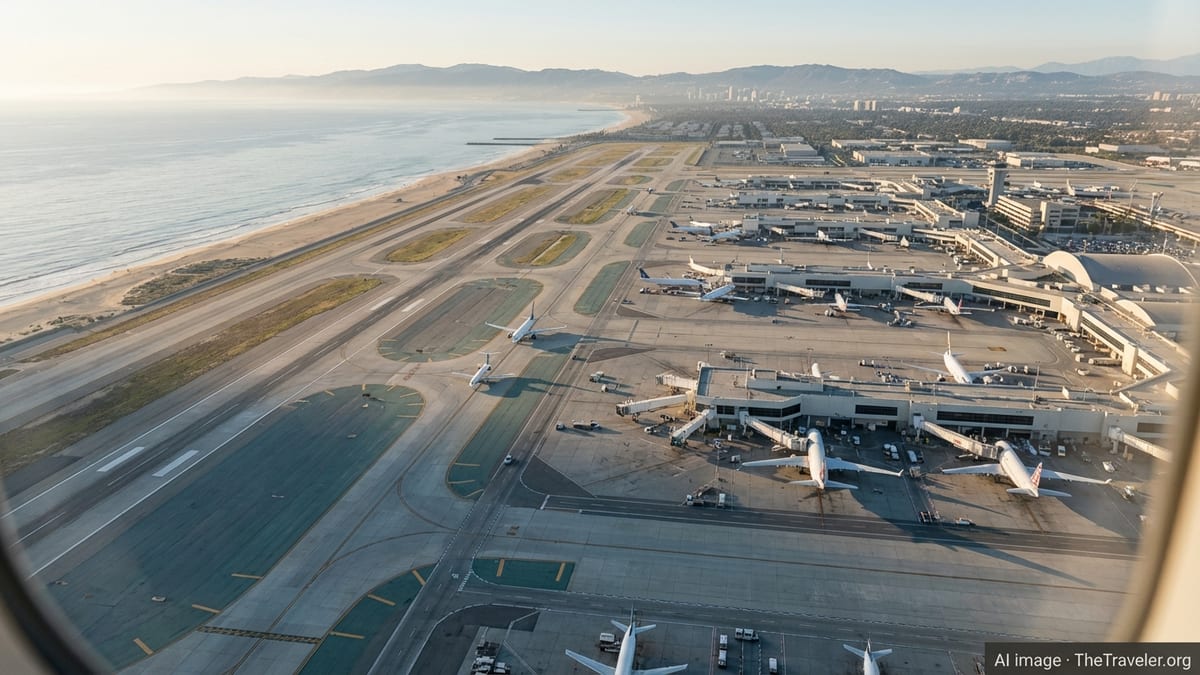
Los Angeles International Airport, better known as LAX, is California’s largest airport by passenger volume and one of the top ten busiest airports in North America. It serves tens of millions of travelers each year and offers one of the widest arrays of international destinations in the United States. Virtually every major global airline group is represented, giving travelers extensive choice of routes, schedules and cabin products for trips to Europe, Asia, Oceania and Latin America.
LAX’s greatest strength is sheer connectivity. The airport is organized around nine passenger terminals, including Tom Bradley International Terminal, which concentrates many long-haul flights. From Los Angeles, travelers can fly nonstop to key global hubs such as London, Paris, Tokyo, Seoul, Sydney, Mexico City and many more, often with multiple daily frequencies. Domestically, all major U.S. carriers maintain significant operations, allowing easy connections onward to nearly any major American city as well as many smaller regional markets.
At the same time, LAX is in the midst of a long-running transformation. A multibillion-dollar modernization program is upgrading terminals, improving baggage systems and reconfiguring ground transportation ahead of the 2028 Olympic Games. New concourses, refreshed interiors, expanded concessions and a much-anticipated automated people mover are designed to ease the chronic congestion that has long frustrated travelers on the roadways into the airport. While construction can still create occasional bottlenecks, the long-term trend is toward more efficient passenger flows and a noticeably more polished experience inside many terminals.
For international and domestic travelers alike, LAX is often the best choice if you prioritize nonstop options and elite lounge networks over simplicity. It shines for those connecting between continents, redeeming airline miles or seeking premium cabin experiences. However, those with flexibility in airport choice around Southern California may find a better balance between convenience and connectivity at nearby airports such as San Diego or Orange County, especially for purely domestic journeys.
San Francisco International Airport: A Premier Pacific Gateway
San Francisco International Airport, SFO, rivals LAX as a leading West Coast gateway, particularly for transpacific and technology-focused travel. It is a primary hub for a major U.S. carrier and offers extensive nonstop service to cities across East Asia, Southeast Asia and Oceania, as well as to major European capitals. For travelers heading to or from Asia, SFO is often considered one of the most convenient and well-connected airports in the country.
SFO has also earned global recognition for its design and sustainability. In late 2025, its Harvey Milk Terminal 1 was singled out by an international architecture and design award as the world’s most beautiful airport terminal, with judges praising its traveler-centered amenities and significant reductions in energy use and carbon emissions. The terminal emphasizes natural light, art installations and quieter gate areas, reflecting a broader shift in airport design toward wellness and reduced stress in the travel experience.
The airport’s layout is relatively intuitive, with four major terminals connected airside in most cases, allowing for straightforward transfers between many domestic and international flights. Public transportation access is another advantage: direct rail service links SFO with downtown San Francisco and other Bay Area communities, helping travelers avoid highway congestion and parking hassles. Inside the terminals, passengers find a wide range of dining options, including local Bay Area brands, as well as museum-quality exhibits, yoga rooms and family-friendly spaces.
SFO is often the best California airport choice for travelers in Northern California who need long-haul international flights or who are connecting between North America and Asia. It offers a strong combination of connectivity, ground transport options and terminal quality. However, coastal weather can occasionally affect operations, and fog-related delays are more common here than at some inland airports. For travelers whose priority is on-time performance and short-haul domestic routes within the West, nearby Oakland or San Jose can be appealing alternatives.
San Diego International Airport: A Growing Coastal Alternative
San Diego International Airport, SAN, has evolved in recent years from a primarily regional facility into one of California’s most important medium-size hubs. Despite operating on a single runway, it ranks as the state’s third-busiest airport, with domestic schedules that rival many larger facilities. Its busiest routes connect San Diego to San Francisco, Las Vegas, Denver, Phoenix, Seattle and other major metropolitan areas, reflecting the city’s role as both a tourism destination and a growing tech and life sciences center.
Recent infrastructure investment has significantly reshaped the passenger experience. In September 2025, the airport opened the first phase of its completely rebuilt Terminal 1, a multibillion-dollar project that replaces a 1960s-era structure with a modern, light-filled facility. The new terminal emphasizes sustainability, including a commitment to carbon-free electricity and extensive electric vehicle charging, along with improved airfield layout to reduce emissions and delays. Additional gates will come online in stages through 2028, further increasing capacity and route potential.
Inside the new Terminal 1, travelers find expanded security checkpoints, larger gate areas and a line-up of dining and retail options curated to showcase local San Diego brands. Design cues nod to the region’s coastal setting, with wave-like forms, views of the bay and warm, natural materials. Combined with the compact size of the airport, these upgrades make check-in, security and boarding feel less hectic than at many major hubs, especially for early morning departures and off-peak flights.
From an international perspective, SAN offers a smaller but steadily growing portfolio of routes, primarily to Mexico and select transborder destinations, complemented by seasonal long-haul services when demand supports them. For many travelers in Southern California, particularly those based in San Diego County and parts of Orange and Riverside Counties, SAN can be the most efficient choice for both domestic and near-international travel, avoiding the long ground journey and heavier crowds associated with LAX.
Regional Powerhouses: Sacramento, Burbank and Orange County
Several mid-size California airports play an outsized role in domestic connectivity, offering an appealing balance of route coverage and convenience. Sacramento International Airport, serving the state capital and much of inland Northern California, has built a particularly strong network of flights to major Western hubs. Its busiest routes link Sacramento with Las Vegas, San Diego, Denver, Seattle and Phoenix, with additional service to large coastal cities like Los Angeles. Travelers heading to conferences, government meetings or wine country often favor Sacramento for its straightforward layout and manageable traffic compared with Bay Area airports.
In the greater Los Angeles region, Hollywood Burbank Airport and John Wayne Airport in Orange County provide attractive alternatives to LAX for many domestic trips. Burbank is especially popular with travelers bound for the entertainment industry hubs of Burbank, Glendale and Hollywood. Its top routes include frequent flights to Las Vegas, Northern California and major Western hubs. The airport’s compact footprint allows some of the shortest curb-to-gate times in the region, and ground transport into central Los Angeles is often quicker than from LAX, especially outside peak rush hours.
John Wayne Airport, located in Orange County, caters to a mix of business and leisure travelers from affluent coastal communities and the broader Orange County and Inland Empire region. While its capacity is constrained by local noise and growth agreements, it offers frequent service to major hubs like Denver, Phoenix, Dallas and San Francisco, along with seasonal and leisure-oriented routes. For families traveling to Southern California’s theme parks or beach resorts, flying into Orange County can significantly cut driving time compared with using LAX.
These regional powerhouses rarely match the intercontinental reach of LAX or SFO, but for domestic travel they can be the “best” airports in California for sheer ease of use. Shorter security lines, smaller terminals and lower stress levels appeal to travelers willing to connect once through a larger hub rather than fight crowds at a megahub from the start.
Bay Area Alternatives: Oakland, San Jose and Sonoma County
In the San Francisco Bay Area, travelers benefit from a trio of secondary airports that complement SFO: Oakland International Airport, San Jose Mineta International Airport and Charles M. Schulz Sonoma County Airport near Santa Rosa. Each has carved out a niche, giving residents and visitors more options for domestic and regional travel and easing pressure on San Francisco’s main hub.
Oakland International, located on the east side of the bay, has long been a stronghold for low-cost carriers and point-to-point domestic routes, particularly to Western and Sun Belt cities. It tends to offer relatively quick security lines and less congestion on the roadways, making it attractive for travelers from the East Bay and Central Valley. Limited international service, often focused on Mexico and the Caribbean, gives budget-conscious vacationers additional options without needing to cross the bay to SFO.
San Jose Mineta International Airport sits at the southern end of the bay, in the heart of Silicon Valley. It caters heavily to technology and business travelers, with robust service to major tech hubs in the Pacific Northwest, Texas and the East Coast. While its long-haul international network is smaller than SFO’s, San Jose does support select international flights, particularly to Mexico and Asia, when demand is strong. Its terminals are modern and compact, and ground transport links to major corporate campuses are straightforward, which can be a decisive advantage on short business trips.
Farther north, Sonoma County’s Charles M. Schulz Airport, sometimes affectionately dubbed “Snoopy’s airport,” has grown from a tiny regional outpost into a credible alternative for travelers heading to wine country or the North Coast. Terminal expansions and upgrades have improved capacity and comfort, and a mix of airlines now links the airport with several West Coast cities. Southwest Airlines is expected to begin operations here in 2026, a sign of the airport’s rising profile. While it does not yet offer intercontinental service, for domestic leisure travel it can dramatically reduce driving time compared with using SFO or Oakland.
Smaller Coastal Gateways: Santa Barbara, Monterey and San Luis Obispo
Along California’s central coast, a string of smaller airports provides valuable links between coastal communities and the national air network. These facilities rarely appear on national rankings, but they can be the best choice for travelers prioritizing proximity and simplicity over a broad choice of airlines. They are especially useful for trips that start or end in wine regions, university towns or coastal resorts far from major metropolitan centers.
Santa Barbara Municipal Airport serves a mix of business and leisure travelers drawn to the region’s beaches, vineyards and cultural institutions. Its busiest routes connect to major hubs like Denver, San Francisco, Phoenix and Las Vegas, primarily on large national carriers. This allows passengers to connect onward to almost any domestic or international destination with just one change of planes. The terminal is small, parking is close and security queues are generally modest, making it easy to arrive relatively close to departure time compared with big-city airports.
Monterey Regional Airport provides similar connectivity for the Monterey Peninsula, Carmel and Big Sur. Flights typically link the region to hubs such as Phoenix, Denver, Dallas, Los Angeles and San Francisco, enabling onward connections while sparing travelers a sometimes-lengthy drive to San Jose or San Francisco. For golf trips, conferences or coastal getaways, using Monterey can save hours on the road and reduce stress at the beginning and end of a trip.
San Luis Obispo County Regional Airport rounds out this cluster of coastal gateways, serving a university town and fast-growing wine region. Routes to Phoenix, Denver, San Francisco, Seattle and Los Angeles create a web of one-stop connections to the rest of the country. Like Santa Barbara and Monterey, San Luis Obispo stands out less for any single marquee feature than for its consistent convenience: manageable crowds, easy parking and short walks from check-in to gate. For many residents in these regions, such qualities make these airports the “best” option, even if it means accepting one additional connection on long-haul itineraries.
Choosing the Best California Airport for Your Trip
Selecting the best airport in California for a particular journey often comes down to weighing connectivity against convenience. Travelers who value nonstop flights to far-flung destinations, alliance loyalty benefits and a wide range of departure times are usually best served by LAX or SFO. These megahubs concentrate long-haul international services and offer rich domestic networks, making them ideal for complex itineraries or trips where avoiding connections is a priority.
By contrast, travelers more focused on a smooth, low-stress experience may find greater satisfaction at mid-size and regional airports such as San Diego, Sacramento, Burbank, Orange County, Oakland, San Jose or the coastal gateways. These facilities tend to feature shorter walks, more predictable security wait times and less intense roadway congestion. The trade-off is fewer airline choices and, in some cases, the need to connect through a larger hub for international or cross-country journeys. For many, that is a worthwhile exchange if it means starting and ending travel closer to home.
Geography and ground transport also play critical roles. In sprawling metropolitan areas like Los Angeles and the Bay Area, the time spent getting to and from the airport can rival or exceed time spent in the air on short flights. Using Burbank instead of LAX, or Oakland instead of SFO, can translate into significant time savings for travelers whose homes or destinations are closer to those airports. Similarly, for visitors heading to coastal resorts, wine country or university towns outside the largest cities, flying directly into regional airports can eliminate hours of driving.
Ultimately, the best airport is the one that aligns with your priorities, schedule and tolerance for connections. California’s diverse airport system means most travelers can find a comfortable balance, whether that means embracing the buzz and route density of a global hub or opting for the calmer, more personal feel of a regional terminal.
FAQ
Q1. What is the best airport in California for international flights?
The best overall airport for international flights is usually Los Angeles International Airport, thanks to its extensive network of long-haul routes across Europe, Asia, Latin America and the Pacific.
Q2. Which California airport is best for travel to Asia?
Both San Francisco International and Los Angeles International offer strong connections to Asia, but many travelers favor San Francisco for its concentration of transpacific routes and efficient international terminals.
Q3. What is the most convenient airport for visiting San Diego and nearby beach cities?
San Diego International Airport is generally the most convenient choice, placing travelers just minutes from downtown, major beaches and coastal neighborhoods.
Q4. Are regional airports like Burbank and Orange County good alternatives to LAX?
Yes. For many domestic routes, Hollywood Burbank and John Wayne Airport in Orange County offer shorter security lines, easier access and less congestion than LAX, though with fewer nonstop options.
Q5. Which airport should I use for California wine country?
For Napa and Sonoma, San Francisco and Oakland are common gateways, but Charles M. Schulz Sonoma County Airport can be the most convenient if there are suitable flights for your itinerary.
Q6. What is the best airport in Northern California for domestic business travel?
San Francisco International is the primary hub, but Sacramento International and San Jose Mineta International are excellent for business trips thanks to their strong links to major Western and national hubs.
Q7. Is San Diego International Airport a good option for domestic connections?
Yes. San Diego has a dense network of domestic flights to major hubs such as San Francisco, Denver, Phoenix and Dallas, making it a practical connecting point for many U.S. itineraries.
Q8. Are smaller airports like Santa Barbara and Monterey reliable for connections?
These airports generally provide dependable service to large hub airports, enabling one-stop connections worldwide. However, schedules may be less frequent than at major hubs, so flexibility is helpful.
Q9. Which California airport is best for avoiding crowds and long lines?
Mid-size and regional airports such as Burbank, Sacramento, Orange County, Santa Barbara, Monterey and San Luis Obispo typically have smaller crowds and shorter lines than LAX or SFO.
Q10. How should I choose between SFO, Oakland and San Jose when flying to the Bay Area?
Consider where you are staying and your route options. SFO has the most international and long-haul flights, while Oakland and San Jose often offer easier access and a calmer experience for domestic trips.