

Colorado’s mountains are closer than they look on the map, but choosing the right airport can mean the difference between watching alpenglow from a lodge hot tub or from a rental car windshield. From Denver’s huge international hub to small regional airfields tucked deep in the Rockies, each airport offers a different balance of flight options, cost, and drive time. Understanding those tradeoffs is the key to a smooth start and finish to your mountain trip.
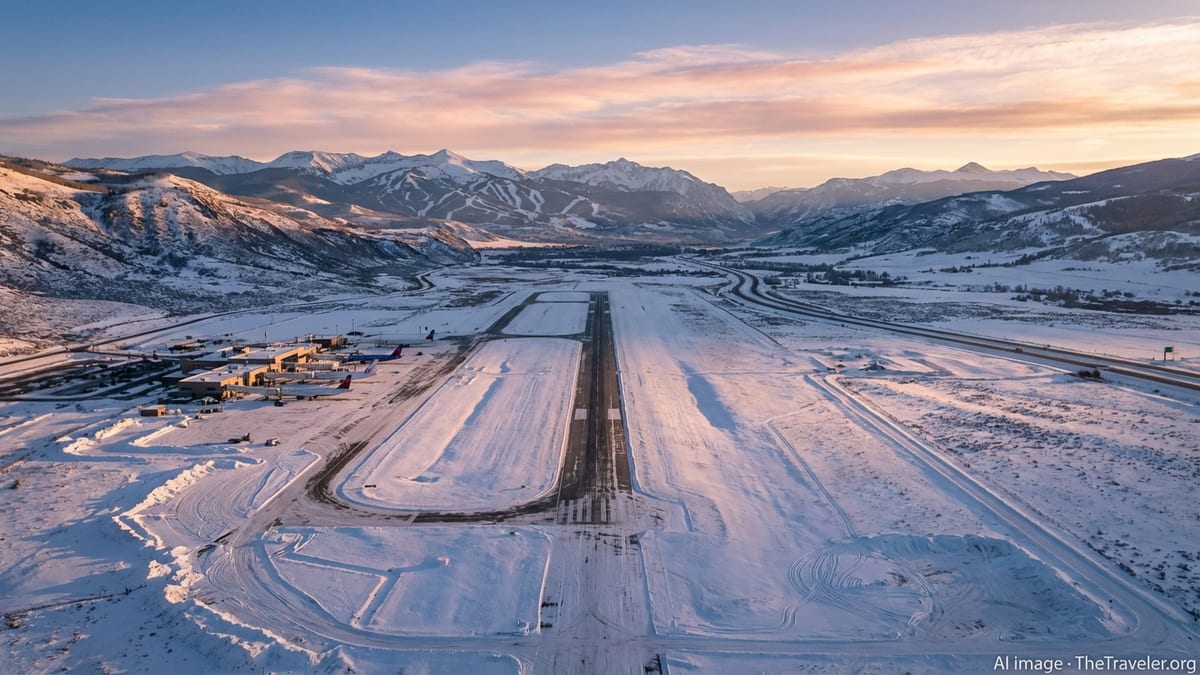
How to Choose the Best Colorado Airport for Mountain Access
For most travelers, the choice starts with one question: fly into a big hub with more routes and lower fares, or land closer to the mountains with a higher ticket price and fewer flights. Denver International Airport serves as the main gateway for Colorado and much of the Rocky Mountain region, offering extensive nonstop connections and generally the widest range of fares. By contrast, smaller regional airports such as Eagle County, Aspen, Montrose, Gunnison, Steamboat/Hayden, and Telluride offer shorter drives to the slopes but rely heavily on seasonal schedules and favorable weather conditions.
Another key factor is how comfortable you are driving in winter. Getting from Denver to marquee resorts like Vail, Breckenridge, and Steamboat typically involves crossing high-elevation passes where snow, ice, and traffic can slow travel significantly, especially on weekends and holidays. In good conditions, many major resorts sit two to four hours from Denver by road, but winter storms can easily extend those times. Recent guides to shuttle transfer times suggest, for example, a roughly four-hour drive from Denver to Aspen and three and a half hours to Steamboat Springs in clear weather, underscoring how quickly distances add up along winding mountain highways.
Regional airports reduce those road miles dramatically, which can be especially valuable on shorter trips where every hour counts. Eagle County Airport, often branded as the gateway to Vail and Beaver Creek, sits well under an hour from those ski areas by car, while Aspen’s airport lies just a few miles from town and Snowmass. For Telluride and Crested Butte, Montrose and Gunnison respectively do similar work, providing mainline flights to within roughly 30 to 90 minutes’ drive of the lifts depending on road conditions. The tradeoff is that these airports can see more frequent weather-related disruptions and offer fewer daily flights.
Ultimately, the best airport for your Colorado mountain trip depends on your origin city, budget, and appetite for winter driving. Travelers connecting from smaller markets or seeking the most aggressive fare sales might find Denver ideal, especially when paired with scheduled shuttle services. Those prioritizing convenience and minimizing winter road exposure may prefer to pay more for nonstop or one-stop flights into regional airports, accepting the tighter schedules as the price for stepping off the plane almost at the base of the mountains.
Denver International Airport: Colorado’s Main Mountain Gateway
Denver International Airport is the busiest airport in Colorado by a wide margin and serves as the primary air hub for travelers heading into the state’s mountain regions. With hundreds of daily flights on major U.S. carriers plus a mix of low-cost airlines, Denver offers broad coverage across North America and beyond. That density of service typically translates into more competitive fares, making it the most budget-friendly choice for many visitors who are willing to trade a longer drive for lower ticket prices and flexible schedules.
From Denver, a web of interstate and state highways radiates toward the high country, with Interstate 70 acting as the main corridor to the central mountains. Under typical conditions, travelers can reach Winter Park or Keystone in around one hour and forty-five minutes, Vail in about two hours, and Steamboat Springs in roughly three and a half hours. Aspen is commonly listed at around four hours of drive time, and Crested Butte around five hours, depending on weather, traffic, and time of day. These estimates come from recent shuttle operator guidance and assume clear roads, so trip planning should allow extra time in peak winter or during storms.
One of Denver’s strengths is the range of ground transportation options into the mountains. Several established shuttle companies run scheduled services between the airport and resorts such as Breckenridge, Vail, Beaver Creek, Keystone, and Copper Mountain, with both shared and private options available. Recent information from statewide tourism resources notes that shared shuttles operate daily, offering door-to-door service to major resorts and nearby towns. This can be particularly useful for travelers who do not want to drive on snow-packed roads or who are unaccustomed to high-altitude winter conditions.
However, the same characteristics that make Denver convenient also introduce challenges. The airport can feel crowded in peak ski season, security lines may lengthen during holiday periods, and rental car queues can be long on powder days. Once on the road, traffic along I-70 can slow significantly on weekends as both locals and visitors head for the slopes. For those reasons, Denver is often best for travelers with some schedule flexibility, or those planning longer stays that make a few extra hours of driving a smaller portion of the overall trip.
Eagle County Regional Airport: Fastest Route to Vail and Beaver Creek
Eagle County Regional Airport, commonly referred to as Vail/Eagle Airport, is one of the most strategically located airports for access to Colorado’s central Rockies. Positioned west of Vail, it sits within easy reach of Vail and Beaver Creek, with recent transportation providers citing approximate drive times of 30 to 40 minutes to each resort in typical conditions. That proximity has helped establish the airport as a favorite for travelers seeking quick access to these marquee destinations without a long mountain drive from Denver.
The airport features a single runway of around 9,000 feet, which is long by mountain standards and designed to support landings in challenging winter conditions. Aviation and tourism sources highlight its winter operations, noting dedicated de-icing facilities and specialized snow removal equipment aimed at keeping the runway open during active storms. While no airport in the high Rockies is immune to weather disruption, Eagle County’s infrastructure reflects its role as a primary winter gateway for the Vail Valley.
Air service at Eagle County is strongly seasonal, with a pronounced ramp-up in winter as airlines add nonstop flights from major U.S. hubs. While schedules change year to year, recent seasons have seen service from carriers such as United, American, and Delta from cities including Denver, Dallas, Houston, Chicago, and others. Industry news in 2025 reported American Airlines reviving a seasonal nonstop route between Charlotte and Eagle County, underlining continuing investment in direct access for skiers from the eastern United States. Such routes typically operate from mid-December through early January or into spring, though specific dates vary by carrier and season.
On arrival, travelers can choose among rental cars, private transfers, and shared shuttle services that coordinate with peak flight windows. Drive times from the airport to nearby resorts are short enough that many visitors can land in the morning and be on the slopes by afternoon. For those planning visits to Breckenridge, Keystone, or Copper, Eagle County still provides an advantage over Denver, though the drive extends to roughly an hour and a half or more, depending on road conditions. The main tradeoff is cost and flexibility: flights into Eagle County are often more expensive and less frequent than into Denver, making advance planning and some schedule tolerance important.
Aspen/Pitkin County Airport: Minutes to Aspen and Snowmass
For travelers whose primary goal is to ski or ride in the Roaring Fork Valley, Aspen/Pitkin County Airport is one of the most convenient options in the United States. Located just a few miles from downtown Aspen and only slightly farther from Snowmass Village, the airport allows visitors to move from baggage claim to base area in roughly fifteen minutes under normal traffic. This proximity, often highlighted in destination marketing materials as a “runway to first chair” experience, is a major reason the airport remains a popular winter gateway despite its small footprint and mountain constraints.
Recent information from Aspen Snowmass notes that the airport is served by major carriers including United, Delta, and American, with nonstop or seasonal flights from major hubs such as Denver, Chicago, San Francisco, Los Angeles, Dallas, Houston, Atlanta, Phoenix, and Charlotte. Seasonal flight maps for the 2025–2026 winter indicate hundreds of weekly operations at peak holiday periods, with Denver in particular providing a crucial connection point for travelers from smaller markets. Importantly, schedules and city pairs can shift from year to year, so checking current route maps before booking is essential.
The airport’s setting in a tight valley at high elevation means that operations can be sensitive to weather and visibility, particularly during persistent snow or low clouds. Delays and diversions are not unusual in stormy periods, with Denver sometimes serving as a backup routing point. Aircraft type is another consideration; because of runway length and terrain, airlines typically operate regional jets rather than larger mainline aircraft, which can limit seat availability in high-demand weeks and push fares upward compared with Denver arrivals.
On the ground, transportation logistics are straightforward. Local transit and resort shuttles connect the airport to lodging in Aspen, Snowmass, Aspen Highlands, and Buttermilk, while a compact road network keeps transfer times short. Many visitors choose to skip rental cars entirely, relying instead on the valley’s bus system and resort circulators, which are designed to serve skiers and riders through extended winter operating hours. That car-free convenience, combined with minimal travel time from plane to slopes, makes Aspen/Pitkin County Airport especially attractive for quick getaways and long weekends.
Montrose, Telluride, Gunnison and Steamboat/Hayden: Deep in the San Juans and Western Slope
Travelers targeting southwest Colorado’s dramatic San Juan Mountains or the western slope’s more secluded resorts often look to a cluster of regional airports anchored by Montrose, Telluride, Gunnison, and Steamboat/Hayden. Each of these facilities serves as a critical link between remote mountain terrain and the national air network, enabling skiers and summer visitors to reach destinations that would otherwise require all-day drives from Denver or other major cities.
For Telluride, two airports share the load. Telluride Regional Airport sits high above town and is frequently cited by regional flight alliances as among the most scenic and conveniently located in North America, just minutes from the village and ski area. It is currently served by Denver Air Connection, with tickets often sold through codeshare arrangements on major airlines. However, because of its elevation and terrain, the airport is particularly sensitive to weather, and a larger share of Telluride-bound passengers still fly into Montrose Regional Airport instead. Montrose lies roughly an hour and a half from Telluride in typical conditions, according to recent tourism and transfer guidance, and offers a broader roster of seasonal flights on mainline jets to and from major U.S. hubs.
Crested Butte, another destination revered for steep terrain and a more low-key atmosphere, relies primarily on Gunnison–Crested Butte Regional Airport. This airport sits about half an hour to forty minutes from Crested Butte by road, with winter schedules geared toward ski season demand. Listings from aviation services highlight the airport as a key regional facility with a single runway capable of accommodating the regional and narrow-body aircraft commonly used in winter operations. Seasonal nonstop flights from cities such as Denver and select larger hubs are common, though routes may be added, dropped, or adjusted over time based on demand.
Steamboat Springs, on Colorado’s northwest flank, draws many of its air visitors to Yampa Valley Regional Airport near Hayden. Ground transfer providers and tourism boards typically quote a drive of around thirty to forty minutes from the airport to Steamboat’s base area in good weather. Airlines tend to load up on winter flights connecting Steamboat to major U.S. cities, helping the resort market itself as a relatively easy destination for families and groups. As with other mountain airports, however, storm cycles can introduce delays and diversions, so some travelers still prefer the longer but more robust Denver routing.
Across these regional airports, a common theme emerges: closer proximity to remote, high-value destinations in exchange for fewer flights, seasonal schedules, and greater sensitivity to winter storms. For those committed to visiting Telluride, Crested Butte, or Steamboat specifically, these airports are usually the most efficient choices. Yet even here, strategic use of Denver as a backup plan can be wise, especially if tight connections or fixed check-in times leave little margin for weather disruptions.
Colorado Springs, Grand Junction and Other Alternative Gateways
While most mountain-bound travelers naturally look to Denver or the well-known regional ski gateways, several other Colorado airports can serve as effective entry points depending on itinerary and season. Colorado Springs Airport, for example, is the state’s second-busiest commercial airport and sits closer to the southern mountains and the San Luis Valley than Denver does. For travelers exploring destinations near the Sangre de Cristo Range, Pikes Peak, or even linking onward by road toward Wolf Creek Pass or the Four Corners region, Colorado Springs can shorten drive times compared with starting in Denver, though it lacks direct access to major ski resorts on par with Eagle, Aspen, or Montrose.
Grand Junction Regional Airport on the western edge of the state provides a different kind of access. While not directly adjacent to world-famous ski resorts, Grand Junction offers relatively easy routes to Powderhorn and serves as a launch point for drives toward the central Rockies, Moab in Utah, and Colorado National Monument. Aviation directories list it among the larger runways in the state, and its lower elevation compared with many mountain airports can sometimes provide more stable operating conditions in winter, though storm systems can still affect flights. For travelers combining a ski trip with a road itinerary through canyon country and wine regions, Grand Junction can be a particularly appealing choice.
Smaller airports like Durango–La Plata County, Rocky Mountain Metropolitan near Boulder, and private or general aviation facilities around Front Range communities are also part of the landscape. Durango offers the main commercial link to Purgatory Resort and the scenic San Juan Skyway, while Rocky Mountain Metropolitan and similar fields see a mix of private, charter, and training flights. These alternative gateways generally lack the dense winter schedules and resort-focused transfer networks found at Denver or Eagle, but they can be valuable for specific itineraries, especially for travelers on private or charter aircraft seeking direct access to less crowded areas of the state.
Choosing one of these secondary gateways makes the most sense when your mountain plans fall outside the familiar arc of Vail, Breckenridge, Aspen, and Telluride, or when you plan a hybrid trip that includes national parks, desert landscapes, and lower-key ski areas. While flight options may be more limited and often involve at least one connection, the payoff can be quieter roads, more flexible lodging options, and a broader sense of Colorado’s varied geography beyond the marquee destinations.
Seasonality, Weather and Ground Transportation Considerations
Regardless of which Colorado airport you choose, three practical factors deserve attention: seasonality of flights, winter weather, and ground transportation options. Most mountain airports build their schedules around ski season, typically ramping up nonstop service from major U.S. cities from December into early spring. This seasonal focus means that some routes operate only on certain days of the week or only during core holiday windows. For example, recent airline announcements regarding Eagle County and Aspen have highlighted limited-time nonstops tied specifically to the peak winter weeks. Travelers planning visits outside these periods should expect to route through Denver or another major hub with year-round service.
Winter weather is an inescapable reality in Colorado’s high country, and it can impact both air and road travel. Mountain airports like Aspen, Telluride, and Steamboat/Hayden sit in terrain where snow, wind, and low visibility are common, occasionally leading to delays, diversions, or cancellations. Even Denver, located on the plains east of the Rockies, experiences significant snow events and high winds that can ripple through flight schedules. On the ground, highway agencies and shuttle companies routinely remind travelers that advertised drive times are based on fair conditions, and that heavy snowfall or peak weekend traffic can add hours to a journey.
Ground transportation options vary widely by airport. Denver stands out for its range of choices, from shared shuttle services that operate daily to rental cars, ride-hailing, and regional buses. Tourism information for operators such as Epic Mountain Express highlights shared shuttle routes between Denver, Eagle/Vail Airport, and most major central-mountain resorts, offering a cost-effective alternative to rental cars. Regional airports often have more limited but still coordinated options, with scheduled shuttle services linking Eagle, Montrose, Gunnison, and Steamboat/Hayden to their respective resort towns and lodging hubs.
For visitors uncomfortable with winter driving, opting for shuttle transfers or private car services can dramatically reduce stress, especially when arriving after dark or during active storms. Travelers who choose to rent cars should consider vehicles with all-wheel or four-wheel drive and be prepared for traction laws on key passes, which may require suitable tires or chains during adverse conditions. In all cases, building extra time into itineraries, checking highway and weather forecasts frequently, and avoiding tight same-day connections between flights and lift-ticket start times can make the difference between a relaxed arrival and a race against the clock.
The Takeaway
Colorado’s patchwork of airports offers multiple paths into the mountains, each with distinct strengths. Denver International Airport delivers unmatched flight frequency, broad route networks, and often the lowest fares, at the cost of longer drives and potential highway congestion. Regional gateways such as Eagle County, Aspen, Montrose, Gunnison, Steamboat/Hayden, and Telluride transform the journey by putting visitors within an hour or less of the slopes, but they ask travelers to accept higher fares, seasonal schedules, and a greater sensitivity to winter storms.
The best choice depends on your priorities. If budget and flexibility matter most, especially on longer trips or for groups coming from a variety of home airports, Denver is usually the most practical option, particularly when paired with well-established shuttle services. If your time window is tight or your focus is firmly on a single destination such as Vail, Aspen, Telluride, Crested Butte, or Steamboat, flying into the closest regional airport can maximize your hours on the mountain and minimize time spent on winter highways.
Whatever route you choose, planning ahead pays dividends. Confirm seasonal flight patterns, examine recent driving time guidance, consider whether you truly want to drive on snow-packed passes, and build in enough margin to absorb weather-related surprises. With a bit of preparation, the flight and transfer can become part of the adventure rather than an obstacle, setting the tone for a trip spent exactly where you wanted to be all along: high in Colorado’s mountains.
FAQ
Q1. What is the best airport in Colorado for general access to the mountains?
For most travelers, Denver International Airport offers the best overall access, thanks to its extensive flight network, competitive fares, and daily shuttle connections to many major mountain resorts.
Q2. Which airport is closest to Vail and Beaver Creek?
Eagle County Regional Airport is the closest major airport to Vail and Beaver Creek, with typical drive times of roughly 30 to 40 minutes in good road conditions.
Q3. What is the most convenient airport for Aspen and Snowmass?
Aspen/Pitkin County Airport is the most convenient, located only a few miles from Aspen and Snowmass, allowing travelers to reach the slopes in about fifteen minutes after landing.
Q4. How do I reach Telluride most easily by air?
Telluride Regional Airport offers the shortest transfer to the resort, but many travelers choose Montrose Regional Airport for its broader flight options and then take a roughly ninety-minute ground transfer to Telluride.
Q5. Is it cheaper to fly into Denver than into regional mountain airports?
Airfares to Denver are often lower because of high competition and more flights, while tickets to regional airports such as Eagle, Aspen, or Montrose can be higher, especially in peak ski season.
Q6. Do I need a rental car to reach Colorado ski resorts from the airport?
Not necessarily. Many resorts are connected to Denver and regional airports by shared shuttles and private transfers, and some areas like Aspen and Snowmass have robust local transit that lets visitors skip a rental car entirely.
Q7. How much can winter weather disrupt flights to Colorado’s mountain airports?
Winter storms can cause delays or cancellations at all Colorado airports, but smaller mountain airports such as Aspen, Telluride, and Steamboat/Hayden tend to be more sensitive to low visibility, wind, and snow than Denver.
Q8. Which airport should I use if I want to ski Crested Butte?
Gunnison–Crested Butte Regional Airport is the closest commercial airport to Crested Butte, with typical transfer times of around thirty to forty minutes by road under normal conditions.
Q9. Are there good alternatives to Denver for combining skiing with a broader Colorado road trip?
Airports such as Colorado Springs and Grand Junction can work well for itineraries that mix skiing with visits to national parks, canyon country, or southern and western Colorado towns, even though they are not as close to major ski resorts as Denver or Eagle.
Q10. How far in advance should I book flights into Colorado’s regional mountain airports?
Because flights to regional airports are often limited and demand is high during peak weeks, booking several months in advance is advisable to secure preferred travel dates and more favorable fares.