

Germany’s air network is one of Europe’s most comprehensive, stitching together major global hubs with a dense web of regional airports. For international travelers, this means plenty of options, but it also raises a practical question: which German airports actually work best when you are arriving from abroad, changing planes on a tight connection, or starting a multi-city journey across the continent? From world-ranking megahubs to award-winning regional gateways, Germany offers a broad spectrum of airport experiences that can shape the start or end of any trip.
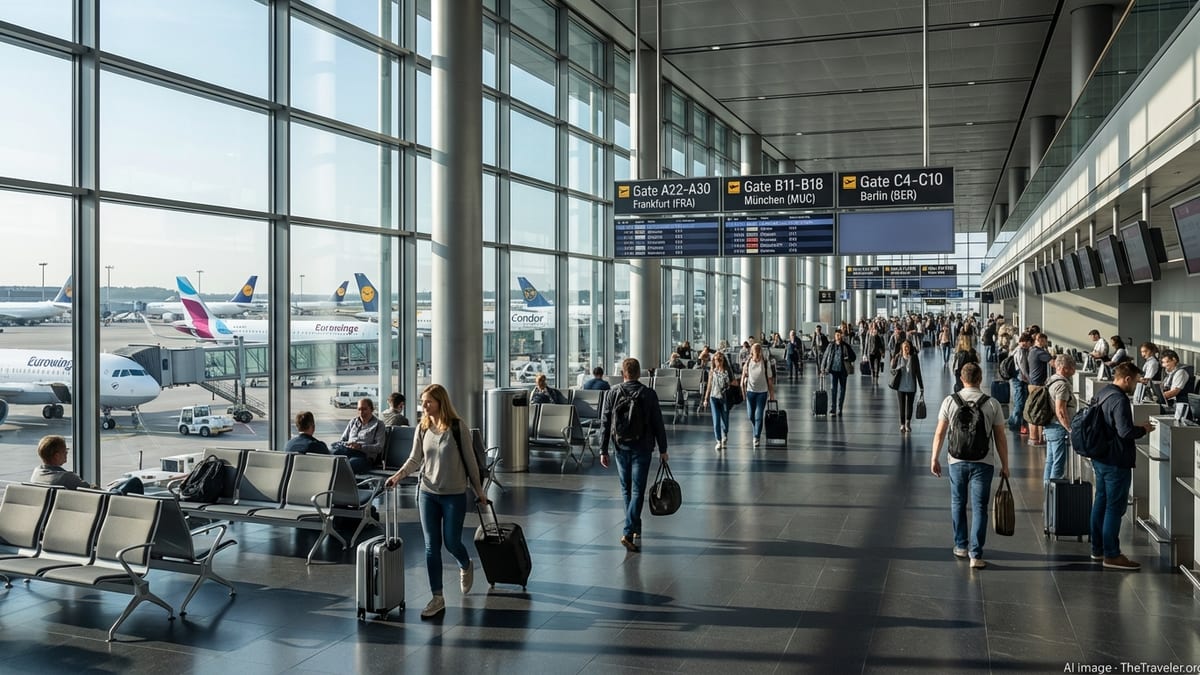
How Germany’s Airports Serve International Travelers
Germany’s airports play a dual role in European aviation. On one side are large intercontinental hubs that connect Europe with Asia, the Americas, Africa and the Middle East. On the other are efficient mid-size and regional airports that plug travelers into specific business regions or tourist areas with minimal hassle. For international visitors, choosing the right airport can translate directly into shorter queues, better connections and smoother onward travel by rail or road.
Passenger traffic data highlights how dominant the largest hubs are. Frankfurt, Munich and Berlin Brandenburg consistently sit atop national rankings, handling the majority of long-haul and transfer traffic. Frankfurt remains Germany’s busiest airport and one of Europe’s top ten by passenger volume, with tens of millions of travelers passing through each year and hundreds of destinations across five continents. Munich follows as the country’s second-busiest gateway, while Berlin Brandenburg anchors the capital region as its primary international entry point.
Yet size is only part of the story. Industry awards and passenger surveys increasingly focus on service quality, wayfinding, punctuality and sustainability. Munich has secured a 5-star rating from the Skytrax aviation research institute and regular recognition as one of Europe’s top airports. Hamburg has been singled out by Airports Council International Europe as “Best Airport” in its passenger category, partly for its digitalization and climate strategy. Mid-size airports such as Düsseldorf and Cologne Bonn are improving operational reliability and connectivity, making them strong alternatives to the main hubs.
For international travelers, all of this means that “best” depends on priorities. Those seeking the most flight options and global connections often favor Frankfurt or Munich. Visitors who value shorter walking distances, calmer terminals and quick exits to regional cities may choose airports like Hamburg, Düsseldorf, Stuttgart or Cologne Bonn. Understanding each airport’s strengths can help align your arrival and departure choices with the type of trip you want.
Frankfurt Airport: Germany’s Intercontinental Megahub
Frankfurt Airport is Germany’s primary global gateway and one of Europe’s busiest hubs, consistently placing in the continent’s top tier for passenger numbers and worldwide connectivity. The airport serves hundreds of destinations across all inhabited continents, which makes it particularly attractive for travelers coming from long-haul markets such as North America and Asia who need to connect onwards within Europe. This sheer breadth of destinations also gives international travelers more options when disruptions occur, since alternative routings are often available.
For connecting passengers, Frankfurt’s layout is designed around transfer traffic, though its scale can feel overwhelming on a first visit. Terminals are large and sometimes crowded at peak times, and walking distances can be significant between far-flung gates. However, the airport supports connections with extensive signage in multiple languages, clear transfer security checkpoints and frequent airside shuttle options. Long opening hours for shops and restaurants, along with numerous airline lounges, give passengers places to rest and reset during layovers.
On arrival, Frankfurt offers an immediate advantage for travelers heading into other parts of Germany: direct integration with the national rail network. The long-distance railway station, located at the airport, connects passengers to major cities such as Cologne, Stuttgart, Munich, Hamburg and Berlin, while a separate regional station serves nearby towns and cities. This combination makes Frankfurt one of Europe’s strongest rail-air interchanges and allows international visitors to avoid an additional domestic flight by continuing their journey via high-speed train.
International travelers should, however, factor in realistic transfer times. Although minimum connection times can be relatively short on paper, the airport’s size, potentially long queues at security or border control, and occasional congestion at peak hours suggest leaving a buffer, especially for non-Schengen to Schengen transfers. For those prepared for a big-hub experience, Frankfurt rewards with unmatched route choice and strong ground connections, making it a strategically smart entry point into Germany and central Europe.
Munich Airport: Germany’s Premium Passenger Experience
Munich Airport has built a strong reputation as Germany’s most passenger-friendly hub, often ranking among Europe’s top airports in global surveys. Recognized by Skytrax with a 5-star airport rating, it combines a substantial long-haul and European network with a design that generally feels more compact and navigable than Frankfurt. Many international travelers describe Munich as a “manageable hub” where transfers feel less stressful, thanks to intuitive wayfinding, bright terminals and a generally calm atmosphere.
The airport serves as a key hub for major European airlines and offers direct connections to North America, Asia and the Middle East alongside a broad European route map. For connecting passengers, especially those arriving from intercontinental flights and continuing into the Schengen area, Munich’s transfer processes are usually straightforward. Security and border control lanes are well signposted, and transfer times can be relatively short, though peak travel periods still require some buffer.
One of Munich Airport’s major selling points for international travelers is comfort. Terminals feature generous natural light, clear signage and a range of amenities such as quiet areas, play spaces for families, shower facilities, and an extensive mix of dining options that highlight both Bavarian and international cuisine. The central plaza between terminals often hosts seasonal events and installations, turning transfer time into something more than just waiting at the gate. The on-site airport hotel, positioned between terminals, is convenient for travelers with early departures or overnight connections.
Ground transport from Munich Airport into the city and surrounding region is straightforward. Trains connect the terminals with Munich’s central station and onward regional rail network, though journey times can be longer than some travelers expect for the distance. Long-distance bus links and car rentals offer additional options for reaching Alpine destinations or smaller Bavarian towns. For visitors aiming to explore southern Germany, Austria or northern Italy, flying into Munich can offer a smoother travel experience than transiting via larger, more congested European hubs.
Berlin Brandenburg: Gateway to the Capital and Eastern Europe
Berlin Brandenburg Airport serves Germany’s capital and the wider Berlin-Brandenburg region, consolidating what were previously several separate airports into one modern gateway. For international travelers, it is the natural choice when the main destination is Berlin, offering a growing selection of European and a modest but expanding set of long-haul routes. While it is smaller in global reach than Frankfurt or Munich, its traffic has been rising, and it now stands firmly among the country’s busiest airports.
The terminal complex has a contemporary design, with an emphasis on glass, open spaces and straight-line walking routes. For most point-to-point travelers, navigation is intuitive, and connections within the Schengen area can be relatively simple. However, as traffic has increased, the airport has at times experienced pressure on terminal capacity and processes, which can lead to queues at security and check-in during peak hours. Travelers should give themselves sufficient time, particularly during holiday periods or large events in the city.
For visitors heading into Berlin, the airport’s rail station directly beneath the terminal offers regional and long-distance connections, allowing easy access to the city center and onward to other cities in eastern Germany and neighboring countries. Express and regional trains link the airport with Berlin’s Hauptbahnhof and other major stations, while long-distance services connect to Hamburg, Dresden and beyond. This integrated rail access is particularly valuable for travelers who want to combine a stay in Berlin with journeys to Poland, the Czech Republic or the Baltic region.
In terms of passenger experience, Berlin Brandenburg continues to evolve. Retail and dining options have broadened since the airport’s opening, and services for families and business travelers continue to improve. While it may not yet offer the same range of premium amenities found at Munich or the sheer global reach of Frankfurt, for international visitors whose primary goal is seeing Berlin or eastern Germany, it delivers a straightforward, modern entry point with good onward connectivity.
Düsseldorf and Cologne Bonn: Hubs for the Rhine-Ruhr Region
The Rhine-Ruhr metropolitan area is one of Europe’s largest urban regions, and its international air travel needs are primarily served by Düsseldorf Airport and Cologne Bonn Airport. Together, they offer an appealing alternative for travelers whose business or leisure plans center on cities such as Düsseldorf, Cologne, Essen, Dortmund or Bonn, as well as for passengers seeking less congested gateways than Germany’s two main hubs.
Düsseldorf Airport has grown steadily, welcoming more than twenty million passengers annually and consolidating its role as the country’s fourth-busiest airport. Its network includes a mix of European flights, leisure routes to Mediterranean and long-haul holiday destinations, and selected intercontinental services. For international travelers, Düsseldorf offers a comfortable balance: terminals that are large enough to feel like a significant hub but small enough to navigate without the long walks often associated with mega-airports. Its central location in a densely populated region also means that many travelers have relatively short ground journeys to and from the airport.
Cologne Bonn Airport, located not far away, serves both Cologne and the former capital Bonn and plays a dual role as a passenger and cargo hub. Passenger numbers have rebounded to and surpassed pre-pandemic levels, supported by a network of low-cost and full-service carriers connecting the region with destinations across Europe and the Mediterranean. For international visitors, particularly those arriving from within Europe or connecting from nearby hubs, Cologne Bonn can be a practical entry point with efficient security and typically shorter queues than larger airports.
Both airports benefit from strong ground transport. Düsseldorf and Cologne Bonn are integrated into regional and long-distance rail networks, offering frequent trains to city centers and other Rhine-Ruhr locations. For business travelers attending trade fairs in Cologne or Düsseldorf, these airports can be considerably more convenient than flying into Frankfurt and continuing by train. Travelers should be aware that flight schedules at both airports can be more seasonal and leisure-focused, so long-haul options may not be as extensive as those from Frankfurt or Munich, but for regional connectivity they perform strongly.
Hamburg, Stuttgart and Other Smart Choices for Specific Trips
Not every international itinerary requires passing through Germany’s biggest hubs. For many trips, especially those focused on a particular region, it can be more convenient to fly directly into a smaller airport such as Hamburg, Stuttgart, Hanover or Nuremberg. These airports tend to prioritize efficient processes, compact layouts and shorter walking distances, which can make arrivals and departures less stressful, especially for travelers with children or substantial luggage.
Hamburg Airport stands out among Germany’s mid-size gateways. Recognized multiple times by Airports Council International Europe with a “Best Airport” award in its passenger category, it has been praised for combining passenger comfort with digital services and a strong sustainability agenda. Its route network covers major European hubs and holiday destinations, with growing links to the Middle East. For international visitors wanting to explore northern Germany, the North Sea and Baltic Sea coasts, or nearby Denmark, starting in Hamburg can save considerable time compared with routing through Frankfurt or Munich and then continuing by train.
Stuttgart Airport and other regional facilities, such as Hanover and Nuremberg, are particularly useful for travelers with business in Germany’s industrial heartlands or for those visiting family outside the main tourist centers. They offer a selection of flights to key European hubs, providing one-stop connectivity to long-haul networks via cities like Frankfurt, Munich, Amsterdam or Zurich. Although these airports may not feature the extensive amenities of the largest hubs, many international visitors appreciate their straightforward, user-friendly nature and relatively quick exit times upon arrival.
When planning a trip, it is worth comparing total journey time rather than just flight time. A direct European flight into a regional airport followed by a short train or car journey can often be more efficient than a long-haul flight into a mega-hub plus a lengthy ground transfer. For travelers open to less obvious routings, Germany’s network of regional airports offers opportunities to tailor entry and exit points closely to individual itineraries.
Choosing the Right German Airport for Your Itinerary
When selecting which German airport to use, international travelers should start by clarifying their priorities: Do you want the widest choice of flights, the shortest total travel time, or the smoothest on-the-ground experience? Frankfurt and Munich are most suitable when global connectivity and flexible schedules matter most, especially for long-haul journeys that depend on strong alliance networks and frequent departures. Berlin Brandenburg is the logical choice when the capital is your main destination, while airports in the Rhine-Ruhr region excel when business or leisure plans center on western Germany.
Travel style also plays a role. Passengers who are comfortable navigating large, busy hubs may appreciate Frankfurt’s extensive network and rail integration, accepting longer walks and potentially busier terminals as part of the trade-off. Those who value a calmer ambiance and premium amenities may prefer Munich’s combination of high-quality services and clear terminal layout. Travelers who dislike long transfers altogether might choose point-to-point flights into regional airports such as Hamburg, Stuttgart or Cologne Bonn, even if that involves a longer or indirect flight routing.
Seasonality and time of day can significantly influence the experience at any airport. Early morning and late afternoon peaks tend to bring heavier queues at security and border control, particularly on weekdays. During major holidays, trade fairs or events such as Oktoberfest, airports like Munich and Düsseldorf can be noticeably busier. Building extra time into your schedule, using advance check-in options and monitoring airport advisories can help manage these pressures, regardless of which German airport you use.
Finally, consider how you will continue your journey after landing. Germany’s main airports are tightly integrated with rail networks and local transit, but the quality and speed of those connections vary. Frankfurt and Berlin Brandenburg stand out for long-distance rail links directly beneath or adjacent to terminals, while Munich, Hamburg, Düsseldorf and Cologne Bonn offer strong regional and intercity train services. For itineraries that blend city stays with visits to smaller towns or scenic regions, planning the airport and rail segments together can turn a simple arrival into a seamless multi-destination journey.
The Takeaway
Germany offers international travelers a diverse portfolio of airports, each with its own strengths. Frankfurt and Munich function as heavyweight global hubs, offering extensive networks and strong rail links that make them powerful gateways not just to Germany but to all of Europe. Berlin Brandenburg anchors the capital region with modern infrastructure and improving connectivity, while airports in the Rhine-Ruhr and northern Germany provide targeted access to key economic and cultural regions.
For travelers, the best German airport is rarely a universal choice. Business passengers with tight schedules may prioritize the connectivity of Frankfurt or the premium ambiance of Munich. Leisure travelers heading to specific regions might find Hamburg, Düsseldorf, Cologne Bonn or Stuttgart more practical and less stressful. Those who value simplicity and compact terminals can often benefit from flying into regional airports that match their precise destination rather than defaulting to the biggest names.
Ultimately, informed airport selection can save time, reduce stress and even enhance the overall travel experience. By considering route networks, ground transport, typical crowding patterns and the nature of your itinerary, you can match your airport choice to your needs. In a country as well connected as Germany, that choice is a powerful tool for shaping the beginning and end of any international journey.
FAQ
Q1. Which German airport is best for first-time visitors from outside Europe?
Frankfurt and Munich are generally best for first-time visitors, thanks to extensive long-haul connections, clear signage in multiple languages and strong onward rail links.
Q2. Is Munich Airport easier to navigate than Frankfurt?
Many travelers find Munich easier to navigate because its terminals feel more compact and its layout more intuitive, although Frankfurt offers a broader global route network.
Q3. Which airport should I choose if I am primarily visiting Berlin?
Berlin Brandenburg Airport is the natural choice, as it serves the capital directly and offers frequent rail connections into the city center and onward to eastern Germany.
Q4. Are smaller German airports like Hamburg or Stuttgart suitable for international travelers?
Yes, smaller airports can be very convenient, especially if your main destination is nearby. They often have shorter queues, compact terminals and efficient ground transport.
Q5. Which German airport has the best rail connections for onward travel?
Frankfurt Airport stands out for long-distance high-speed rail services directly at the terminal, while Berlin Brandenburg, Munich, Düsseldorf and Hamburg also have strong rail links.
Q6. Is it better to connect through Germany or another European hub when flying long haul?
It depends on your route and airline. Germany’s hubs offer extensive connections, but you should compare total travel time, number of stops and fare options with other European hubs.
Q7. How early should I arrive at German airports before an international flight?
Plan to arrive about two to three hours before a European flight and at least three hours before a long-haul departure, adding extra time during holidays or major events.
Q8. Are German airports generally reliable when it comes to punctuality?
Performance varies by airport and season, but overall reliability is solid. Nonetheless, weather, airspace congestion or peak holiday traffic can still cause delays, so build in buffers.
Q9. Which German airport is best for exploring Bavaria and the Alps?
Munich Airport is usually the best starting point for Bavaria and nearby Alpine regions, with direct flights to many European cities and good rail and road links to mountain destinations.
Q10. Are there good options for overnight layovers at German airports?
Major hubs such as Frankfurt and Munich offer on-site or nearby hotels, late-opening services and comfortable lounges, making them suitable for planned overnight layovers.