

The American South offers far more than one state can hold. While Alabama has long attracted travelers with its beaches, barbecue, and civil rights landmarks, a broader sweep of the region reveals equally compelling places for coastal escapes, mountain air, music-filled nights, and deep history. From restored riverfronts to pastel port cities and misty peaks, these destinations give you the flavor of the South without repeating the usual Alabama itinerary.
Why Look Beyond Alabama for a Southern Trip
Alabama remains a worthy stop, particularly for those interested in civil rights history, Gulf Coast beaches, and small-town charm. Yet many travelers now seek fresh takes on the region, from walkable historic districts to quieter shorelines and mountain towns where summer temperatures run a few crucial degrees cooler. The good news is that the South is dense with alternatives that feel distinct yet recognizably Southern in their food, architecture, and hospitality.
Recent tourism campaigns across the South have emphasized lesser-known small cities and rural escapes, highlighting places where you can pair cultural experiences with nature in a single trip. Regional organizations such as Travel South USA now market a broad arc of destinations, from the Blue Ridge foothills to the Lowcountry coast, encouraging visitors to explore beyond the better-known hubs. This push has made it easier than ever to skip across state lines and build a multi-stop itinerary that still feels cohesive and relaxed.
Choosing alternatives to Alabama does not mean sacrificing what many people come south to find. You can still eat shrimp and grits within sight of marsh grasses, listen to live music spilling from barroom doors, or walk beneath Spanish moss in the evening heat. What changes is the backdrop and the pace: a cobblestoned riverside instead of a busy beach strip, a mountain overlook in place of a boardwalk, or a restored river bluff rather than a coastal highway.
For travelers worried about crowds or rising costs at popular beach towns, these alternate destinations can also offer better value and a little more breathing room. From secondary airports that are adding new direct routes to refurbished downtown inns and expanded state park facilities, the infrastructure supporting Southern road trips is steadily improving. The result is a network of places that feel both accessible and pleasantly under the radar.
Charleston and the South Carolina Lowcountry
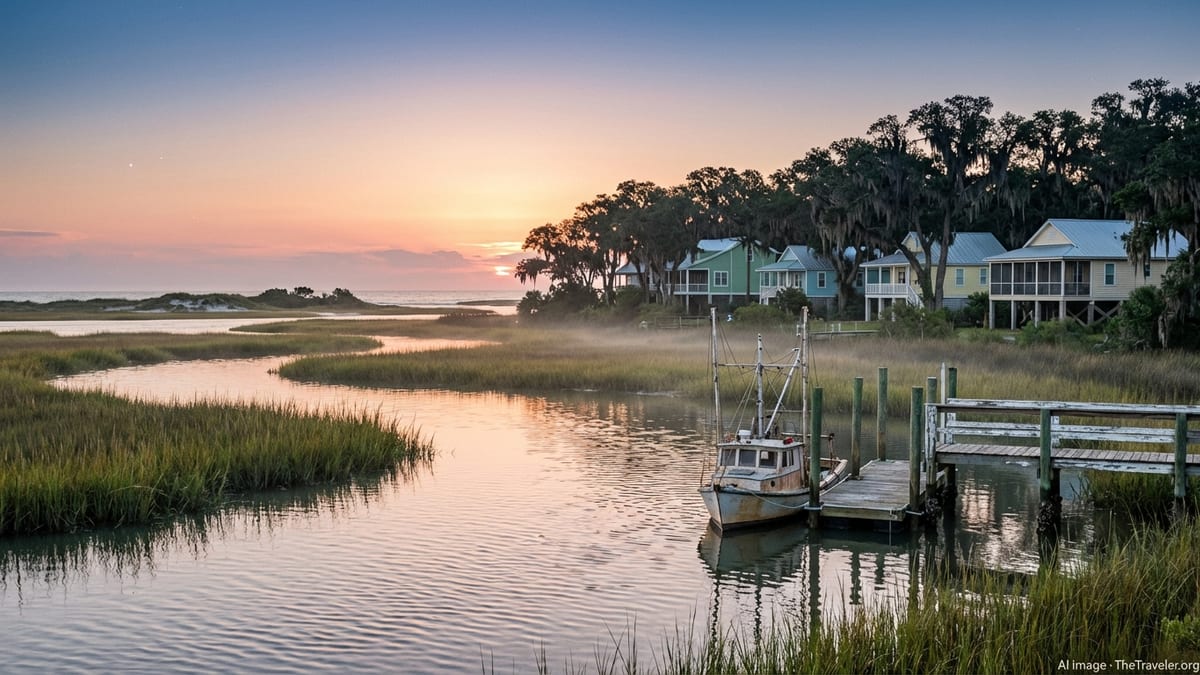
If you are drawn to Alabama’s coastline, marsh-fringed South Carolina offers a richly textured alternative. Charleston has long been a standard-bearer for Southern travel, mixing cobblestone streets, pastel row houses, and a working harbor where shrimp boats still depart at dawn. In the past few years, the city’s dining scene has continued to climb, with the broader South now recognized by the Michelin Guide and Charleston restaurants earning star status and attention from national food media. The mood in town balances old brick and live oaks with a constant buzz of new openings and restored buildings.
For visitors who want sand as well as city, nearby barrier islands such as Folly Beach, Sullivan’s Island, and Isle of Palms offer long Atlantic strands, surf, and classic cottage neighborhoods. Further north, small fishing communities like McClellanville sit between protected refuges and national forest land, giving a glimpse of Lowcountry life at a slower pace, with docks lined with trawlers and restaurants serving local oysters and shrimp caught that morning. These areas let you combine wildlife-rich day trips with evenings back in Charleston’s historic core.
There is also a deep and sometimes difficult history to explore. Newer institutions, including museums dedicated to African American history and sites tied to the transatlantic slave trade, have broadened the narrative beyond house tours and carriage rides. Travelers increasingly balance meals at acclaimed restaurants with time in galleries, historic churches, and waterfront memorial spaces that examine how Charleston’s past continues to shape the modern South.
Because Charleston has become one of the most connected cities in the region with frequent nonstop flights from major American airports, it works well as a long weekend or as the anchor of a longer Lowcountry journey. Combined with short drives to quiet marshlands, wildlife refuges, and smaller coastal towns, it gives you much of what Alabama’s Gulf Coast promises, with a different coastal profile and a dense web of historic streets to explore on foot.
Savannah and Coastal Georgia
Where Alabama offers riverfront towns and a handful of beach communities, Savannah and the Georgia coast provide a layered alternative that blends history, islands, and long stretches of protected shoreline. Savannah’s grid of shady squares remains one of the South’s most distinctive urban experiences. Brick townhouses, wrought-iron balconies, and fountain-centered parks give the city an almost cinematic feel, though its atmosphere is relaxed rather than staged. Walking between the riverfront and Forsyth Park, you move through centuries of architecture and under thick veils of Spanish moss.
Food is a central part of the experience here as well. While you can still find fried chicken and sweet tea without trying, Savannah’s chefs increasingly work with coastal ingredients and regional farms, experimenting with Lowcountry and Gullah Geechee traditions. Riverfront warehouses now hide cocktail bars and modern Southern bistros, while quieter residential blocks host bakeries, coffee shops, and neighborhood restaurants that draw both locals and visitors. It is easy to build an entire day around slow meals, with breaks for a house tour or a stroll through a historic cemetery.
For travelers who might otherwise aim for Orange Beach or Gulf Shores, Georgia’s nearby islands are compelling substitutes. Tybee Island sits less than a half-hour from downtown Savannah and offers broad Atlantic beaches, a working lighthouse, and marsh views at sunset. Farther south, protected stretches of coastline like Jekyll Island and Cumberland Island emphasize dunes, driftwood-strewn shores, and maritime forests in place of high-rise condominium towers. These landscapes feel wilder than many Gulf beaches, with more room to roam and a higher chance of spotting shorebirds and dolphins.
Savannah’s compact size and pedestrian-friendly center make it ideal for travelers who want to park once and walk. From there, you can drive out to the islands for a day of swimming or cycling, then be back in town in time for dinner. Combined with nearby small cities and beach towns along the Georgia coast, this area replicates much of the appeal of an Alabama trip, but with a deeper emphasis on walkable historic neighborhoods and relatively undeveloped shoreline.
Natchez and the Mississippi River Bluffs
Travelers who love Alabama for its small towns, antebellum homes, and river scenery will find a natural alternative in Natchez, Mississippi. Set high on bluffs above the Mississippi River, Natchez has long been known for its historic mansions and leafy streets. In recent years it has drawn more attention from travelers seeking a quieter, more contemplative Southern experience that pairs architecture with views and live music. Publications that rank Southern destinations frequently single it out as one of Mississippi’s most appealing river towns.
Walking through downtown, you will pass 19th century storefronts, churches, and houses that reflect layers of prosperity and hardship. Many visitors arrive during seasonal home tours, when private residences open their doors for guided visits, but the city is compelling throughout the year. The riverfront itself has become a focal point for sunset views and casual dining, with the wide Mississippi serving as a constant reminder of how geography shaped the region’s history and economy.
Beyond its famous facades, Natchez is also a hub for music and cultural storytelling. It sits along what has been branded the Americana Music Triangle, a region linking cities such as Memphis, Nashville, and New Orleans. Small venues and bars host local musicians, and the city’s events calendar increasingly features festivals and concerts that highlight blues, country, and roots music. For many visitors, an evening of live performance becomes the emotional highlight of the trip.
Outdoor travelers can connect Natchez with the Natchez Trace Parkway, a scenic route that traces historic paths used by Native Americans and early European traders. Cyclists and road trippers use the parkway as a slow alternative to the interstate, pausing at overlooks and historic markers along the way. Combined with Mississippi’s growing network of state parks and heritage sites, a Natchez-focused trip offers much of what draws people to Alabama’s river towns, but with the added drama of sheer bluffs and broad river vistas.
Tennessee’s Smoky Mountains and Music Cities
For many travelers, part of Alabama’s appeal lies inland, in its rolling hills, lakes, and small towns. If you are craving that rural feel with an added layer of iconic scenery, Tennessee provides a powerful alternative. The Great Smoky Mountains, straddling the border with North Carolina, remain one of the most visited national parks in the United States. Their popularity is no secret, but even as visitation has climbed, the vast network of trails, waterfalls, and scenic overlooks still allows travelers to find quiet corners away from main roads.
Base towns such as Gatlinburg and Pigeon Forge offer an unmistakably touristy strip of attractions, yet they also serve as gateways to high ridges, misty valleys, and old-growth forests. Trails that climb toward viewpoints like Clingmans Dome reveal layers of blue hills receding into the distance, a scene that feels far removed from the flat stretches of coastal Alabama. For families who might otherwise choose a beach week, a cabin in the Smokies substitutes cool mornings and campfires for sand and surf, with day hikes and scenic drives in place of beach chairs.
Tennessee’s cities deepen the experience and give the state a clear identity as an alternative to Alabama. Nashville’s growth as a cultural hub has been steady, with new hotels, restaurants, and performance venues spreading beyond its famous honky-tonk strip. Live music is not limited to country; visitors can find jazz, rock, and songwriter showcases on any given night. Memphis, meanwhile, adds civil rights landmarks, blues clubs, and significant barbecue traditions to the mix, providing a powerful counterpart to the history-focused sites in Alabama.
Because Tennessee stretches from the Mississippi River to the Appalachian foothills, you can design a road trip that moves from urban nightlife to mountain air in a matter of hours. Travelers who like the idea of pairing a couple of days by the water with hiking and music can substitute the Smokies and these cities for Alabama’s lake country and coastal towns. The result is an itinerary that still feels deeply Southern but introduces fresh landscapes and soundtracks.
New Orleans and the Louisiana Bayous
For some visitors, Alabama’s draw is less about beaches and more about a sense of place tied to food, music, and layered history. In that case, New Orleans and the broader Louisiana bayou country present one of the most compelling alternatives in the South. The Crescent City’s blend of French, Spanish, African, and Caribbean influences is visible in its architecture, food, and festivals. Over the past decade, a steady wave of hotel and restaurant openings, along with renewed attention to preservation, has kept its historic districts vibrant while expanding options in neighborhoods beyond the French Quarter.
Walking through the city, you move from cast-iron balconies and narrow streets to broad avenues lined with live oaks and streetcar tracks. Dining remains central to the experience, from corner po-boy shops to white-tablecloth restaurants serving updated takes on Creole and Cajun classics. Travelers interested in culture can dive into a dense network of museums, music clubs, literary landmarks, and community arts centers that explore everything from jazz history to contemporary visual art.
Venture just beyond the city and Louisiana’s wetlands add a natural dimension that parallels Alabama’s river delta and coastal bays. Guided boat tours introduce visitors to bayous lined with cypress trees and wildlife, while small towns along the so-called Cajun Coast offer fishing, paddling, and regional food traditions rooted in rural life. In recent years, these communities have worked to balance tourism with the realities of coastal erosion and climate change, encouraging visitors to learn about the environmental challenges facing the Gulf Coast.
New Orleans also functions well as part of a larger circuit through the Deep South. It can be combined with Mississippi river towns, central Louisiana’s historic plantations, or even a loop north into Arkansas or Tennessee. For travelers looking for an alternative to an Alabama-focused trip that still feels anchored in music and culinary adventure, few places can match the sensory density of New Orleans and its surrounding bayous.
North Carolina’s Coast and Inner Piedmont
Travelers considering Alabama for its Gulf Coast or lake escapes may find a fresh perspective along North Carolina’s maritime edge and rolling interior. The state’s Outer Banks, a string of barrier islands standing off the mainland, have a different character from most Southern beaches. Here, long strands of sand are anchored by lighthouses, fishing piers, and small towns where development tends to be low-slung and scattered. Wind and weather play a starring role, and the Atlantic feels more immediate and powerful than the gentle shallows of the Gulf.
Inland, the state’s central corridor offers a mix of universities, revitalized downtowns, and food scenes that have gained national attention. Cities like Raleigh, Durham, and Greensboro have converted old warehouses and tobacco factories into breweries, galleries, and lofts, paralleling similar redevelopments across the South. Visitors who might otherwise spend time in Montgomery or Birmingham can instead explore these mid-sized cities, sampling regional barbecue, exploring modern art museums, and walking greenways that trace old rail lines and creeks.
Western North Carolina, though slightly farther afield, rounds out the picture as an alternative to Alabama’s Appalachian foothills. Towns like Asheville sit within easy reach of the Blue Ridge Parkway, waterfalls, and hiking trails that cross high ridges and rhododendron-filled coves. Craft breweries, a long-running arts scene, and farm-focused restaurants have turned Asheville into a favored launch point for mountain escapes. The climate at elevation brings cooler summer temperatures and colorful foliage in autumn, offering a seasonal rhythm that contrasts sharply with the subtropical Gulf Coast.
Because North Carolina stretches from sea level to high peaks, it is possible to design a single trip that takes in dunes, college towns, and mountain overlooks. Flights into coastal or central airports connect easily with rental cars, and the state’s network of state parks and scenic roads makes it well suited to leisurely drives. As an alternative to Alabama, North Carolina gives you the breadth of the South in one package: seafood shacks by the water, barbecue joints in small towns, and switchback roads that wind into the clouds.
Planning Your Southern Alternative Itinerary
Building a Southern trip that does not center on Alabama starts with clarifying what you most want from the region. If beaches and marsh views top the list, the coastal arcs of South Carolina and Georgia provide natural substitutes. Travelers focused on history and architecture might steer toward Savannah, Charleston, or Natchez, while those who prioritize music, nightlife, and food could emphasize New Orleans, Nashville, or Memphis. Mountain lovers will likely anchor their plans in the Smokies or the Blue Ridge, with side trips to small towns and craft hubs.
Seasonality matters across the South. Summers can be intensely hot and humid, especially near the Gulf and Atlantic coasts, though ocean breezes sometimes take the edge off. Spring and fall are often the most comfortable seasons, with blooming azaleas, mild temperatures, and a full calendar of festivals, from music and food events to home and garden tours. Winter can be a rewarding time to visit cities and mountain areas, offering lower room rates and thinner crowds, though higher elevations occasionally see ice and snow.
Transportation logistics are another consideration. Many of the destinations that function as alternatives to Alabama benefit from strong air connections, with cities like Charleston, Savannah, Nashville, and New Orleans offering direct flights from multiple regions of the United States. Renting a car remains the simplest way to link cities with nearby coasts, parks, and small towns, but travelers who prefer to limit driving can build itineraries around one or two hubs and use guided tours or rideshare services for day trips.
Budget-wise, the same principles that apply to Alabama hold across the South. Traveling midweek, avoiding peak holiday periods, and looking for state park cabins or locally owned inns can keep costs manageable. Smaller towns such as Natchez or certain Outer Banks communities often offer better value than the most famous resort areas. With a bit of planning, you can enjoy rich cultural experiences, memorable meals, and access to nature without stretching your budget as far as some coastal hot spots might require.
The Takeaway
Alabama remains an important chapter in the Southern story, but it is only one of many. Travelers willing to look beyond its borders will find Lowcountry marshes and harbor cities, river bluffs lined with historic homes, bayous threaded with cypress trees, and mountains that catch the first and last light of day. Each of these alternatives brings its own combination of music, food, architecture, and landscape to the table.
Whether you choose cobblestone streets in Charleston, tree-shaded squares in Savannah, bluesy porches in Natchez, neon-lit nights in Nashville, or misty overlooks in the Smokies, you will still encounter the region’s signature hospitality and storytelling. The key is matching your priorities to the right pocket of the South and giving yourself enough time to settle into its slower rhythms. In doing so, you will discover that a “Southern trip” has never been a single thing, and that skipping Alabama on one journey only opens up more possibilities for the next.
FAQ
Q1. Why should I consider alternatives to Alabama for a Southern trip?
Many neighboring states offer similar beaches, historic towns, and music scenes, often with different landscapes, fewer crowds, or easier flight connections, giving you fresh ways to experience the South.
Q2. Which destination is best if I mainly want beaches?
For a coastal-focused trip, look to South Carolina’s islands near Charleston, Georgia’s Tybee or Jekyll Island, or North Carolina’s Outer Banks for long, scenic shorelines.
Q3. What is a good alternative to Alabama’s small historic towns?
Natchez in Mississippi, with its river bluffs and antebellum homes, and Savannah in Georgia, with its squares and townhouses, both offer rich history in walkable settings.
Q4. Where can I find a mix of music and nightlife similar to what I might seek in Alabama?
Nashville and Memphis in Tennessee, along with New Orleans in Louisiana, provide dense clusters of live music venues, late-night dining, and cultural attractions.
Q5. Are these alternative Southern destinations family friendly?
Yes, most offer family oriented activities, from beach days and boat tours to national parks, aquariums, historic sites, and interactive museums suitable for kids.
Q6. When is the best time of year to plan a Southern trip outside Alabama?
Generally, spring and fall bring the most comfortable weather and plentiful festivals, while winter can be good for city breaks and budget conscious travel.
Q7. Do I need a car to visit these destinations?
A car offers the greatest flexibility, especially for reaching islands, small towns, and mountain areas, though many cities mentioned are walkable once you arrive.
Q8. How can I keep costs down when visiting these Southern alternatives?
Travel midweek, avoid peak holiday periods, consider state park cabins or local inns, and focus on smaller towns or shoulder seasons to find better rates.
Q9. Can I combine several of these alternatives into one trip?
Yes, many travelers link coastal cities with nearby islands or pair New Orleans with Mississippi river towns or Tennessee mountain areas on a single road trip.
Q10. Are there options for travelers who prefer nature over cities?
Absolutely, from the Great Smoky Mountains and Blue Ridge Parkway to North Carolina’s Outer Banks and Louisiana’s bayous, you can design an itinerary centered on hiking, wildlife, and scenic drives.