

Connecticut draws travelers with its graceful coastal villages, leafy town greens, covered bridges, and understated New England charm. Yet many of the qualities people love about Connecticut also thrive just beyond its borders, from historic Hudson Valley river towns to low-key Maine fishing villages and wine country in upstate New York. For travelers seeking a similar mix of scenery, culture, and relaxed sophistication, the following destinations offer compelling alternatives without sacrificing the essence of the Connecticut experience.
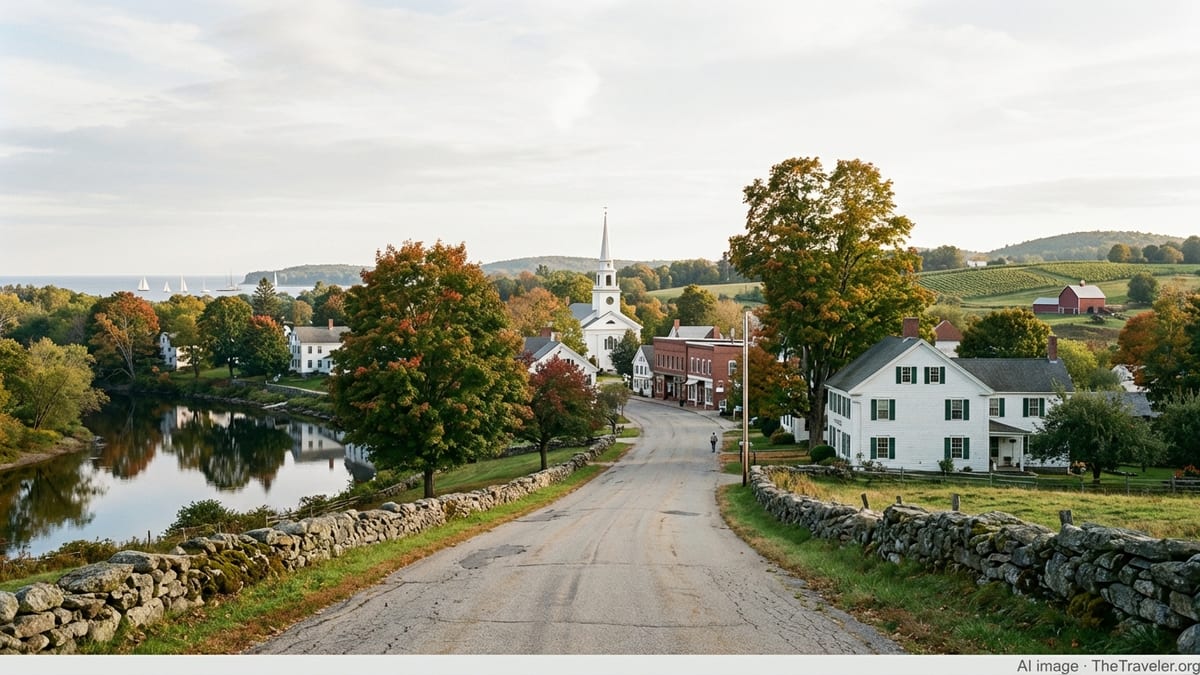
Hudson Valley, New York: River Towns With New England Flair
The Hudson Valley, stretching north from the suburbs of New York City, offers a landscape and lifestyle that feel remarkably similar to Connecticut’s river towns. Historic main streets, farm-to-table restaurants, country inns, and leafy back roads echo the appeal of places like Essex, Old Lyme, or Litchfield, but with the broad sweep of the Hudson River as the backdrop. Many visitors come here in autumn for foliage, but the region has evolved into a four-season destination with an emphasis on arts, food, and outdoor recreation.
Towns such as Rhinebeck, Hudson, and Cold Spring are especially attractive to travelers who enjoy Connecticut’s blend of comfort and culture. Rhinebeck, for example, pairs 18th and 19th century architecture with modern boutiques, wine bars, and destination dining, and it hosts major regional events at the Dutchess County Fairgrounds that give the town a festive, small-town energy in peak seasons. Historic mansions, forest preserves, and gentle hills just outside town add to a sense of retreat without remoteness.
Like Connecticut’s Lower Connecticut River Valley, the Hudson Valley has become a magnet for chefs, makers, and creative professionals moving north from major cities. That migration has led to a growing selection of bakeries, coffee roasters, small galleries, and independent bookshops woven into compact, walkable centers. Travelers who enjoy bundling an afternoon of hiking or river views with a polished dinner and a cozy inn will find that the region matches Connecticut’s understated but high-quality style of getaway.
Access is straightforward for visitors who might normally aim for Connecticut. From New York City, trains follow the Hudson’s edge, making it easy to visit car-free, while drivers find a network of scenic byways on both sides of the river. As in Connecticut, the pace is calmest midweek and in shoulder seasons, when foliage colors linger or orchards reopen for spring.
Southern Maine Coast: Quiet Harbors and Walkable Beach Towns
For travelers drawn to Connecticut’s shoreline villages and maritime history, the southern Maine coast offers a compelling alternative. While Maine is often associated with wild, rocky shores, the stretch from Kittery to Ogunquit layers working harbors, broad sandy beaches, and handsome clapboard houses that feel familiar to anyone who loves New England’s softer coastal scenes. It delivers the same mixture of salty air, local seafood, and low-rise, human-scale towns that define many of Connecticut’s beach communities.
Kittery, just over the New Hampshire border, balances its historic shipbuilding heritage with a growing food and arts scene. Colonial-era homes, tree-lined streets, and small independent businesses in the Kittery Foreside neighborhood capture the same blend of history and modern life found in Connecticut river towns. The presence of the nearby Portsmouth Naval Shipyard underscores how maritime industry and tourism coexist here, much as they do around New London or Mystic, while the coastline remains layered with islands, coves, and viewpoints.
A bit farther north, Ogunquit pairs three and a half miles of fine sand with a compact village center. The Marginal Way, a cliff walk tracing the shoreline for about a mile and a half, offers ocean vistas that many visitors find as soothing as any Long Island Sound panorama, with the added drama of open Atlantic swells. In town, art galleries, small inns, and casual restaurants create a walkable environment that feels similar in spirit to Connecticut’s more polished beach communities, yet with a distinctly Maine accent.
Compared with Connecticut, the Maine coast typically offers cooler summer temperatures and a slightly more rugged aesthetic, but the underlying appeal is familiar: a place where you can stroll from a historic inn to a working harbor, watch lobstermen or sailors at work, and close the day with a seafood dinner and a quiet walk along the water.
New Hampshire’s White Mountains: An Alpine Take on Litchfield Hills
Travelers who gravitate toward Connecticut’s northwest corner, with its rolling hills, covered bridges, and old mill towns, often appreciate destinations that combine scenery with simple, outdoorsy pleasures. The White Mountains of New Hampshire provide a more dramatic, alpine version of that same experience. Peaks, waterfalls, and forested valleys take the place of gentle hills, yet the small-town fabric and traditional New England architecture remain.
Villages such as North Conway and Jackson offer a base that feels both lively and intimate. North Conway, in particular, has drawn national attention as a top ski town, yet at its core it remains a classic New England village with a main street lined by independent shops, casual eateries, and historic buildings. While the slopes of Cranmore and other nearby ski areas rise within easy reach, there is also a strong year-round appeal, from hiking and fall foliage drives to snowshoeing and spring waterfall hikes.
For travelers used to the compact scale of Connecticut towns, the White Mountains can feel surprisingly accessible. Scenic byways loop through notched passes, connecting viewpoints, historic hotels, and small communities that still center on white-steepled churches and general stores. The area’s older inns and family-run lodges mirror the low-key hospitality found in Connecticut’s countryside, though with more direct access to high peaks and winter sports.
Visiting in shoulder seasons can also echo the quiet, contemplative feel of a late-autumn weekend in Connecticut’s Litchfield Hills. Trails are less crowded, road traffic eases, and the muted colors of forest and field become part of the appeal. For those who enjoy the way Connecticut balances nature with a sense of village life, the White Mountains offer a similar rhythm, simply translated into higher elevations and broader vistas.
Finger Lakes, New York: Lake Country With Wine and Waterfalls
Connecticut’s countryside has a growing wine scene and a patchwork of farm stands, orchards, and reservoirs that invite leisurely drives. Travelers who enjoy that side of the state often find an ideal alternative in New York’s Finger Lakes region, where glacial lakes, vineyards, and small towns combine into a scenic, slow-paced escape. The atmosphere here is relaxed and rural, yet increasingly focused on good food, wine, and outdoor access.
The Finger Lakes are dotted with wine trails, particularly around Cayuga and Seneca Lakes, where cool-climate varietals thrive in a microclimate moderated by the deep waters. Vineyards cling to hillsides above the shore, creating views that pair rows of vines with blue water and distant hills. Towns like Geneva, Ithaca, and smaller lakeside communities have become hubs for tasting rooms, farm-driven restaurants, and small inns, not unlike the way Connecticut’s wine trail threads through rolling farmland and historic villages.
In addition to wine, the region is known for its waterfalls, gorges, and state parks. Travelers who love wandering Connecticut’s forest preserves and riverfront paths will find a different but complementary kind of landscape here, where short hikes lead to dramatic cascades and stone-lined ravines. Many parks are close to town centers, making it easy to blend a morning of hiking with an afternoon of gallery-hopping or café-hopping.
The pace of life in the Finger Lakes is similar to inland Connecticut: unhurried, community-oriented, and decidedly seasonal. Summer brings boating and lake swimming, autumn emphasizes foliage and harvest events, and winter quiets into a time of tasting-room firesides and snow-dusted vineyards. It is a destination for those who appreciate subtler forms of tourism, where conversation with a winemaker or a local farmer can become a highlight of the trip.
Rhode Island’s Coastal Towns: Compact, Historic, and Sea-Focused
Just over the state line, Rhode Island’s coastal towns provide an appealing stand-in for Connecticut’s shoreline communities, especially for travelers who value compact scale and deep maritime roots. While Newport often grabs the headlines with its mansions and sailing scene, smaller towns like Bristol and Wickford align even more closely with the atmosphere of Connecticut’s historic seaports.
Bristol, set on a sheltered harbor, is known for its long-running Independence Day traditions and preserved downtown architecture. Brick and clapboard buildings, narrow streets, and a waterfront promenade recall the look and feel of smaller Connecticut towns along Long Island Sound. Outside of peak holiday periods, Bristol’s pace slows back to a walkable, neighborly rhythm, with cafés, waterfront parks, and small museums oriented toward residents and repeat visitors rather than mass tourism.
Likewise, villages along Narragansett Bay mix working marinas with recreational boating, seafood shacks with more refined dining, and compact historic districts with surrounding coastal neighborhoods. Travelers used to the experience of strolling from a bed-and-breakfast to a town green, harbor overlook, or small historical society museum will find the same pattern repeated here. The distances between communities are short, which makes it easy to string together several towns over a weekend, in much the same way visitors hop between Mystic, Stonington, and other nearby Connecticut coastal villages.
Rhode Island’s advantage for some travelers is scale. The state is small enough that a visitor can sample beaches, lighthouses, and village streets in a single day, yet each town retains its own identity. For those who appreciate Connecticut’s accessible geography, where nothing feels terribly far, Rhode Island’s coastal belt offers a familiar and satisfying alternative.
Western Massachusetts and the Berkshires: Arts, Hills, and Historic Towns
Connecticut’s hill towns and cultural institutions, from music festivals to small museums, have long attracted visitors who favor an understated arts scene in a pastoral setting. Just to the north, the Berkshires of western Massachusetts extend that combination across a slightly larger canvas. Here, low mountains, river valleys, and historic town centers host an array of theaters, galleries, and seasonal events that mirror the feel of a summer evening performance or autumn exhibit in Connecticut’s countryside.
Towns such as Great Barrington, Lenox, and Stockbridge are built on a familiar New England pattern: a main street framed by 19th century buildings, a town green or central church, and residential streets that quickly give way to fields and woods. Many of the area’s inns and guesthouses occupy restored homes and estates, much like Connecticut’s classic bed-and-breakfasts. The combination of cultural programming and quiet, wooded surroundings draws visitors who might otherwise spend weekends in the Litchfield Hills or along the Connecticut River.
The Berkshires have also embraced farm-to-table dining, artisanal food production, and outdoor recreation in a way that resonates strongly with Connecticut travelers. Local farms supply markets and restaurants, while trail networks, lakes, and rivers offer space for hiking, paddling, and cross-country skiing. What distinguishes the region is the concentration of major cultural venues in such a rural setting, allowing visitors to attend a concert or gallery opening and then return to a country road lined with stone walls and old maples.
For travelers who prize Connecticut’s combination of culture and countryside, the Berkshires feel less like a departure and more like an extension. The architectural language, the four-season appeal, and the comfortable, slightly reserved atmosphere make it an easy transition for repeat trips.
The Takeaway
Connecticut’s appeal is not easily distilled into a single attraction. It rests in the way coastal light falls on shingled cottages, how old mill towns sit along rivers, and how small communities balance history with contemporary life. The good news for travelers is that this blend of qualities is not unique to one state. Riverfront towns in the Hudson Valley, harbors in southern Maine, upland villages in the White Mountains, the vineyard-lined hills of the Finger Lakes, Rhode Island’s compact coastal communities, and the arts-driven towns of the Berkshires all echo parts of what makes Connecticut special.
Choosing among these alternatives comes down to emphasis. Those who cherish shoreline walks and seafood might gravitate toward Maine or Rhode Island. Travelers who love foliage drives, farm visits, and quiet inns could find their best match in the Hudson Valley, Finger Lakes, or Berkshires. Outdoor enthusiasts with a taste for mountains might favor New Hampshire’s higher terrain. In each case, the essential promise is similar: a slower pace, layered history, and landscapes best appreciated at human scale.
As travel patterns continue to evolve and visitors seek destinations that feel authentic rather than overproduced, these regions reward curiosity and repeat visits. They invite the same kind of unhurried exploration that suits Connecticut so well, proving that the spirit of New England and the broader Northeast extends well beyond any one set of borders.
FAQ
Q1. What qualities define a “Connecticut-like” travel experience?
Travelers often associate a Connecticut-like experience with small historic towns, gentle coastal or rural scenery, understated but high-quality dining, independent shops, and an overall relaxed pace.
Q2. Which nearby region feels most similar to Connecticut’s river towns?
The Hudson Valley in New York most closely mirrors Connecticut’s river towns, with historic main streets, river views, scenic byways, and a strong farm-to-table dining and arts culture.
Q3. Where can I find coastal towns that resemble Connecticut’s shoreline villages?
Southern Maine and coastal Rhode Island both offer compact harbor towns and beach communities that resemble Connecticut’s shoreline, with walkable centers, local seafood, and maritime history.
Q4. Is there an alternative to Connecticut’s countryside with more dramatic scenery?
New Hampshire’s White Mountains provide a similar small-town New England atmosphere but with higher peaks, more extensive hiking, and a greater focus on winter sports.
Q5. I enjoy Connecticut’s wineries. Which region should I consider instead?
The Finger Lakes region of upstate New York is a strong alternative, with lakeside vineyards, established wine trails, and small towns that pair tasting rooms with local dining and lodging.
Q6. Are these alternative destinations easy to reach by car from the Northeast?
Yes. The Hudson Valley, Berkshires, Finger Lakes, southern Maine, coastal Rhode Island, and the White Mountains are all accessible by car from major Northeastern cities, often within a half-day drive.
Q7. When is the best time to visit for foliage similar to Connecticut’s?
Early to mid autumn is ideal across these regions, though exact peak color varies by elevation and latitude. Higher areas like the White Mountains and Berkshires typically peak earlier than coastal zones.
Q8. Can I enjoy these regions without a car, as I sometimes do in Connecticut?
Some towns in the Hudson Valley and certain New England villages are reachable by train or bus, but having a car greatly increases flexibility, especially in rural and mountain areas.
Q9. How do prices compare between Connecticut and these alternatives?
Costs vary widely, but many alternatives offer a similar range of midscale inns and restaurants. Some rural areas and smaller towns can be slightly more affordable outside peak holiday periods and foliage season.
Q10. Which destination should I choose for a first trip if I love everything about Connecticut?
If you want the closest overall match, start with the Hudson Valley or the Berkshires, where the mix of historic towns, scenic drives, inns, and cultural sites feels especially similar to Connecticut.