

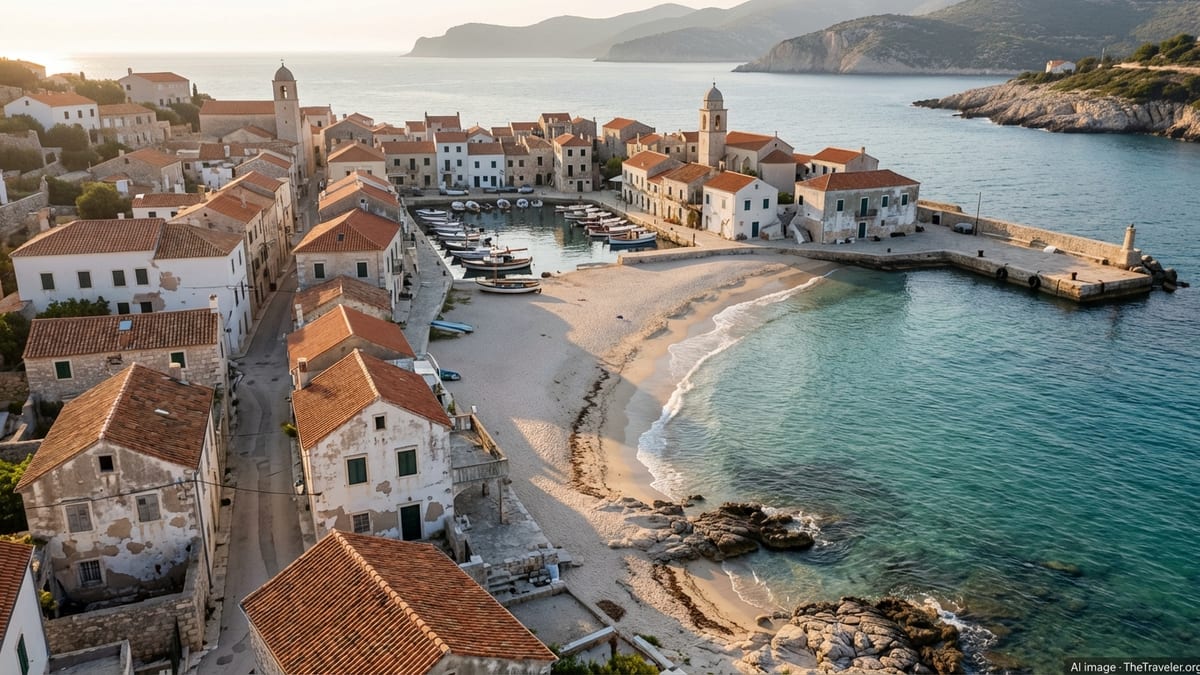
Spain has long been the default choice for a Mediterranean break, but record visitor numbers and well-documented overtourism protests are pushing many travelers to look elsewhere. Across the wider Mediterranean basin and its fringes, a new set of destinations is stepping into the spotlight, offering similar sunshine, seafood and slow-paced coastal life with fewer crowds and, in many cases, gentler prices. From Portugal’s Atlantic-facing Algarve to the fjord-like bays of Montenegro, these are some of the most compelling alternatives to Spain for your next Mediterranean escape.
Why Look Beyond Spain for a Mediterranean Escape
Spain remains one of the world’s most visited countries, with tourism numbers hitting new records in recent years. As visitor arrivals climb, popular regions such as Catalonia, the Balearic Islands and the Canary Islands are experiencing intense pressure on infrastructure and housing, triggering resident protests and stricter rules in some city centers. For travelers, the result can be crowded beaches, higher peak-season prices and a sense that the relaxed Mediterranean ideal is getting harder to find.
At the same time, neighboring countries around the Mediterranean and nearby seas are investing in tourism, improving airports, roads and coastal promenades, and promoting lesser-known regions. From boutique guesthouses in Greek island towns to small-scale wine tourism in Portugal or Montenegro, these destinations are positioning themselves as more sustainable, experience-rich alternatives. Many offer climate and landscapes that feel instantly familiar to anyone who loves Spain, yet the atmosphere on the ground can be noticeably calmer.
Looking beyond Spain also opens the door to more diverse cultural experiences. In a single trip, you might mix Latin, Slavic and Ottoman heritage along the Adriatic, or combine Italian and Arabic influences on a tiny island in the central Mediterranean. For travelers who value authentic local life as much as beaches and sunshine, these countries can deliver the same coastal pleasure as Spain while adding fresh stories, flavors and traditions.
Crucially, several of these destinations still sit outside the heaviest tourist circuits, especially outside peak summer weeks in July and August. That means a better chance of finding a quiet cove to yourself, securing a waterfront table without a long wait, and chatting with locals who have time to share recommendations, rather than racing to keep up with mass tourism.
Portugal’s Algarve and Atlantic South Coast
Portugal shares the Iberian Peninsula with Spain, so it is no surprise that its southern regions feel instantly familiar to anyone who loves the Costa del Sol or Costa Blanca. The Algarve in particular offers golden beaches, dramatic cliffs and whitewashed fishing towns that would not look out of place in Andalusia. Yet away from the busiest resort strips, there is still a sense of space, and prices for accommodation and dining often remain slightly lower than in comparable Spanish hot spots.
The western Algarve, around towns such as Lagos and Sagres, has an untamed edge that appeals to surfers, hikers and travelers who prefer simple guesthouses to large resort complexes. Here, steep ochre cliffs plunge into the Atlantic, with small sandy coves tucked between them. Inland, cork oak forests and orange groves line quiet country roads, and you can still find modest village taverns serving grilled fish caught that morning. Compared with Spain’s more developed costas, the built environment often feels less dense and more integrated with the landscape.
Further east, towards Tavira and the Ria Formosa lagoon, the Algarve softens into a chain of barrier islands and sandbanks, accessed by small ferries. This area suits travelers drawn to Spain’s low-key coastal towns but keen to avoid high-rise development. Birdlife flourishes in the wetlands, traditional salt pans are still worked by hand, and long, wind-brushed beaches provide ample space even in high summer. It is easy to combine relaxed days by the sea with forays into small historic centers, where tiled facades and azulejo-covered churches give the region a distinctly Portuguese character.
Beyond the Algarve, Portugal’s Alentejo coast remains one of southwestern Europe’s quietest stretches of shoreline. A mix of rolling farmland, pine forest and low cliffs edged by wide, often sparsely populated beaches, it offers the kind of big-sky coastal scenery that many travelers once found in less-developed parts of Spain. For a Mediterranean-style escape that still feels like a discovery, this region is an increasingly attractive alternative.
Greek Islands Beyond the Beaten Path
Greece has long rivaled Spain as a Mediterranean favorite, but most international attention falls on a handful of islands such as Santorini and Mykonos. Look beyond those famous names and you will find a constellation of islands that capture the same easygoing, sun-drenched lifestyle many travelers seek in Spain, often with fewer visitors and a stronger sense of local life. Whitewashed villages, clear waters and taverna tables spilling onto harbor fronts are common threads from the Aegean to the Ionian Sea.
In the Cyclades, islands like Paros and Naxos have emerged as quieter alternatives to the region’s party-focused hubs. Their main towns combine neoclassical mansions, blue-domed churches and narrow alleys bright with bougainvillea. Beaches range from shallow, family-friendly bays to wilder stretches popular with windsurfers and kitesurfers. Compared with Spain’s more built-up resort zones, accommodation here still tilts heavily toward small hotels, apartments and family-run pensions, which can make stays feel more personal.
Further south, Crete offers a scale and diversity that invites longer trips. Its old towns, such as Chania and Rethymno, blend Venetian, Ottoman and Greek influences around harbors lined with tavernas and cafes. Inland, mountain villages cling to hillsides above olive groves and gorges, offering a taste of rural life that has changed slowly over generations. For beach lovers, the island’s western and southern coasts reveal lagoons, pink-sand bays and long swathes of nearly empty shore, especially outside peak summer weeks.
What makes these Greek islands compelling alternatives to Spain is not just their scenery, but how daily life unfolds. Long, late dinners outdoors, coffee sipped slowly in town squares, and multi-generational gatherings at the beach mirror the rhythms of Spanish coastal towns. At the same time, distinct local music, language and cuisine, from Cretan herb-rich dishes to Cycladic seafood stews, ensure the experience feels fresh rather than a simple substitution.
Croatia’s Dalmatian Coast and Islands
On the opposite side of the Adriatic from Italy, Croatia’s Dalmatian Coast has become one of Europe’s most talked-about seaside regions. While the walled city of Dubrovnik is firmly on the global tourist map, much of the coast to the north remains comparatively relaxed, with a mix of historic towns, rocky coves and forested islands that feel like an appealing alternative to Spain’s Balearics or Mediterranean costas.
Cities such as Split and Zadar offer a compelling blend of Roman and Venetian heritage, seafront promenades and lively cafe culture. In Split, parts of the modern city are literally built into the remains of an ancient imperial palace, creating an unusual backdrop for daily life. Ferries from these ports connect to an archipelago of islands scattered along the coast, many of which retain a distinctly local character, especially outside the busiest summer weeks.
Islands like Brač, Hvar and Korčula are frequently cited as standouts. Brač is known for its long, shifting pebble beaches and pine-fringed bays, while Hvar balances a reputation for nightlife in its main town with quieter villages and lavender fields inland. Korčula, sometimes compared to a smaller Dubrovnik, has a compact medieval core surrounded by vineyards and small beaches. For travelers accustomed to Spain’s island-hopping possibilities, this network of easily reached islands offers a similar sense of freedom and variety.
Croatia’s coast generally lacks the wide sandy strands found in parts of Spain, but its clear, often calm waters and dramatic limestone landscapes offer a different kind of seaside appeal. Swimming off stone quays, snorkeling around rocky headlands and lingering in sheltered coves become part of the daily rhythm. For many visitors, the relative absence of large all-inclusive resorts and the emphasis on locally owned apartments and guesthouses also set the experience apart.
Montenegro and Albania: The Emerging Adriatic
South of Croatia, Montenegro and Albania are rapidly gaining recognition as some of Europe’s most exciting coastal frontiers. Both countries share the same Adriatic climate and views that draw travelers to more established Mediterranean destinations, yet development remains patchier and, in many places, more restrained. For those willing to trade some polish for a sense of discovery and value, these shores can be particularly rewarding alternatives to Spain’s well-trodden coasts.
Montenegro’s Bay of Kotor is often likened to a fjord, with steep mountains plunging straight into sheltered, glassy water. The old town of Kotor itself is a tangle of medieval streets and stone churches encircled by walls that climb the hillside, reminiscent of Croatia’s Dubrovnik but on a smaller, more intimate scale. Around the bay, small villages line the waterfront, and it is still possible to find quiet spots for a swim or a coffee with only a few other tables occupied, especially outside the peak of summer.
Further along Montenegro’s open coastline, towns such as Budva and Ulcinj combine beaches with Ottoman-influenced old quarters and a growing choice of small hotels and apartments. While some sections have seen fast-paced development, others retain a relaxed, unhurried air. Travelers who enjoy Spain’s mix of beach days and old-town strolls often find similar pleasures here, set against a more dramatic, mountainous backdrop.
South into Albania, the so-called Albanian Riviera is drawing increasing interest for its clear Ionian waters, laid-back beach towns and relatively modest prices compared with many Western European coasts. Around Vlorë and further down to towns like Himarë, visitors discover a coastline of pebble and sand beaches backed by olive groves and rugged hills. Small seaside promenades host simple seafood restaurants and cafes where time seems to stretch, evoking the Mediterranean atmosphere many travelers seek in Spain but with a strong local flavor and fewer international chains.
Malta and Gozo: Island Culture in the Heart of the Med
Set almost in the middle of the Mediterranean Sea, Malta and its smaller sister island Gozo offer a compact yet richly layered alternative to Spain’s island destinations. The archipelago combines fortified harbor cities, limestone cliffs, sheltered bays and a complex history that weaves together influences from Italy, North Africa and Britain. For travelers who love the mix of seafront promenades, historic quarters and beach days that Spain’s islands provide, Malta can feel both familiar and intriguingly different.
The capital, Valletta, occupies a peninsula overlooking a natural harbor dotted with traditional wooden boats and sleek modern yachts. Within its walls, narrow streets step up and down hills lined with baroque churches, palaces and houses with painted wooden balconies. Cafes and wine bars spill onto small squares in the evening, and harbor views at sunset rival those of many Spanish coastal cities. Yet the city’s compact scale and pedestrian-friendly layout keep it from feeling overwhelming.
Beyond Valletta, coastal towns such as Sliema and St Julian’s form a nearly continuous waterfront promenade, popular with walkers and swimmers, while more rural stretches of coastline reveal sea-sculpted cliffs and small coves. A short ferry ride away, Gozo offers a slower pace, with terraced fields, village churches and a rocky shoreline tailored to hiking and diving. For travelers used to Spain’s larger islands, Gozo’s quiet roads and limited built-up areas can be a welcome change.
One of Malta’s strengths as a Spanish alternative lies in its accessibility and language. English is widely spoken, making it particularly straightforward for visitors from North America and other anglophone countries. Combined with a climate that delivers long, warm seasons and a coastline never far away, the islands provide the essentials of a Mediterranean escape in a concentrated, easy-to-navigate package.
Turkey’s Turquoise Coast
Stretching along the country’s southwestern edge, Turkey’s Turquoise Coast delivers a blend of clear seas, forested hills and ancient ruins that feels at once Mediterranean and distinctly Middle Eastern. For travelers who enjoy Spain’s combination of beach relaxation, historic sites and lively harbors, this region provides a compelling alternative, often at lower day-to-day costs.
Resort towns such as Antalya, Fethiye and Bodrum anchor the coastline, each with its own personality. Antalya combines a restored old quarter of Ottoman houses and Roman walls with a modern city and nearby beaches. Fethiye sits around a sheltered bay framed by mountains, serving as a gateway to hiking trails and boat trips to small islands and coves. Bodrum, with its waterfront castle and marina, has long attracted a mix of Turkish vacationers and international visitors seeking a more cosmopolitan seaside scene.
Beyond the main hubs, the coastline breaks into a series of smaller bays and peninsulas dotted with low-rise villages and boutique hotels. Here, pine forests sweep down to pebbly shores, and gulet boats anchor in quiet inlets for swimming and sunbathing. Ancient cities, from Lycian rock tombs to crumbling theaters overlooking the sea, punctuate the landscape, providing a strong sense of historical depth that rivals Spain’s Roman and medieval sites.
What sets the Turquoise Coast apart as an alternative is the interplay of cultures and flavors. Meze spreads, fresh grilled fish and strong Turkish coffee replace tapas and sangria, while the call to prayer mingles with the sound of clinking cutlery on seaside terraces. The overall rhythm of long, slow meals and late evenings outdoors feels familiar to fans of Spain, yet the sensory details tell a different, fascinating story.
France’s Mediterranean Riviera and Quiet Corners
For many travelers, the French Riviera has long defined the idea of the glamorous Mediterranean, but its appeal extends beyond celebrity hangouts and yacht-filled harbors. Along the Côte d’Azur and neighboring stretches of coastline, you will find a mix of pastel-colored old towns, pebble beaches and hilltop villages that can stand in for some of Spain’s more upscale coastal resorts.
Cities such as Nice and Cannes offer seafront promenades lined with palm trees, Belle Époque hotels and pebbly urban beaches where locals and visitors share space. Inland, within easy reach, small towns cling to hillsides above the sea, their stone houses and shaded squares providing respite from the coastal buzz. For travelers who might otherwise consider Spain’s Marbella or Barcelona for a blend of city and sea, these French destinations offer a similar formula with a different cultural flavor.
Beyond the Riviera’s marquee names, quieter corners of southern France deliver a more low-key Mediterranean experience. The coastline of Occitanie, for instance, mixes long sandy beaches with lagoon-side villages and historic inland cities. Vineyards run almost to the shore in some areas, inviting wine-focused day trips between swims. Compared with Spain’s busiest beaches, many of these stretches feel surprisingly relaxed outside the main French vacation period in August.
While France is rarely a budget destination, traveling in shoulder seasons and choosing smaller towns over marquee resorts can keep costs manageable. For those seeking Spanish-style sunshine, outdoor dining and a strong sense of place, the combination of coastal scenery, food culture and historic architecture makes southern France a sophisticated alternative.
The Takeaway
Spain’s magnetic pull as a Mediterranean destination is unlikely to fade, but travelers willing to look beyond its borders now have more choice than ever. From Portugal’s cliffs and lagoons to Greece’s lesser-known islands, from Croatia and Montenegro’s Adriatic bays to Malta’s fortified harbors and Turkey’s pine-fringed coves, the wider region offers ample ways to capture the essence of a Spanish seaside holiday without the same level of crowding.
Choosing an alternative destination can also be a way to travel more thoughtfully. Many of these countries are actively trying to spread visitors across regions and seasons, support local businesses and avoid the pressures that have sparked overtourism debates in parts of Spain. By considering places that are still finding their balance between welcoming guests and preserving local life, travelers can enjoy a richer experience while helping sustain the character that drew them there in the first place.
For your next Mediterranean escape, think about what you love most in Spain: is it the long beach days, the historic city centers, the food, the late-night atmosphere or the value for money. Once you know your priorities, it becomes easier to match them with a region or country that offers a similar mix, whether on the Atlantic edge of Portugal, in the middle of the Mediterranean in Malta, or along the rising shores of the Adriatic. In doing so, you may discover that stepping away from the familiar is the surest way to recapture the relaxed, sun-soaked magic you are seeking.
FAQ
Q1. Which country feels most similar to Spain for a beach holiday.
Portugal’s Algarve and parts of southern France offer climates, coastal scenery and town life that feel closest to Spain, with plenty of sunshine and established tourist services.
Q2. Where can I avoid crowds but still enjoy a Mediterranean vibe.
Consider Montenegro’s Bay of Kotor, Albania’s smaller beach towns, Greece’s less famous islands such as Naxos or Paros, or Portugal’s Alentejo coast outside peak summer.
Q3. Are these alternatives generally cheaper than Spain.
Prices vary, but Albania, Montenegro and parts of Turkey are often more affordable day to day, while Portugal and Greece can be comparable or slightly lower than Spain, depending on season.
Q4. Is the sea warm enough for swimming in these destinations.
From late spring to early autumn, sea temperatures along the Mediterranean, Adriatic and Aegean coasts are typically comfortable for swimming, though the Atlantic in Portugal can feel cooler.
Q5. Which destinations are best for families with children.
Portugal’s Algarve, Greece’s larger islands such as Crete, and Croatia’s calmer bays near towns like Zadar and Šibenik offer family-friendly beaches, activities and infrastructure.
Q6. Do I need a car to explore these regions properly.
You can rely on public transport in many areas, but renting a car in places like the Algarve, Crete, Montenegro or rural parts of France and Croatia allows greater freedom to reach quieter beaches and villages.
Q7. How safe are these alternative countries for travelers.
Portugal, Greece, Croatia, Montenegro, Malta and the main Turkish resort areas are generally considered safe for visitors, though standard precautions and local guidance are always advisable.
Q8. When is the best time to visit to balance weather and lower crowds.
Late April to June and September to early October usually provide warm weather and fewer visitors compared with the peak holiday weeks of July and August.
Q9. Can I combine several of these destinations in one trip.
Yes, many travelers pair neighboring countries, such as Croatia and Montenegro, or Portugal and southern France, and Greek island-hopping is straightforward once you reach a major port.
Q10. Are these alternatives suitable for travelers who do not speak the local language.
English is widely understood in tourist areas across Portugal, Greece, Croatia, Malta and much of Turkey and Montenegro, so basic communication, especially in hotels and restaurants, is usually manageable.