

Turkey has long been a favorite for travelers who want both timeworn ruins and lazy days on the sand, but it is far from the only place where sunseekers can walk from the shoreline to ancient streets in a single afternoon. Whether you are looking to avoid crowds, explore somewhere new, or navigate changing regional dynamics, a growing list of destinations now offers a very similar blend of history, culture, and beaches, often with better value and fewer tour buses.
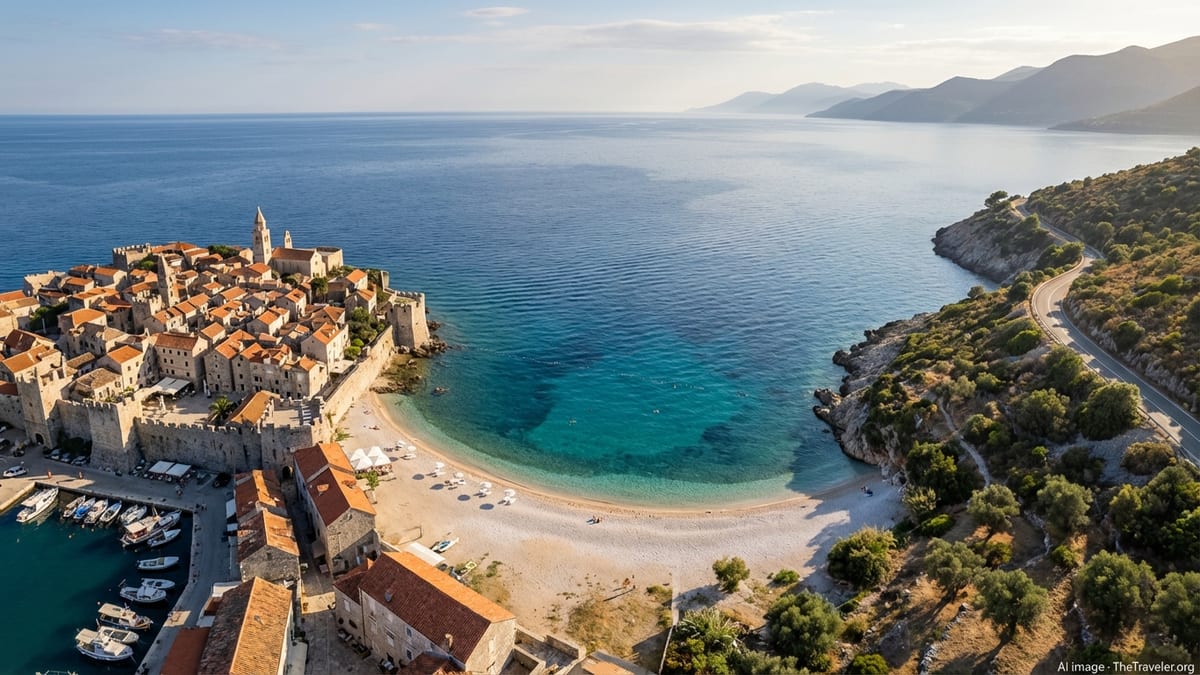
Why Look Beyond Turkey Right Now
In recent years, Turkey’s most famous coastal regions have seen sharp rises in visitor numbers, higher prices in marquee resorts, and at times a sense that the country’s most popular ruins and beaches are straining under the weight of their own success. For some travelers, that has meant longer queues at historic sites, busier shorelines at peak season, and a search for alternatives that still deliver on the twin appeal of history and sea.
At the same time, improved transport links and investment across southern Europe, North Africa, and the Balkans have opened up destinations that once felt remote. Island airports have added seasonal flights, new ferry routes have appeared, and historic port towns have renovated waterfronts and museums. The net effect is that it has never been easier to reach places that offer the same fusion of archaeology, old-town atmosphere, and warm-water beaches that many people associate with Turkey.
Another factor is value. While Turkey can still feel affordable in many areas, some of its coastal hotspots now command prices close to Western European levels in high season. By contrast, emerging destinations along the Adriatic, Ionian, and parts of the western Mediterranean often pair uncrowded beaches with locally owned guesthouses, modest entry fees for ruins, and restaurant bills that remain comparatively gentle. For travelers willing to look a little beyond the most familiar names, the rewards can be considerable.
The destinations below are not simply “second best” substitutes. Each stands on its own for historical depth and natural beauty. What they share is that rare pairing of swimmable seas and substantial stories, where a beach day can be framed by fortress walls, Roman amphitheaters, or medieval alleys rather than high-rise hotel blocks.
Greece Beyond the Crowds: Crete and the Dodecanese
Many visitors know Greece for Santorini’s caldera or Mykonos nightlife, but several islands offer an experience that parallels Turkey’s mix of ruins, harbor towns, and sheltered bays. Crete, the country’s largest island, is a case in point. Its north coast is dotted with resort strips, yet within a short drive you can stand in front of Minoan palaces that predate many of Turkey’s best-known ruins, or walk through Venetian-era ports whose lighthouses still guard working harbors.
Chania, on Crete’s western side, appeals to travelers who love the layered history of Turkish cities like Izmir or Antalya. Its compact old town curls around a 14th century harbor edged with pastel mansions and an Ottoman-era mosque. A short drive brings you to beaches ranging from family friendly coves with sunbeds to more remote stretches backed by low-slung mountains. Inland, traditional villages and hiking trails through the White Mountains offer the kind of rural escape that can be hard to find in more heavily developed resorts.
Further east in the Aegean, the Dodecanese islands echo Turkey’s southwest coast both geographically and culturally. Rhodes combines a lively beach scene with one of the most impressive medieval old towns in the region, complete with Crusader walls and labyrinthine alleys. Smaller islands such as Karpathos feel closer to Turkey in spirit: there are long, lightly developed beaches, villages where traditional dress still appears at festivals, and coves best reached by small boat. The result is a destination that feels both timeless and thoroughly Mediterranean, with history never far from the shoreline.
Practical considerations are straightforward. Many Greek islands now have direct flights from major European hubs in season, while ferries from Athens and neighboring islands give you flexibility if you prefer to travel over water. Once there, local buses and rental cars make it relatively easy to combine different beaches and archaeological sites over the course of a week.
Croatia’s Dalmatian Coast: Roman Palaces and Island Beaches
For travelers drawn to Turkey’s Aegean coast but curious about the Adriatic, Croatia’s Dalmatian region provides a natural alternative. The coastline here is rugged and fractured, fringed by hundreds of islands, clear water, and pebbled beaches that often back onto steep hillsides. The sea is typically calmer than the open Atlantic, and summer conditions are reliably warm from June through September.
Split is one of the most striking examples of history and seaside life overlapping. The city’s old center is built within the shell of a Roman emperor’s retirement palace, its colonnaded courtyards and ancient walls now housing cafes, apartments, and small shops. Within minutes you can walk from these stone-paved alleys to the palm-lined Riva promenade, where locals gather at sunset, or onward to city beaches favored by residents on hot afternoons. It is a combination that feels lived-in rather than curated solely for tourism.
Beyond Split, a chain of islands offers beaches that rival Turkey’s for clarity and variety. Hvar has developed a reputation for nightlife and polished hotels, yet still hides quieter coves on its southern shores. Brač is home to a distinctive spit of white pebbles that changes shape with wind and current, while more distant islands such as Mljet mix forested national parks with simple seaside villages and sandy bays. On many of these islands, Byzantine churches and remnants of Roman villas lie within walking distance of the water.
Croatia’s popularity has grown sharply, so planning and timing matter. Visiting just outside the busiest months, aiming for late May, early June, or late September, can mean fewer cruise crowds, easier reservations in old towns, and more space on the beaches. Compared to Turkey’s largest resorts, prices in Croatia’s main hubs can be similar, but moving a little away from the headline towns usually reveals more modestly priced guesthouses and family-run apartments with sea views.
The Albanian Riviera: Emerging Star of the Ionian
South of Montenegro and opposite the Greek island of Corfu, Albania’s Ionian coastline has rapidly emerged as one of the Mediterranean’s most talked-about beach regions. Often referred to as the Albanian Riviera, this stretch of coast cuts between steep mountains and an intensely blue sea, with winding roads leading to villages perched above coves of white pebbles and aquamarine water. It offers many of the visual qualities travelers love about Turkey’s Turquoise Coast, but with far fewer large-scale developments.
Key beach settlements such as Himarë, Dhërmi, and Ksamil remain relatively small, especially when compared with Turkey’s major resorts. Sun loungers and modern beach bars sit alongside simple tavernas and family guesthouses, and it is still common to find stretches of coast where goats graze within sight of swimmers. The atmosphere is informal; dress codes are minimal, and evenings revolve around seaside promenades, grilled seafood, and music drifting from small bars rather than vast nightclubs.
Historically, Albania offers more than many first-time visitors expect. Above the sea, old stone villages and castle ruins testify to Illyrian, Greek, Roman, and Ottoman influences. Inland, the ancient site of Butrint, a short drive from the coastal town of Sarandë, presents layers of history from classical temples to Byzantine churches in a lakeside setting. Travelers who enjoyed exploring sites like Ephesus or Pergamon in Turkey will find a quieter but evocative parallel here, often without tour groups.
Practical travel is improving year by year. Roads that once felt daunting have been upgraded, new small hotels appear each season, and neighboring countries provide gateways via ferry or short flights. Costs for accommodation and dining are generally lower than in Western Europe, and even in high season there are still pockets of coast that feel under the radar. For visitors open to a slightly more adventurous atmosphere, the Albanian Riviera can be a compelling alternative to Turkey’s more established seaside towns.
Cyprus: Island of Crossroads and Warm Seas
If the appeal of Turkey lies partly in its position between cultures, Cyprus offers a similarly layered identity in an island format. Located in the eastern Mediterranean, it has been influenced over millennia by Greek, Roman, Byzantine, Venetian, and Ottoman rule, and that blend shows up everywhere from village architecture to cuisine. For beach-focused travelers, the attraction is a coastline that moves quickly from limestone cliffs to golden bays and sheltered swimming coves.
On the southern and eastern shores, resort areas around Ayia Napa and Protaras are known for long, sandy beaches and water that can stay warm into October. In the west, Paphos combines a working town and holiday infrastructure with an impressive concentration of archaeological remains, including tombs cut into coastal rock and mosaicked villa floors a short distance from the sea. Inland, the Troodos Mountains offer cool retreats and traditional villages if you need a break from the coast.
Cyprus also echoes Turkey in its everyday rhythms. Long summer evenings spill outdoors, with families socializing in cafes and tavernas well into the night. Meze meals encourage unhurried dining, and many of the island’s best experiences, from beach walks at sunrise to late swims beneath a deepening sky, unfold at a gentle pace. For independent travelers, car rental is a practical way to link scattered historical sites and beaches into a single itinerary.
One additional advantage is the island’s relative compactness. Distances between regions are short compared with Turkey’s broad sweep of coastline, which means you can feasibly base yourself in one place and still make day trips to contrasting beaches and ancient sites. That makes Cyprus particularly suitable for travelers with limited time who still want a sense of variety in both history and scenery.
Italy’s Southern Shores: Puglia, Calabria, and Sicily
For travelers who love the idea of wandering ruined amphitheaters before swimming in clear water, southern Italy is an appealing alternative to Turkey. Here, fishing villages, baroque towns, and sandy coves hug peninsulas that poke into the Adriatic, Ionian, and Tyrrhenian seas. The pace can be unhurried, the food consistently excellent, and the historical depth significant enough to satisfy serious culture seekers.
Puglia, forming the heel of Italy’s boot, has become known for its whitewashed hill towns and Adriatic beaches. Coastal areas near towns such as Otranto and Monopoli offer rock platforms and small sandy inlets where locals dive into intensely blue water, while inland you find fortified farm estates and Romanesque cathedrals. Farther south and west, Calabria is wilder and less visited, with mountainous backdrops that plunge almost directly into the sea. Its villages and small resorts remain comparatively low key, appealing to those who value atmosphere over polish.
Sicily adds another layer of interest, with Greek temples, Norman cathedrals, and Roman mosaics scattered across an island ringed by beaches and lava-black cliffs. The southwest and southeast coasts tend to have long sandy strands and family friendly resorts, while the north and east mix pebble bays with dramatic volcanic scenery. Like Turkey, Sicily rewards slow travel: pausing in markets, sitting in shaded squares, and letting each town’s particular combination of seaside life and history reveal itself over a few days.
Getting around southern Italy can be done by a mix of trains, buses, and rental cars, although more remote coves and hill towns are easiest with your own wheels. Compared with some of the alternatives on this list, prices in popular Italian resorts can be higher, particularly in August, but traveling in the shoulder seasons of May, June, September, or early October often brings milder weather, quieter beaches, and better value.
Spain’s Quiet Coasts: From the Costa de la Luz to the Balearics
Spain is often associated with crowded resort strips and high-rise blocks, yet several stretches of its coastline still offer a slower, more traditional rhythm that can stand in for Turkey’s more relaxed seaside towns. On the Atlantic-facing Costa de la Luz in the southwest, long, relatively unbuilt beaches back onto dunes and pine forests, with white villages perched just inland. Summer winds attract kite surfers, but there is still space on the sand, especially away from the main access points.
Along the Mediterranean, pockets of coastline remain unexpectedly low key. In parts of Andalusia, protected natural parks frame coves with clear water and minimal development, where small fishing boats still anchor offshore. A short walk inland leads to villages with Moorish-influenced architecture, narrow winding streets, and hilltop castles that overlook both farmland and sea. It is a combination that will feel familiar to travelers who loved Turkey’s mix of coastal scenery and fortified towns.
Offshore, the Balearic Islands add variety. Mallorca has busy resorts, yet also hides quieter northern and western coasts where stone-built villages sit above tiny harbors. Menorca is more restrained, with whitewashed towns, Bronze Age monuments, and a coastline of both sandy bays and rocky inlets. Even on better-known islands, choosing smaller towns or rural stays can deliver a sense of being close to the sea and history without the intensity of the busiest Spanish resort strips.
Transport links to Spain’s coasts are extensive, and that reach brings both convenience and crowds. To preserve the atmosphere many people seek in Turkey’s coastal areas, it is worth looking beyond the biggest names on package tour brochures and focusing on under-publicized stretches of shore, shoulder-season travel, and locally run accommodation.
Morocco’s Northern Coast: Where Continents Meet
For travelers who enjoyed Turkey’s position at the meeting point of Europe and Asia, Morocco’s northern shore offers a similar sense of being between worlds. Here, the Atlantic Ocean and Mediterranean Sea converge, and whitewashed towns climb up from crescent bays and long city beaches. The climate is warm for much of the year, and sea breezes take the edge off the summer heat.
Cities such as Tangier pair modern waterfront promenades and marinas with medinas that still function as living neighborhoods. You can spend the morning on a vast sandy beach backed by palms and cafes, then wander uphill through lanes lined with historic houses, mosques, and small squares. High above the water, centuries-old kasbahs provide viewpoints across the straits, reminders that this coast has been a crossroads for traders, writers, and travelers for generations.
Further along the Mediterranean, smaller towns retain a more languid pace. In some, pastel buildings cluster along headlands, small fishing ports remain active, and evening life centers on cafes overlooking the sea. The beaches themselves range from simple urban stretches where local families gather to wilder coves framed by cliffs and scrub. While hotel infrastructure is developing, many visitors still opt for traditional guesthouses or boutique hotels in renovated townhouses.
Compared with Turkey, Morocco’s northern coast can feel both familiar and distinctly North African. Tagines replace meze, mint tea stands in for raki, and the call to prayer echoes from minarets above the surf. Yet the essential pleasures are similar: warm evenings outdoors, sea views from rooftop terraces, and the ability to move quickly between beach, bazaar, and historic landmarks within a single day.
The Takeaway
For travelers who love Turkey’s combination of beaches and history, the good news is that there has never been a wider range of alternatives. From Greek islands where Venetian harbors meet mountain-backed bays, to Croatia’s Roman palaces by the sea and Albania’s suddenly celebrated Riviera, the Mediterranean and its fringes are full of coastlines where the past remains visible and the water inviting.
Choosing between them often comes down to priorities. If you value gentle, family friendly beaches and compact distances, islands such as Cyprus or parts of the Balearics may suit you best. If you want a sense of discovery and lower costs, the Albanian coast or quieter stretches of southern Italy reward curiosity. Those seeking a different cultural flavor might look to Morocco’s northern shore, where Africa and Europe meet across a narrow channel of water.
What unites all these destinations is their capacity to turn a simple day at the beach into something richer. You might swim below a walled town, eat in a harbor built by merchants centuries ago, or end the day wandering streets that have seen empires rise and fall. Looking beyond Turkey is not about turning your back on a beloved destination, but about realizing that its greatest qualities can be found, in varying forms, all around the region.
FAQ
Q1. Which destination feels most similar to Turkey’s Turquoise Coast?
For scenery and atmosphere, many travelers find the Albanian Riviera and certain Greek islands, particularly around the Dodecanese and Crete, to offer the closest parallels.
Q2. Where can I combine major ruins with easy beach access?
Split in Croatia, Paphos in Cyprus, and several Sicilian coastal towns allow you to visit significant archaeological sites and then reach beaches within a short walk or drive.
Q3. Which of these alternatives is generally the most budget friendly?
Albania and some quieter parts of Greece and Morocco tend to offer lower overall costs than Western Europe, especially for local dining and small guesthouses.
Q4. Are the beaches in these destinations sandy or pebbly?
The mix varies by region. Croatia and parts of Greece lean toward pebbles, while Cyprus, southern Spain, and much of southern Italy feature more sandy stretches.
Q5. Is it easier to get around islands or mainland coasts without a car?
Major islands and resort belts usually have bus networks and taxis, but renting a car often gives you more flexibility to reach quieter coves and hilltop historic sites.
Q6. When is the best time to visit for warm seas but fewer crowds?
Late May, June, September, and early October typically offer warm water and milder temperatures with fewer visitors than the peak months of July and August.
Q7. Are these destinations suitable for families with children?
Yes, many have gentle, shallow beaches, family oriented accommodation, and relaxed dining, though parents should always check local conditions and facilities in advance.
Q8. How do these alternatives compare to Turkey for nightlife?
Larger hubs in Greece, Croatia, Spain, and parts of Italy have active nightlife, while Albania and smaller towns generally offer a more low key, bar focused evening scene.
Q9. Do I need to worry about language barriers?
In most coastal areas, people working in tourism speak at least basic English, though learning a few local phrases is appreciated and can make interactions smoother.
Q10. Can I visit more than one of these destinations on a single trip?
Yes, many travelers combine neighboring regions, such as Croatia and Montenegro or Greece and Albania, especially when using short flights or regional ferries.