

From the serrated skyline of the Rockies to high plains cities with serious cultural clout, Colorado delivers an unusually rich mix for travelers. Here, ski towns double as summer hiking hubs, national parks guard some of North America’s most dramatic scenery, and urban centers like Denver and Colorado Springs serve up museums, food halls, and craft breweries in revitalized historic districts. Whether you are planning a first trip or refining a return visit, understanding the state’s key regions helps you match your time on the ground to the experiences you value most.
Denver and the Front Range Gateway
Most Colorado adventures begin along the Front Range, the long urban corridor pressed against the eastern flanks of the Rockies. Denver, the Mile High City, has rapidly evolved into a year round destination in its own right, with revitalized warehouse districts, major sports venues, and a dense network of bike paths that trace old rail and river routes. Travelers use Denver both as a soft landing at altitude and as a base for day trips into foothills towns and hiking areas within a short drive.
Downtown and adjacent neighborhoods reward unhurried exploration. The heart of the city mixes historic brick warehouses with contemporary glass towers, while areas just beyond the core have become magnets for independent restaurants and taprooms. Well curated museums add cultural depth, from large scale art collections to institutions focused on Western history and natural science. Between April and October, outdoor patios fill quickly on sunny afternoons, taking advantage of the region’s generally dry, bright climate.
The broader Front Range offers easy escapes from the city grid. To the west, communities near the foothills sit within quick reach of local trail systems and canyon drives. To the north and south, mid sized cities have their own walkable historic centers and university campuses that support live music, cafes, and seasonal events. All share an outdoor oriented culture that prizes proximity to open space and fast access to the mountains.
For visitors, the main practical advantage of staying along the Front Range is logistical. Rental cars, regional rail links, and major highways radiate from Denver, making it straightforward to assemble multi stop itineraries that combine city time with mountain loops. Travelers who are sensitive to elevation sometimes spend their first night here to acclimatize before heading higher.
Boulder and the Foothills Communities
Set where the plains rise abruptly into rust colored sandstone slabs, Boulder offers one of Colorado’s most photogenic urban backdrops. The city sits near the mouth of Boulder Canyon, beneath iconic rock formations known as the Flatirons, which frame sunsets and lure hikers and climbers to trailheads minutes from downtown. A compact street grid, leafy residential districts, and a large university population give Boulder the feel of a small city with outsized amenities.
Outdoor access is Boulder’s defining feature. An extensive network of open space lands wraps around the city, crisscrossed by trails suitable for everything from casual strolls to steep conditioning hikes. Many paths begin at the short grass prairie and climb into ponderosa pine forest, offering big views over the plains along the way. Cyclists use paved creek paths and shoulderless canyon roads for training rides, while the nearby foothills host popular spots for bouldering and sport climbing.
The town itself blends an informal atmosphere with a polished food and drink scene. Independent coffee shops and bakeries are easy to find, and there is a strong emphasis on local, seasonal ingredients in many restaurants. Evenings often spill outdoors in warmer months, when patios and rooftop bars stay busy and the main pedestrian thoroughfare hosts street performers and small festivals. Between late summer and late spring, the academic calendar keeps the city lively, while midsummer brings more of a visitor oriented crowd.
Beyond Boulder, smaller foothills communities provide a slower pace. Historic mining towns tucked into narrow canyons have preserved 19th century storefronts and low slung brick buildings, while nearby reservoirs and state parks offer calm water for paddling and fishing. These areas work well for travelers who want mountain scenery and trail access but prefer to avoid busier resort corridors.
Classic Mountain Towns and Ski Resorts
Colorado’s high country is dotted with former mining settlements that have reinvented themselves as year round bases for outdoor recreation. Names like Aspen, Vail, Breckenridge, and Telluride signal both mountain adventure and a certain level of refinement, with lift served skiing in winter and hiking, biking, and festival calendars in the warmer months. Even travelers who do not ski can enjoy the alpine architecture, chairlift accessed viewpoints, and lively main streets common to these towns.
Summit County, within a couple of hours’ drive from Denver in normal conditions, is among the most accessible clusters of resorts. Towns such as Breckenridge and Frisco sit near major ski areas and a large high elevation reservoir, which together create a dense concentration of activities. In winter, visitors can move between multiple downhill ski mountains, nordic centers, and snowshoe trails. By summer, attention shifts to wildflower hikes, lift served mountain biking, and boating on the lake, where marinas rent kayaks and stand up paddleboards and host small regattas.
Further west and southwest, resort communities trade quick access for more dramatic settings. Aspen anchors a cluster of peaks and passes known for narrow valleys, high alpine lakes, and memorable fall foliage. In the San Juan Mountains, Telluride occupies a box canyon beneath towering cliffs and waterfalls, combining restored Victorian structures with a modern slopeside village connected by gondola. These destinations are more distant from Denver but reward the extra travel time with a strong sense of place and thinner crowds outside major holidays.
Travelers considering a mountain town stay should keep elevation and seasonality in mind. Many resorts sit between 8,000 and 10,000 feet above sea level, which can affect sleep and exertion for the first day or two. Snow conditions and lift operations vary from year to year, particularly at the shoulders of winter, and some high country roads can close temporarily after heavy storms. In shoulder seasons, certain restaurants and shops reduce hours, but room rates can be more favorable and hiking trails often feel quieter.
Rocky Mountain National Park and Estes Park
Rocky Mountain National Park is one of Colorado’s signature landscapes, preserving a broad swath of the Continental Divide north west of Denver. Peaks over 12,000 feet rise above U shaped valleys carved by glaciers, while spruce, fir, and aspen forests shelter elk, mule deer, and bighorn sheep. The park’s road system and trail network make it straightforward for visitors to experience subalpine meadows, high passes, and quiet lakes without technical skills, provided they plan around weather and elevation.
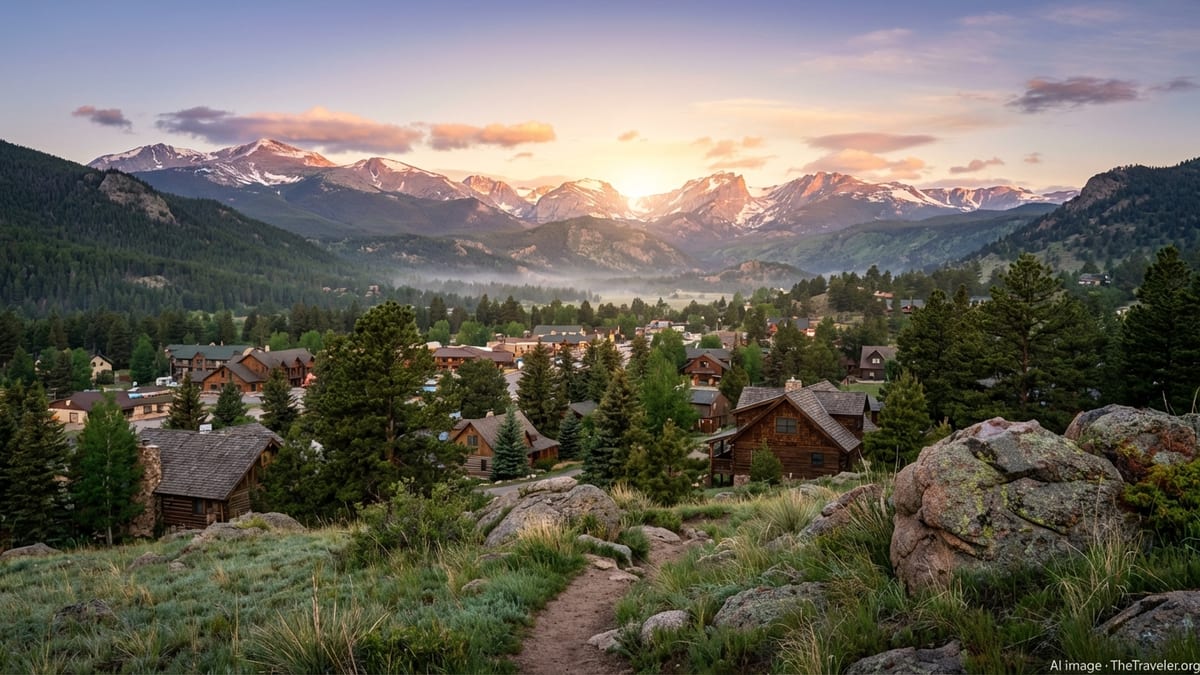
The main eastern gateway is Estes Park, a small resort town that wraps around Lake Estes and follows the Big Thompson River. Long known as a summer retreat, Estes Park now receives visitors in all seasons, from leaf peepers in autumn to snowshoers and wildlife watchers in winter. The town’s compact center mixes lodges, old fashioned motels, and vacation rentals with restaurants, galleries, and outfitters that help visitors arrange guided hikes, horseback rides, and scenic drives.
Within the park, one of the most celebrated routes is Trail Ridge Road, a seasonal highway that climbs above treeline and crosses the high tundra between Estes Park and the town of Grand Lake on the western side. When open, typically from late spring to early fall depending on snowpack, it offers broad views of the Front Range and numerous pullouts where travelers can experience the thin air and stark beauty of the alpine zone. Lower elevation valleys, including areas around Bear Lake and Moraine Park, have well marked trailheads for day hikes of varying difficulty.
Because of its popularity, Rocky Mountain National Park uses timed entry systems during peak months on certain corridors. Travelers should check official information when planning, as reservation windows, shuttle services, and parking rules can change from year to year. Starting days early, carrying layers for fast changing weather, and building in flexibility for afternoon thunderstorms all increase the odds of a rewarding visit.
Southern Colorado: Colorado Springs, Pikes Peak, and High Desert Landscapes
South of Denver, the landscape opens into a mix of grasslands, sandstone formations, and high peaks that define the Colorado Springs region. The city itself sits in the shadow of Pikes Peak, one of the best known summits in the state, and has grown into a sizable urban center with a historic downtown, military installations, and a cluster of museums and cultural institutions. For travelers, its appeal lies in the close juxtaposition of city comforts and dramatic natural features.
One of the most striking of those features is a municipal park filled with towering red rock fins and spires, set against the backdrop of snow capped mountains. A network of paved and unpaved paths winds among the formations, giving visitors easy access to viewpoints at sunrise and sunset, when the rock glows in warm light. Nearby, canyon roads climb toward higher elevations, passing trailheads, waterfalls, and historic sites that date back to early railroad and mining eras.
Pikes Peak itself can be reached by highway, cog railway, or trail. The paved summit road, which typically operates seasonally and can see temporary closures in adverse weather, offers a series of overlooks and picnic areas on the way to the top. The recently modernized summit facilities provide sheltered viewing areas and interpretive exhibits that explain the mountain’s geology and role in regional history. Those sensitive to altitude should ascend gradually and pay attention to how they feel, as the summit exceeds 14,000 feet.
Beyond Colorado Springs, southern Colorado spreads into high valleys and semi arid plateaus that feel distinct from the northern Front Range. To the southwest, travelers encounter historic railroad towns, hot springs, and access points to the rugged San Juan Mountains. To the southeast, the terrain flattens toward the plains, where state parks protect reservoirs, riparian corridors, and bird habitat. This part of the state is generally less visited than the central Rockies, which can appeal to travelers seeking quieter campgrounds and smaller crowds on trails.
Iconic National Parks and Monuments Beyond the Front Range
Although Rocky Mountain National Park garners much of the attention, Colorado’s other national parks and monuments showcase very different facets of the state. In the southwest, an expansive mesa preserves hundreds of ancient cliff dwellings and archaeological sites that illuminate the lives of Ancestral Pueblo people. Visitors can view many of these dwellings from overlooks along a loop road and, in season, join ranger led walks that visit selected sites up close. The combination of cultural history and sweeping canyon vistas makes this area one of the most compelling destinations in the Four Corners region.
Farther south in the San Luis Valley, a separate park protects the tallest sand dunes in North America, backed by the steep wall of the Sangre de Cristo Mountains. Here, strong prevailing winds have piled sand into a sea of shifting ridges and bowls that visitors can climb on foot or descend with specially designed sand boards and sleds. Seasonal streams at the base of the dunes create shallow channels where families wade and cool off on summer days. Because there is little shade, many travelers aim for early morning or evening visits, when temperatures are lower and light is especially beautiful.
Western Colorado adds yet another layer to the mix. Near the city of Grand Junction, a national monument preserves a landscape of sandstone monoliths, sheer walled canyons, and high desert plateaus. A scenic rim drive provides easy access to overlooks, while a network of trails explores side canyons and slickrock benches. The surrounding region is also one of Colorado’s primary fruit growing and wine making areas, with orchards and vineyards lining river valleys and lower slopes.
Together, these sites reveal how dramatically Colorado’s ecosystems and landforms can shift within a day’s drive. Travelers who associate the state primarily with alpine forests and ski slopes are often surprised by the scale of its desert canyons, the extent of its agricultural valleys, and the depth of its Indigenous and pioneer histories. Building time for at least one of these non alpine parks can make a Colorado itinerary feel more complete and balanced.
Planning Your Colorado Itinerary Season by Season
Colorado’s appeal changes significantly with the calendar, making seasonality a central consideration when deciding which areas to visit. Winter is high season in many mountain towns, particularly those anchored by major ski resorts, and it is also the time when road conditions demand the most flexibility. Snow and ice can affect driving times, temporary pass closures are possible, and avalanche control work can delay travel in certain corridors. On the positive side, snow covered peaks, frozen lakes, and twinkling resort streets create a classic alpine atmosphere, and off peak midweek stays may come with quieter slopes and better lodging value.
Spring is a transitional period. At lower elevations along the Front Range and in cities like Denver and Colorado Springs, trees leaf out and trails dry relatively early, making this a good time for urban sightseeing, foothills hikes, and cultural events. In the high country, snow can linger well into May or June, especially on shaded slopes, keeping some backcountry routes and high passes inaccessible. Travelers in this shoulder season should expect a mix of conditions and pack both warm layers and waterproof footwear.
Summer brings the broadest range of options. High passes and scenic byways typically open, allowing for loop drives that connect multiple mountain valleys and towns. Wildflowers peak in alpine meadows between roughly July and early August in many regions, drawing hikers and photographers. National parks and well known trails are busiest at this time, so it helps to start early in the day or target lesser known areas. Afternoon thunderstorms are common at elevation, and lightning risk increases on exposed ridges, so trip plans should account for an early turnaround from high country routes.
Autumn can be particularly rewarding for travelers focused on scenery. Aspen groves across the Rockies shift from green to yellow and orange in a relatively short window, usually sometime between mid September and early October depending on elevation and annual weather patterns. During this period, popular leaf viewing corridors can see heavy weekend traffic, but weekdays often feel more relaxed. As nights cool, resort towns gradually transition toward winter operations, and some services wind down temporarily before ski season begins in earnest.
The Takeaway
Colorado’s variety is its greatest strength. Within a single trip, travelers can sample a major metropolitan center, hike or ski in high mountain basins, and stand among sandstone arches or archaeological sites that speak to cultures far older than the modern state. Deciding where to go begins with clarifying priorities: lively cities and craft food scenes, quiet trails and wildlife watching, historic districts and museums, or a bit of each.
Denver and the surrounding Front Range provide the most convenient entry point and a flexible base, while mountain towns like Breckenridge, Aspen, and Telluride deliver concentrated alpine experiences. Estes Park and Rocky Mountain National Park link big scenery with relatively easy access, and farther flung parks such as Mesa Verde, Great Sand Dunes, and Colorado National Monument add diversity and context. By matching regions to the season, allowing for altitude and weather, and keeping driving distances realistic, travelers can assemble itineraries that feel both ambitious and enjoyable rather than rushed.
No single route will capture everything Colorado has to offer, and that is part of the state’s enduring appeal. Many visitors find themselves planning a return as soon as they leave, sketching future loops that might prioritize the San Juans, the wine country around Grand Junction, or the quieter state parks of the eastern plains. Whatever combination you choose, the mix of mountains, cities, and parks ensures that time spent in Colorado feels full, memorable, and distinctly tied to place.
FAQ
Q1. What is the best time of year to visit Colorado?
The best time depends on your priorities. Winter favors skiing and snow sports, summer offers widest access to trails and high passes, and autumn is ideal for foliage and cooler hiking.
Q2. How many days should I plan for a first trip to Colorado?
A week is a comfortable starting point, allowing time for a major city, one or two mountain towns, and at least one national park or monument without rushing.
Q3. Is Denver a good base for visiting the mountains?
Yes. Denver and nearby Front Range cities offer easy access to rental cars, highways, and regional transit, making them practical bases for day trips to foothills and some mountain areas.
Q4. Do I need a car to explore Colorado’s best areas?
A car provides the most flexibility, especially for national parks and smaller towns. Some resort corridors and cities have shuttles and transit, but coverage is limited in rural regions.
Q5. How should I prepare for Colorado’s elevation?
Plan an easy first day, drink plenty of water, avoid overexertion and excess alcohol early on, and consider spending a night along the Front Range before heading to higher elevations.
Q6. Which national parks are must sees for first time visitors?
Rocky Mountain National Park is the most accessible from Denver, while Great Sand Dunes and Mesa Verde add contrasting desert and archaeological landscapes if you have more time.
Q7. Are Colorado’s mountain towns worth visiting in summer?
Yes. In summer they offer hiking, biking, festivals, scenic gondola rides, and lake activities, often with fewer crowds than peak ski season on weekdays.
Q8. How busy do Colorado parks and trails get in peak season?
Popular parks and trailheads can become very crowded on summer weekends and holidays. Arriving early, visiting on weekdays, or choosing lesser known areas helps avoid congestion.
Q9. Is Colorado suitable for family travel?
It is. Many destinations feature easy trails, interactive museums, kid friendly attractions, and outdoor activities like paddling, gentle rafting, and wildlife watching that work well for families.
Q10. What should I pack for a Colorado trip?
Layers are essential. Include a waterproof shell, warm mid layer, sun protection, sturdy footwear, and reusable water bottle, as weather can shift quickly, especially at elevation.