

Amsterdam is an endlessly rewarding city, but some of the Netherlands’ most memorable experiences lie just beyond its canals. Within a couple of hours by train, bus, or organized tour, you can trade busy streets for quiet windmill landscapes, canal-side market squares, and watery villages where boats replace cars. Delft, Haarlem, Kinderdijk, and Giethoorn each offer a distinct snapshot of Dutch history and everyday life, making them ideal day trips from the capital for first-time visitors and repeat travelers alike.
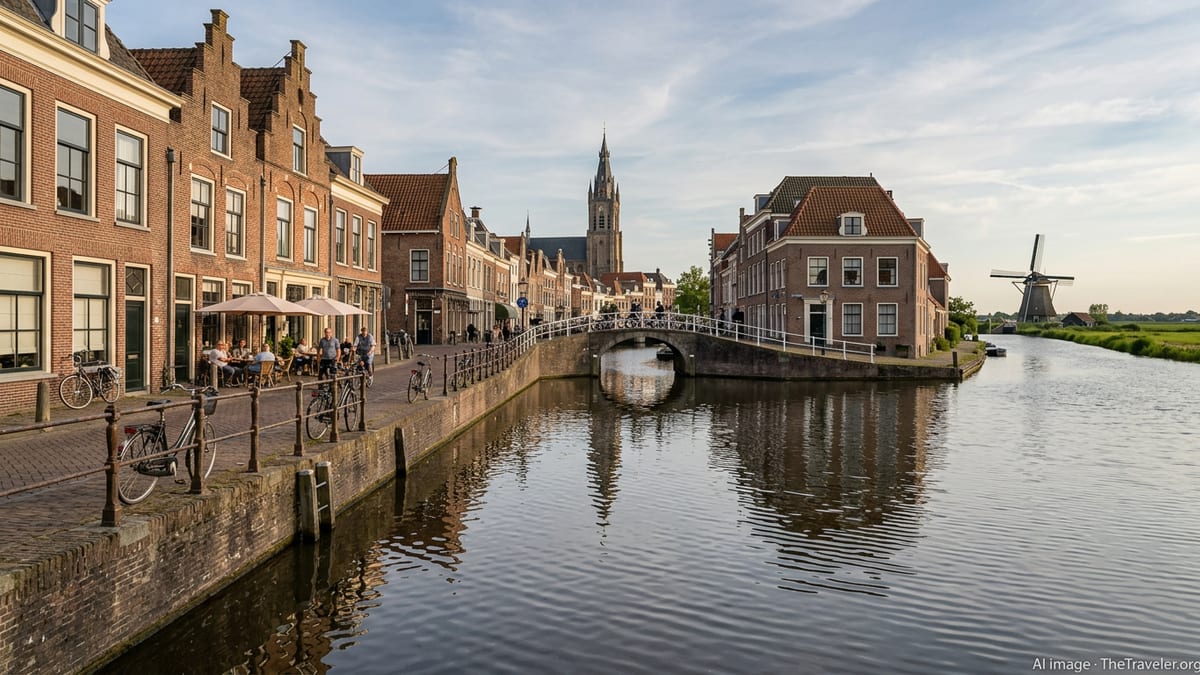
Planning Day Trips from Amsterdam in 2026
One of the advantages of using Amsterdam as a base is the density and reliability of Dutch public transport. Frequent trains connect Amsterdam Centraal, Zuid, and Sloterdijk with cities such as Delft and Haarlem, while regional buses and boat links provide access to more rural destinations like Kinderdijk and Giethoorn. In practice, this means most travelers can leave after breakfast, enjoy a full day exploring, and still be back in Amsterdam in time for a late dinner, without rushing excessively if they plan carefully.
Haarlem is the quickest of the four destinations to reach, with direct trains from Amsterdam Centraal typically taking about 15 to 20 minutes, and departures running multiple times an hour during the day. Delft is slightly further but still straightforward, with direct trains or connections via major hubs such as Leiden or The Hague, usually taking around one hour in total. Kinderdijk and Giethoorn require a combination of train and bus, or a dedicated tour, and are better suited to travelers who are comfortable with transfers or prefer a door-to-door excursion.
For 2026, travelers continue to benefit from various regional and multi-day rail passes that can reduce costs if used efficiently across several day trips. Passes available through the national rail operator and international booking platforms often bundle multiple travel days into a fixed price, which can be more economical than buying separate point-to-point tickets for every excursion. It is still wise to check current timetables and any planned engineering works a few days before travel, as schedules can shift seasonally or for maintenance.
Weather is another crucial factor. The Netherlands has a temperate maritime climate, with changeable conditions year-round. Rain showers can appear with little warning even in summer, and winter days are short, particularly between November and February. Packing light layers, a compact umbrella or rain jacket, and comfortable waterproof shoes will make canal-side strolls, boat trips, and windmill walks much more enjoyable, especially in exposed areas such as Kinderdijk’s polder landscape.
Delft: Blue Pottery, Old Masters, and Royal History
Delft is often described as a smaller, more relaxed cousin of Amsterdam, with ringed canals, gabled houses, and cobblestone streets, all centered around a handsome market square. It is best known for its blue-and-white Delftware pottery, its association with the painter Johannes Vermeer, and its long-standing ties to the Dutch royal family. For many visitors, it delivers the classic postcard image of the Netherlands in a quieter, more compact setting than the capital.
From Amsterdam, trains to Delft generally take around one hour, depending on the route and whether you opt for a direct Intercity service or make a quick change in Leiden or The Hague. Services tend to be frequent during the day, which allows flexibility: early risers can aim for a morning arrival to enjoy the city before day-trip crowds peak around late morning and early afternoon. Delft’s train station sits just outside the historic center, and within 10 to 15 minutes on foot you can reach the Markt, the main square framed by the Stadhuis (Town Hall) and the Nieuwe Kerk (New Church).
Once in the heart of the city, the best approach is often to wander without a strict agenda, following canals lined with trees and bridges. The Markt is a natural anchor point: on market days, stalls selling flowers, cheese, and local crafts spill across the square, while surrounding cafes offer terrace seating where you can pause with coffee and watch daily life unfold. The Nieuwe Kerk is of particular interest for those keen on Dutch history, as it contains the royal crypt where members of the House of Orange are interred, and its tower offers panoramic views in clear weather for visitors willing to climb the steps.
Delftware enthusiasts can visit one of the city’s historic pottery workshops, where artisans demonstrate the meticulous process behind the famous blue-and-white designs. Many workshops offer short guided tours and small shop areas where travelers can purchase ceramics directly from the source, ranging from delicate tiles to larger decorative pieces. Art lovers may also gravitate toward museums and exhibitions that explore Vermeer’s life and the Dutch Golden Age, often including multimedia presentations that help bring the era to life for modern visitors.
Haarlem: Compact Canals, Culture, and a Softer Pace
Haarlem is one of the easiest and most rewarding day trips from Amsterdam, especially for travelers who want a taste of Dutch canal life without long travel times. Located just west of the capital, it combines a walkable historic center, a strong artistic heritage, and an excellent restaurant and cafe scene. Many visitors use it as a gentle counterbalance to the intensity of central Amsterdam, appreciating its slower pace and more local feel.
Trains between Amsterdam Centraal and Haarlem generally take about 15 to 20 minutes, with many departures every hour throughout the day, which makes this an ideal spontaneous excursion if you wake up to sunshine and clear skies. The short journey time also means Haarlem works well as a half-day or evening trip, perhaps combined with a visit to nearby North Sea beaches such as Zandvoort or Bloemendaal in warmer months for those willing to add a short onward train or bus ride.
Haarlem’s central landmark is the Grote Markt, a spacious square dominated by the Gothic Grote Kerk (St. Bavo’s Church). On market days, the square fills with stalls selling flowers, fresh produce, and local specialties, while nearby streets host boutiques, bookshops, and traditional brown cafes. Inside the Grote Kerk, visitors can admire the impressive organ, which has attracted famed musicians over the centuries, and appreciate the craftsmanship that went into the church’s vaulted ceilings and stonework.
Culture-focused travelers often prioritize the Frans Hals Museum, dedicated to one of the Dutch Golden Age’s most renowned portrait painters, alongside smaller galleries that showcase contemporary art and photography. Wandering Haarlem’s side streets reveals tranquil hofjes, or historic almshouse courtyards, tucked behind unassuming doors, offering pockets of quiet greenery. With so much within walking distance of the station, Haarlem is particularly suitable for travelers who prefer to explore on foot and avoid complex transport changes.
Kinderdijk: Windmills, Water Management, and Wide-Open Polders
Kinderdijk offers one of the most iconic landscapes in the Netherlands: a string of historic windmills lined up along broad canals, surrounded by low-lying fields and big skies. Recognized as a UNESCO World Heritage site, the area showcases how Dutch engineers have managed water for centuries, keeping reclaimed land dry in a country where much of the territory sits at or below sea level. For travelers interested in history, engineering, or classic Dutch scenery, it is a compelling day trip from Amsterdam.
Reaching Kinderdijk from Amsterdam typically involves a combination of train and bus, or a train plus waterbus from nearby cities such as Rotterdam or Utrecht. Travelers often take a train from Amsterdam to either Rotterdam or Utrecht, then transfer to regional buses or dedicated boat services that deliver them close to the windmill complex. Total travel time commonly falls around 1.5 hours each way, depending on connections and seasonal schedules, so it is wise to start early, particularly during busy spring and summer periods.
Once on site, visitors follow a network of paths and boardwalks threading between canals, dikes, and the 18th-century windmills. Several windmills are usually open as museums, allowing you to step inside and see how miller families lived and worked in tight quarters, adjusting sails and gears in response to wind and water levels. Informational displays and visitor centers explain how this network of mills, pumps, and sluices functions as part of a broader water management system, placing Kinderdijk within the larger story of Dutch resilience in the face of flooding.
In favorable weather, renting a bike or joining a guided cycling tour can be an excellent way to appreciate the wider polder landscape, as cycle paths extend beyond the main cluster of windmills into quieter countryside. Boat tours along the canals present another perspective, gliding past the mills while offering shelter in the event of light rain. Because much of the area is exposed and can feel chilly in wind, packing a windproof layer, even in summer, is advisable. Visitors should also be prepared for crowding around midday in peak season, when coach tours often arrive in waves.
Giethoorn: Canals, Thatched Roofs, and Car-Free Quiet
Giethoorn, often marketed as a kind of Dutch “Venice,” is a small village in the province of Overijssel where narrow canals and wooden bridges weave between farmhouses with thatched roofs. Despite its relatively remote location compared with Delft or Haarlem, it has become a very popular day trip from Amsterdam, particularly in recent years as social media images of its tranquil waterways have circulated widely. Travelers drawn by those pictures should expect a charming setting, but also be prepared for crowds during peak months.
Getting to Giethoorn typically requires a train from Amsterdam to a regional hub such as Steenwijk or Zwolle, followed by a local bus or taxi for the final stretch to the village. Depending on connections, total travel time often ranges from about 2 to 2.5 hours one way, making Giethoorn a longer day trip that benefits from an early start. Visitors who prefer a smoother experience sometimes opt for organized day tours that handle the transfers, though independent travelers usually find the journey manageable with a bit of preparation and attention to current timetables.
Once in Giethoorn, the classic activity is to explore the canals by boat. Rental companies in the village offer small electric whisper boats, traditional punting-style vessels, and guided cruise boats, with routes that loop through the central canals and nearby lakes. A slow circuit allows time to appreciate the architecture of the old farmhouses, the lush gardens that spill down to the water, and the network of wooden footbridges connecting properties that remain car-free. On busy days, boat traffic can become dense, so steering carefully and keeping a relaxed mindset are important.
Those who prefer to stay on foot can follow paths that run parallel to the canals, pausing on bridges for photos or ducking into small cafes and restaurants along the way. The village also connects to broader walking and cycling routes in the surrounding Weerribben-Wieden National Park, a marshy landscape of reeds, waterways, and wildlife. Spending time in these quieter stretches can be a welcome break from the busier central canals, especially in summer when the village center can feel crowded. In shoulder seasons such as late spring and early autumn, visitor numbers often dip slightly, offering a calmer atmosphere while still providing relatively stable weather.
Choosing the Right Day Trip for Your Travel Style
Each of these four destinations appeals to different priorities, so considering your travel style can help you decide how to allocate limited days. If you want a city that feels like a gentler, smaller Amsterdam with good museums and food, Haarlem is usually the easiest choice. Its compact center, minimal travel time, and frequent trains make it particularly suitable for families, travelers with mobility concerns, or anyone who prefers to avoid navigating transfers in unfamiliar surroundings.
Delft, on the other hand, is a strong pick for those interested in Dutch art, royal history, and traditional crafts. Its market square, churches, and pottery workshops can easily fill a relaxed day without feeling rushed. Because the city is somewhat farther from Amsterdam than Haarlem, it also feels more distinct, and many visitors enjoy pairing it with nearby cities such as The Hague or Rotterdam on longer itineraries, even if that combination is better suited to an overnight stay than a single day for most travelers.
Kinderdijk and Giethoorn are more about landscapes and atmosphere than urban culture. Kinderdijk’s windmills and open polders appeal to travelers who want to understand Dutch water management and see classic windmill scenes in situ. It can feel more educational and historically grounded, especially with a guided tour or an audio guide. Giethoorn, by contrast, offers a romantic, almost storybook setting centered on boating, canals, and traditional houses. It is well suited to slow travelers who enjoy hours spent on or near the water, and to photographers seeking distinctive canal views.
If you have only two or three full days in Amsterdam, it may be wise to commit to just one or two day trips, leaving time to enjoy the capital itself. Travelers with a week or more have greater flexibility to sample all four destinations, perhaps combining a quick half-day in Haarlem with a longer outing to Kinderdijk or Giethoorn. Whatever you choose, building in some buffer time for missed connections or spontaneous discoveries often results in a more relaxed and memorable experience than trying to see everything at once.
Practical Tips for Transport, Tickets, and Timing
In 2026, most travelers will continue to rely heavily on contactless payments, rechargeable smart cards, or mobile tickets for Dutch trains, trams, and buses. Before setting off, it is worth confirming how your payment method works across different operators, since some regional buses and smaller boat services may have slightly different rules from the main rail network. Many visitors find that tapping a bank card, smartphone, or watch in and out at card readers provides a simple, pay-as-you-go solution on most routes, while others prefer the predictability of pre-booked tickets or passes.
When planning a day trip, check departure and return times for both legs of the journey before leaving Amsterdam. For destinations with transfers, such as Kinderdijk and Giethoorn, note the intervals between connecting services; a missed bus can add significant waiting time in smaller towns with limited amenities. In busier periods, seats on popular trains can become crowded, especially around commuting hours, so traveling slightly earlier or later than peak rush hour may make for a more comfortable ride and easier luggage management.
Booking ahead can be particularly useful for boat tours in Giethoorn and Kinderdijk, as well as for specialized guided tours in Delft and Haarlem. Some operators allow advance reservations with flexible change policies, giving you room to adapt if weather forecasts shift. While it is still possible to show up and book on the spot in many cases, securing a place on a morning or early afternoon departure can reduce uncertainty, especially on weekends and during school holidays when domestic tourism adds to visitor numbers.
Finally, remember that Dutch weather can influence not only comfort but also the full operation of certain services. Strong winds or heavy rain may lead to temporary adjustments in boat schedules, while extremely hot days can make exposed areas such as Kinderdijk feel more tiring than expected. Checking a reliable forecast the night before your trip, and packing accordingly, allows you to pivot if necessary: a cooler, overcast day may be ideal for museum-heavy Delft, while a bright, dry day is better suited to open-air destinations like Giethoorn and Kinderdijk.
The Takeaway
Delft, Haarlem, Kinderdijk, and Giethoorn each showcase a different facet of the Netherlands, all within reach of Amsterdam on a day trip. Delft’s blend of pottery workshops, historic churches, and canal-ringed streets offers a refined look at Dutch art and royal heritage. Haarlem’s compact center, grand market square, and lively cultural scene provide an accessible, less hectic alternative to the capital, perfect for a half-day or long afternoon escape.
Kinderdijk, with its row of windmills and wide polder vistas, tells the story of how the Dutch have shaped and defended their landscape over centuries. Giethoorn, with quiet canals and thatched houses, highlights a softer, more rural way of life that feels far removed from city traffic and tramlines. Taken together, these destinations reveal just how varied a small, densely connected country can be, rewarding travelers who venture a little beyond Amsterdam’s familiar canal belt.
Whether you prioritize historic architecture, waterfront scenery, or the simple pleasure of watching local life unfold in market squares and village cafes, at least one of these four day trips is likely to fit your interests. With thoughtful planning around transport, timing, and weather, they can become highlights of a wider Netherlands itinerary rather than rushed side excursions. Giving each place space in your schedule lets you experience the Netherlands not just as a quick checklist of sights, but as a collection of living, breathing communities linked by trains, boats, and centuries of shared history.
FAQ
Q1. How many day trips from Amsterdam can I realistically do in three days?
With three full days based in Amsterdam, most travelers find that one or two day trips are realistic without feeling rushed. This allows at least one full day dedicated to the city itself and one or two days to destinations like Delft or Haarlem, which have shorter travel times and are easier to fit into a balanced itinerary.
Q2. Which is the easiest day trip from Amsterdam among Delft, Haarlem, Kinderdijk, and Giethoorn?
Haarlem is generally the easiest, thanks to its 15 to 20 minute direct train ride from Amsterdam Centraal and frequent departures throughout the day. The station is close to the historic center, so you can be walking through the Grote Markt and canals within minutes of arrival.
Q3. Is Giethoorn worth the longer travel time from Amsterdam?
Giethoorn can be very rewarding if you enjoy tranquil boat rides, photography, and villages with a strong scenic focus. Because it usually takes about 2 to 2.5 hours each way with transfers, it is best for travelers who are comfortable with a full, long day out and who value atmosphere and landscape over packed sightseeing schedules.
Q4. Can I visit Delft and The Hague or Rotterdam on the same day from Amsterdam?
It is possible to combine Delft with The Hague or Rotterdam in a single day, but doing so can feel compressed. For a relaxed pace, many visitors devote most of the day to Delft and treat any additional city as a brief stop, or plan separate days if they want to explore museums and neighborhoods in depth.
Q5. Do I need to book tickets in advance for Kinderdijk and Giethoorn?
Train tickets to the nearest hubs can often be bought on the day, but it is sensible to reserve spots on boat tours or popular time slots, especially during weekends and peak season. Organized day tours from Amsterdam also typically require advance booking to secure a place and confirm departure times.
Q6. Are these day trips suitable for children and families?
Yes, all four destinations can work well for families, though suitability depends on age and interests. Haarlem and Delft are particularly easy for children because of short travel times and ample space to run around in car-light historic centers. Giethoorn and Kinderdijk can be engaging for kids who enjoy boats, windmills, and outdoor exploration, provided you plan for breaks, snacks, and weather changes.
Q7. What is the best season to visit Delft, Haarlem, Kinderdijk, and Giethoorn?
Late spring and early autumn often offer a good balance of milder weather, longer daylight hours, and slightly fewer crowds than peak summer. Kinderdijk and Giethoorn are especially pleasant when fields are green and skies are relatively stable, while Delft and Haarlem can be enjoyable year-round thanks to their mix of indoor and outdoor attractions.
Q8. Can I do these day trips using only public transport?
Yes, you can reach all four destinations using trains and buses, sometimes supplemented by boat services. Delft and Haarlem are straightforward by train alone, while Kinderdijk and Giethoorn usually require at least one bus connection or a waterbus from nearby cities. Checking current schedules and planning transfers ahead of time will make public transport routes smoother.
Q9. Are guided tours from Amsterdam a better option than traveling independently?
Guided tours can be convenient if you prefer not to manage multiple transfers, particularly for Kinderdijk and Giethoorn. They often bundle transport, a guide, and key site admissions into one package. Independent travel, however, gives you more freedom to adjust timing, choose specific museums or cafes, and linger where you feel most inspired.
Q10. How far in advance should I plan my day trips from Amsterdam?
For most travelers, planning one to three weeks in advance is enough to secure tours, check transport passes, and align activities with weather forecasts. During very busy holiday periods or major events, booking popular tours and certain museum tickets earlier can be helpful, while still leaving room in your schedule for spontaneous discoveries once you are on the ground.