

Delaware may be a small state, but its location on the Mid-Atlantic corridor puts an impressive mix of beaches, small towns, big cities and national parks within easy reach. Whether you are based in Wilmington, Dover or the coastal resorts, you can be hiking in deep forests, tasting your way through a historic market, or standing on an Atlantic beach in well under two hours. This guide highlights some of the best day trips from Delaware, with practical context on what each destination offers so you can match the escape to your ideal kind of day.
Cape Henlopen State Park: Classic Delaware Coast Day
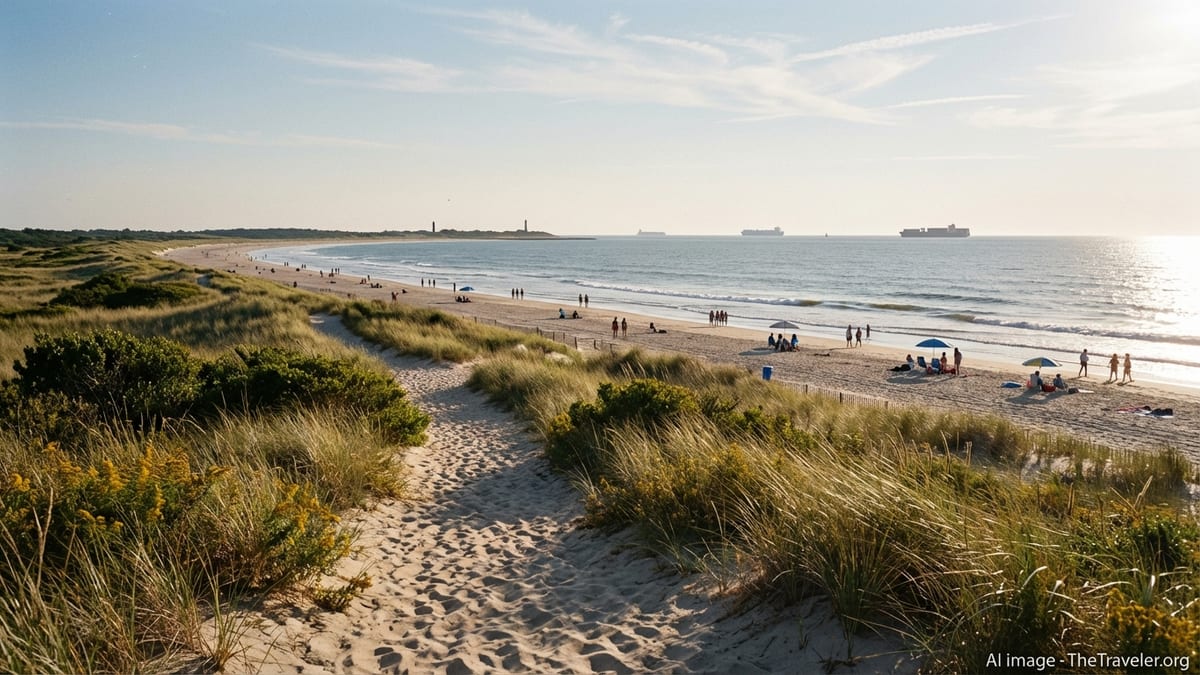
Cape Henlopen State Park, near Lewes at the mouth of Delaware Bay, is one of the state’s signature coastal escapes and an easy day trip from almost anywhere in Delaware. Broad Atlantic beaches, rolling dunes and pine forest trails give you room to spread out even on busy summer weekends. The shoreline here has a noticeably wilder feel than many resort strips, with long uninterrupted views north toward the Delaware Bay and south toward Rehoboth Beach.
The park offers guarded swimming beaches in season, a long fishing pier that is open around the clock, and access for surf anglers who obtain the appropriate vehicle permit. Away from the water, cycling and walking paths wind through the dunes and former military areas. One of the most distinctive sights is the World War II observation tower, which you can climb for wide views over the cape and the meeting point of bay and ocean.
Cape Henlopen is also known for its birdlife. Shorebirds, terns and occasional raptors patrol the beaches and ponds, and horseshoe crabs gather along the Delaware Bay shoreline in late spring, attracting both birders and photographers. The on-site nature center gives helpful orientation for first-time visitors, with aquariums and simple exhibits that make it a practical stop for families. For a straightforward Delaware coast day, with a balance of beach time and gentle exploration, Cape Henlopen remains one of the most reliable choices.
From northern Delaware, plan on roughly ninety minutes by car in light traffic, longer on summer weekends. Arriving earlier in the day usually means easier parking near the main beach areas and more peaceful conditions on the trails.
White Clay Creek & Northern Delaware’s Green Corridor
In the opposite corner of the state, White Clay Creek State Park creates a very different kind of day trip. Straddling the border near Newark, this large swath of hills, forest and stream valley has an extensive trail network that appeals to hikers, runners and mountain bikers. The creek itself is federally designated as part of the National Wild and Scenic Rivers System, and much of the experience here is about immersing yourself in a surprisingly rural-feeling landscape on the edge of suburban development.
The park’s 40-plus miles of trails range from broad, relatively flat creekside paths suitable for casual walkers to more rolling routes that link up into longer loops. In many areas, you can walk for an hour or two and see only a handful of other visitors, especially outside peak fall foliage weekends. The terrain is gentle enough that families with school-age children often manage several miles comfortably, and in summer you will see people wading or cooling their feet in quiet sections of the creek.
White Clay Creek also offers a layer of history. Boundary markers connect to the story of the Mason–Dixon survey, and you can walk to the Tri-State Monument where Delaware, Pennsylvania and Maryland meet. Old farm buildings and stone walls appear along the trails, hinting at earlier agricultural use of the valley before conservation efforts took hold in the mid-twentieth century. The combination of light historical interest and accessible green space makes this an appealing alternative to a long drive into the mountains.
For Wilmington and Newark residents, the park is close enough to function as an extended backyard. For visitors from central or southern Delaware, pairing a walk here with time in downtown Newark or at nearby attractions can turn it into a full, varied day out.
Philadelphia: Big-city Culture Within Easy Reach
From much of northern Delaware, Philadelphia is closer than many in-state beach towns, which makes it a natural choice when you want an urban day trip. The drive from Wilmington to Center City Philadelphia is often under an hour outside rush periods, and regional rail links the cities for travelers who prefer to leave the car behind. Once you arrive, the compact downtown and historic core mean you can see a great deal on foot in a single day.
Many visitors start with the historic sites in and around Independence National Historical Park, where key locations connected to the American Revolution and the founding era are clustered within a few blocks. From there, it is a short walk to neighborhoods like Old City and Society Hill, where cobblestone streets, brick rowhouses and independent galleries offer a sense of the older city. Food-focused travelers often head to the bustling indoor market halls, which bring together local vendors and regional specialties under one roof.
Philadelphia’s museum district along the Benjamin Franklin Parkway provides enough art and culture to fill several visits. Large institutions hold international collections, while smaller museums and science centers appeal to families and enthusiasts with more specialized interests. Even if you do not step inside a single gallery, the Parkway’s broad sidewalks and public art installations make for an easy urban promenade.
Planning a Philadelphia day trip from Delaware largely comes down to timing. Weekday mornings can be congested along the interstate approaches, while weekends often mean lighter traffic but busier attractions. If you can, decide in advance whether your focus is history, food or museums, and cluster your stops geographically to minimize time in transit within the city.
Baltimore’s Waterfront & Neighborhoods
South and slightly farther afield than Philadelphia, Baltimore offers a different kind of city day trip within range of central and southern Delaware. From Dover, the drive to Baltimore’s Inner Harbor is commonly around two hours in good traffic, putting it within reach for an early start and late return. The city’s waterfront has been reshaped over recent decades, turning old docks into promenades, museums and public spaces that are easy to navigate in a day.
The Inner Harbor itself is a natural base for first-time visitors. Here you will find major family-friendly attractions, historic ships and broad walkways with views back toward the downtown skyline. A short walk or water-taxi ride brings you to neighborhoods such as Federal Hill, with its park overlooking the harbor, and Fell’s Point, where cobbled streets and historic buildings now house bars, cafes and small shops. The atmosphere can feel distinctly maritime, particularly on clear days when sunlight reflects off the harbor basin.
Beyond the waterfront, Baltimore’s neighborhoods offer a cross-section of the city’s culture. Areas such as Mount Vernon are known for grand nineteenth-century architecture and cultural institutions, while other districts highlight street art, markets and evolving food scenes. It is usually possible to combine one or two of these with harbor time without feeling rushed.
Because Baltimore is a larger and sometimes more complex city to navigate by car, many Delaware travelers choose a parking garage near the Inner Harbor and explore on foot from there. As with any city day trip, checking opening hours for key attractions before you go and giving yourself some flexibility with timing will help you make the most of the journey.
Delaware Water Gap: River, Cliffs and Appalachian Scenery
For Delaware travelers willing to drive farther in pursuit of mountain and river scenery, the Delaware Water Gap National Recreation Area on the Pennsylvania and New Jersey border offers a full day of outdoor activity. From northern Delaware, the drive typically ranges between two and a half and three hours, depending on your starting point and traffic. Once there, you find a stretch of the Delaware River flanked by steep ridges, forested hills and a network of hiking trails that connect to the Appalachian Trail.
Many day trippers focus on the water itself. Outfitters near the small town of Delaware Water Gap and at river access points offer seasonal canoe, kayak and rafting rentals, with trips calibrated for casual paddlers and families. Gentle current, broad views and occasional small rapids provide enough variety without requiring advanced skills, particularly on the shorter stretches closer to town. Summer weekends can be busy on the most popular sections, so midweek days and shoulder seasons offer a quieter experience.
On land, a number of signed trails lead to overlooks and waterfalls within the recreation area. Popular routes include relatively short but steep climbs that reward effort with far-reaching views over the river valley. Lower-elevation riverside paths appeal to those looking for a more relaxed walk with frequent access to the water’s edge. In autumn, foliage draws additional crowds as the surrounding forests shift through reds, oranges and golds.
Because the Delaware Water Gap region spreads across a large area with multiple access points, a bit of advance planning pays off. Decide whether your priority is paddling, hiking or simply scenic driving, and identify a couple of specific parking areas and trailheads before you set out. From Delaware, an early start and packed picnic often make this outing feel less rushed, turning the extra driving time into part of a broader change of scenery.
Historic Brandywine Valley and Gardens
Very close to the Delaware border with Pennsylvania, the Brandywine Valley offers an appealing mix of rolling countryside, historic estates and carefully maintained gardens. From Wilmington or Newark, driving times to many of the key sites in this corridor are often under half an hour, making it a flexible and relatively low-effort day trip. Despite the proximity, once you leave the main highways the landscape quickly feels more rural, with winding roads, stone walls and old farmsteads.
Several notable estates in and around the valley open their grounds and houses to visitors, showcasing periods of regional architecture, formal gardens and art collections. Many were shaped by industrial or banking fortunes connected to the broader development of the mid-Atlantic, and today they operate as museums or cultural centers. Walking paths through woodlands and meadows link some properties with nearby riverside trails, giving you the option to combine cultural touring with gentle outdoor time.
The Brandywine River itself, with its low falls and rock outcrops, serves as both a visual focal point and a recreational resource. Sections of riverfront parkland allow for picnicking, short walks and views of historic mill buildings. Art institutions in the region often draw on this landscape, so spending time outdoors before or after a museum visit can deepen your sense of place.
Because so many attractions in the Brandywine Valley sit close together, it is feasible to visit more than one in a single outing. That said, the experience is often most enjoyable when you linger rather than race between stops. Checking seasonal garden highlights, special exhibitions and tour schedules ahead of time can help you build a relaxed route through this corner of the Delaware borderlands.
Fort Delaware and Delaware City: Civil War History on the River
For a day trip that stays firmly within state lines while still feeling like an excursion, Fort Delaware State Park on Pea Patch Island is a strong choice. The fort occupies a low-lying island in the Delaware River opposite Delaware City and is reached by a short seasonal ferry ride. The trip across, with views of passing ships and the riverfront industrial landscape, immediately signals that you are leaving the everyday mainland behind.
The fort itself is a substantial brick structure that dates in its current form largely to the mid-nineteenth century. During the Civil War, it served as a major prison for captured Confederate soldiers, and interpretive programs today highlight both the military architecture and the human stories linked to that period. Costumed interpreters, guided walks and occasional living-history events help bring the site to life, giving visitors a concrete sense of how the island operated when it was an active post.
Beyond the historic fortifications, Pea Patch Island is also recognized as an important wetland habitat along a major migratory bird route. Trails loop through marshy areas, and observation points allow for birdwatching without disturbing nesting areas. In late spring and summer, colonies of wading birds can often be seen in the surrounding shallows, and the mix of industrial backdrops and natural scenery makes for distinctive photography.
Many travelers combine time at Fort Delaware with a stroll and meal in Delaware City before or after the ferry. The small town’s historic main street, low-key waterfront and modest scale lend themselves to a leisurely pace. Because ferry schedules and fort operating hours are strongly seasonal, checking current information and planning your departure and return times in advance is essential.
Holts Landing & the Quiet Inland Bays
While Delaware’s oceanfront beaches attract most coastal visitors, Holts Landing State Park on the southern shore of Indian River Bay offers a calmer alternative for a day trip. Located a short drive from Bethany Beach, this compact park centers on a broad stretch of bay shoreline, a long crabbing and fishing pier, and a small network of forest and meadow trails. The water here is typically shallower and more sheltered than along the open ocean, which changes both the scenery and the pace of recreation.
The park is especially known for its purpose-built crabbing pier, where visitors lower baited lines and baskets into the bay in hopes of catching blue crabs. Even if you do not plan to crab, the pier functions as an excellent vantage point for sunrise, sunset or simply watching boats and birdlife on the bay. Nearby, a boat ramp provides 24-hour access for small motorboats and kayaks, making Holts Landing a practical launch point for exploring more of the inland bays by water.
Away from the shoreline, relatively short trails weave through pine forest, freshwater ponds that formed in old borrow pits, and open clearings. Wildlife sightings can include wading birds, ospreys and deer, and the low elevation creates a characteristic coastal light, particularly in the evening. Picnic tables, a small playground and open lawns support relaxed half-day visits where the focus is on unhurried time outdoors rather than long drives or complex itineraries.
For travelers staying in or near the beach resorts, Holts Landing often works well as an early-morning or late-afternoon excursion paired with time on the oceanfront. For residents of inland Delaware, it can serve as a lower-key coastal destination when the main beaches feel too crowded or commercial.
The Takeaway
From oceanfront dunes and inland forests to historic forts and major metropolitan neighbors, Delaware’s compact size belies the variety of day trips within its orbit. You can shift from a quiet crabbing pier on an inland bay to a bustling city market, or from a Civil War fort on a marshy island to an Appalachian river gorge, with only a few hours behind the wheel. The key is to align your choice with the kind of day you want, be it contemplative, active, cultural or family-focused.
Because many of these destinations are popular in specific seasons, a bit of timing and flexibility also goes a long way. Arriving early at the beach, choosing shoulder-season visits for crowded city attractions, or planning weekday hikes in sought-after parks can all improve your experience. With thoughtful planning and realistic expectations about driving times and crowds, Delaware becomes an ideal launchpad for a wide range of daylong escapes.
Whether you are a long-term resident looking to see your home state’s surroundings with fresh eyes or a visitor using Delaware as a base, these trips demonstrate how much lies within reach. Start with the destinations that fit your interests and expand outward; over time, the web of easy day trips from Delaware can become as familiar and rewarding as any longer journey.
FAQ
Q1. What is the best day trip from Delaware if I only have one free day?
The best single day trip depends on your interests, but many travelers choose either Cape Henlopen State Park for a classic Delaware beach and nature day or Philadelphia for big-city culture and food within a relatively short drive.
Q2. Are these day trips manageable without a car?
Philadelphia is the most practical option without a car, thanks to regional rail connections from Wilmington. Some Brandywine Valley sites and Wilmington-area parks can be reached by combinations of local transit and rideshares, but most other destinations described here are easiest with a vehicle.
Q3. When is the best time of year to visit Cape Henlopen State Park?
Late spring through early fall offers warm beach weather and full services at Cape Henlopen State Park. For fewer crowds and milder temperatures, many visitors prefer May, June and September over peak midsummer weekends.
Q4. How far is Philadelphia from northern Delaware?
From Wilmington to Center City Philadelphia the drive is often around forty-five minutes to an hour in light traffic. Travel times increase during weekday rush hours and on busy holiday weekends, so building in extra time is wise.
Q5. Is the Delaware Water Gap too far for a day trip?
From northern Delaware, the Delaware Water Gap is typically a two and a half to three hour drive one way, which makes for a long but still realistic day trip if you start early, especially in summer when daylight hours are longer.
Q6. Are the Brandywine Valley gardens and estates suitable for children?
Yes, many Brandywine Valley properties welcome families and offer open lawns, walking paths and seasonal programs that appeal to children, though some historic interiors may have restrictions on touching objects and running indoors.
Q7. Do I need reservations for Fort Delaware State Park?
You generally do not need reservations simply to visit the fort, but ferry departures, special programs and some tours operate on fixed schedules and may sell out on busy days, so checking current information and booking ahead when possible is recommended.
Q8. Can I combine a visit to Holts Landing State Park with the main Delaware beaches?
Yes, Holts Landing State Park is a short drive from Bethany Beach and other coastal towns, so many visitors fit it into the same day as oceanfront time, either in the early morning for a quiet walk or in the evening for sunset views over the bay.
Q9. Which of these day trips is best for hiking?
For dedicated hiking, White Clay Creek State Park and the Delaware Water Gap offer the most extensive trail networks, while Cape Henlopen and the Brandywine Valley provide shorter but still rewarding walks combined with other activities.
Q10. How can I avoid heavy traffic when taking day trips from Delaware?
Starting early, traveling on weekdays when possible, and avoiding peak holiday weekends help reduce time in traffic. Checking real-time conditions before committing to a route and keeping backup plans, such as alternative parks or nearby towns, can make it easier to adapt on the day.