

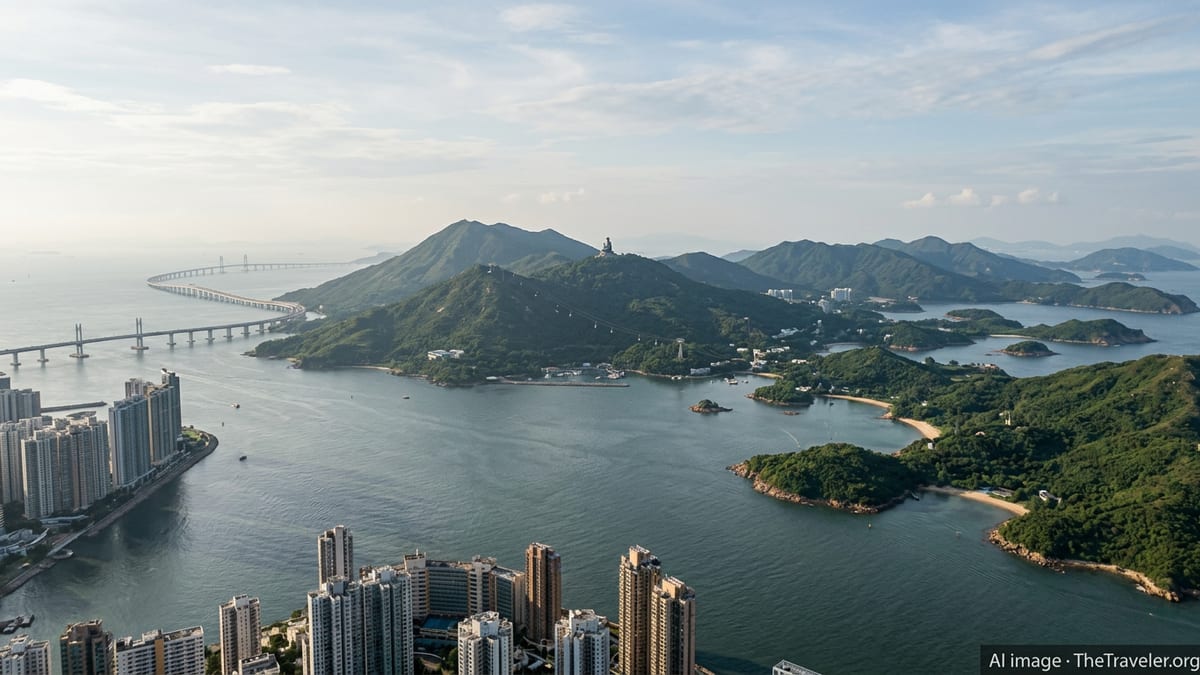
Hong Kong is famous for its neon skyline and dense urban energy, but some of its most rewarding experiences lie just beyond the city center. Within an hour or two of Central you can cross an international border into Macau’s Unesco listed old town, ride a cable car up to misty peaks on Lantau Island, or hike out to subtropical beaches and volcanic cliffs in Sai Kung. These three very different day trips offer a quick change of scenery without the need for complex logistics or long travel times, making them ideal breaks during a Hong Kong stay.
Planning Your Hong Kong Day Trips in 2026
Before choosing between Macau, Lantau and Sai Kung, consider how much time you want to spend in transit versus on the ground. Macau works best as a full day or even late night excursion because it involves border control formalities at least twice. Lantau is ideal for a relaxed, mostly transport based sightseeing day that still includes some walking and sea air. Sai Kung is the choice for travelers who want to hike, swim or simply sit by the water in a low rise town that feels far removed from Kowloon’s towers.
Public transport connections from central Hong Kong remain frequent and reliable, with MTR lines, buses, minibuses and ferries all serving these destinations. Services can be busier during weekends, local school holidays and large events, so it is wise to start early if you want quieter trails or shorter queues. Typhoon season typically runs from June to September, and strong wind or heavy rain can disrupt ferries, the Ngong Ping 360 cable car and coastal boat trips, so always check the latest advisories and be prepared with a wet weather backup plan.
Immigration rules are another factor, especially for a same day visit to Macau. Many nationalities, including holders of United States and European Union passports, are currently granted visa free short stays in both Hong Kong and Macau, but policies can change and some travelers require visas or travel authorizations. Always verify entry rules for both regions with official sources before you travel, paying close attention if you plan to shuttle between Macau, Hong Kong and mainland China within a short period.
Finally, build flexibility into your itinerary. Cable car maintenance, trail closures or high heat can all affect what you are able to do on the day. A sensible approach is to favor one headline activity, such as walking around Senado Square in Macau, visiting the Big Buddha on Lantau, or hiking to a beach in Sai Kung, then keep a shortlist of secondary sights or cafes nearby rather than trying to tick off every possible viewpoint.
Macau: A Different World an Hour From Central
Macau feels dramatically different from Hong Kong, despite lying just across the water. Historic churches, pastel colored civic buildings and tiled plazas reflect more than four centuries of Portuguese administration layered over Chinese traditions. Today this compact city is also known for its modern casino resorts, elaborate hotel entertainment and ambitious dining scene, which ranges from Michelin starred tasting menus to traditional Macanese comfort food.
Most day trippers head first for the Unesco designated Historic Centre. From the ferry or bus terminals it is a short taxi or public bus ride to Senado Square, a gently sloping plaza paved with wave patterned stones and surrounded by restored 19th century buildings. From here, lanes lead uphill to the ruins of St Paul’s, the surviving stone facade of a once grand church that has become Macau’s defining landmark. Nearby, the Monte Fort offers sweeping views over old rooftops and the newer skyline beyond.
Beyond the postcard highlights, Macau rewards slow wandering. Duck into side streets where family run shops sell almond cookies and jerky, peek into incense filled temples like A Ma Temple on the waterfront, or sit with a coffee in Taipa Village, where low rise houses back onto narrow alleys festooned with laundry and lanterns. The contrasts between Roman Catholic churches and Taoist shrines, Portuguese street names and Cantonese conversations, give the territory a distinctive personality not found in Hong Kong.
Travelers who are curious about the contemporary side of Macau can finish the day in one of the integrated resorts on the Cotai Strip. Even if you do not gamble, you can explore elaborate shopping arcades, themed interiors and large performance venues. Eating well is easy, with everything from Macanese dishes like African chicken to high end dim sum available. Just remember to keep an eye on the time so you can comfortably return to Hong Kong before services wind down.
Practical Tips for a Macau Day Trip From Hong Kong
There are two main ways to reach Macau from Hong Kong in 2026: high speed ferries and cross border buses using the Hong Kong Zhuhai Macau Bridge. Ferries depart from terminals on Hong Kong Island and in Kowloon, typically taking around an hour each way depending on operator and route. Cross border buses can be slightly cheaper and use the impressive bridge, but travel time varies with traffic and immigration queues at the artificial islands on either side.
For a smooth day trip, many visitors still favor ferries because terminals are within easy reach of the MTR and central hotels. Morning sailings start early, and late evening returns run close to midnight on popular routes, which gives you a wide window to explore. It is advisable to book tickets in advance on weekends or holidays, especially if you prefer specific departure times. On quieter weekdays you can often buy tickets on the spot, though peak hour sailings may still sell out.
When passing immigration, you will formally exit Hong Kong and enter Macau, then complete the reverse at the end of the day. Make sure you carry the same passport you used to enter Hong Kong, along with any necessary visas. Some visitors who combine Macau with mainland China assume they can move freely among all three, but in practice each border crossing is treated as a separate entry, and overstaying in any jurisdiction can have consequences. If you intend to position yourself between the three repeatedly, allow generous buffers in your schedule and keep your travel history in mind.
Currency is straightforward. Macau has its own pataca, but Hong Kong dollars are widely accepted in shops, restaurants and on public transport, usually at a fixed one to one rate. Change may be given in patacas, so try to spend down small coins before heading back to Hong Kong, where they are not legal tender. Contactless payments are increasingly common, but you should still carry some cash for small local cafes, bakeries and bus fares.
Lantau Island: Big Buddha, Cable Cars and Fishing Villages
Lantau is the largest island in Hong Kong, and it offers a markedly different rhythm from the dense districts around Victoria Harbour. Much of Lantau is covered by country parks and hiking trails, with peaks rising straight from the sea and small communities dotting sheltered bays. Yet it is also highly accessible, as the MTR’s Tung Chung line and the Hong Kong International Airport both sit on its northern shore, making it an easy day trip option even for travelers with limited time.
The classic Lantau itinerary combines Ngong Ping 360, the Tian Tan Buddha and Po Lin Monastery. From Tung Chung, the cable car climbs over the water and forested ridges for roughly 25 minutes, offering panoramic views of the airport, surrounding islands and, on clear days, the South China Sea. At the top, Ngong Ping Village serves as a visitor hub with restaurants and small attractions, from which it is a short walk to the imposing bronze Buddha that sits atop a large flight of steps overlooking the plateau.
Next to the Buddha, Po Lin Monastery remains an active spiritual center, with incense coils, colorful halls and vegetarian meals served in simple dining rooms. Even as visitor numbers have grown, the site still retains moments of quiet, especially in the early morning. If you tire of crowds, a short walk quickly leads you toward quieter corners, whether you choose the Wisdom Path lined with wooden columns inscribed with Buddhist texts, or begin a longer hike along the Lantau Trail.
Later in the day, many visitors continue to Tai O, a traditional fishing village on Lantau’s western edge. Here you can stroll over bridges that cross narrow waterways lined with stilt houses, sample shrimp paste and dried seafood from small shops, or join a short boat ride to see the village from the water. Tai O has become busier in recent years, particularly on weekends, but it remains a striking contrast with both modern Hong Kong and the organized spaces of Ngong Ping Village.
Making the Most of a Lantau Day Trip
In 2025 the Ngong Ping 360 cable car underwent scheduled maintenance closures and a fare adjustment, and travelers in 2026 should still expect occasional service suspensions for weather or technical checks. If the cable car is operating, buying timed tickets in advance can significantly reduce queuing, particularly during weekend late mornings and early afternoons. If you arrive without a reservation and find long lines, consider opting for a standard cabin rather than a crystal floor cabin, as these often move faster.
When the cable car is closed or affected by strong winds, buses and taxis between Tung Chung and Ngong Ping remain a practical alternative. The ride takes around an hour along winding mountain roads, and while it lacks the aerial views, it can be scenic in its own right. Blue taxis, which serve Lantau, have different operating areas from urban red taxis, so if you plan to rely on taxis it helps to understand that not every cab can serve every route across the territory.
Time management is crucial on Lantau because attractions are spread out and public transport timetables thin out later in the evening. A focused but realistic day might look like this: arrive in Tung Chung by 9 am, take the cable car to Ngong Ping, visit the Buddha and monastery before lunch, then catch a mid afternoon bus down to Tai O for a stroll before sunset. From Tai O you can return via bus to Tung Chung, then connect back to your hotel by MTR. Travelers who enjoy hiking could instead allocate more time to the Lantau or Nei Lak Shan trails and skip Tai O entirely.
Food options are plentiful but sometimes clustered. Tung Chung Town Centre has modern malls with chain cafes and restaurants, while Ngong Ping Village offers tourist oriented choices, including vegetarian meals from the monastery. Tai O, by contrast, has simple seafood eateries, street snacks and small cafes. If you have dietary restrictions, carrying some backup snacks is wise because menus in more traditional spots can be limited and peak hours busy.
Sai Kung: Hong Kong’s Green Escape
Sai Kung, on the eastern side of the New Territories, bills itself as Hong Kong’s backyard. The town’s low rise waterfront, bobbing fishing boats and relaxed promenade feel a world away from Central, and beyond the harbor the Sai Kung Peninsula unfolds into one of the region’s most striking landscapes. This is where you find cliff backed beaches, subtropical hills and offshore islets that form part of the Hong Kong Unesco Global Geopark.
Most travelers start in Sai Kung Town, which can be reached by MTR to Choi Hung, Hang Hau or Diamond Hill followed by a bus or green minibus. The final stretch often takes you past large public housing estates and then quieter hills before descending into the compact town center. Once there, it is easy to orient yourself. The main waterfront promenade lines the inner harbor, with seafood restaurants and small piers where local boats are moored and vendors sometimes advertise trips to nearby islands and beaches.
For those who want to get out on the water, boat operators at the Sai Kung Public Pier offer rides to popular beaches such as Hap Mun Bay or Ham Tin, and to scenic spots in the geopark when sea conditions allow. Organized geopark tours, some promoted in recent tourism campaigns, give context to the area’s hexagonal rock columns, sea caves and remote inlets. Independent travelers can also charter small boats, but prices, routes and safety standards vary, so it is important to ask questions and wear lifejackets when provided.
On land, Sai Kung is a gateway to some of Hong Kong’s most photogenic hikes, from family friendly walks to demanding full day routes. Trails toward High Island Reservoir, the MacLehose Trail stages in the area, and peaks like Sharp Peak are all within reach, though difficulty levels differ significantly. Even shorter strolls along the coastline in Sai Kung East Country Park reveal quiet coves and viewpoints that underscore just how much nature still exists within Hong Kong’s boundaries.
Hiking, Beach Time and Practicalities in Sai Kung
Sai Kung’s appeal lies in its relative remoteness, but that same quality demands more planning than a simple urban sightseeing loop. Public transport into town is frequent during the day, but buses and minibuses serving trailheads and country park entrances can be crowded on weekends and public holidays, especially in cooler hiking seasons from late autumn to early spring. Starting early not only avoids the busiest times but also helps you finish hikes before the afternoon heat peaks in warmer months.
If you are planning a beach focused day, check recent conditions and be mindful of lifeguard service schedules. Some of the most beautiful beaches near Sai Kung, including those on the outer coasts, do not have full facilities or easy road access. That is part of their charm, but it also means you should bring enough water, sun protection, and perhaps a light cover for the return boat ride when the breeze picks up. When hiring a boat at the pier, clarify the pickup time and location to avoid long waits at the end of the day.
For hikers, route choice is key. Sections of the MacLehose Trail that traverse the Sai Kung area range from moderate to challenging, and certain peaks are steep and remote enough that they are better suited to experienced walkers in good weather. If in doubt, opt for better signposted routes near High Island Reservoir or family friendly coastal paths, or consider booking a guided hike with an operator familiar with local conditions. Mobile coverage is generally good but can be patchy in more secluded valleys and along some shorelines.
Back in Sai Kung Town, reward yourself with a seafood dinner or a simple bowl of noodles. The promenade area is popular in the evenings, with families, dog walkers and visitors strolling by the water. In recent years more cafes, gelato shops and casual bars have opened on side streets, adding to the town’s laid back appeal. Returning to the city later at night is usually straightforward, but do factor in extra time for queues at minibus stands after peak dining hours.
Choosing Between Macau, Lantau and Sai Kung
If your time in Hong Kong is short, you may need to choose just one of these day trips. A useful way to decide is to match each option to the type of experience you value most. Macau offers cross border novelty, layered history and the chance to see how Portuguese and Chinese cultures intersect within a small, walkable area. It is best for travelers who enjoy architecture, food and nightlife, and who do not mind dealing with immigration formalities and an additional currency in exchange for a very different atmosphere.
Lantau suits visitors who appreciate a mix of soft adventure and spiritual landmarks without venturing too far from the city. The cable car ride, Big Buddha, monastery and Tai O provide a varied but manageable itinerary that works well for families and mixed interest groups. It is relatively simple to reach by MTR, and you can tailor the day to your energy levels, adding or subtracting hikes and side trips as needed.
Sai Kung, by contrast, is the choice for nature lovers and repeat visitors who have already seen the main urban sights. While the town is charming in its own right, the real draw lies in the surrounding country parks, beaches and geopark formations. This is the day trip that feels least like a conventional tour and most like a glimpse of local weekend life, as many Hong Kong residents come here to walk dogs, kayak or linger over seafood dinners along the harbor.
Ultimately, all three destinations are close enough that you can visit more than one on a longer stay. You might, for example, use a clear weekday for Lantau, when cable car queues are shorter, reserve a cooler or slightly overcast day for Sai Kung hiking, and save Macau for an evening when you are happy to stay out late. With some forethought around transport and weather, they can each become highlights of a Hong Kong itinerary rather than rushed box ticking exercises.
The Takeaway
Hong Kong’s reputation as a city of skyscrapers and shopping barely scratches the surface of what the region offers travelers. Within easy reach of the MTR and ferry piers lie three contrasting worlds: the European flavored streets and neon casinos of Macau, the misty peaks and monasteries of Lantau, and the green peninsulas and island dotted bays of Sai Kung. Each makes for a rewarding day trip that adds depth and variety to any visit.
When planning your excursions, take a conservative approach to timing and do not underestimate the impact of weather, crowds and transport connections. Build your day around one or two core experiences rather than trying to see everything. Whether that means standing before the ruins of St Paul’s, climbing the steps to the Tian Tan Buddha, or swimming off a soft sand beach in Sai Kung, focusing your energy will yield richer memories.
Equally important is to leave space for serendipity. Some of the best moments on these day trips happen in the gaps between major sights: watching a street performer in Senado Square, sharing a bench with local residents outside Po Lin Monastery, or buying skewers from a waterfront stall in Sai Kung as the light fades. By slowing down a little and paying attention to these details, you will come away with a more nuanced sense of Hong Kong and its neighboring territories.
In the end, the beauty of basing yourself in Hong Kong is that these very different landscapes and cultures are only an hour or two away. With a bit of planning and an eye on current conditions, Macau, Lantau and Sai Kung can each transform an ordinary city stay into a much more varied and memorable journey.
FAQ
Q1. Is a day trip from Hong Kong to Macau still realistic in 2026?
A same day return between Hong Kong and Macau remains realistic for most visitors, provided you start early, account for immigration queues and book transport in advance during busy periods.
Q2. Do I need a visa to visit Macau from Hong Kong for the day?
Many nationalities enjoy visa free short stays in Macau, but requirements vary by passport and can change, so always check the latest entry rules with official sources before you travel.
Q3. What is the easiest way to get from central Hong Kong to Macau?
High speed ferries from terminals on Hong Kong Island or in Kowloon remain the simplest option for most travelers, with journeys taking around one hour each way in normal conditions.
Q4. Is the Ngong Ping 360 cable car on Lantau operating normally?
The cable car generally operates daily but can close for scheduled maintenance or adverse weather, so it is wise to confirm operating hours and any planned suspensions close to your visit.
Q5. Can I visit the Big Buddha, Po Lin Monastery and Tai O on one Lantau day trip?
Yes, it is feasible to combine Ngong Ping’s Big Buddha and monastery with a later visit to Tai O in one day, as long as you start early and keep an eye on bus timetables.
Q6. How do I reach Sai Kung from central Hong Kong without a car?
The usual route is to take the MTR to a nearby station such as Choi Hung or Diamond Hill, then connect to a bus or green minibus that runs directly into Sai Kung Town.
Q7. Are boat trips from Sai Kung to beaches and the geopark easy to arrange?
On most weekends and many weekdays, you can arrange boat transfers at Sai Kung’s public pier, though organized tours or private charters are advisable if you want a specific route or timing.
Q8. Which day trip is best for families with young children?
Lantau Island often works best for families, thanks to the cable car, straightforward walking around Ngong Ping and the option of a gentle visit to Tai O without long or difficult hikes.
Q9. Is it safe to hike in Sai Kung without a guide?
Many marked trails near Sai Kung are suitable for independent hikers with proper preparation, but more remote or demanding routes are better tackled with experience or a local guide and in good weather.
Q10. Can I use Hong Kong dollars everywhere on these day trips?
Hong Kong dollars are widely accepted on Lantau and in Sai Kung, and commonly used in Macau as well, though small change there may be given in Macau patacas, which are not valid back in Hong Kong.