

Arkansas rewards curiosity. From historic spa towns and art-filled mountain cities to wild rivers and cave country, the Natural State is packed with places that make perfect day trips. Whether you are based in Little Rock, northwest Arkansas, or passing through on a longer road trip, these destinations deliver a full taste of Arkansas in a single day: scenic drives, memorable meals, and just enough adventure to make you start planning your return.
Hot Springs: Classic Spa Town With a Wild Side
Few day trips in Arkansas combine history, relaxation, and outdoor adventure as seamlessly as Hot Springs. Set at the edge of the Ouachita Mountains, this small city grew around naturally heated thermal springs that rise from the hillside at roughly bath temperature. You can stroll past rows of elegant early twentieth century bathhouses, many of them preserved inside Hot Springs National Park, and still feel echoes of the era when gangsters and baseball stars came here to soak, socialize, and gamble.
Plan to start your day with a walk along Bathhouse Row and the Grand Promenade just above it, where interpretive signs explain how the springs shaped the town. Several historic bathhouses now operate as modern spas, so you can book a traditional soak or contemporary treatment if you want the full spa-town experience. For a free introduction to the famous water, locate one of the public fountains where locals fill jugs with the hot, mineral-rich spring water that has been flowing here for generations.
Once you have explored the park’s urban core, the surrounding forested hills offer an easy escape into nature. Drive or hike up to the Hot Springs Mountain Tower area for sweeping views of the Ouachita landscape, or follow one of the short, well-marked trails that loop through the woods just minutes from downtown. In the afternoon, the city’s compact center makes it simple to sample local restaurants, breweries, and small museums before heading back to your base. With its mix of walkable history, accessible trails, and year-round spa culture, Hot Springs is a reliable all-season day trip.
Eureka Springs: Victorian Charm in the Ozarks
Tucked into a steep Ozark hollow in northwest Arkansas, Eureka Springs feels like a small European village dropped into the forest. The historic downtown curls along switchback streets lined with Victorian storefronts and gingerbread-trimmed homes, many of them perched dramatically on stone terraces. With no traffic lights and a fiercely preserved historic core, it is ideal for a day spent on foot, ducking into galleries, antique shops, and cafes.
Architecture and atmosphere are the main attractions here. You can wander from the stone Basin Spring Park up side streets where staircases replace sidewalks, pausing to admire preserved hotels and cottages that date back to the late nineteenth century health-resort boom. Street musicians and seasonal festivals add color in warmer months, while the town’s compact scale means you are never far from a coffee shop or bakery when you need a break. Art is another thread that runs through Eureka Springs, and you will find an unusually high number of working studios, small theaters, and independent galleries for a town this size.
Just outside town, winding mountain roads lead to scenic overlooks and lakes that reward anyone willing to explore a bit farther. Beaver Lake and the White River area offer boating, paddling, and fishing opportunities within a short drive, while forest roads in the surrounding hills provide access to trailheads and picnic spots. Because of its elevation and wooded setting, Eureka Springs tends to feel cooler than the Arkansas lowlands in summer and particularly cozy in autumn when the foliage peaks. As a day trip, it offers a satisfying blend of walkable historic streets and quick escape routes into nearby nature.
Crystal Bridges and Bentonville: Art, Trails, and Ozark Culture
For a more contemporary spin on a day out in Arkansas, head to Bentonville in the state’s northwest corner. The city has emerged as an unlikely cultural hub anchored by Crystal Bridges Museum of American Art, which sits in a forested ravine just a short walk from the town square. The museum’s collection spans centuries of American art, and its glass-and-wood pavilions are integrated into the surrounding hillsides and spring-fed pools, so the building itself feels like part of the exhibition.
Crystal Bridges and its satellite venues emphasize public access to both art and green space. Several miles of sculpture-dotted walking paths radiate from the museum into the woods, connecting to broader urban trail networks. As you move between galleries and paths, you can shift from studying paintings to standing under towering oaks in a matter of minutes. Admission to the main museum collection has traditionally been free, although some special exhibitions require timed reservations or tickets, so it is wise to check ahead when planning your day.
Bentonville’s compact downtown makes the rest of the day easy to fill. The central square hosts seasonal farmers markets and events, and side streets are packed with restaurants, coffee shops, and boutiques that reflect the city’s fast-growing, outdoors-focused culture. Cyclists gravitate to Bentonville’s extensive system of paved greenways and purpose-built mountain bike trails, many of which begin within riding distance of the square. Even if you are not a dedicated rider, you will notice bikes leaned against nearly every storefront and trailheads tucked unexpectedly into neighborhood parks. A day trip here can be as laid-back as wandering between the museum, the square, and a few short woodland paths, or as active as a full day of riding and gallery-hopping.
The Buffalo National River: Classic Ozark Wilderness Escape
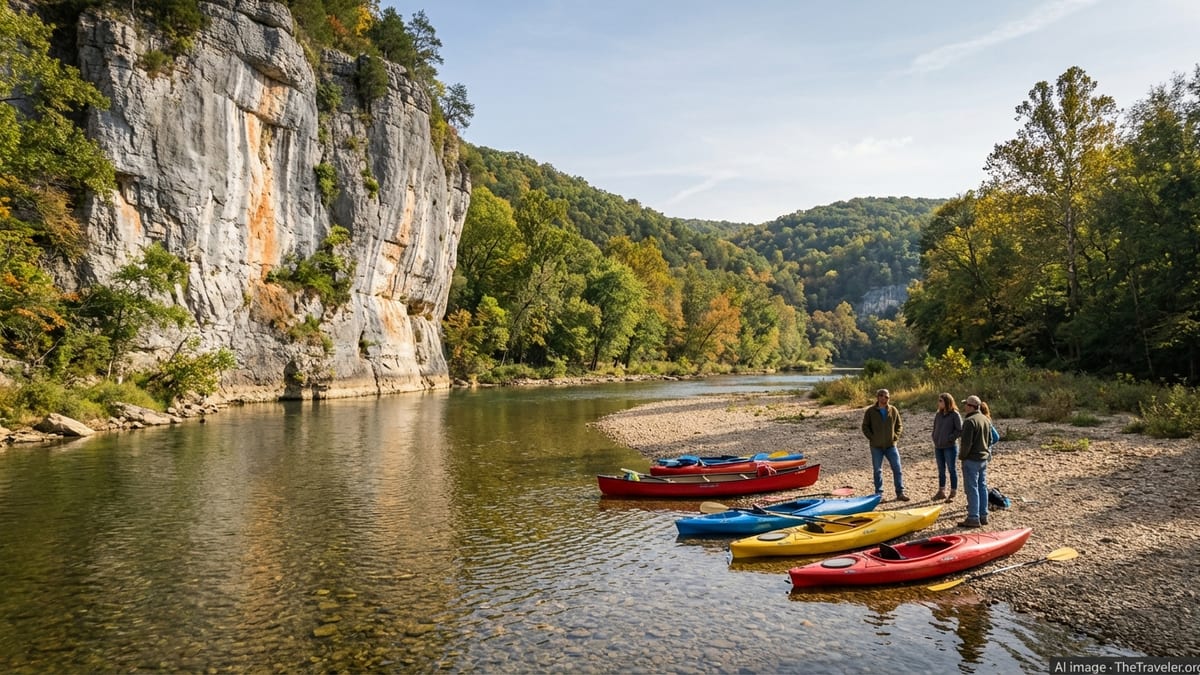
When Arkansans picture a perfect spring or summer day trip, the Buffalo National River usually comes to mind. Flowing freely for more than one hundred miles across the Ozark Mountains, the Buffalo was one of the first rivers in the United States to receive national river status. Its upper reaches are framed by dramatic limestone bluffs that rise straight from the water, while side hollows hide waterfalls, wildflower meadows, and quiet swimming holes.
The exact experience you have on a Buffalo River day trip depends on water levels and which section you visit. In high-water spring months, outfitters in gateway communities can arrange canoe or kayak rentals and shuttles for half-day or full-day floats. In late summer and early fall, when some upper stretches run low, many visitors shift to hiking and swimming instead, exploring trails that lead to overlooks, side canyons, and sandbars. Because river conditions can change quickly with seasonal rain, it is important to check recent reports from the National Park Service or local outfitters before you commit to a specific float or trail.
Even if you are not planning to paddle, simply driving into the upper Buffalo corridor is rewarding. Scenic roads trace the river valleys and climb to high points where you can see the Ozarks rolling away in every direction. Trailheads near well-known bluff lines and waterfalls are usually within a reasonable walk of parking areas, making them feasible for a day visitor with limited time. Bring layers, sun protection, and more water than you think you need, since services are sparse once you leave the small towns at the edges of the park. With a bit of preparation, a day trip to the Buffalo can feel like a quick plunge into true wilderness only a few hours’ drive from Arkansas’s cities.
Petit Jean State Park: Waterfalls and Canyon Views Near the Capital
For travelers based in or near Little Rock, Petit Jean State Park might be the most rewarding short day trip in the state. Perched on a flat-topped mountain above the Arkansas River, the park is one of Arkansas’s oldest and best-loved, known for its deep canyons, sweeping overlooks, and classic stone structures built in the 1930s. Because it is roughly an hour’s drive from the capital under normal conditions, you can leave after breakfast, enjoy a full day of hiking and sightseeing, and still be back in the city by evening.
The park’s signature feature is Cedar Falls, a tall waterfall that plunges into a rocky pool at the head of a canyon. A popular trail descends from the rim near the historic lodge to the base of the falls, weaving through boulders and forest before arriving at the amphitheater-like basin. This hike is moderately strenuous, especially on the climb back to the top, but it is short enough to complete in a few hours if you take your time. Visitors who prefer less challenging options can stick to rim trails that visit multiple overlooks, where you can peer down into rugged side canyons and watch raptors riding the thermals above the river valley.
Petit Jean blends natural and cultural history in a way that rewards slow exploration. Carved stone overlooks, cabins, and the rustic main lodge showcase the craftsmanship of Civilian Conservation Corps crews who helped shape the park nearly a century ago. Picnic areas, a small lake with a swimming beach, and a compact network of drives make it easy to tailor the day to different energy levels and interests. Weather can shift quickly on the plateau, so a light jacket and sturdy shoes are recommended in every season. With thoughtful planning, Petit Jean delivers a true state-park experience without requiring an overnight stay.
Mount Magazine State Park: A Day on Arkansas’s Highest Peak
Mount Magazine State Park offers a very different but equally rewarding mountain experience. Rising to 2,753 feet at its high point, Signal Hill, this flat-topped peak is the highest point in Arkansas and one of the most prominent summits between the Appalachian and Rocky Mountain chains. The drive to the top along Highway 309 doubles as a scenic byway, especially on the approach from Havana, where the road climbs steeply through forested switchbacks with sporadic glimpses of the valleys below.
Once on the plateau, day trippers can mix short hikes with relaxed sightseeing. The Signal Hill Trail is a relatively gentle loop through the woods leading to the highest point marker, where a stone map of Arkansas provides a satisfying photo opportunity. Around the rim, pullouts and overlook areas give access to expansive views of the Arkansas River Valley and distant Ouachita and Ozark ranges. On clear days the horizon seems impossibly far, especially around sunrise or sunset when soft light washes over the ridges. Because of the elevation, temperatures at the top are often noticeably cooler than in surrounding lowlands, which can be a welcome relief during summer heat.
The park also caters to visitors with a range of interests beyond hiking. Rock climbers and hang gliders are drawn to the sheer bluffs and updrafts, while birders come in search of species that favor the high, open woodlands. A modern lodge and cabins line the southern rim, offering dining with a view for those who want a sit-down meal during their day trip. Before setting out, it is worth checking current road and park alerts, especially regarding ongoing maintenance along the southern approach and any temporary trail or activity advisories. With its combination of cool air, big skies, and easily reached vistas, Mount Magazine feels like a genuine mountaintop escape that still fits comfortably into a single long day.
Blanchard Springs and the Ozark Folk Country
In north-central Arkansas, the region around Blanchard Springs and the town of Mountain View offers a day trip that dives below ground and then surfaces in the heart of Ozark music culture. Blanchard Springs Caverns, managed by federal land agencies and now moving toward designation as a state park, is known for its extensive cave system and carefully developed tour routes. Visitors who book a guided tour can follow paved paths and handrails through vast, dramatically lit chambers filled with stalactites, stalagmites, and flowstone formations, all kept at a steady underground temperature that feels cool in summer and mild in winter.
Access conditions at Blanchard Springs can change with the seasons and with ongoing infrastructure work, so it is important to confirm tour availability, operating hours, and any temporary closures before you drive into this remote corner of the Ozark-St. Francis National Forest. When tours are operating, expect a structured experience led by trained guides, with clear rules to protect both visitors and the sensitive cave environment. Comfortable walking shoes and a light layer are recommended, since the interior stays cool even on hot days at the surface. If certain sections or activities are paused for safety upgrades, the broader recreation area still offers hiking trails, scenic streams, and picnic spots that make the drive worthwhile.
Pairing the caverns with nearby Mountain View creates a full and distinctive day. The town has built a reputation as a center of traditional Ozark music and crafts, with impromptu jam sessions on the courthouse square during warmer months and a dedicated folk center showcasing regional art forms. Cafes and small restaurants serve as informal gathering spots for musicians and visitors alike. Taken together, a morning in the underground quiet of Blanchard Springs and an afternoon surrounded by fiddles, banjos, and handmade quilts gives you an unusually complete picture of this corner of Arkansas, where geology and culture are equally central to the landscape.
Planning Your Arkansas Day Trips
While each of these destinations can be enjoyed on its own, a little planning will make any Arkansas day trip smoother and more rewarding. Distances between the state’s major cities and these sites are generally manageable, but travel times can increase on curving mountain roads or during peak travel seasons. Checking drive times with a current map or navigation app before you commit to a full itinerary helps you avoid rushing through experiences that are best savored slowly, like sunset at Mount Magazine or an unhurried soak in Hot Springs.
Seasonality is another important factor. Spring and fall are widely considered the most comfortable times for outdoor-heavy destinations like the Buffalo National River, Petit Jean, and Mount Magazine, thanks to mild temperatures and, in autumn, vivid leaf color in the Ozark and Ouachita ranges. Summer brings higher heat and humidity, but also long daylight hours that favor water activities and evening strolls in places like Hot Springs and Eureka Springs. Winter can be quietly beautiful, especially on clear days, though some facilities and tours may reduce hours or pause operations in the coldest months.
Because many of Arkansas’s marquee day-trip spots are set in protected natural areas, conditions on the ground can shift with weather, visitor demand, and ongoing maintenance projects. Water levels on the Buffalo River fluctuate after storms or dry spells, road work may temporarily affect approaches to high country parks, and cave tours at Blanchard Springs sometimes adjust for safety or conservation reasons. Before you leave home, it is wise to consult the latest updates from state park agencies, the National Park Service, or local tourism offices so you can adjust plans if needed. Flexibility and a backup hike, overlook, or small town cafe in mind will ensure your day still feels successful even if one element changes at the last minute.
The Takeaway
Arkansas shines brightest when you step beyond the interstates and into its mountains, rivers, and small towns. A day in Hot Springs, Eureka Springs, Bentonville, on the Buffalo National River, at Petit Jean, on Mount Magazine, or in the Blanchard Springs region delivers much more than a checklist of sights. These places offer a sense of how deeply nature, history, and community are woven together in the Natural State, from bathhouses built over ancient springs to art museums nestled into forested ravines and river valleys maintained for quiet, unhurried exploration.
With thoughtful planning, any of these destinations can be the highlight of a weekend or a welcome break in a longer journey across the South. Start with the experiences that match your interests, whether that means paddling below limestone bluffs, tracing Victorian streets in a mountain town, or standing at the state’s highest point as the sun sinks over distant ridges. Then let Arkansas’s easygoing pace and generous scenery do the rest. One good day trip here has a way of turning into a promise to come back for more.
FAQ
Q1. What is the best time of year to plan a day trip in Arkansas?
The most comfortable seasons are typically spring and fall, when temperatures are milder and humidity is lower, especially in the mountains.
Q2. Do I need reservations for places like Crystal Bridges or Blanchard Springs Caverns?
Crystal Bridges often allows walk-in visits for the main collection, but special exhibits and Blanchard Springs cave tours may require advance reservations or tickets.
Q3. Can I visit the Buffalo National River on a day trip without paddling?
Yes. Scenic drives, short hikes to overlooks, and riverside picnic areas make the Buffalo worthwhile even if you are not getting on the water.
Q4. How far are these day-trip destinations from Little Rock?
Travel times vary, but Petit Jean and Hot Springs are roughly an hour to ninety minutes away in normal conditions, while the Buffalo and Mount Magazine are farther.
Q5. Is Arkansas’s summer heat a problem for outdoor day trips?
Summer can be hot and humid, especially in the lowlands, so plan early starts, seek shade or higher elevations, and bring plenty of water and sun protection.
Q6. Are these destinations suitable for families with young children?
Most are family-friendly, with short trails, picnic areas, and accessible viewpoints, but always check trail difficulty, safety notices, and facility details in advance.
Q7. Can I rely on cell service in Arkansas state parks and river areas?
Coverage is often spotty or limited in remote parks and river valleys, so download maps, note directions, and share plans before you lose signal.
Q8. Do I need special gear for hikes at places like Petit Jean or Mount Magazine?
Sturdy walking shoes, layered clothing, and basic rain or sun protection are usually sufficient, though more rugged trails may call for hiking boots.
Q9. Are pets allowed on trails and in parks mentioned in this article?
Many Arkansas parks allow leashed pets in certain areas, but rules vary by site, so check specific park regulations before bringing an animal.
Q10. How can I keep track of closures or advisories before a day trip?
Consult the latest information from Arkansas state parks, the National Park Service, or local tourism offices for updates on roads, trails, and facility hours.