

Florida’s big cities deliver theme parks, nightlife and culture, but some of the state’s most memorable experiences lie just beyond the skyline. Within a few hours’ drive of Miami, Orlando, Tampa and Jacksonville, you can trade traffic for mangrove tunnels, crystalline springs, historic towns and empty Atlantic beaches. These easy day trips are designed for travelers who want a change of pace without complicated logistics, highlighting routes where you can leave after breakfast and still be back in time for a late dinner.
Planning Easy Florida Day Trips From Major Cities
Florida is built for day tripping. A dense highway network connects major cities with state parks, wildlife preserves and coastal towns, often within one to three hours by car. From Miami, Interstates 95 and 75, plus the slower but scenic U.S. 1, unlock the Atlantic coast, the Keys and the western Everglades. From Orlando and Tampa, a web of toll roads and interstates makes it simple to reach natural springs, Gulf beaches and small historic communities in almost every direction.
Driving is usually the most flexible option, especially for parks and preserves where public transport is limited. High-speed rail connects Miami, Fort Lauderdale, West Palm Beach and Orlando, but you will still often need a rideshare or rental car on arrival to reach beaches and nature areas. When planning, build in extra time for traffic, toll plazas and slower scenic roads. In coastal zones and near wildlife crossings, speed limits drop and enforcement tends to be strict, so resist the urge to rush.
Florida’s climate rewards early risers. In the warmer months, afternoon heat and thunderstorms are common, so aim to arrive at your destination in the morning, enjoy outdoor activities before midday, then retreat to shaded cafes or visitor centers when temperatures peak. In winter, shorter days and cooler mornings make mid-morning starts more comfortable, although popular parks can still fill early on weekends and holidays, sometimes closing entrances once parking lots reach capacity.
Recent public pressure has reinforced Florida’s long-standing commitment to its state parks, with new legislation emphasizing conservation over commercial development. That growing focus on preservation means visitors can expect more of Florida’s most important natural areas to remain wild in the years ahead, but it also means respecting rules on crowds, parking, food containers, alcohol and wildlife protection is more important than ever for day trippers.
From Miami and Fort Lauderdale: Wetlands, Islands and Wild Coasts
South Florida’s sprawl gives way quickly to wild landscapes. About 45 miles west of Miami, Big Cypress National Preserve protects more than 700,000 acres of cypress swamp and wet prairie, forming a vital buffer around Everglades National Park. Boardwalks, scenic drives and ranger-led programs introduce the region’s orchids, wading birds and alligators without demanding long backcountry hikes. In the cooler, drier months, visibility is exceptional and wildlife tends to congregate around deeper water, making short visits especially rewarding.
To the south and west, the Everglades remain one of Florida’s essential day trips. From Miami, main access points can be reached in roughly an hour to 90 minutes by car, depending on traffic. Airboat concessions, tram tours and short walking trails provide a manageable taste of the “River of Grass” for visitors who only have a day. For a quieter experience, consider lesser-known access roads and visitor centers, where you can wander freshwater sloughs and pinelands with fewer crowds, or paddle marked waterways with the guidance of outfitters based in nearby small towns.
For an island escape, head east to Key Biscayne, reached from Miami via the Rickenbacker Causeway. Within about 20 to 30 minutes of downtown in light traffic, you can be walking along Atlantic beaches, renting bikes to explore shady coastal trails or climbing historic lighthouses for wide views of Biscayne Bay and the city skyline. To the north, day trips from Fort Lauderdale and Miami to the beaches of Palm Beach County offer a different mood, with quieter stretches of sand, sea turtle nesting zones in season and manicured waterfront neighborhoods set against turquoise water.
Those willing to drive a bit farther can follow U.S. 1 toward the Upper Keys for a long but rewarding day. Stops at local parks, small marinas and waterfront cafes break up the drive, and clear days reveal shallow reefs and mangrove islands on both sides of the highway. The journey is as compelling as the destinations, particularly around long bridges where the water shifts from jade near shore to deep blue in the channels.
From Orlando: Springs, Forests and Old-Florida Towns
Central Florida is dotted with freshwater springs that bubble up from the Floridan Aquifer, creating pools of clear water that stay cool year-round. Several of the most accessible lie within roughly 60 to 90 minutes of Orlando by car, making them ideal day trips from the theme parks. Many are protected within state parks that cap daily admissions, so arrivals early in the day are wise, particularly on weekends and holidays when parking lots can reach capacity by mid-morning.
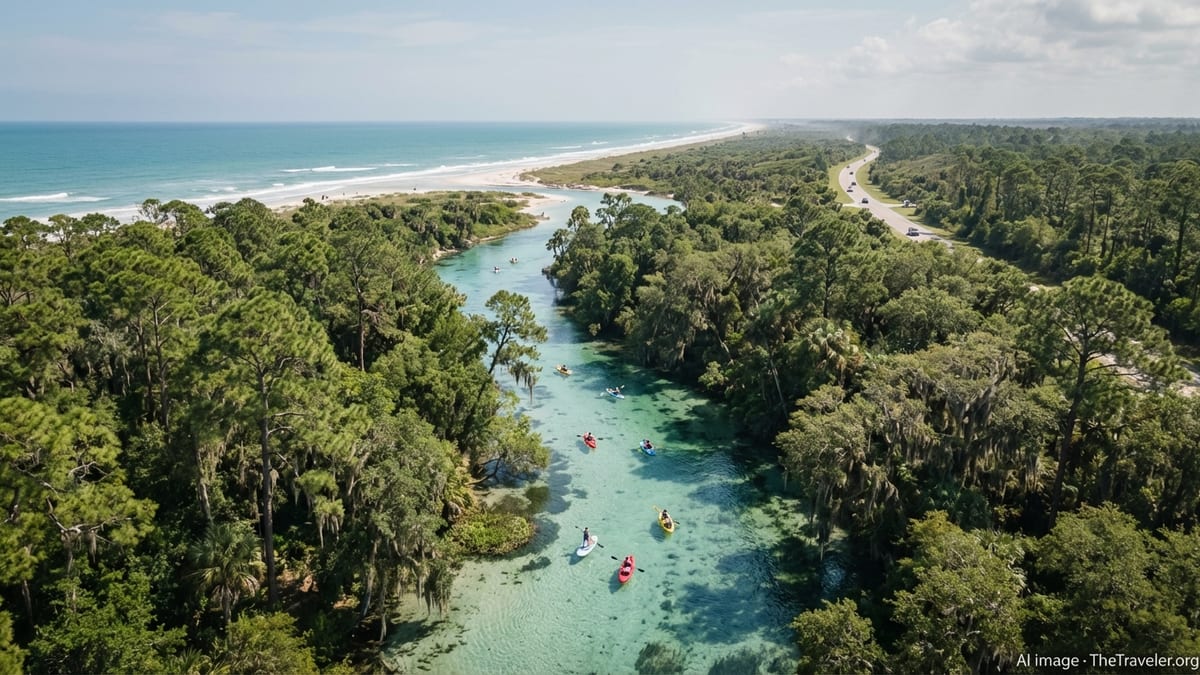
Popular options include spring parks where visitors can swim, paddle and sometimes spot manatees in cooler months. The water clarity can be exceptional, revealing sandy bottoms, aquatic plants and fish even in deeper sections. Designated paddling runs downstream of some headsprings provide gentle currents suitable for casual kayakers and families, though reservations with concessionaires are often needed during busy seasons. Park rules commonly restrict disposable containers and alcohol, reflecting efforts to keep these delicate waterways pristine.
Beyond the springs, national forests northwest of Orlando offer shaded trails, lakes and rustic campgrounds. Scenic driving loops pass through longleaf pine stands, scrub habitat and scattered rural communities where you can still glimpse Old Florida architecture. Historic towns within day-trip range provide brick-lined main streets, local diners and small museums that contrast sharply with Orlando’s newer developments. Many visitors find pairing a morning on the water with an afternoon stroll through a nearby town creates a balanced, low-stress itinerary.
Because distances between central Florida attractions can look deceptively short, it is worth plotting your route in advance, especially if you plan to visit more than one site in a single day. Narrow two-lane roads, seasonal roadwork and slow-moving local traffic can stretch drive times beyond what navigation apps predict. Building in extra time preserves the relaxed spirit that makes day trips so appealing in the first place.
From Tampa Bay: Gulf Beaches, Springs and Riverfront Escapes
Tampa and St. Petersburg residents and visitors have ready access to some of the Gulf Coast’s best day-trip destinations. Within an hour or so by car are state parks that showcase both natural and nostalgic sides of Florida. North of Tampa, Weeki Wachee Springs State Park blends a clear first-magnitude spring with family attractions and a long-running live mermaid show rooted in mid-20th-century roadside Americana. Its spring-fed waterways, which remain around the low to mid 70s Fahrenheit year-round, are a favorite for kayaking and canoeing along a gently flowing river flanked by lush vegetation and occasional wildlife.
Along the Gulf, barrier islands and coastal preserves offer a quieter alternative to busier municipal beaches. Several state parks within day-trip range of Tampa protect stretches of undeveloped shoreline, dunes and coastal hammocks where you can swim, walk for long distances on packed sand and watch shorebirds patrol the surf line. Picnic pavilions, bike rentals and simple nature trails make these parks suitable for families and mixed-ability groups. In winter, migrating birds add an extra layer of interest for casual wildlife watchers and photographers.
Inland, riverfront parks like Hillsborough River State Park provide a dense, shaded counterpoint to the open coast. Located in northeastern Hillsborough County, the park protects more than 3,000 acres along a tannin-colored river with short rapids, cypress knees and suspension bridges. It has more than seven miles of trails for easy hiking and trail running, along with opportunities for paddling, fishing and picnicking. The park sustained storm damage in 2024 but reopened in February 2025, so visitors should still check for any lingering trail or facility closures before setting out.
For those interested in Old Florida culture, small towns north of Tampa showcase historic downtowns, vintage motels, freshwater lakes and converted fish camps that now serve as relaxed resorts or marinas. Many sit close to paved rail-trails or multiuse paths, inviting visitors to combine a leisurely bike ride with time on the water and a casual seafood lunch before returning to the city by evening.
From Jacksonville: Atlantic Shores, Islands and Historic Landscapes
Jacksonville’s location near the Georgia border places it within easy reach of quiet Atlantic barrier islands, maritime forests and historic sites that feel worlds away from downtown high-rises. To the east and northeast, a cluster of state and national park units protect beaches, estuaries and cultural landscapes that together make a natural circuit for a long day out. Several of these parks sit within 30 to 45 minutes of central Jacksonville in light traffic, though bridge bottlenecks and seasonal beach crowds can extend travel times.
Fort George Island Cultural State Park, in far northeast Jacksonville, anchors a region with deep Indigenous and colonial history. The island was once near a major Timucua center and later hosted a Spanish mission. Today, visitors can explore the preserved Ribault Club, a 1920s-era resort building now used as a visitor center, and follow loop trails for hiking and off-road bicycling through live oak hammocks. A boat ramp and nearby waters give boaters and paddlers access to tidal channels where dolphins, wading birds and fish are common sights.
South along the coast, state parks and preserves around St. Augustine offer easily combined experiences for day trippers. Anastasia State Park, just across the bay from downtown St. Augustine, protects more than 1,600 acres of beaches, tidal marsh and coastal hammock. Boardwalks lead over dunes to long Atlantic beaches suitable for walking, running, surfing or simply sitting in the sea breeze. Within the park, traces of coquina quarries recall the stone used to build the Castillo de San Marcos, tying the landscape directly to the nation’s oldest continuously inhabited European-established city just across the water.
Pairing park time with a few afternoon hours in St. Augustine’s historic district is a natural combination. Visitors can spend the morning on the sand or on nature trails, then cross the bridge to wander narrow streets, tour museums or simply sit under shade trees with a cold drink. Because parking in St. Augustine can be tight on busy days, it helps to arrive early, secure a spot and be prepared to walk or use local shuttles between the town and nearby attractions.
From South Florida’s West Coast: Mangroves, Marshes and Quiet Beaches
Southwest Florida’s cities, including Naples and Fort Myers, serve as gateways to a different side of the state’s wildlands. A short drive from Naples on U.S. Highway 41 brings you to Collier–Seminole State Park, which protects more than 6,000 acres of mangrove swamp, cypress stands, salt marsh and pine flatwoods. The park is home to a historic walking dredge used in building the Tamiami Trail and supports wildlife ranging from alligators and wading birds to, more rarely, black bears and fox squirrels. A network of hiking, biking and canoe trails allows visitors to sample different habitats without venturing deep into remote backcountry.
Farther inland and south, Big Cypress National Preserve overlaps with the day-trip orbit of Naples as well as Miami. Scenic drives through the preserve reveal sawgrass prairies, strands of dwarf cypress and ponds frequented by alligators and wading birds. Rangers and visitor centers provide maps and advice on short walks suitable for casual visitors, as well as guidance on seasonal conditions such as high water, smoke from prescribed burns or areas undergoing restoration work. In the dry season, roadside pullouts sometimes offer surprisingly good wildlife viewing without the need for long hikes.
Coastal preserves near Naples and Fort Myers highlight the interplay of Gulf waters and mangrove islands. Day trippers can join guided boat tours, rent kayaks to explore sheltered bays or simply visit public beaches that look out on undeveloped shorelines rather than high-rise towers. Early and late in the day, low-angled light emphasizes the textures of mangrove roots, oyster bars and gently rippled tidal flats, making this region particularly rewarding for photographers and quiet observers.
As with other parts of Florida, visitor interest in preserving southwest Florida’s remaining natural areas is high, and state authorities have recently underscored a commitment to conservation in parks and preserves. This has practical implications for day trippers, from parking limits to stricter enforcement of no-wake zones and wildlife approach rules. Planning ahead, respecting posted regulations and traveling with a light footprint help ensure these low-key coastal escapes retain their character.
The Takeaway
Day trips in Florida offer a chance to see beyond the state’s most familiar images of theme parks and crowded beaches. Within a few hours of every major city are springs as clear as glass, river corridors shaded by cypress, barrier islands swept by Atlantic surf and historic communities that have watched centuries of change. Thoughtful planning, early starts and a willingness to explore beyond the main highway exits turn a simple day drive into a deeper encounter with the landscapes that define the Sunshine State.
Because conditions in parks and on Florida’s roads can shift with weather, seasons and ongoing conservation work, flexible itineraries are invaluable. Check park alerts on the morning of your trip, keep an eye on the sky in summer and allow more time than navigation apps suggest. When in doubt, choose fewer stops and linger, rather than rushing to squeeze in one more beach or spring. The relaxed rhythm that results is one of the best souvenirs Florida’s day trips have to offer.
Whether you are based in Miami, Tampa, Orlando, Jacksonville or a smaller coastal city, these easy escapes remind you how quickly Florida changes once you leave the urban core behind. In under an hour, high-rises give way to pinewoods, and expressways yield to quiet two-lane roads. It is in these in-between spaces, where sand, water and sky dominate the horizon, that Florida’s enduring character reveals itself most clearly.
FAQ
Q1. What is the best time of year for day trips in Florida?
The most comfortable time for day trips is generally from late fall through early spring, when temperatures and humidity are lower and mosquitoes are less active. Summer works too, but early starts and midday breaks are important.
Q2. How far should I expect to drive for a typical Florida day trip?
Most of the destinations in this guide sit one to three hours from major cities in normal traffic. Plan on extra time during holiday weekends, special events and peak beach seasons.
Q3. Do I need a car, or can I rely on trains and buses?
A car provides the most flexibility, especially for state parks and preserves with limited public transport. High-speed rail connects some cities, but you will usually still need a rideshare or rental vehicle at the far end.
Q4. Are Florida’s springs warm enough for swimming?
Most major springs stay in the low 70s Fahrenheit year-round. That feels refreshing in summer and cool but manageable in winter for many swimmers, especially with short dips and towels waiting on shore.
Q5. How early should I arrive at popular parks?
On weekends, holidays and in peak seasons, aim to arrive near opening time. Many spring parks and some beach parks close entrances once parking lots fill, which can happen by late morning.
Q6. What should I pack for a Florida day trip to parks or springs?
Bring sun protection, insect repellent, plenty of water, quick-drying clothing, sturdy sandals or shoes that can get wet, and a dry bag for valuables if you plan to paddle or swim.
Q7. Are there safety concerns with wildlife, especially alligators?
Alligators and other wildlife are common but rarely a problem if you keep a safe distance, obey posted signs, never feed animals and stay out of restricted areas. Supervise children closely near water.
Q8. Can I bring food and drinks into Florida state parks?
Most parks allow picnics, but some waterways and springs restrict disposable containers and all parks prohibit glass in many areas. Alcohol rules vary and are often strict, so check park guidelines in advance.
Q9. Do I need reservations for activities like kayaking or guided tours?
For popular springs and rivers, advance reservations with outfitters are strongly recommended, especially on weekends and during school holidays. Guided boat and wildlife tours in coastal areas can also sell out.
Q10. How can I minimize my environmental impact on a day trip?
Stick to marked trails, pack out all trash, avoid disturbing wildlife, use reef-safe sunscreen where relevant and respect park capacity limits and closures. Small choices like refilling a reusable water bottle help keep Florida’s natural areas healthy.