

Indiana is far more than a stretch of interstate between bigger-name destinations. Within a few hours of Indianapolis, Fort Wayne, South Bend, or Evansville, you can be hiking along sandstone gorges, drifting through underground rivers, photographing 19th-century covered bridges, or watching the sun set over a lakeside town. These day trips highlight caves, bridges, and beachy escapes that show off the quieter, more surprising side of the Hoosier State.
Planning Your Indiana Day Trip
Indiana is compact enough that many of its standout natural and historic sites are within a two- or three-hour drive of the state’s major cities. That makes it easy to turn a free Saturday into a mini vacation without booking a hotel or burning extra vacation days. Whether you are based in Indianapolis, Fort Wayne, South Bend, Bloomington, or Evansville, you can reach caves, covered bridges, and lakeside towns in plenty of time for a relaxed lunch and an unhurried afternoon.
Before you head out, build some flexibility into your schedule. Many of Indiana’s most rewarding day trips revolve around small towns and state parks, where the appeal lies as much in wandering and lingering as in checking off specific sights. Caves may adjust tour schedules seasonally, and lakeside cafes can keep informal hours outside of summer. Aim for a window rather than a rigid timetable, and you will be better able to adapt to weather or crowds.
In all seasons, bring layers. Underground caves in southern Indiana stay cool throughout the year, often around the low- to mid-50s Fahrenheit even when summer heat and humidity climb outside. Lakeside towns can feel breezy, and fall color drives through covered bridge country are more comfortable with a jacket and walking shoes. A small backpack with water, snacks, and a change of socks goes a long way toward keeping everyone comfortable.
Finally, check park and attraction websites or call ahead before you go, especially in shoulder seasons or winter. Cave tours, boat rides, and some state park facilities may pause or scale back outside peak months. Festivals celebrating covered bridges or lakeside communities can draw large crowds on autumn weekends, which is part of the fun if you plan for it, but can be a surprise if you are expecting solitude.
Southern Indiana’s Cave Country
Southern Indiana sits atop a landscape of limestone riddled with caverns, sinkholes, and underground rivers. Several caves have been developed for guided tours, making them accessible day trips even for families with children or travelers who have never stepped underground before. Publicized show caves include long-running favorites near Marengo, Corydon, Mauckport, and Bedford, each with slightly different experiences ranging from walking tours to boat rides on an underground river.
Marengo Cave, a National Natural Landmark discovered in the 19th century, has been offering public tours for well over a century. Visitors typically choose from guided walking routes that highlight stalactites, flowstone formations, and broad underground rooms. The passageways are electrically lit and maintained, and guides talk through the geology and history in approachable language, which makes this a straightforward first cave experience for kids and adults alike.
Not far away, Indiana Caverns near Corydon combines a walking tour with a boat ride along an underground stream, giving day trippers a sense of how water carved out this subterranean world. Tours usually last around an hour to an hour and a half, with stairs and elevated walkways bringing you roughly a hundred feet below the surface before you board the small tour boats. In addition to natural formations, you can often see cave-dwelling wildlife like blind cavefish or small crustaceans that thrive in the darkness.
Other southern Indiana caves expand the options. Squire Boone Caverns near the Ohio River pairs cave tours with above-ground family attractions like a historic mill and seasonal activities, while Bluespring Caverns south of Bedford is known for its extended underground boat tours through a lengthy river passage. For any of these day trips, sturdy, closed-toe shoes with good traction are important because even maintained cave paths can be damp and slick. A light jacket and a willingness to climb stairs will help you enjoy the tours comfortably.
Covered Bridge Country in Parke and Putnam Counties
Northwest of Indianapolis, Parke County promotes itself as the Covered Bridge Capital of the World, with more than 30 historic bridges scattered across farmland, wooded hollows, and winding creeks. Each October, the county’s covered bridge festival stretches across multiple towns and is often described as one of Indiana’s largest seasonal events, drawing visitors with food vendors, craft markets, and organized tours through the countryside. Outside of festival dates, the same back roads become a quieter driving route for those who want to photograph the bridges without the crowds.
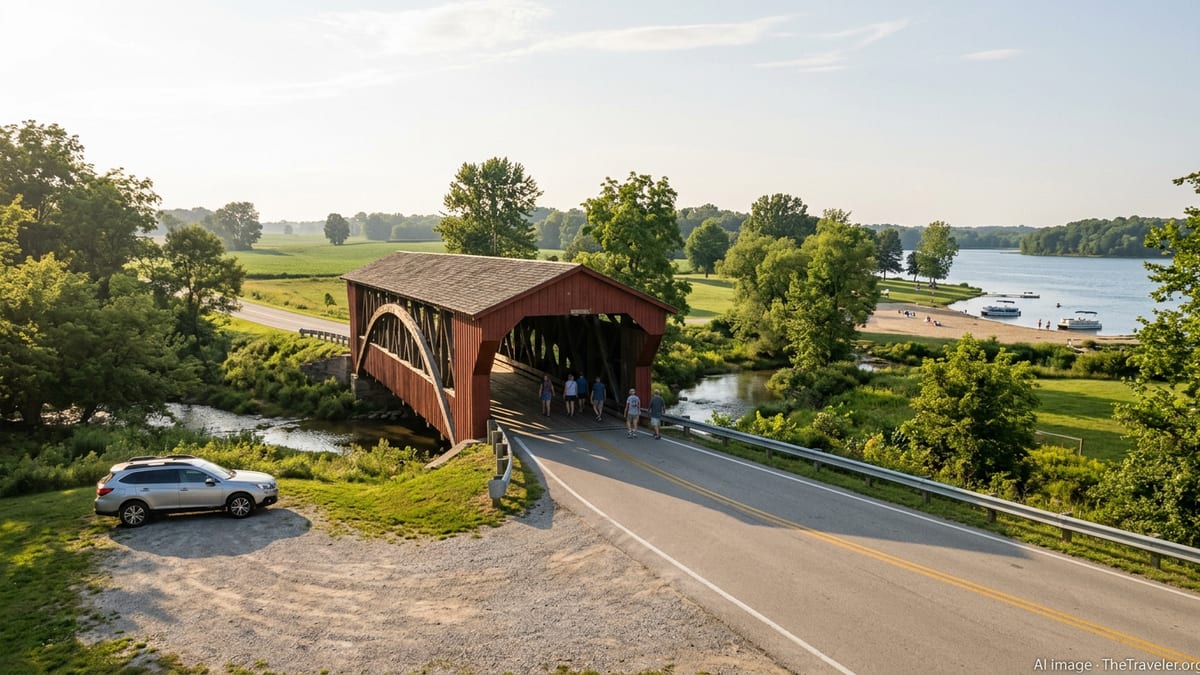
Classic spans such as the Cox Ford Covered Bridge at the edge of Turkey Run State Park and the Big Rocky Fork Covered Bridge near Mansfield show off different truss designs and settings. Many sit at the end of short gravel spurs, which encourages you to park, walk across the timbers, and listen to the creek below rather than just snap a quick picture from the car window. Because some bridges were built in the late 19th or early 20th centuries and have been restored or carefully maintained, they give a tangible sense of how rural travel once looked and felt.
Neighboring Putnam County adds more stops for a day devoted to covered bridges. The Baker’s Camp Covered Bridge east of Bainbridge, a Burr arch truss bridge built in the early 1900s, remains a photogenic crossing over Big Walnut Creek and is a reminder that historic bridges are scattered well beyond Parke County’s borders. Connecting the dots between Parke and Putnam counties can easily fill a day, especially if you allow time to walk short creekside trails, browse small-town shops, or linger in courthouse squares along the way.
While autumn is the signature season for covered bridge touring, thanks to fall color and festival energy, these routes are appealing in spring and summer as well. Lush green leaves frame the red or white bridge siding, and quiet weekday mornings can feel almost timeless. Be prepared to share narrow roads with farm equipment, respect posted weight limits on the bridges, and avoid blocking residential driveways or mailboxes when you pull over to explore on foot.
Turkey Run, Shades, and the Sandstone Gorges
For day trippers who want to pair covered bridges with memorable hiking, Turkey Run State Park and nearby Shades State Park make a compelling combination. Turkey Run is one of Indiana’s most beloved parks, known for its deep sandstone ravines, suspension bridge over Sugar Creek, and network of trails that often involve scrambling through narrow gorges or along creek beds. The drive from Indianapolis typically takes around an hour and a half, which makes it an easy early-morning departure.
Once inside Turkey Run, you can tailor your day around your comfort level. Some trails stay on higher, drier ground with overlooks of the ravines, while others descend stone steps into mossy canyons where you may need to navigate shallow water or slick rock. Even a short circuit gives a taste of the park’s scenery, from hemlock-lined cliffs to occasional views of historic structures such as the park’s inn and shelters built in the early days of Indiana’s state park system.
Shades State Park lies just a short drive from Turkey Run but often sees fewer visitors, which can make it a quieter escape on busy weekends. Its ravines and overlooks face Sugar Creek and smaller tributaries, with several trails leading to sandstone ledges and stairways into forested hollows. The park’s atmosphere is more low-key, with fewer amenities than some larger state parks, but that is part of its charm for day trippers seeking shade, birdsong, and time away from traffic.
Combining Turkey Run, Shades, and nearby covered bridges into a single loop is one of the most rewarding day itineraries in central Indiana. Start early with a hike in the cooler morning hours, then take a mid-day drive through Parke County’s back roads to see a handful of bridges and small towns. Pack a picnic or plan a late lunch in Rockville, Marshall, or a neighboring community. By afternoon, you can either unwind by Sugar Creek or continue on to another bridge or overlook before returning home.
Lakeside Escapes in Northern Indiana
Indiana’s northern tier, shaped by the retreat of ancient glaciers, holds a surprising number of lakes. While some are dotted with private cottages, several communities and state parks make it easy for day trippers to access public beaches, rentals, and waterfront restaurants. These destinations are especially appealing from late spring through early fall, when long daylight hours and warm temperatures invite lingering by the water.
The Indiana Dunes region along Lake Michigan is the state’s signature lakeside escape, but it can also be one of the busiest on summer weekends. If you are seeking a smaller-scale alternative, head inland to lakes in Kosciusko, LaGrange, or Steuben counties. Towns around lakes such as Winona Lake near Warsaw and the interconnected chain of lakes around Angola and Fremont blend classic Midwestern main streets with marinas, walking paths, and public piers.
Pokagon State Park, near the Indiana border with Michigan, is a perennial favorite for family day trips. Fronting Lake James and Snow Lake, the park offers swimming areas, boat rentals in season, and wooded trails that loop through rolling hills. In summer, visitors paddle kayaks or take leisurely pontoon rides, then return to shaded picnic areas. In winter, Pokagon’s toboggan run turns the park into a cold-weather attraction, which gives northern Indiana residents a day-trip destination throughout much of the year.
Smaller lakeside towns such as Culver, on the shores of Lake Maxinkuckee, offer a quieter charm. Here, a compact business district sits within walking distance of the water, with parks and public spaces making room for picnics, fishing, or simply watching sailboats and sunsets. Many of these communities host seasonal festivals, farmers markets, or live music, so checking local event calendars before your trip can help you time your visit for added atmosphere.
Historic Towns and Scenic Drives
Some of Indiana’s best day trips unfold not around a single attraction but along a thoughtfully chosen route. Historic river towns, rolling Amish country, and old highway alignments all reveal a slower-paced version of the state when you step off the interstate. Southern Indiana in particular rewards meandering, thanks to the Ohio River, hills, and small communities that predate modern highways by more than a century.
Corydon, Indiana’s first state capital, makes an easy anchor for a day that pairs history with cave tours. You might spend the morning underground at a nearby show cave, then walk Corydon’s historic downtown square in the afternoon, with small shops, cafes, and markers outlining events from early statehood. Similar trips can center on Madison along the Ohio River or New Harmony along the Wabash, where preservation efforts have kept distinctive architecture and town plans intact.
Farther north, following old alignments of U.S. highways or state roads can lead you through classic Midwestern farm country and clusters of historic bridges. County byways in Fountain, Montgomery, Franklin, and Rush counties, for example, reveal additional covered bridges that see fewer visitors than Parke County’s more famous spans. Local tourism offices and visitor centers often publish simple brochures or maps marking scenic routes, and these can be especially useful if you prefer to look out the window rather than at your phone’s navigation screen.
When planning scenic drives, build in extra time for unscheduled stops. A roadside produce stand, a trailhead sign you did not expect, or an unassuming diner with a bustling parking lot can all become highlights. Rural roads may lack frequent gas stations, so starting with a full tank and carrying water and snacks will make the in-between stretches more comfortable. Avoid relying on only one navigation app in areas where mobile coverage can fade, and consider downloading offline maps in advance.
Seasonal Tips and Practical Logistics
Indiana’s four seasons dramatically change how day trips feel, even if the destinations remain the same. Spring brings wildflowers to state parks and fuller flows to creeks beneath covered bridges, but it can also bring mud, rapidly changing temperatures, and the tail end of snowmelt. Summer delivers long days perfect for lakeside lounging, but it can also mean crowded parking areas at popular parks and higher humidity in the southern part of the state.
Autumn is prime time for covered bridge touring, particularly in Parke County, where a multi-day festival each October draws large regional crowds for crafts, food, and guided tours. If you plan to visit during peak festival weekends, expect heavier traffic, full parking lots, and lineups for shuttle buses or tours. One strategy is to arrive early in the morning, explore a few bridges before the rush, and then lean into the festival environment in the afternoon with food stands and live entertainment.
Winter in Indiana can be underrated for day trips, especially for those who are prepared for cold and snow. Caves maintain relatively stable temperatures year-round, so on a freezing January day, the constant underground chill can feel milder than the wind above. Lakeside towns quiet down, creating a peaceful backdrop for bundled-up walks along icy shorelines. A few state parks, including Pokagon, add winter-specific attractions like toboggan runs or cross-country ski rentals when conditions allow.
Regardless of season, pack with safety and comfort in mind. Good walking shoes, weather-appropriate layers, a small flashlight for cave parking areas at dusk, and basic first-aid supplies are practical additions. Respect posted rules about staying on trails, avoiding restricted cave entrances to protect bat populations, and not climbing on covered bridges or their trusses. With a bit of preparation, Indiana’s day-trip destinations are straightforward to navigate and welcoming to first-time visitors.
The Takeaway
Indiana’s best day trips are stitched together by back roads, sandstone cliffs, farm fields, and lakeshores rather than dramatic mountain ranges or ocean views. That quieter landscape hides a remarkable variety of experiences within a relatively short drive: boat rides through underground rivers, hikes along shaded gorges, leisurely crossings of 19th-century covered bridges, and slow evenings in lakeside towns where the biggest event is sunset over the water.
Because the state is so compact, you do not have to choose between themes. With a bit of planning, it is possible to explore a show cave in the morning, picnic below a covered bridge, and cap the day with ice cream beside a small-town lakefront. Alternatively, you can dive deeply into one region, returning in different seasons to see how fall color, spring blossoms, summer crowds, or winter quiet shift the mood.
For travelers who tend to overlook Indiana in favor of flashier neighbors, these easy day trips serve as an invitation to reconsider. The state’s caves, covered bridges, and lakeside communities are not only convenient breaks from daily routines but also living links to the landscapes and histories that shaped the Midwest. Give yourself a day, pick a direction, and let Indiana’s back roads show you what is just beyond your usual commute.
FAQ
Q1. What is the best time of year to visit Indiana’s covered bridges?
Autumn is generally the most popular time, thanks to fall foliage and seasonal festivals, but spring and summer offer quieter roads and lush green backdrops.
Q2. Are Indiana’s show caves suitable for young children?
Most guided cave tours are designed for families and welcome children, though parents should be prepared for stairs, cool temperatures, and potentially damp, uneven surfaces.
Q3. Do I need to book cave tours in advance?
Advance reservations are strongly recommended during summer weekends, holidays, and school breaks, while walk-up availability is more common on weekdays and in shoulder seasons.
Q4. Can I visit multiple covered bridges and a state park in one day?
Yes, many travelers combine Turkey Run or Shades State Park with a driving loop through Parke and nearby counties to see several bridges in a single, full day.
Q5. Are there fees to visit Indiana’s state parks and lakeside areas?
State parks typically charge a modest vehicle entrance fee, and some lakeside facilities may add separate charges for parking, boat rentals, or certain amenities.
Q6. How should I dress for visiting caves in southern Indiana?
Caves stay cool year-round, so wear long sleeves or a light jacket, long pants, and sturdy closed-toe shoes with good traction, even in hot weather.
Q7. Is public transportation available to these day-trip destinations?
Public transit options are limited outside major cities, so most visitors rely on personal vehicles or rentals to reach caves, covered bridges, and lakeside towns.
Q8. Are the covered bridges open to vehicle traffic?
Some historic covered bridges still carry light local traffic, while others are restricted to pedestrians; always follow posted signs, weight limits, and detour markers.
Q9. Can I swim in Indiana’s lakes during a day trip?
Many public lakes and state park beaches offer designated swimming areas in season, often with lifeguards or posted rules when conditions are suitable.
Q10. How much driving should I expect on a typical Indiana day trip?
Many of the destinations described can be reached within two to three hours one way from major Indiana cities, leaving sufficient time to explore before driving home.