

Georgia’s calendar is packed with festivals that show off the state’s music, food, arts, and deep sense of community. From small town fairs to major urban spectacles, these events are reasons in their own right to plan a trip. While dates and details can shift slightly from year to year, the traditions behind them are remarkably enduring. Here is a guide to some of the best and most characteristic events and festivals across the Peach State, and what you can expect when you go.
Savannah’s St. Patrick’s Day: A Coastal City Turns Green
Each March, Savannah transforms into one of the country’s most spirited hubs for Irish heritage. The city hosts one of the largest and oldest St. Patrick’s Day celebrations in the United States, tracing its parade tradition back to the early 19th century. In the weeks leading up to March 17, visitors will find the whole historic district in a holiday mood, with flags, green décor, and storefront displays echoing the city’s Irish roots.
The core of the celebration is the St. Patrick’s Day Parade, which typically steps off on the morning of March 17 and snakes through Savannah’s historic squares and along its oak shaded streets. Crowds gather early, some lining up in the pre dawn hours to secure the most coveted viewing spots along the route. City officials implement temporary road closures and parking restrictions throughout the parade area, so it is important for visitors to arrive early, park outside the core when possible, and be prepared to walk.
Beyond the parade, Savannah layers on a series of related events that make the celebration feel more like a festival season than a single day. Ceremonies such as the greening of the fountain in Forsyth Park, Irish heritage parades on nearby Tybee Island, and religious observances at local churches highlight both the sacred and secular sides of the holiday. Families with children will appreciate that many official events are organized with a family friendly atmosphere in mind, even as nightlife in the city’s bars and along the riverfront becomes more raucous as evening falls.
For travelers, the key to enjoying Savannah’s St. Patrick’s celebration is advance planning. Lodging in and around the historic district sells out months ahead of time, and minimum stay requirements are common. If you hope to watch from one of the central squares, learn about the city’s “land rush” system for setting up in those green spaces and be ready for an early start. Comfortable walking shoes, layers for changeable March weather, and a flexible attitude go a long way toward making this signature Georgia event unforgettable.
Macon’s International Cherry Blossom Festival: The Pinkest Party on Earth
In late March, Macon stakes its claim as the Cherry Blossom Capital of the World, when hundreds of thousands of Yoshino cherry trees burst into bloom across the city. The International Cherry Blossom Festival typically spans about ten days, often around the last third of March. During this period, Macon becomes a sea of pale pink blossoms, and a packed lineup of concerts, family activities, and cultural programs accompanies the natural spectacle.
The festival’s main hub is often centered around Carolyn Crayton Park and other downtown venues, where visitors will find amusement rides, food vendors, and live entertainment. Ticketed concerts draw regional and occasionally national acts, while smaller stages host community performers, school groups, and cultural showcases. Many events are designed for families, including children’s activities, pet friendly gatherings, and themed days that highlight Macon’s neighborhoods and partner communities abroad.
A key part of the festival’s appeal is how it connects the city’s cherry trees with broader themes of friendship and international goodwill. The festival’s organizers have long emphasized ties with cities in Japan and other countries, and cultural exchange programs, visiting delegations, and themed art exhibits are recurring features. At the same time, the event remains firmly rooted in local pride. Community groups host pancake breakfasts, church socials, and neighborhood tours that offer a more intimate view of Macon’s history and architecture under the canopy of blooms.
Because cherry blossoms are highly dependent on weather, exact blooming conditions vary from year to year. Travelers hoping to see Macon at peak pink should watch for updates from festival organizers and local tourism offices, which often provide bloom forecasts and photographs. Even in years when timing is imperfect, the festival atmosphere, mild late March weather, and range of activities make Macon a rewarding spring destination.
Atlanta’s Signature Spring Festivals: Dogwoods and Indie Rock
Atlanta in spring is defined by two standout events that often fall within weeks of each other: the Atlanta Dogwood Festival and the Shaky Knees Music Festival. Both take advantage of the city’s expansive in town parks and the pleasant weather that typically arrives by April and early May, though specific dates can shift. Together, they highlight very different sides of the capital city’s personality, from fine arts and family fun to guitar heavy rock and late night sets.
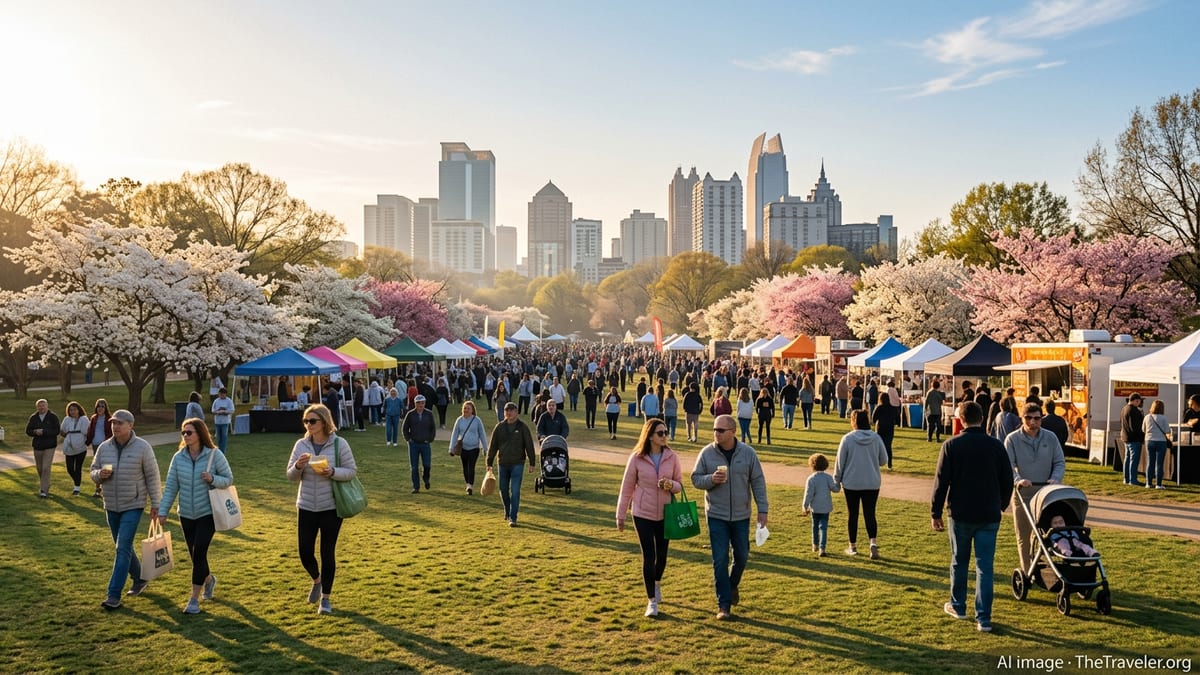
The Atlanta Dogwood Festival, held in Midtown’s Piedmont Park, has been a local tradition for decades and is widely considered the city’s unofficial welcome to spring. Centered on a large juried artist market, the festival brings in hundreds of artists from across the United States working in media such as painting, photography, ceramics, wood, jewelry, and textiles. Visitors can browse tents that line the park’s paths, meet the artists, and purchase original works. Additional attractions often include a high school art exhibition, children’s activity zones, food trucks, and multiple stages for live music and cultural performances.
In recent years, organizers have spoken candidly about financial pressures and fundraising efforts to keep the Dogwood Festival viable. Production costs have risen and sponsorship patterns have shifted, prompting appeals to the community and discussions with city leaders. Travelers should still expect a lively, well organized event, but checking current year status and schedules before planning a trip is prudent. If you attend, consider supporting the festival by buying from artists, purchasing refreshments on site, or contributing through official channels.
Shaky Knees, by contrast, is a ticketed, multi day rock festival that now also makes its home in Piedmont Park. Founded in 2013 to showcase indie and alternative rock, it has grown into one of the Southeast’s key music events. Lineups typically blend major headliners with buzzy up and coming acts, spread across multiple stages. Crowds are enthusiastic but generally more music focused than at some larger pop festivals, and the park setting provides space to move between performances, relax on the grass, or take in skyline views between sets.
For visitors, pairing a trip to Atlanta with either Dogwood or Shaky Knees offers a compelling way to experience the city. Public transit and rideshare options make it relatively easy to reach Piedmont Park from central neighborhoods, though festival days can bring congestion and limited parking. Booking accommodation near transit lines and allocating extra time for security and bag checks will help the experience go more smoothly.
Autumn Traditions: Georgia National Fair and the Yellow Daisy Festival
While spring gets much of the attention, fall in Georgia brings its own lineup of beloved festivals that showcase regional crafts, agriculture, and changing seasons. Two of the most emblematic events are the Georgia National Fair in Perry and the Yellow Daisy Festival at Stone Mountain, each reflecting a different facet of the state’s culture. Cooler temperatures, harvest themes, and colorful foliage make autumn an ideal time for outdoor events, and both festivals draw repeat visitors year after year.
The Georgia National Fair, held at the Georgia National Fairgrounds and Agricenter in Perry, typically runs for around ten days starting in early October. Officially designated as the state’s sponsored fair, it combines a classic midway full of rides, games, and food stands with extensive agricultural and livestock exhibitions. Visitors can tour barns filled with cattle, horses, pigs, and poultry raised by young competitors, watch 4 H and FFA members present their projects, and browse home and fine arts displays that include quilting, baking, photography, and woodworking.
Evenings at the fairgrounds often feature live concerts on big outdoor stages, along with fireworks displays that light up the sky over the Ferris wheel. Fair food is a major draw in its own right, with vendors serving everything from cotton candy and funnel cakes to more adventurous creations. Families with children will find dedicated kiddie ride areas and daytime events tailored to younger audiences. Because the fair is a significant regional attraction, visiting on weekday afternoons or early in the run can mean thinner crowds and shorter lines.
Closer to Atlanta, the Yellow Daisy Festival at Stone Mountain Park is a long running arts and crafts event typically held over four days in early September, often the weekend after Labor Day. It began in the late 1960s and has grown into a major marketplace for handcrafted goods. Vendors set up in shaded areas around the base of Stone Mountain, selling everything from handmade furniture, ceramics, and textiles to jewelry and garden décor. Live bands provide a soundtrack that leans toward rock and bluegrass, and food stands offer casual fare to keep shoppers fueled.
Because both the Georgia National Fair and Yellow Daisy Festival are highly weather dependent, it is wise to prepare for sun and rain alike. Comfortable shoes, sun protection, and a plan for carrying purchases will make the day more enjoyable. These fall events are ideal for travelers who like to combine sightseeing with browsing for unique, locally made items or who are curious about Georgia’s agricultural and craft traditions.
Music and Food Across the State: A Year of Regional Celebrations
Beyond the headline events in Savannah, Macon, and Atlanta, Georgia’s smaller cities and towns host a wide range of music and food focused festivals that reflect local tastes and traditions. While lineups and specific dates change regularly, the pattern of seasonal celebrations remains relatively consistent, with outdoor concerts and cook offs filling the calendar from spring through late fall. Exploring these regional events is one of the most satisfying ways to see parts of the state that many visitors overlook.
In metro Atlanta and the surrounding suburbs, outdoor music festivals are common in warmer months. Communities often organize free or low cost concert series in local parks, featuring cover bands, regional acts, and food trucks, while larger ticketed events bring in national touring artists. Genres range from country and Americana to hip hop and electronic music, and some festivals build entire weekends around a particular sound. Out in the mountains of North Georgia and along the Chattahoochee River corridor, smaller bluegrass gatherings and singer songwriter events cater to a more intimate, roots oriented crowd.
Food, naturally, is central to many Georgia festivals. Barbecue competitions, peach themed celebrations in summer, and seafood festivals along the coast all showcase regional specialties. While the exact roster evolves year by year, visitors can reliably find events that focus on boiled peanuts, local oysters, chili cook offs, and farm to table tasting experiences. Many of these festivals pair culinary programs with live music, craft vendors, and kid friendly activities, making them suitable for a full day out.
Because these regional festivals are often organized at the community level, they can be more sensitive to weather and funding shifts than major city events. Schedules may be adjusted, venues moved, or certain years skipped entirely if conditions are not favorable. Checking current information with local tourism offices or city event calendars before you travel is essential. The reward, however, is the chance to experience Georgia’s hospitality at a more personal scale and to talk directly with local chefs, farmers, musicians, and artisans.
Planning Your Trip: Timing, Logistics, and Local Etiquette
Choosing which Georgia festival to attend often starts with the calendar. Spring, especially March and April, is dominated by Savannah’s St. Patrick’s celebration, Macon’s Cherry Blossom Festival, and Atlanta’s Dogwood Festival. These events tend to coincide with mild temperatures and the state’s famous flowering trees. Late spring and summer usher in more music and food festivals, while early fall is prime time for events centered on crafts, agriculture, and harvest themes, including the Georgia National Fair and the Yellow Daisy Festival.
Once you have matched an event to your preferred travel dates, logistics come next. Popular festivals can overwhelm local infrastructure, particularly in historic districts and smaller towns where parking and road capacity are limited. Whenever possible, use public transit, shuttle services, or rideshare drop off zones designated by event organizers. In places like Savannah’s historic district or downtown Macon, plan to walk significant distances between parking areas and event sites, and leave extra time to navigate security checks or crowd bottlenecks.
Accommodation is another key factor. For marquee events such as the Savannah St. Patrick’s Parade or the Macon International Cherry Blossom Festival, central hotels and vacation rentals often book up months in advance and may require multi night stays. If your plans are flexible, consider staying in nearby communities and commuting in for the day. In Atlanta, staying near a transit line or within walking distance of Piedmont Park can minimize time spent in traffic during festivals like Dogwood or Shaky Knees.
Local etiquette matters as well. Georgia’s festivals are generally welcoming to visitors, but communities work hard to balance celebration with respect for residents, historic sites, and public spaces. Follow clearly posted rules on open containers, noise, and public behavior, and pack out your trash or use designated waste and recycling stations. Many events are family oriented during the day even if nightlife scenes become livelier later on, so being mindful of language, conduct, and shared space helps keep the atmosphere enjoyable for everyone.
The Takeaway
Georgia’s best events and festivals are far more than listings on a calendar. They are living traditions that bring together history, music, food, art, and regional pride in settings that range from moss draped coastal squares to bustling city parks and rural fairgrounds. Whether you join the sea of green in Savannah, walk under pink canopies in Macon, shop for handmade crafts at the foot of Stone Mountain, or listen to guitars echo across Piedmont Park, you will encounter a side of the state that everyday sightseeing rarely reveals.
Because dates, venues, and lineups evolve from year to year, the most successful trips combine early planning with an open mind. Check updated schedules, build in extra time for crowds and weather, and remember that some of the best festival memories come from serendipitous encounters with local artists, cooks, and fellow visitors. With a bit of preparation and a willingness to embrace Georgia’s relaxed pace, you can build a trip around one of these standout events or thread several together into a festival focused itinerary.
FAQ
Q1. When is the best time of year to visit Georgia for festivals?
Spring and early fall are usually the strongest seasons, with major events in March and April and craft and agricultural fairs in September and October.
Q2. How far in advance should I book hotels for Savannah’s St. Patrick’s Day?
For stays in or near the historic district around March 17, aim to book several months ahead, as central accommodations often sell out early.
Q3. Do I need tickets for Macon’s International Cherry Blossom Festival?
Many outdoor activities and neighborhood events are free, but specific concerts, rides, and special programs may require tickets or wristbands.
Q4. Is the Atlanta Dogwood Festival free to attend?
The main festival in Piedmont Park is typically free to enter, though certain attractions, food, beverages, and VIP experiences have separate costs.
Q5. What should I wear to Georgia festivals in spring?
Plan for changeable weather by layering light clothing, wearing comfortable walking shoes, and bringing rain protection and sunblock for outdoor events.
Q6. Are Georgia’s major festivals family friendly?
Most large events, including the Georgia National Fair, the Dogwood Festival, and Macon’s Cherry Blossom celebration, offer many family oriented activities during the day.
Q7. How can I get around during busy festival days in Atlanta and Savannah?
Use public transit, official shuttles, or rideshares where available, and be prepared to walk from outlying parking areas to event sites.
Q8. Do Georgia festivals continue in light rain?
Most outdoor festivals proceed in light or moderate rain, though individual performances or activities can be delayed or canceled during severe weather.
Q9. Can I bring my own food and drinks to festivals?
Policies vary; some events allow small coolers or snacks, while others restrict outside food and beverages, so always check current guidelines before you go.
Q10. How can I find out if a festival’s dates have changed or been canceled?
The most reliable information usually comes from official festival organizers or local tourism offices, which post updates on any schedule changes.