

Iowa’s festival calendar is a vivid snapshot of Midwestern life, where agriculture, small-town pride, and a surprising streak of creativity collide. From million-strong crowds at the Iowa State Fair to the rolling street party of RAGBRAI and intimate heritage events in historic town squares, the Hawkeye State offers celebrations that feel deeply rooted yet welcoming to visitors. Whether you arrive for corn dogs on a hot August afternoon or bicycles at sunrise on a country road, Iowa’s best festivals invite you to slow down, join in, and savor the community at the heart of the state.
Iowa’s Festival Landscape: Heartland Traditions With Wide Appeal
Travelers sometimes picture Iowa as a quiet stretch of cornfields between bigger destinations, but its festivals tell a different story. Across the state, long-running events draw crowds in the hundreds of thousands, while smaller celebrations keep local customs and immigrant heritage vibrantly alive. Many of Iowa’s biggest gatherings are built around food, music, and agriculture, and nearly all share a strong sense of hospitality that makes visitors feel like temporary locals.
The rhythm of the year is shaped by the seasons. Late spring and early summer bring tulip and arts festivals; July and August belong to hot air balloons, outdoor music, RAGBRAI, and the Iowa State Fair; fall adds harvest and Oktoberfest events. For travelers, that means almost any warm-weather trip can be anchored by a festival, whether you are passing through Des Moines on a cross-country drive or planning a dedicated vacation around a bucket-list event.
What sets Iowa’s festivals apart is how accessible they feel. Large events are highly organized but rarely pretentious, and even marquee attractions often feature family-friendly programming alongside headline concerts or athletic feats. At the same time, the state’s rural backbone means many festivals remain closely tied to local farmers, church groups, and service clubs, giving visitors a direct line into everyday Iowa life rather than a curated show put on from a distance.
Three pillars anchor the calendar: the Iowa State Fair in Des Moines, RAGBRAI’s weeklong bike ride across the state, and an array of local celebrations from tulip time to hot air balloons. Together they create an introduction to the state’s culture, landscapes, and people that goes far beyond the stereotypes, making Iowa a surprisingly rich destination for travelers who time their visits to coincide with the festivities.
The Iowa State Fair: Eleven Days of Classic Americana
The Iowa State Fair in Des Moines is the state’s largest event and one of the best-known fairs in the United States. Held for eleven days each August at the historic Iowa State Fairgrounds, it attracts more than a million attendees in a typical year and has become a pilgrimage site for fair enthusiasts from around the world. The fair traces its roots to 1854, and since the late nineteenth century it has occupied the same expansive site on the east side of the capital city, where tree-lined avenues and century-old exhibition halls provide the backdrop for a sprawling mix of livestock, food, and entertainment.
At its core, the Iowa State Fair remains an agricultural showcase. Visitors can wander through air-conditioned livestock barns to see award-winning cattle, sheep, pigs, and poultry, often groomed and shown by 4-H and FFA members who have spent months preparing their animals. For many city visitors, this is a rare chance to see the scale and skill of Midwestern farming up close. Tractor displays, giant pumpkins, and crop competitions reinforce the connection between the fair and the state’s rural communities, even as Des Moines has grown into a modern metro area.
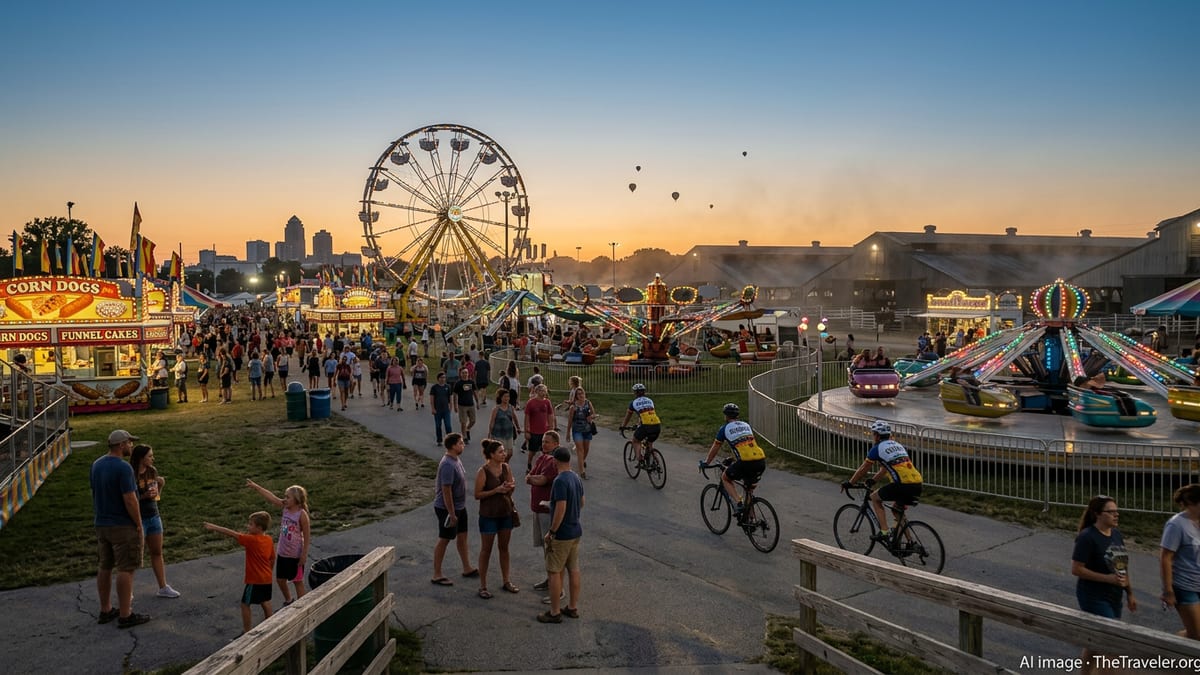
Beyond agriculture, the fair has become famous for its distinctive traditions and larger-than-life novelties. The butter cow, a life-sized sculpture carved from hundreds of kilograms of butter, draws long lines in the Dairy Barn and has inspired copycats and themed artwork across the grounds. Food vendors compete to create ever-more inventive items on a stick, alongside classic corn dogs, funnel cakes, pork chops, and freshly churned ice cream. Midway rides, grandstand concerts, and nightly fireworks add to the sense of carnival atmosphere, especially after sunset when the midway lights reflect off the steel of the Ferris wheel.
For travelers planning a visit, timing is key. The fair typically begins in mid-August and runs for just under two weeks, with weekends drawing the largest crowds and weekday mornings offering a slightly calmer experience. Many visitors opt to stay in downtown Des Moines and use shuttles or rideshares to reach the fairgrounds, avoiding parking stress during peak hours. Comfortable shoes, sun protection, and a willingness to sample local favorites are essential, as is leaving enough time to explore beyond the main midway to see smaller stages, craft demonstrations, and fairground landmarks that reward unhurried wandering.
RAGBRAI: A Rolling Festival Across the Iowa Countryside
Officially known as the Register’s Annual Great Bicycle Ride Across Iowa, RAGBRAI is an early-morning-to-late-night celebration that happens to take place on two wheels. Launched by two Des Moines Register reporters in 1973, it has grown into the world’s largest recreational bicycle touring event, drawing tens of thousands of registered riders and many more day participants. Each year in late July, cyclists dip their rear wheels in the Missouri or Big Sioux River on the western border, then spend seven days pedaling east across rolling farmland to finish at the Mississippi.
RAGBRAI is not a race. The daily mileage varies with each year’s route, but the tone is social rather than competitive, with riders of all ages and experience levels joining the rolling caravan. Small towns along the way embrace the event as a temporary festival, lining main streets with food stands, church suppers, pie tents, and live music. Riders cool off in farmyard sprinklers, pose for photos in front of quirky roadside attractions, and chat with local residents who camp out with lawn chairs to watch the steady stream of bikes pass through.
For travelers, the event offers a unique way to experience Iowa’s landscapes and communities at a slower pace. The route changes annually, announced during the winter at a dedicated reveal party, and each edition highlights different corners of the state, from river bluffs to prairie lakes. Overnight host towns organize concerts and beer gardens, while many charter groups create their own camp atmospheres with team tents, themed costumes, and long-running in-jokes. Even those who join for a single day can expect an immersive festival experience threaded through quiet county roads and small downtowns.
RAGBRAI usually takes place in the last half of July, when heat and humidity can be intense. Riders considering the full week should plan months ahead, training for back-to-back days in the saddle and reserving transport, camping support, or charter services early. First-time participants often appreciate starting with a single day’s ride or joining an established team that can help navigate logistics. Spectators can also enjoy the event from the sidelines, visiting host towns for concerts and community breakfasts without committing to the full cycling challenge.
National Balloon Classic: Colorful Skies Over Indianola
Just south of Des Moines, the National Balloon Classic fills the summer sky over Indianola with vivid bursts of color. This annual hot air balloon festival, typically held over nine days in late July or early August, brings pilots from across the United States to compete, perform mass ascensions, and offer tethered rides. Morning and evening launches create some of the most photogenic moments in Iowa’s festival calendar, especially when dozens of balloons rise simultaneously over the gentle hills of Warren County.
Visitors to the Memorial Balloon Field can watch pilots inflate their balloons at dawn, when the air is cool and winds are light, or arrive at sunset for glows where burners illuminate tethered envelopes against the darkening sky. Competitive flights test pilots’ skill at navigating toward designated targets, while special-shape balloons delight younger spectators. On the ground, the atmosphere feels like a relaxed community fair, with food vendors, local crafts, and live music adding to the experience.
Because ballooning is highly weather dependent, flexibility is important. Calm, clear mornings are best for flights, and launch windows can be adjusted or occasionally canceled for safety. Many travelers choose to attend multiple sessions across different days to increase their chances of seeing mass ascensions and glows. Arriving early helps secure good viewing spots on the hillside, and light layers, blankets, or lawn chairs make it easier to enjoy the cool pre-dawn or evening conditions.
Indianola’s proximity to Des Moines makes the National Balloon Classic an easy side trip for visitors already in town for the State Fair or other urban events. Overnight stays in or near Indianola allow early access to morning launches, while day trippers can combine a balloon session with a visit to downtown Des Moines, nearby wineries, or scenic drives through the surrounding countryside.
Tulip Time and Heritage Festivals: Dutch Roots, Irish Pride, and More
Iowa’s festival calendar is also rich with heritage events that reflect the cultures of the immigrants who settled its towns. Among the most famous are the Tulip Time celebrations in Pella and Orange City, usually held each May when carefully tended beds of tulips transform streets and parks into splashes of color. Visitors can expect traditional Dutch costumes, wooden shoe dancing, parades, and tours of windmill replicas and historic buildings that showcase how settlers preserved ties to their homeland.
These tulip festivals blend pageantry with small-town familiarity. Volunteer-run bakeries and church kitchens turn out stroopwafels, pastries, and Dutch letters, while local families demonstrate lace-making, carving, and other traditional crafts. The pace is gentler than at the major summer events, and the spring weather adds a fresh, hopeful tone to the festivities. For photographers and garden lovers in particular, Tulip Time offers a compelling reason to visit Iowa before peak summer crowds arrive.
Later in the summer, Iowa Irish Fest in Waterloo and other ethnic celebrations around the state highlight Celtic music, dance, and food. Streets fill with live bands, step-dancing competitions, and vendor tents selling everything from soda bread to Celtic jewelry. These gatherings offer a festive but approachable entry point for travelers who may not have deep familiarity with the cultures being celebrated, and they often feature family activities alongside pub-style entertainment.
Together, these heritage festivals highlight a side of Iowa that goes far beyond agriculture, illustrating how communities have maintained their identities while integrating into the broader Midwestern fabric. For visitors, they provide an opportunity to experience distinct flavors, sounds, and stories in compact, walkable settings where festival stages are often just steps from historic homes, churches, and main-street storefronts.
Arts, Music, and Citywide Celebrations in Des Moines and Beyond
While small-town festivals give Iowa much of its charm, the state’s cities stage their own marquee events that blend culture, food, and urban energy. In late June, the Des Moines Arts Festival transforms Western Gateway Park into an open-air gallery and performance space, drawing visual artists from around the country. White tents line the park’s pathways, housing everything from painting and sculpture to ceramics and photography, while live music and food stalls energize the surrounding streets.
For travelers, the arts festival offers a compact way to sample the region’s creative scene. Many exhibitors are happy to discuss their work, and the juried nature of the event means the overall quality is typically high. Nearby museums, coffee shops, and restaurants make it easy to spend a full day moving between art, performances, and downtown exploration. Evening hours often bring larger crowds as locals finish work and gather for concerts or drinks under the skyline.
Music lovers will also find growing options beyond Des Moines. The Hinterland Music Festival, held at a rural amphitheater near St. Charles, has emerged as a major summer event, attracting national touring acts in genres like indie rock, folk, and Americana. Set amid rolling hills and farmland, it offers a different feel from urban festivals, with camping, hammocks, and sunset sets that lean into the pastoral setting. Other cities, including Cedar Rapids and Iowa City, host their own arts and jazz festivals, often timed to take advantage of warm evenings and college-town energy.
These events reveal another side of Iowa: one where galleries, murals, and live music coexist comfortably with farm fields and grain elevators. For visitors who may initially head to the state for the fair or RAGBRAI, adding an arts or music festival to the itinerary can provide a complementary experience and a better sense of how younger residents are shaping Iowa’s cultural identity.
Planning Your Trip: When to Visit and How to Navigate the Crowds
Because many of Iowa’s signature festivals take place during a relatively short summer window, smart planning can make the difference between a smooth experience and a frustrating one. The peak season generally runs from late June through late August, when Des Moines Arts Festival, RAGBRAI, the National Balloon Classic, and the Iowa State Fair cluster together. Shoulder-season events in May and early June, such as Tulip Time and some smaller community festivals, offer milder weather and slightly lighter crowds.
Accommodation is the first puzzle to solve. For the Iowa State Fair and RAGBRAI in particular, hotels and campgrounds in key locations often book out months in advance. Fair visitors may find better availability in suburban Des Moines or nearby communities, using shuttles or public transit to access the fairgrounds. RAGBRAI riders typically rely on a patchwork of town-organized campgrounds, private yard rentals, and charter services that transport gear and set up tents, but these also require advance registration.
Transportation logistics also deserve attention. Driving is the most common way to reach Iowa festivals, with Interstates 35, 80, and 380 providing straightforward access to major venues. During the Iowa State Fair, local authorities often adjust traffic patterns around the grounds, so it helps to review parking and shuttle information ahead of time. For urban events in Des Moines, walking or using ride-hailing services can be easier than searching for street parking, especially in the evenings when downtown is busiest.
Weather is another key factor. Iowa summers can be hot and humid, with sudden thunderstorms possible, especially in late afternoon and evening. Travelers should pack light, breathable clothing, sun protection, and rain gear, and be prepared to adjust plans if severe weather affects balloon launches, outdoor concerts, or bike routes. Flexibility, patience, and a sense of humor go a long way toward enjoying festivals where a passing shower might briefly shut down a stage, only for the party to resume under a double rainbow.
The Takeaway
Iowa’s festivals offer a revealing cross-section of the state’s character. The Iowa State Fair distills agricultural pride and family tradition into eleven concentrated days of spectacle. RAGBRAI stretches that spirit across an entire state, turning quiet county roads and small towns into a weeklong rolling celebration. Local events, from tulip festivals and hot air balloons to arts fairs and ethnic gatherings, fill in the details, showing how diverse communities maintain their identities while sharing a common Midwestern friendliness.
For travelers willing to look beyond the coasts and major national parks, these festivals deliver a distinctive blend of Americana and authenticity. They invite you to sit on a curb with a paper plate of fair food, chat with volunteers pouring coffee at a church stand, or watch sunrise from a country road surrounded by cyclists and cornfields. With thoughtful planning and a bit of flexibility, a trip built around Iowa’s festivals can turn a flyover state into the centerpiece of a memorable journey.
FAQ
Q1. When is the Iowa State Fair held each year?
The Iowa State Fair typically takes place over eleven days in mid-August in Des Moines, with exact dates announced well in advance for each year.
Q2. Do I need tickets in advance for the Iowa State Fair?
Buying tickets in advance is recommended, especially for specific grandstand concerts, while general admission tickets are usually available both ahead of time and at the gate.
Q3. What level of fitness is required to ride RAGBRAI?
RAGBRAI is not a race, but riders should be comfortable cycling several consecutive days, often 50 to 70 miles per day, in summer heat and variable terrain.
Q4. Can I participate in RAGBRAI for only one day?
Yes, many cyclists join for a single day or a portion of the route, purchasing the appropriate registration and arranging their own transport to and from the start and end towns.
Q5. What is the best time of day to see balloons at the National Balloon Classic?
The most reliable and scenic viewing times are typically early morning and early evening, when winds are calmer and mass ascensions or balloon glows are scheduled.
Q6. Are Iowa’s major festivals suitable for families with children?
Yes, events such as the Iowa State Fair, Tulip Time, and the National Balloon Classic all feature family-friendly programming, kid-focused activities, and manageable walking distances.
Q7. How far in advance should I book lodging for big Iowa festivals?
For peak events like the Iowa State Fair and RAGBRAI, booking several months ahead is wise, especially if you want accommodations close to the fairgrounds or overnight host towns.
Q8. Do Iowa festivals continue in bad weather?
Most festivals proceed in light rain with adjustments as needed, but weather-sensitive events such as balloon launches or outdoor concerts may be delayed or canceled for safety.
Q9. Are there notable festivals in Iowa outside the summer season?
Yes, spring tulip festivals, fall harvest and Oktoberfest events, and various winter holiday celebrations provide options beyond the main summer festival window.
Q10. Is it possible to combine multiple Iowa festivals in one trip?
With careful timing, travelers can often combine urban events, local heritage festivals, and even part of RAGBRAI or the State Fair into a single extended summer itinerary.