

Japan’s festival calendar is a vivid tapestry of sound, color, ritual and revelry, stretching from snowbound Hokkaido in February to sultry Obon nights in August. For travelers, timing a trip around one of the country’s major festivals is one of the most rewarding ways to experience Japanese culture up close, whether you are standing beneath glowing paper lanterns in Kyoto or watching dancers swirl through the streets of Tokushima. This guide highlights some of the best festivals in Japan you should not miss, along with practical context to help you decide which ones fit your interests, timeframe and travel style.
Sapporo Snow Festival: Hokkaido’s Winter Wonderland
Held each February in the northern city of Sapporo, the Sapporo Snow Festival has grown into Japan’s premier winter celebration and one of the world’s best-known snow events. The 2026 edition is scheduled from February 4 to February 11, continuing a postwar tradition that began with a handful of student-built sculptures. Today it draws visitors from across Japan and overseas to admire towering snow and ice creations that transform the city’s streets and parks into a temporary open-air gallery.
The festival revolves around three main zones spread across Sapporo. Odori Park in the city center is the heart of the action, with large-scale sculptures that can reach several stories high, often modeled on famous landmarks, pop culture icons or scenes from Japanese history. At night, projection mapping and carefully orchestrated lighting add drama to the frozen facades. In the Susukino nightlife district, intricate ice carvings line the streets, illuminated after dark and sometimes featuring animals, characters or imaginative abstract forms. Families gravitate toward the Tsudome site on the city’s eastern side, where snow slides, tubing tracks and play areas invite more hands-on fun.
Winter in Sapporo is genuinely cold, so visitors should be prepared for sub-zero temperatures, icy sidewalks and occasional snowfall. The reward is an atmosphere that feels both festive and otherworldly: steam rising from food stalls selling hot ramen and grilled seafood, the crunch of snow underfoot, and the quiet hush that falls over the sculptures when crowds thin late at night. Budget-conscious travelers can appreciate that admission to the outdoor sites is typically free, with costs limited to food, transport and optional activities.
To make the most of the Sapporo Snow Festival, consider basing yourself near Odori or Susukino stations, which simplifies access to the main sites and reduces time spent in the cold. Trains and subways can be crowded around peak evening hours, so arriving a bit earlier or staying out later can make for a more relaxed experience. Combining Sapporo with nearby hot spring resorts or ski areas is a popular strategy, turning the festival into the centerpiece of a wider Hokkaido winter itinerary.
Gion Matsuri: Kyoto’s Grand Summer Procession
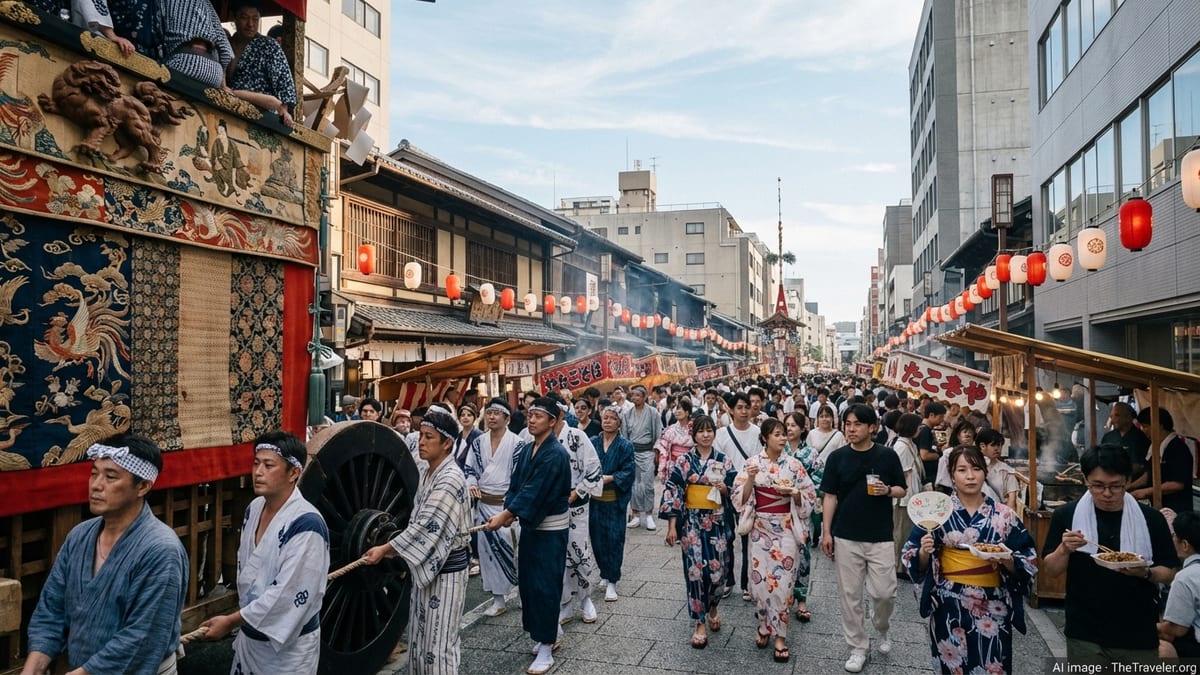
Few festivals capture the spirit of classical Japan as powerfully as Gion Matsuri, Kyoto’s month-long celebration held every July. Rooted in a ninth-century ritual to placate the spirits believed to cause plague, it has evolved into one of the country’s largest and most elaborate festivals. Events span the entire month, but the highlights are the float processions on July 17 and July 24, when enormous wooden floats known as yamaboko roll slowly through central Kyoto.
Each float is a moving work of art, assembled without nails using traditional carpentry techniques and decorated with textiles, carvings and metalwork that reflect centuries of craftsmanship. During the days leading up to each main procession, evenings called Yoiyama fill downtown Kyoto with food stalls, lantern light and crowds in light cotton yukata. Streets are closed to traffic in key areas, turning the city into a pedestrian zone where visitors can wander, listen to festival music and sometimes step inside local townhouses temporarily opened to display treasured family artifacts.
Although Gion Matsuri is among the most famous festivals in Japan, it remains at heart a community-driven event linked to Yasaka Shrine and the surrounding neighborhoods. Participation is carefully organized by traditional town associations, and the movements of each float follow long-established patterns. For travelers, this blend of spectacle and ritual is part of the appeal. It is not only a parade to watch from the sidelines but also a window into how Kyoto communities maintain continuity with their past.
July in Kyoto is hot and humid, with daytime temperatures that can feel oppressive for those unaccustomed to Japanese summers. Planning around the heat makes a big difference: rest during the midday peak, hydrate frequently, and use the city’s extensive public transport network to avoid long walks in direct sun. Many visitors choose to watch the float processions from less crowded side streets rather than the most famous viewing points, trading dramatic photographs for a more comfortable and contemplative experience.
Awa Odori: Dancing Through Tokushima’s Obon Nights
On the island of Shikoku, the city of Tokushima hosts Awa Odori each August, a raucous dance festival that coincides with the Obon period when families honor ancestral spirits. Typically held from August 12 to 15, it is widely known as Japan’s largest dance festival, filling the city’s streets with choreographed dance troupes, musicians and onlookers. The name comes from Awa, the former name of the province that roughly corresponds to modern Tokushima Prefecture, and odori, meaning dance.
The core of Awa Odori lies in groups known as ren, troupes of dancers and musicians that practice throughout the year. During the festival, these ren parade through designated routes, accompanied by shamisen lutes, taiko drums, flutes and bells. Women often dance in lines wearing straw amigasa hats and lightweight cotton yukata, their movements controlled and graceful, while men tend toward more exaggerated and acrobatic steps. The atmosphere is joyful and occasionally chaotic, amplified by rhythmic chants and call-and-response lyrics that pass through the crowd.
For travelers, Awa Odori offers both structured grandstands, where tickets can be purchased for reserved seating, and more informal viewing from along the streets. Some areas of the festival program invite audience participation, allowing visitors to join simplified versions of the dance under the guidance of local groups. Accommodation in Tokushima during the main festival nights can be scarce, so booking well in advance or staying in nearby towns and commuting by train or bus is advisable.
Weather is another factor to consider. August in Tokushima is typically hot and humid, and evening thunderstorms are possible. Light clothing, a small towel, and plenty of water are essential for comfort. Despite the crowds, many visitors find Awa Odori one of the most approachable major festivals, with a relaxed, inclusive spirit that encourages laughter, spontaneous dancing and conversation with locals. It is an excellent choice for travelers who want to move with the festival rather than simply observe from the sidelines.
Nagasaki Lantern Festival: Lunar New Year Lights
While many of Japan’s best-known festivals follow the solar calendar, the Nagasaki Lantern Festival is tied to the Lunar New Year, reflecting the city’s long-standing connections with Chinese communities. What began as a smaller celebration in Nagasaki’s Chinatown has expanded into a citywide event, typically running for about two weeks around late January or February. During this period, tens of thousands of colorful lanterns are displayed across central Nagasaki, creating an immersive nighttime landscape of light.
The festival’s main sites include Chinatown, the central shopping arcades and key plazas, each with its own clusters of lanterns and illuminated sculptures. Many of these displays depict zodiac animals, historical figures or mythological scenes associated with East Asian folklore. In addition to the lanterns themselves, the program often features dragon dances, Chinese acrobatics, traditional music performances and the visually striking Mazu procession honoring the sea goddess venerated by many Chinese communities.
Compared to some of Japan’s older Shinto-based festivals, the Nagasaki Lantern Festival feels distinctly cosmopolitan, reflecting the port city’s history as one of the few gateways to foreign trade during Japan’s long period of isolation. This makes it particularly appealing for travelers interested in the cultural crosscurrents that have shaped modern Japan. The atmosphere is festive but usually more relaxed than the most crowded summer festivals, with families, couples and travelers strolling at their own pace through illuminated streets.
Because the festival takes place in mid-winter, temperatures are cool but generally milder than Hokkaido’s. Light layers are usually sufficient, and there is a good chance of clear, crisp evenings that show the lanterns to best effect. As with any major event, accommodation near central Nagasaki tends to fill quickly, especially on weekends and the opening and closing days, so advance planning is helpful. Combining Nagasaki with nearby destinations such as Unzen hot springs or the Goto Islands can turn the lantern festival into the highlight of a broader Kyushu itinerary.
Tenjin Matsuri: Osaka’s Dynamic River Festival
Osaka’s Tenjin Matsuri is often cited alongside Gion Matsuri and Tokyo’s Kanda Matsuri as one of Japan’s three great festivals. Centered on Osaka Tenmangu Shrine and usually held in late July, it blends a daytime land procession with a dramatic evening river parade. The festival honors Sugawara no Michizane, a scholar and statesman later deified as Tenjin, the patron of learning, and has been celebrated in some form for more than a millennium.
On the main day, costumed participants accompany a mikoshi portable shrine through the streets, along with musicians, dancers and attendants bearing banners and ceremonial objects. As evening approaches, the focus shifts to the Okawa River, where a fleet of boats carrying priests, performers and lanterns moves slowly along the water. Fireworks overhead reflect on the surface of the river, creating one of the Kansai region’s most memorable summer nightscapes.
Travelers attending Tenjin Matsuri should be prepared for intense crowds, especially near the riverbanks during the fireworks. Arriving early to secure a comfortable viewing spot or considering paid seating where available can make the experience more enjoyable. Osaka’s efficient rail network helps disperse visitors, but stations near the festival area can still be very crowded directly before and after the main events.
Tenjin Matsuri is a natural fit for travelers already planning to visit Kyoto or Nara, since Osaka is an easy day trip from both cities. It also showcases a different side of urban Japan than Tokyo’s high-rise districts, with older neighborhoods, canals and markets close at hand. Combining the festival with visits to local eateries, backstreet shopping areas and independent bars can turn one or two days in Osaka into a rich immersion in Kansai’s famously outgoing culture.
Planning Your Trip Around Japan’s Festivals
Choosing which festival to prioritize depends largely on your preferred season, tolerance for crowds and broader travel plans. Winter travelers who enjoy snow and cold weather will naturally gravitate toward Hokkaido for the Sapporo Snow Festival, possibly pairing it with skiing, snowboarding or onsen stays. Those drawn to classical imagery, elaborate floats and traditional townscapes may favor Gion Matsuri in Kyoto, while visitors eager to participate directly in dancing and street revelry often find Awa Odori especially engaging.
Practical considerations are just as important as cultural ones. Accommodation around major festivals can book out months in advance, particularly near key viewing areas and on peak nights. Flexible travelers may find better value by staying one or two train stops away from the main venues and commuting in, especially in large cities with extensive rail networks such as Sapporo, Osaka and Kyoto. For smaller cities like Tokushima or Nagasaki, securing lodging early is advisable if you plan to attend on weekends or public holidays.
Weather and clothing choices can significantly influence how you experience a festival. In winter, insulated footwear with good traction, thermal layers and hand warmers can transform a frosty evening at the Sapporo Snow Festival from a test of endurance into a pleasure. In summer, light, breathable fabrics, sun protection and steady hydration make the difference between an exhilarating night at Gion Matsuri or Awa Odori and an exhausting one. Local convenience stores are invaluable sources of drinks, snacks and small comforts such as folding fans or disposable rain ponchos.
Finally, it helps to approach Japanese festivals with a balance of curiosity and respect. Learning a few basic phrases, understanding that many festivals have religious roots, and following instructions from volunteers and police help events run smoothly. At the same time, do not hesitate to ask locals for recommendations on quieter side streets, less obvious viewing spots or regional dishes associated with the festival. Some of the most memorable moments often occur in small interactions away from the main stage.
The Takeaway
Japan’s festivals are more than just events on a calendar. They are living expressions of community, belief and regional identity, shaped over centuries yet constantly renewing themselves with each passing year. From the icy sculptures of Sapporo to the lantern-lit alleys of Kyoto and the whirling dancers of Tokushima, these celebrations give travelers rare opportunities to witness Japan at its most open and joyful.
Building a trip around one of the country’s major festivals involves extra logistics, but the rewards are considerable. You see not only temples, castles and city skylines but also the people who inhabit them as they dance, pray, laugh and share food together in public spaces transformed by light and sound. With thoughtful planning and a willingness to embrace crowds, weather and the occasional surprise, Japan’s festivals can turn a good itinerary into an unforgettable journey.
FAQ
Q1. When is the best time of year to experience major festivals in Japan?
The richest concentration of major festivals falls in winter and summer, with events like the Sapporo Snow Festival in February and Gion Matsuri and Awa Odori in July and August. Spring and autumn also feature important regional festivals, but the largest nationwide celebrations tend to cluster around these colder and hotter months.
Q2. How far in advance should I book accommodation for big festivals?
For headline events such as the Sapporo Snow Festival, Gion Matsuri or Awa Odori, booking three to six months in advance is sensible, especially for weekends and peak nights. Closer to the dates you may still find options, but they are often farther from the venues or significantly more expensive.
Q3. Are Japan’s major festivals suitable for families with children?
Yes, many festivals are family friendly, particularly those with daytime activities and dedicated play areas such as the Tsudome site at the Sapporo Snow Festival. Parents should plan around crowds, weather and noise levels, and choose viewing spots with easy access to toilets, rest areas and transport.
Q4. Do I need tickets to attend these festivals?
Most Japanese festivals are free to enter, with costs limited to food, transport and optional experiences. However, some events offer or require paid seating in grandstands for the best views of parades, dances or fireworks. Checking in advance for these options can improve comfort, especially for travelers who prefer to avoid standing in crowded streets for long periods.
Q5. What should I wear to a Japanese festival?
Dress for the season and expect to spend long periods outdoors. In winter, layers, warm boots and gloves are essential, while in summer light, breathable clothing, a hat and sunscreen are more appropriate. Many locals wear yukata to summer festivals, and visitors can rent these outfits if they wish, but comfortable walking shoes remain important.
Q6. Can visitors participate in the dances or rituals?
Participation varies by festival. Some, like Awa Odori, include sections where visitors are invited to join simplified dance routines, while others focus more on observation. Religious elements, such as shrine rituals, are usually reserved for designated participants, but visitors are welcome to watch respectfully and, where appropriate, follow local customs such as bowing or making small offerings.
Q7. How crowded do these festivals get, and how can I cope with the crowds?
Major festivals can be very crowded, particularly on weekend evenings and main event days. Strategies include arriving early, watching from secondary streets rather than main intersections, considering paid seating where available and planning your route to and from the venue to avoid the most congested stations and times.
Q8. Are there safety concerns I should be aware of at Japanese festivals?
Japan’s festivals are generally well organized and safe, with clear signage and a visible presence of staff, volunteers and police. The main concerns are crowd density, heat in summer, cold in winter and occasional slippery surfaces. Keeping valuables secured, staying with your group and following public announcements help ensure a smooth experience.
Q9. Is photography allowed during festivals?
Photography is widely accepted and expected at festivals, but visitors should remain mindful of personal space and local etiquette. Avoid blocking pathways, using flash during performances that request otherwise or intruding on moments of private prayer. When photographing individuals at close range, especially children, it is courteous to seek permission.
Q10. How can I find accurate dates for festivals in the year I plan to travel?
Festival dates are often stable from year to year, but there can be changes due to local decisions or special circumstances. For the year of your trip, consult official city or prefectural tourism offices, shrine or temple announcements, and recent travel resources to confirm exact dates and any schedule adjustments before committing to flights and accommodation.