

The Netherlands celebrates in color. From streets awash in bright orange on King’s Day and tulip fields blazing with spring blooms to candlelit canals and cozy winter markets, the Dutch festival calendar turns a small country into a big stage. For travelers, timing a visit around these events is one of the best ways to see Dutch life at its most expressive, informal, and welcoming.
Understanding the Dutch Festival Calendar
The Dutch festival year has a clear rhythm. After a quiet, reflective winter, the first major color arrives with tulip season in early spring, followed by nationwide King’s Day celebrations in late April. Summer brings outdoor concerts and city festivals, then the mood shifts again as lights and Christmas markets take over in late November and December. Planning around this cycle allows you to experience the country through its changing seasons and traditions.
Because the Netherlands is compact and well connected by train, it is easy to build an itinerary that weaves together multiple festival experiences. You might pair Amsterdam’s urban energy with a day among the tulip fields in Lisse, then head south for a weekend of winter charm in Maastricht or Valkenburg. Even short trips can include one “headline” event and one smaller, local celebration.
While festival dates shift slightly each year, they follow predictable patterns. King’s Day is tied to the king’s birthday on 27 April, tulip events generally peak from late March to early May, and major winter festivals cluster between late November and early January. Check current-year calendars as you plan, but you can be confident these celebrations will return annually in some form.
For visitors, the key is to balance ambition with realism. The most famous events, such as King’s Day in Amsterdam or peak tulip weekends at Keukenhof, draw huge crowds. When possible, add a quieter festival city, stay a night nearby, or visit early in the day to enjoy the atmosphere without being overwhelmed.
King’s Day: A Sea of Orange Across the Country
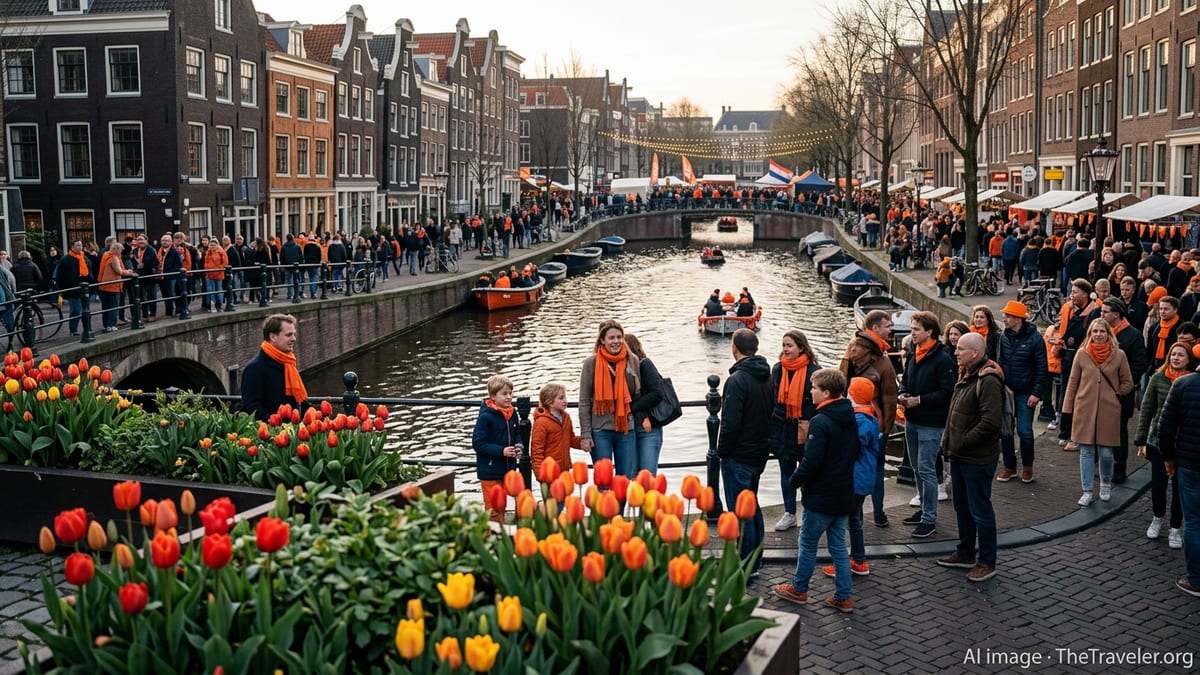
King’s Day, known locally as Koningsdag, is the Netherlands’ biggest national celebration. Officially honoring the birthday of King Willem-Alexander on 27 April, it effectively becomes a nationwide street party where almost everyone wears some shade of bright orange, the color of the Dutch royal family. When the 27th falls on a Sunday, celebrations move to 26 April, but the traditions stay the same.
The festivities begin the evening before with King’s Night, when city centers in places like Utrecht, The Hague, and Rotterdam fill with live music, outdoor bars, and spontaneous dancing. On King’s Day itself, every town and neighborhood sets up its own activities. The most distinctive tradition is the vrijmarkt, or free market, a citywide flea market where adults and children spread out blankets to sell secondhand goods, homemade snacks, or simple games.
Amsterdam is the most famous place to experience King’s Day, with canals packed with orange-decked boats and major music festivals around the city. The energy can be intense, with large crowds, loud music, and plenty of partygoers. Travelers who prefer a more relaxed ambience often choose smaller cities such as Haarlem, Leiden, or Amersfoort, where family activities, brass bands, and local food stalls take center stage while still offering the classic orange spectacle.
Practical planning is essential. Public transport schedules are adjusted, central streets may be closed, and many regular shops shut for the day. Book accommodation well in advance, wear comfortable shoes, and expect variable weather in late April, from cool drizzle to unexpected sunshine. Embracing the informal, slightly chaotic spirit is part of the experience: King’s Day is less about strict schedules and more about wandering, listening to street music, and people watching in a country fully at ease with itself.
How and Where to Experience King’s Day Like a Local
To experience King’s Day beyond the central tourist zones, start your morning early in a residential neighborhood. Many cities designate specific streets or parks for their free markets, where families sell old books and toys, teenagers play music for coins, and local sports clubs grill sausages or make pancakes as fundraisers. It is an ideal place to chat with residents, buy simple picnic food, and see how everyday Dutch people celebrate.
Canal-side cities offer a particularly memorable King’s Day perspective. In Amsterdam, Utrecht, and Leiden, boats line up along the waterways, often playing music and flying orange flags or banners. If you want to join a boat, consider arranging it through a reputable company or local contact well ahead of time. Alternatively, walking along the canals provides great vantage points without committing to hours afloat in crowded conditions.
Larger cities also host ticketed music festivals on King’s Day, especially aimed at electronic dance music and pop fans. These events require advance booking and typically have strict entry times and security checks. For many visitors, however, the most rewarding memories come from unplanned moments: children’s choirs on a corner stage, a group of friends dressed in coordinated orange costumes, or impromptu dancing when a brass band passes through a square.
If you prefer a calmer version of the holiday, consider The Hague, Groningen, or smaller historic towns where the mood is festive but less intense than in the capital. In any location, wear something orange, carry a small amount of cash for market purchases and snacks, and keep your plans flexible. King’s Day is at its best when you follow the sounds and crowds rather than a strict itinerary.
Tulip Season and the Keukenhof Experience
For many travelers, tulip season is the most iconic time to visit the Netherlands. Each spring, the flat landscapes between Amsterdam, Haarlem, and Leiden transform as bulb fields bloom in wide bands of red, yellow, pink, and purple. The focal point is Keukenhof, a vast flower garden in Lisse that typically opens for about eight weeks from roughly late March to mid May each year. Millions of bulbs are planted in intricate patterns, renewed annually to keep the displays fresh.
Keukenhof is not a single tulip field but a landscaped park with winding paths, ponds, pavilions, and curated flower shows. Plantings are staggered so that, even if some varieties are past their prime, others will be at their peak. On busy days, especially weekends in April, the park can feel crowded, yet its scale and variety still allow for quiet corners, especially in the early morning or late afternoon.
Beyond Keukenhof, the surrounding Bollenstreek, or Bulb Region, offers a more agricultural perspective on tulip culture. Here, long fields stretch toward the horizon, and small towns such as Lisse, Hillegom, and Noordwijkerhout host their own local events and farm shops. A highlight of the season is the annual flower parade in the region, when elaborate floats covered in blooms travel between coastal towns, drawing both locals and visitors.
Weather plays a big role in the exact timing and intensity of the blooms, so it is wise to allow some flexibility if tulips are your main goal. Aim for early to mid April for a good chance of seeing both flower fields and Keukenhof at their best, and be prepared for everything from cool showers to bright, crisp spring sunshine.
Beyond Keukenhof: Tulip Events Across the Netherlands
While Keukenhof and the Bulb Region are the most famous symbols of Dutch tulip season, there are many other ways to experience the country’s flower culture. The Amsterdam Tulip Festival, for example, brings tulip displays into the city itself each spring, with beds planted in front of museums, along canals, and in public squares. This urban approach lets you combine art and history with seasonal color during routine sightseeing.
In January, National Tulip Day in Amsterdam marks the informal start of the tulip year. For one day, growers create a temporary picking garden on a central square so that visitors can assemble a bouquet and learn about the flower industry. The event is weather dependent and may shift locations occasionally, but it offers a rare opportunity to see bulbs and blooms in the heart of winter.
Beyond the western core of the country, provinces such as Flevoland also host tulip routes and regional festivals. Here, visitors can drive or cycle along signposted routes past large-scale modern fields, stopping at farm stands and lookout points. Compared with the Bulb Region, these areas often feel more spacious and less crowded, offering wide-sky landscapes and long straight horizons that highlight the geometric patterns of the fields.
Smaller towns and private gardens participate too, with open days, local fairs, and art installations inspired by tulips and other spring flowers. While these events rarely have the scale of Keukenhof, they provide a more personal connection with Dutch horticulture and are ideal for travelers who prefer a slower pace and closer interaction with local communities.
Planning a Tulip-Focused Trip
To build a trip around tulip season, start by choosing your base. Amsterdam, Haarlem, and Leiden all offer easy access by bus or train to Keukenhof and the surrounding Bulb Region. From these cities, you can combine an early visit to the gardens with an afternoon exploring canals, museums, and historic streets. Booking tickets to Keukenhof and any specific tours in advance is strongly recommended during peak weekends.
Cycling is one of the most enjoyable ways to see the flower fields. Bicycle rentals are widely available near Keukenhof and in nearby towns, with signposted routes that loop past fields and through villages. The terrain is flat and forgiving, but spring weather can be gusty, so bring layers and a windproof jacket. Respect private property and farming operations by staying on marked paths and avoiding walking into the fields.
If you are combining tulips with other festivals, consider the overlap between late April and King’s Day. On some trips you may be able to enjoy both peak blooms and the national holiday in a single journey, although this period is among the busiest of the year. Alternatively, plan for early April for a slightly calmer experience while still enjoying rich floral displays and longer daylight hours.
For photographers and social media enthusiasts, early morning and late afternoon provide the most flattering light and thinner crowds, especially at Keukenhof and at popular viewpoints overlooking the fields. Always remember that farmers rely on healthy crops for their livelihood, so avoid trampling soil or crossing into roped-off areas for the sake of a photo.
Winter Markets and Seasonal Lights
As the days shorten and temperatures drop, the Netherlands shifts from flowers and outdoor parties to warm, intimate winter traditions. From late November through December, many cities and towns set up Christmas and winter markets, ice rinks, and light festivals. While Dutch markets may be more modest than some in neighboring Germany, they blend historic settings, local crafts, and a strong sense of gezelligheid, the Dutch concept of cozy togetherness.
Amsterdam typically offers several winter attractions spread across the city: temporary ice rinks in atmospheric squares, small markets selling crafts and seasonal treats, and festive decorations along canals and shopping streets. Farther south, Maastricht is known for its winter event that fills the central square with lights, stalls, and a Ferris wheel, framed by the city’s medieval churches and townhouses. Valkenburg adds a different twist with markets set in limestone caves, combining holiday shopping with underground grotto atmospheres.
Complementing these markets is the Amsterdam Light Festival, which usually runs through part of the winter season. Light artworks by international artists are installed along the canals and in public spaces, creating illuminated routes that can be explored by boat or on foot. The installations change annually, giving repeat visitors something new to discover each year while preserving the core experience of wandering through a glowing cityscape.
Weather during the winter festival period is often cold, damp, and breezy rather than deeply snowy, so pack accordingly. Waterproof shoes, a warm coat, hat, and gloves make it easier to stay out longer and fully enjoy the atmosphere without needing frequent indoor breaks just to warm up.
Making the Most of Dutch Winter Markets
To enjoy Dutch winter and Christmas markets at their best, view them as an evening experience rather than a checklist of stalls. The charm lies in lingering over a hot drink while watching people skate, listening to live music, and walking through old streets highlighted by strings of lights. Plan to visit after dark, when decorations and light installations have maximum impact.
Food is a central part of the experience. Seasonal favorites often include poffertjes, which are small fluffy pancakes dusted with powdered sugar, and oliebollen, deep-fried dough balls associated with New Year celebrations but often available earlier. Cups of hot chocolate and mulled wine help to take the chill off and are easy to find at market stands and surrounding cafes.
Many markets emphasize regional crafts and local products, such as ceramics, candles, leather goods, or specialty foods. These make thoughtful souvenirs, but there is no pressure to buy. The Netherlands has a strong culture of window shopping and casual browsing, and it is perfectly acceptable to wander through without making many purchases.
If you plan to combine multiple winter events, consider basing yourself in a city with good train connections such as Utrecht or Rotterdam, then taking day trips or evening excursions to specific markets and the Amsterdam Light Festival. Trains usually run frequently even in winter, though timetables can change around public holidays, so checking schedules in advance is wise.
The Takeaway
The Netherlands offers a festival calendar that mirrors its landscapes and seasons. In spring, tulips and other flowers dominate, transforming fields and gardens into living color charts. By late April, King’s Day shifts the focus to streets and canals, turning cities and towns into open-air celebrations. As the year turns, lights, markets, and intimate winter traditions take over, revealing a more reflective, cozy side of Dutch culture.
For travelers, the choice is not which festival is “best,” but which combination suits your interests and travel style. Those drawn to big crowds and urban energy might plan around King’s Day in Amsterdam or a peak April weekend at Keukenhof. Visitors who prefer slow exploration could time their trip for early spring tulip routes in quieter regions or mid December evenings in Maastricht or Valkenburg.
Whatever you choose, a successful festival-focused trip to the Netherlands comes down to three things: timing, preparation, and openness. Check current-year dates, book key tickets and accommodations early, pack for changeable weather, and then leave space in your days for the small surprises that define authentic travel. It might be a child proudly selling toys on King’s Day, a farmer waving from a tractor among the tulips, or a choir singing carols as snow flurries drift over a market square. These unscripted moments are what turn great festivals into lasting memories.
FAQ
Q1. When is the best time to visit the Netherlands for tulip festivals?
The most reliable period is usually from early April to late April, when both tulip fields and major gardens such as Keukenhof tend to be in good bloom, although exact timing varies with the weather each year.
Q2. What date is King’s Day, and does it ever change?
King’s Day is tied to King Willem-Alexander’s birthday on 27 April, but if that date falls on a Sunday, the public celebrations move to Saturday 26 April while keeping the same traditions.
Q3. Is Amsterdam the only good place to experience King’s Day?
No. Amsterdam is the largest and liveliest hub, but many travelers enjoy King’s Day more in smaller cities such as Utrecht, Haarlem, Leiden, or Groningen, where crowds are easier to manage and the atmosphere feels more local.
Q4. Do I need to book tickets in advance for Keukenhof and tulip events?
Advance booking is strongly recommended for Keukenhof and for any guided tulip tours, especially on weekends and around mid April. Smaller regional tulip routes and local fairs may not require tickets but can still be busy on sunny days.
Q5. Which Dutch cities have the most atmospheric winter or Christmas markets?
Amsterdam offers several smaller markets and light displays, while Maastricht and Valkenburg in the south are particularly known for their festive winter squares and, in Valkenburg’s case, cave markets carved into the hills.
Q6. What should I wear for festivals in the Netherlands?
Pack layers for all seasons. For spring tulip trips and King’s Day, expect cool, changeable weather and occasional rain. For winter markets and light festivals, bring a warm coat, hat, gloves, and waterproof shoes to stay comfortable outdoors.
Q7. Is it easy to combine multiple festivals in one trip?
Yes. The country is compact and well connected by rail, so with careful timing you can combine tulip season with King’s Day in spring, or visit several winter markets and the Amsterdam Light Festival within a few days.
Q8. Are Dutch festivals family friendly?
Most are. Free markets, flower gardens, and winter squares are popular with families. Evening parties and large music festivals on King’s Day are more geared toward adults, so consider the timing and location when traveling with children.
Q9. How far in advance should I book accommodation for these festivals?
For peak tulip season and King’s Day, booking several months ahead is wise, particularly in Amsterdam and the main Bulb Region towns. For winter markets, demand is strong but usually slightly less intense, so early booking is still helpful but not always critical.
Q10. Can I enjoy these festivals on a budget?
Yes. Many core experiences are low cost or free, such as wandering through King’s Day street markets, viewing tulip fields from public roads or bike paths, and enjoying the atmosphere of winter squares without heavy spending, especially if you choose smaller cities and avoid the busiest nights.