

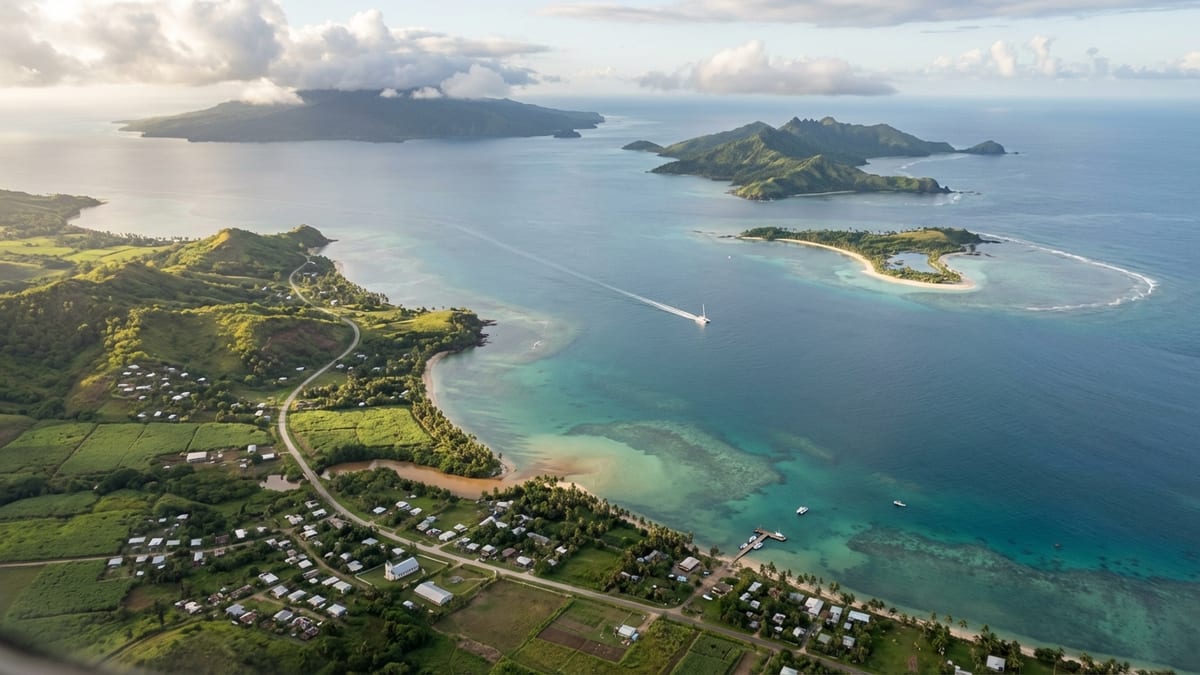
Fiji’s islands are the sort of place that reset your sense of what the tropics should look like: bright turquoise shallows, reefs that seem to glow from below, volcanic peaks rising behind quiet villages, and a pace of life that runs on “Fiji time.”
For travelers deciding where to go first, four names come up again and again: Viti Levu, the Mamanuca Islands, the Yasawa Islands and Taveuni. Together they offer a cross-section of the country’s best beaches, reefs, hikes and cultural encounters, along with a broad mix of budgets and travel styles.
Understanding Fiji’s Island Geography
Before zeroing in on specific islands, it helps to understand how Fiji is laid out. The country encompasses more than 300 islands scattered across the South Pacific. Viti Levu is the main gateway, home to the international airport, major towns, ring roads and resort pockets like the Coral Coast and Pacific Harbour. Just offshore to the west sit the Mamanuca Islands, a compact cluster of low-lying coral and volcanic islets focused on easy beach escapes, family resorts and surf breaks. Stretching further north, the Yasawa chain is wilder and more dramatic, with rugged ridges, blue lagoons and a comparatively laid-back backpacker and small-resort scene. To the northeast of the main group is Taveuni, nicknamed the Garden Island, all rainforest, waterfalls and world-class diving.
Most visitors will pair a stay on Viti Levu with an island-hop out to either the Mamanucas, the Yasawas, or both. Taveuni, which requires a domestic flight, rewards those willing to travel a little farther with a quieter, more timeless Fiji. The four regions complement each other: you swim and sail in the west, hike and dive in the east, and experience Fijian culture at village level almost everywhere in between.
Viti Levu: Gateway Island With More Than a Transit Stop
Many travelers see Viti Levu as a simple staging point for getting to the outer islands, but Fiji’s largest island is a destination in its own right. It holds the bulk of the country’s population, the cities of Nadi and Suva, and a ring road that connects sugar-cane fields and river valleys to palm-lined coasts. Resorts are clustered along the western side around Nadi and Denarau, and along the southern Coral Coast and Pacific Harbour. This is where you ease into Fiji time, sort your logistics and get a first taste of the beaches and culture without long boat transfers.
Nadi and Denarau: Arrival Point and Resort Hub
Nadi, near the main international airport, is typically your first encounter with Fiji: a lively town with curry houses, markets and views across the cane fields to the Sabeto Mountains. It is also the staging point for transport out to the Mamanuca and Yasawa islands, which depart from nearby Port Denarau. Denarau itself is a master-planned resort enclave built on a reclaimed islet linked to Viti Levu by a short causeway. Here you find big-name international hotels, an 18-hole golf course, swimming pools, kids’ clubs and a marina lined with bars and restaurants.
For many visitors, a night on Denarau on arrival or before departure makes sense. It is practical, close to the airport and port, and delivers an easy glide into holiday mode. Day cruises to offshore sand cays and beach clubs depart from the marina, allowing you to test the waters of Fiji’s outer islands before committing to a longer stay elsewhere.
Coral Coast: Family-Friendly Beaches and Local Life
Running along the southern shore of Viti Levu between Nadi and Suva, the Coral Coast has a distinctly different feel. Here, resorts share space with fishing villages and hillside farms, and the reef sits close to shore, creating long stretches of shallow lagoon ideal for swimming, kayaking and beginner snorkeling. Accommodation ranges from all-inclusive family properties to smaller Fijian-owned guesthouses set back from the sand.
The Coral Coast is also one of the best places on Viti Levu to experience day-to-day Fijian life. Many resorts have relationships with nearby villages and can arrange kava ceremonies, school visits and handicraft markets that support local communities. Inland, the Sigatoka Valley offers river safaris and farm tours, where you can ride jet boats, visit archaeological sites and see how taro, cassava and tropical fruits are grown in the so-called “salad bowl” of Fiji.
Pacific Harbour and Beqa Lagoon: Adventure Central
Further east along the southern coast is Pacific Harbour, marketed locally as Fiji’s adventure capital. The area’s mangrove-lined rivers, coastal reefs and nearby highlands provide a natural playground for rafting, zip-lining, off-road buggy tours and white-water kayaking. It is also the jumping-off point for dives in Beqa Lagoon, which has long been known for its shark encounters and healthy coral bommies.
Pacific Harbour suits travelers who want a mix of activity and relaxation rather than a pure “fly-and-flop” beach break. Accommodation options run from boutique villas to mid-size resorts, many with on-site dive centers or fast access to operators who can get you out to the reef, up the rivers or into the forest in a morning.
Mamanuca Islands: Classic Postcard Fiji Close to Nadi
West of Port Denarau lies the Mamanuca archipelago, a compact group of small volcanic and coral islands renowned for their white-sand beaches, glassy lagoons and easy access from the mainland. Fast catamarans, private water taxis and seaplanes shuttle visitors out in under an hour, making the Mamanucas a natural first choice for short stays, families and honeymooners who want minimal travel time. This is where you go for overwater sunsets, gentle snorkeling, surf breaks and days that rarely stray far from the water’s edge.
Malolo Lailai: Activity Hub With Multiple Resorts
Malolo Lailai, often known simply as Plantation Island, is one of the most developed of the Mamanucas and serves as a central tourism hub for the group. The island is ringed with beaches and fringed by shallow reef, and it hosts a cluster of resorts that collectively offer a marina, small shops, dive operations and a nine-hole golf course. Scheduled catamarans make the crossing from Port Denarau in around 50 minutes, and there is a small airstrip for short flights from Nadi.
Because Malolo Lailai has several separate properties sharing one island, it works well for mixed groups and families with differing budgets and expectations. Water sports, including sailing, diving, stand-up paddleboarding and reef snorkeling, are easy to arrange, and the protected lagoon makes it a safe environment for children and novice swimmers. Yet despite the amenities, walk a few minutes away from the main jetties and you still find quiet pockets of sand shaded by palms.
Malolo, Matamanoa and Mana: Smaller Islands, Big Experiences
Scattered around Malolo Lailai are smaller islands that deliver different shades of the Mamanuca experience. Malolo itself is the largest island in the group, with low hills, two traditional villages and a handful of detached resorts. It combines sheltered beaches with proximity to famous surf breaks out on the reef, making it popular with couples and surfers looking for a quieter base than the main hubs.
Matamanoa is a compact volcanic cone rising from the sea, wrapped almost completely in white sand and ringed by a narrow lagoon. With essentially one intimate resort and no villages, it is geared towards adults seeking a secluded escape, with an emphasis on snorkeling, spa time and lazy days under the fringing palms. The reef shelf drops away close to shore, so even a short swim out from the beach yields surprisingly good marine life.
Mana, by contrast, is larger and livelier, for years associated with day trips and long stays alike. It has an airstrip, quiet coves and good snorkeling, and its beaches have provided backdrops for international television productions. From Mana, it is easy to join boat trips to neighboring uninhabited islands, visit offshore sandbars at low tide or simply walk across the island to catch sunrise and sunset on opposite shores.
Surf, Snorkel and Day-trip Paradise
The broader Mamanuca region excels at water-based activities. Surf breaks like Cloudbreak, Namotu Lefts and Tavarua Rights, sitting on outer reefs, attract advanced surfers when swells are up, while gentler reef passes cater to intermediate and longboard riders. Several surf-oriented resorts and charter boats base themselves here, allowing surfers to chase the best conditions each day.
- Snorkeling over shallow coral gardens a short swim from the beach
- Introductory and certified scuba diving with calm conditions and good visibility
- Day trips to floating platforms and beach clubs set above the reef
- Sunset sailing, fishing charters and jet ski safaris between islands
For visitors who want a no-fuss tropical holiday with all the classic South Pacific visuals and plenty of optional activities, the Mamanucas deliver exactly what most imagine when they picture “Fiji.”
Yasawa Islands: Volcanic Drama and Laid-back Island Life
North of the Mamanucas, the Yasawa Islands form a long arc of steep-sided, sparsely populated islands that feel further removed from the mainland. There are no large towns, few paved roads and a limited number of small-scale resorts spread between traditional villages. Catamarans from Port Denarau run up the chain, dropping passengers at various jetties where small boats ferry them ashore. The result is a region that feels off-grid by Fiji standards yet is still accessible on scheduled services and organized transfers.
Blue Lagoons and Film Locations
Certain parts of the Yasawas are almost archetypal lagoon landscapes. Around Nanuya Levu and neighboring islands, the sea turns a particular shade of pale turquoise, ringed by sandbars and low, rocky headlands. The area provided the setting for a famous tropical film in the late 20th century, and its cinematic good looks still draw travelers today. Resorts in this northern section often occupy their own bays, backed by hills suitable for short hikes to panoramic viewpoints.
Nearby lies Sawa-i-Lau, a small limestone island punctuated by caves filled with filtered daylight and seawater pools. Guided visits allow travelers to climb into caverns, swim in the cool, clear water and, conditions permitting, pass through underwater tunnels into inner chambers. Combined with quiet beaches and limited visitor numbers, it makes for one of the more atmospheric day excursions in the Yasawas.
Drawaqa and Nacula: Snorkeling and Village Encounters
Further south, Drawaqa Island has developed a reputation for seasonal manta ray encounters, particularly during the cooler months when plankton-rich currents pass through nearby channels. Simple resorts and marine conservation groups work together to manage viewing practices, with guests taken out on boats to drift-snorkel above the animals as they feed, observing strict guidelines on distance and behavior in the water.
Nacula and neighboring islands combine long beaches and basic to mid-range accommodations with opportunities to visit nearby villages. Walking inland from coastal settlements, you quickly climb into grassy hills with sweeping views across the island chain. Though the infrastructure is modest, the friendliness of hosts and the unhurried pace of life are a significant part of the region’s appeal.
Backpacker Trails and Small-Resort Comfort
The Yasawas historically grew around a style of independent, budget-minded travel, with simple beachfront dorms, shared meals and scheduled island-hopping passes. That scene still exists, but in recent years several more comfortable, low-density resorts have opened, offering private bures, better dining and more polished service while keeping a relaxed, shoes-off atmosphere.
- Backpacker lodges with shared facilities and communal dining
- Family-run beachfront guesthouses with a handful of rooms
- Small resorts offering en-suite bures, guided activities and spa services
- Occasional higher-end properties in particularly scenic locations
Compared with the Mamanucas, nights here are quieter, stars are brighter and daily schedules tend to revolve around tides, snorkel conditions and community events. Travelers who value a sense of remoteness and do not need big pools or built-up marinas often find the Yasawas become the highlight of their trip.
Taveuni: Fiji’s Garden Island and Diving Powerhouse
East of Viti Levu, across the Koro Sea, Taveuni presents a different facet of Fiji. Almost entirely cloaked in rainforest, with volcanic peaks and fertile soils, it is known as the Garden Island. Domestic flights connect it to Nadi and Suva, and a ring road loops around much of the coastline, passing small villages, churches and coastal farms. Instead of large resorts, you find a scattering of intimate lodges and dive-focused properties, many tucked into quiet bays or perched above the sea on forested slopes.
Bouma National Heritage Park and Waterfalls
Roughly three quarters of Taveuni is protected within Bouma National Heritage Park and related reserves, preserving cloud forest, coastal woodland and bird habitat. One of the most accessible and rewarding experiences here is the series of cascades known as Tavoro or Bouma Falls, reached by a well-maintained trail from the coastal road. The first waterfall lies a short, mostly flat walk from the park entrance, with a broad plunge pool for swimming. Further up the valley, steeper paths and steps lead to additional falls with fewer visitors and wider views.
Elsewhere along the eastern coast, the Lavena Coastal Walk traces a route from a small village over sandy stretches and rocky headlands to a forest pool fed by twin waterfalls. Along the way you pass black-sand beaches, simple plantations and lookout points where you can see the Pacific swell crashing onto offshore reefs. Guides from the local community accompany visitors, with entry fees contributing to village projects and conservation efforts.
Rainbow Reef and the Somosomo Strait
For divers and snorkelers, Taveuni’s main draw sits offshore in the Somosomo Strait, a channel between Taveuni and neighboring Vanua Levu. Here, nutrient-rich currents feed soft coral gardens collectively known as Rainbow Reef, celebrated for their color and density. Dive sites with names like the Great White Wall and the Purple Wall are carpeted in soft corals that open and glow when the tides run at certain strengths, creating a surreal underwater landscape.
Water clarity is often excellent, and the combination of soft corals, reef fish and occasional pelagic visitors makes the area one of the South Pacific’s signature dive destinations. Dive resorts and liveaboards time their outings to catch slack or gently running tides at key sites, and introductory dives and snorkel trips are available for those without previous experience. Even from the surface, drifting over bommies covered in fans, crinoids and anemones shows why these reefs feature prominently in Fiji’s national biodiversity strategy.
Slow Travel and Local Culture
Unlike Fiji’s western island groups, Taveuni is not set up for quick, all-inclusive beach holidays. The pace is slower and more intentional: you might spend one day hiking to waterfalls, another diving, a third visiting villages and gardens or simply watching cloud shadows move across the hills. Many accommodations are locally owned or long-established family operations, reinforcing the sense of being a guest rather than a transient tourist.
Cultural encounters on Taveuni tend to be understated but meaningful. Attending a Sunday church service to hear choral singing, joining a kava circle in a village hall, or learning the stories behind the island’s flora, including the red-and-white tagimoucia flower that grows in the highlands, can all add depth to a stay. For travelers who appreciate nature, quiet and authenticity, the island often feels far removed from the busier resort corridors closer to Nadi.
Choosing the Right Fiji Islands for Your Trip
With limited time, most visitors will not see every island group in one trip, so it helps to match destinations to travel style and season. Viti Levu is virtually unavoidable and, handled well, can be a core part of the journey rather than a mere stopover. The Mamanucas reward those looking for quick access, classic beach scenery and structured resort life. The Yasawas add a layer of raw beauty and remoteness, ideal for longer, more relaxed stays. Taveuni appeals to divers, hikers and anyone who places a premium on landscapes and low-key cultural experiences.
Best for First-time Visitors and Short Breaks
Travelers visiting Fiji for the first time, especially on a week-long holiday, often find a combination of Viti Levu plus the Mamanuca Islands the most practical option. A typical pattern is one night near Nadi or Denarau, three to five nights on a Mamanuca island, and perhaps a night back on the mainland before departure. This setup minimizes transit fatigue, maximizes time on the beach and allows for easy day trips to reefs, surf breaks and sandbars.
Families with young children and multi-generational groups also appreciate the Mamanucas’ short transfer times, calm waters and resort infrastructure. All-inclusive meal plans, kids’ clubs, babysitting and a wide array of water sports make it simple to relax without constant planning.
Best for Longer Stays and Off-grid Feel
Those with 10 days or more might consider extending beyond the Mamanucas to the Yasawas or Taveuni. Spending four to six nights in the Yasawas allows time to move between two or three islands, experiencing different beaches, villages and activities like cave swimming and ridge hiking. Accommodation can suit modest budgets or upgrade to boutique small resorts that retain a sense of place.
A journey to Taveuni fits well into a longer itinerary for divers, nature enthusiasts and repeat visitors who have already sampled the west. A week on Taveuni provides enough time to explore multiple waterfalls, complete several days of diving on Rainbow Reef and still enjoy unscheduled time to absorb the island’s rhythms. Combining Taveuni with a few days on Viti Levu or in the Mamanucas gives a well-rounded sense of Fiji’s contrasts.
Seasonal Considerations and Practical Tips
Fiji’s drier, cooler months from roughly May to October are generally considered the most comfortable for travel, with lower humidity, fewer tropical showers and better visibility for diving and snorkeling. This period coincides with peak tourism demand, particularly around school holidays, so securing boat transfers and preferred accommodations early is advisable.
- Use Port Denarau as the main jumping-off point for both Mamanuca and Yasawa islands
- Plan at least one buffer night near Nadi on either side of domestic flights to Taveuni to allow for weather or schedule disruptions
- Factor in transfer times and costs when comparing resorts on different islands
- Respect local customs, particularly regarding dress and behavior in villages and during ceremonies
Whichever mix of Viti Levu, the Mamanucas, the Yasawas and Taveuni you choose, the common thread will be the warmth of Fijian hospitality and a striking variety of landscapes in a relatively compact country.
The Takeaway
Fiji is often condensed in the popular imagination into a single image of palm trees and blue water, but its main island and outer groups each carve out their own identities. Viti Levu is both urban and rural, a place of markets and river valleys that anchors the rest of the country. The Mamanuca Islands excel at easy-access island living, tailor-made for families, honeymooners and anyone who wants to step off a long-haul flight and be on the beach in under an hour. The Yasawa Islands trade infrastructure for drama and peace, with serrated skylines and quiet bays that appeal to slow travelers and those seeking a sense of remoteness. Taveuni adds waterfalls, rainforest and iconic soft-coral reefs to the mix, rewarding travelers prepared to venture a little further.
Choosing among them is less about finding the “best” island and more about aligning destinations with what you want your days to look like: lazy lagoon swims or long hikes, resort buffets or village feasts, gentle snorkel sites or current-swept walls. Taken together, Viti Levu, the Mamanuca Islands, the Yasawa Islands and Taveuni form a quartet that captures much of what makes Fiji compelling, from its landscapes and seascapes to the generous spirit of its people.
FAQ
Q1. How many days do I need to visit Viti Levu, the Mamanuca Islands, the Yasawa Islands and Taveuni?
For a relaxed trip including all four, two to three weeks is ideal. With 10 to 12 days, most travelers focus on Viti Levu plus either the Mamanucas and Yasawas or Viti Levu plus Taveuni.
Q2. Is it realistic to visit both the Mamanuca and Yasawa islands in one week?
It is possible but feels rushed. In seven days, you might spend one night near Nadi and then split the remaining time between either the Mamanucas or the Yasawas. Visiting both chains usually works better on trips of 10 days or more.
Q3. Which is better for families, the Mamanuca Islands or the Yasawa Islands?
The Mamanuca Islands generally suit families better thanks to shorter boat transfers, calmer lagoons and a higher concentration of family-oriented resorts with kids’ clubs and childcare services.
Q4. Do I need to fly to reach Taveuni?
Most visitors reach Taveuni via a domestic flight from Nadi or Suva. There are occasional ferry options linking Vanua Levu and Taveuni, but these are slower and less convenient for short holidays.
Q5. Are the Yasawa Islands suitable for luxury travel or mainly for backpackers?
The Yasawa Islands offer both. Backpacker lodges and simple guesthouses remain, but there are also intimate, higher-end resorts with private bures, curated activities and more personalized service.
Q6. When is the best time of year to dive Rainbow Reef near Taveuni?
Diving is possible year-round, but many divers favor the drier months from May to October for cooler, clearer conditions and more reliable visibility on sites like the Great White Wall.
Q7. Can I surf and dive on the same trip in the Mamanuca region?
Yes. Several resorts and operators in the Mamanucas cater to both surfers and divers, with boat trips to reef breaks for surfing and separate excursions to sheltered dive sites inside the barrier reef.
Q8. Is it safe to drink tap water on these islands?
In major hotels and resorts on Viti Levu and the more developed islands, tap water is often treated, but many travelers prefer bottled or filtered water. On smaller islands and in villages, you should use boiled, filtered or bottled water.
Q9. How important is it to observe dress codes and customs when visiting villages?
It is very important. Visitors are expected to dress modestly, remove hats, and follow local guidance during ceremonies. Covering shoulders and wearing knee-length clothing or a sulu when entering villages shows respect.
Q10. Do I need travel insurance for inter-island travel in Fiji?
Travel insurance is strongly recommended, as inter-island flights and boat services can be affected by weather or schedule changes, and medical facilities on smaller islands are limited compared with those on Viti Levu.