

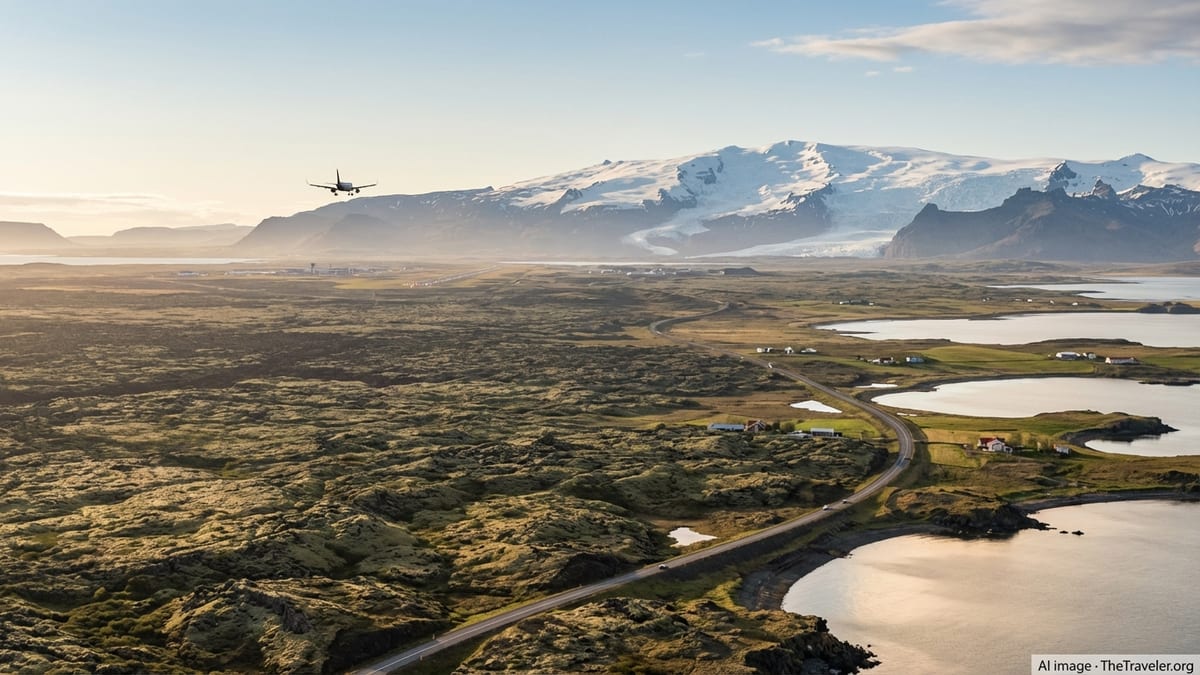
Vatnajökull National Park is one of Iceland’s most extraordinary landscapes, a vast wilderness of ice caps, black sand plains, volcanoes and glacial lagoons that feels both remote and surprisingly accessible. Reaching it starts in the sky: by choosing smart flight routes to Iceland and planning your onward journey carefully, you can trade confusing logistics for a smooth approach to this unforgettable corner of the country.
Understanding Iceland’s Air Gateways for Vatnajökull
Almost all international visitors heading to Vatnajökull National Park will land first at Keflavík International Airport, Iceland’s main gateway. Located about 50 kilometers southwest of Reykjavík, Keflavík handles the vast majority of the country’s international traffic and serves as the hub for Icelandair, as well as a base for several European and North American airlines. From here, you will either continue your journey overland along the south coast or connect to a domestic flight from Reykjavík’s separate city airport.
Vatnajökull National Park itself has no commercial airport. Instead, it is reached by road from towns such as Höfn in the east and Vík or Kirkjubæjarklaustur in the south, or via domestic air connections to smaller regional airfields that put you closer to the park’s eastern and southeastern sectors. That means your first choice is how to get to Iceland in a way that lines up cleanly with your preferred overland or domestic connection.
Because Vatnajökull stretches across a huge swath of southeast and central Iceland, there is no single “right” entry point. However, most visitors focus on the south coast gateway around Skaftafell and the nearby Jökulsárlón Glacier Lagoon, both of which are typically reached by driving from Reykjavík. Understanding the structure of Iceland’s airports and flight networks will help you compare options before you commit to a ticket.
Best International Flight Routes to Keflavík
For many travelers, the most efficient way to reach Vatnajökull starts with a nonstop or one-stop transatlantic or European flight to Keflavík. Icelandair remains the dominant carrier, linking Keflavík to dozens of destinations across North America and Europe and offering a stopover program that allows you to spend time in Iceland on the way between continents. Several legacy and low-cost carriers also operate seasonal and year-round services, particularly from hubs in Scandinavia, the UK, central Europe and the northeastern United States.
From North America, you will find especially strong connectivity from cities such as New York, Boston, Washington, Chicago, Denver and Minneapolis, along with additional seasonal routes from Canadian and secondary US hubs. These routes concentrate in the spring through early autumn period, coinciding with prime hiking and glacier-touring season in Vatnajökull. If you are planning a shoulder-season trip, it is worth checking which routes remain in operation and whether flights shift to fewer days per week.
From Europe, Keflavík is served by a broad mix of airlines from major cities including London, Manchester, Copenhagen, Oslo, Stockholm, Paris, Amsterdam, Frankfurt, Munich, Berlin, Madrid, Warsaw and many more. Flight times from much of western Europe hover between three and four hours, making long-weekend visits to Vatnajökull realistic, provided you are comfortable driving several hours after arrival or planning an overnight in Reykjavík before heading east.
Passengers from further afield, such as Asia or the Pacific, typically route through major European hubs like London, Amsterdam, Copenhagen or Frankfurt before connecting to Iceland. When comparing itineraries, prioritize those that keep your layover in the hub short but realistic and deliver you into Keflavík at a time that matches bus transfers, car rentals or a same-day domestic hop.
New and Seasonal Routes That Benefit Vatnajökull Travelers
In recent years Keflavík has seen steady network growth, with additional airlines and routes expanding Iceland’s reach into North America and Europe. New seasonal services from hubs such as Calgary, Madrid, Munich, Warsaw and Miami, along with forthcoming long-haul links like Seattle, offer more one-stop options for travelers planning an Iceland-focused itinerary. For visitors to Vatnajökull, this trend translates into more flexible departure cities, competitive pricing at peak periods and the ability to align flight times with early-morning or late-evening ground departures.
Seasonal flights are especially useful if you are planning to visit Vatnajökull in late spring, summer or early autumn, when mountain trails are clear, day hikes around Skaftafell are at their best, and boat tours on Jökulsárlón tend to operate more frequently. Some carriers only serve Keflavík between roughly May and October, so if you are tied to a particular airline or loyalty program, make a point of checking seasonal schedules as they are loaded, often many months before travel.
The flip side is that winter visitors, who may be chasing northern lights over the ice cap or exploring ice caves, will see a more streamlined network. Core routes from key North American and European hubs generally remain, but fringe seasonal destinations drop off. In practical terms, that means you may have fewer options for nonstop flights and might need to accept a longer layover or a connection in a different hub if you want to arrive during daylight hours for a safer drive along the south coast.
When browsing airfare search engines, look closely at time-of-day patterns. Many transatlantic flights land in Iceland in the early morning, which can be ideal for picking up a rental car and traveling to Vatnajökull, but challenging if you are jet lagged or facing poor winter road conditions. Evening arrivals can be gentler on your sleep schedule but may require an overnight in Reykjavík or near Keflavík before you head towards the park.
Choosing the Right Airline and Cabin for the Journey
With multiple carriers flying into Keflavík, your ideal airline choice depends on where you are starting, your budget and how you plan to continue to Vatnajökull. Icelandair’s network depth and hub structure make it a natural option for many travelers, particularly those who want the ability to add an Iceland stopover onto a transatlantic itinerary. Some European flag carriers and North American airlines offer through tickets that include connections onto Icelandair’s flights or make it easy to combine different partners on a single booking.
In economy cabins, seat pitch and amenities vary by airline and aircraft, but most transatlantic flights to Iceland are relatively short compared with longer intercontinental journeys. Even so, if you are flying overnight, a seat with extra legroom or a quiet section of the cabin can make a meaningful difference in how ready you feel for the drive towards Vatnajökull. On some routes, premium economy or business class tickets can be priced competitively, especially in shoulder seasons, and might be worth consideration if you value rest and flexibility.
Low-cost carriers serving Keflavík can be appealing if you are focused on minimizing airfare and willing to accept stricter baggage and change policies. For travelers packing hiking gear, winter clothing or photo equipment, it is essential to factor in checked bag fees when comparing ticket prices. The cheapest fare may become more expensive once you add the extras you realistically need for a multi-day journey around the park.
Where possible, book your international flights and any domestic Iceland segments on a single ticket or through one booking channel. This can simplify rebooking if disruptions occur, and it often allows your checked baggage to be tagged through to your final domestic destination, though you will still need to physically transfer between Keflavík and Reykjavík’s domestic airport.
From Keflavík to Reykjavík and Onward to the Park
Once you land at Keflavík, your next step towards Vatnajökull depends on whether you are continuing overland or flying domestically. Keflavík handles only international services, so all domestic flights depart from Reykjavík’s smaller city airport, located a short distance from downtown. Travelers connect between the two via airport bus services, private shuttles, taxis or rental cars, with the driving time typically around 45 minutes to an hour depending on traffic and weather.
If you intend to drive to Vatnajökull along Iceland’s Ring Road, you can either pick up a rental car at Keflavík and head towards Reykjavík and the south coast, or travel into the city first and collect a vehicle there. The road distance from Reykjavík to the western edges of Vatnajökull National Park is roughly 320 kilometers, with typical summer driving times of about four to six hours. Winter trips can take longer due to snow, ice and reduced visibility, and you should always allow extra time when road conditions are uncertain.
For many visitors, it makes sense to spend at least one night in Reykjavík or a nearby coastal town before attempting the drive. This break allows you to recover from jet lag, adjust to local time and respond to updated weather and road condition forecasts. It also creates room to pick up any last-minute gear, such as crampons, waterproof layers or snacks, before you venture into more sparsely serviced stretches of the south coast.
Bus travel to Vatnajökull is more limited than private rental options but can still be workable, particularly on popular corridors. Several companies operate scheduled services between Reykjavík and towns like Vík or Höfn during the main tourist season, from which you can join guided tours into the national park. However, if your primary goal is independent exploration of trailheads, viewpoints and lesser-visited corners of the park, a rental car or small camper remains the most flexible solution.
Domestic Flights and Regional Gateways Near Vatnajökull
Domestic flights come into play if you want to minimize driving or focus on specific areas of Vatnajökull, such as the eastern fjords and the region around Höfn. Reykjavík’s domestic airport offers short hops to a handful of regional airports, including Hornafjörður near Höfn and Egilsstaðir in east Iceland. Flights to Hornafjörður, in particular, usually take under an hour and are operated by turboprop aircraft, providing a swift link between Reykjavík and one of the main gateways for glacier excursions.
These domestic services are designed primarily for local and regional travel, so they typically operate with modest frequencies, often one or more flights per day rather than a dense schedule. This means you should pay close attention to how arrival times from Keflavík line up with departures from Reykjavík, factoring in transfer time between airports, potential delays at immigration and baggage reclaim and any seasonal adjustments to timetables.
Egilsstaðir, sitting in the east of the country, can also serve as a jumping-off point for the northern reaches of Vatnajökull National Park, including areas connected by interior roads in summer. However, reaching the park from Egilsstaðir often still requires a significant drive, and in many itineraries, flying there makes sense only if you plan to combine Vatnajökull with a wider circuit through the east and north of Iceland.
Because domestic flights are more vulnerable to weather-related disruption, particularly in winter, it is sensible to build in buffer time at the start and end of your trip. Booking fully flexible fares, where available, can help if a storm or high winds force changes to your plan. When researching, remember that these routes may be operated by subsidiaries or regional partners of larger airlines, which can affect baggage allowances and the way codeshares appear in booking engines.
Timing Your Trip for Flights and Glacier Conditions
The best flights to Iceland for visiting Vatnajökull are those that align with both your preferred season in the park and sensible daily timing. In late spring and summer, extended daylight hours across Iceland mean you can comfortably tackle a long drive along the Ring Road after a morning arrival at Keflavík. Trails around Skaftafell typically open up as snow recedes, and tour operators add more departures for glacier walks, boat trips and guided hikes, increasing your options once you arrive.
In autumn and winter, priorities shift. Many visitors now time their flights to arrive in the early afternoon, giving them enough daylight to travel at least part of the way towards the park or to settle into accommodation closer to Reykjavík before continuing the next morning. Shorter days, occasional road closures and icy conditions make conservative planning the safer choice, and that often means looking for itineraries that avoid tight connections and late-night arrivals when you intend to drive.
It is also wise to think about how your outbound and return flights fit together. If you are traveling a long distance to reach Iceland, building a rest day at either end of your Vatnajökull excursion can reduce the stress of potential disruptions, particularly in January and February when storms are more common. That buffer could be spent exploring Reykjavík, soaking in a geothermal spa or visiting attractions along the Reykjanes Peninsula, all within easy reach of Keflavík.
For flexible travelers, midweek flights often offer better fares and less crowded airport experiences, especially outside of school holiday periods. Choosing Tuesday or Wednesday departures, for instance, can sometimes improve your chances of securing both reasonable pricing and seats on the most desirable time-of-day flights, setting you up for a smoother onward journey to the national park.
The Takeaway
Planning the best flights to Iceland for a visit to Vatnajökull National Park is about more than just finding a cheap ticket. It involves understanding how Keflavík acts as the international gateway, how Reykjavík’s domestic airport connects you to regional airfields and how the long ribbon of the Ring Road shapes your overland options towards the park’s glaciers and lagoons.
By starting your search with seasonality, time-of-day preferences and your tolerance for driving or additional domestic flights, you can narrow down airlines and routes that genuinely serve your itinerary. Strong transatlantic and European networks into Keflavík give you ample choice, while targeted domestic links to Hornafjörður and other regional airports can trim hours from your ground travel if you plan carefully.
Above all, build in breathing room. Iceland’s weather is changeable, and Vatnajökull’s appeal lies in unhurried exploration: lingering at a viewpoint over an outlet glacier, joining a last-minute boat tour on Jökulsárlón or taking a detour to a waterfall along the way. Smart flight planning gives you the freedom to respond to those moments, turning a complex journey into a rewarding approach to one of Europe’s most remarkable national parks.
FAQ
Q1. Which airport should I fly into to visit Vatnajökull National Park?
The main international gateway is Keflavík International Airport, from which you continue by road or via domestic flights from Reykjavík’s city airport.
Q2. Are there any direct flights to airports close to Vatnajökull?
No international flights serve airports inside the park. You must first arrive at Keflavík, then travel by road or take a domestic flight to a regional airport.
Q3. How long does it take to drive from Reykjavík to Vatnajökull National Park?
The drive to the western edge of the park along the south coast is typically around four to six hours in summer, longer in winter conditions.
Q4. Is it better to fly domestically or drive from Reykjavík to reach the park?
Driving offers maximum flexibility and scenic stops, while domestic flights to regional airports save time but still require additional driving to key park sites.
Q5. When is the best season to fly to Iceland for visiting Vatnajökull?
Late spring through early autumn offers milder weather, long daylight and more frequent tours, while winter is best for ice caves and northern lights.
Q6. How much transfer time should I allow between Keflavík and Reykjavík’s domestic airport?
Allow at least three to four hours between flight arrival and domestic departure to cover immigration, baggage, airport transfer and check in.
Q7. Can I book my international and domestic Iceland flights on one ticket?
In some cases, yes. Certain booking channels and airline partnerships allow through tickets, which can simplify rebooking if disruptions occur.
Q8. Are winter flights to Iceland reliable for reaching Vatnajökull?
Core routes generally operate year round, but weather can cause delays. Building buffer days into your plan is recommended in midwinter.
Q9. Which side of the plane has the best views when flying into Iceland?
Views vary by route and weather, but window seats often offer striking perspectives of coastlines and lava fields during clear arrivals and departures.
Q10. Do I need to rent a 4x4 vehicle if I am flying in to visit Vatnajökull?
For main roads and popular south coast routes in summer, a standard car usually suffices, but a 4x4 is advisable for winter or rougher access tracks.