

California has long been a place where people come to reinvent themselves, and its food scene is no exception. From curbside taco stands lit by a single bulb to hushed dining rooms serving intricate tasting menus, the Golden State offers one of the most diverse and dynamic culinary landscapes in the world. Eating your way across California is not just about chasing famous restaurants. It is about understanding how immigrant traditions, agricultural abundance, coastal access, and relentless creativity have turned everyday meals into a defining part of the state’s identity.
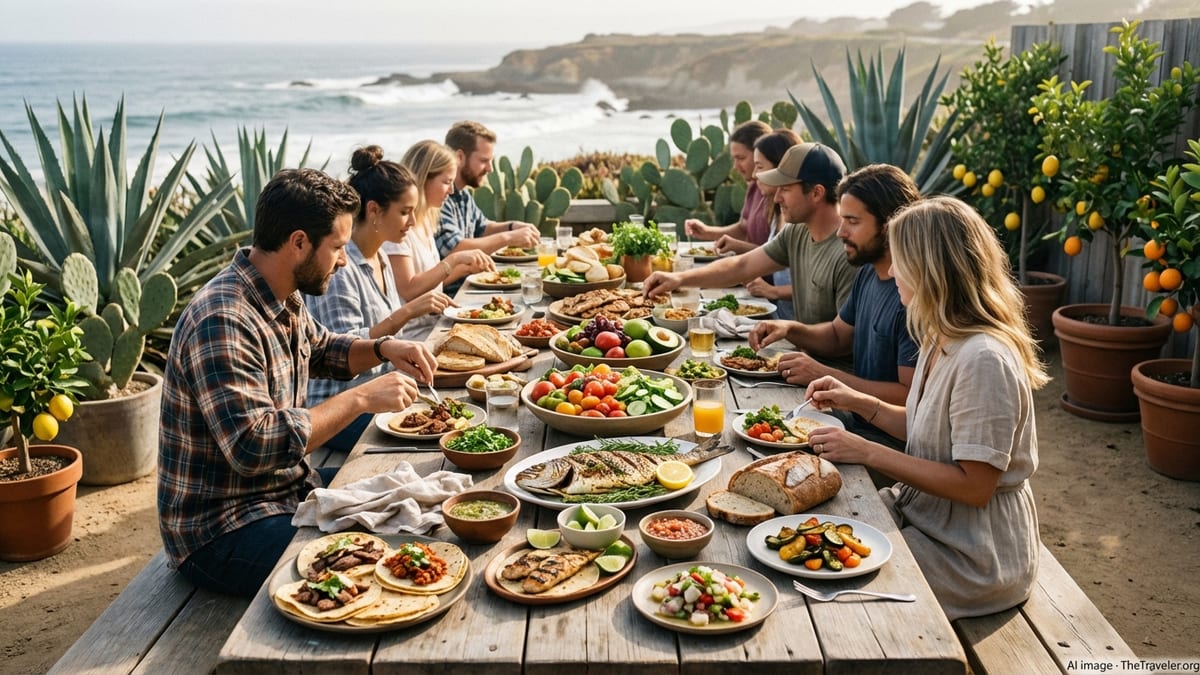
California’s Culinary Landscape: A State Built on Flavor
To understand why California food is so compelling, you have to start with geography. The state stretches more than 750 miles from north to south, with climates ranging from foggy coastal towns to arid deserts and snowcapped mountain valleys. That environmental variety feeds a year-round agricultural engine, especially in regions like the Central Valley and Salinas Valley, where farms supply an astonishing share of the nation’s fruits, vegetables, and nuts. For diners, that means a steady stream of ripe produce on restaurant plates and at neighborhood markets in nearly every season.
California is also shaped by waves of immigration that have never really stopped. Mexican, Central American, Chinese, Japanese, Korean, Vietnamese, Filipino, Indian, Middle Eastern, and African diasporas have all built deep culinary roots here. In cities like Los Angeles, San Diego, San Francisco, and Oakland, you can move from a Oaxacan mole to Korean barbecue to Palestinian hummus in a single block. This dense layering of traditions has created a food culture where so-called fusion is not a gimmick but a natural reflection of daily life.
At the same time, California helped redefine restaurant cooking across the United States. The rise of so-called California cuisine in the late twentieth century elevated seasonal, local ingredients, lighter preparations, and relaxed dining rooms focused on produce rather than heavy sauces. That philosophy still shapes everything from fine dining tasting menus in Yountville and San Francisco to beachside wine bars in Santa Barbara. The result is a scene where street food and Michelin-starred restaurants are less opposites than points on the same continuum of curiosity and care.
Today, eating in California feels like plugging into a constantly evolving experiment. Chefs pull from farmers’ markets, heritage grains, regenerative ranches, and global pantry staples to create menus that can shift week to week. Food trucks operate with as much ambition as some brick-and-mortar spots. Even casual neighborhood restaurants regularly serve dishes that would have been considered cutting edge in major cities just a decade ago. For travelers, that means that almost anywhere you go in the state, there is something worth planning a meal around.
Taco Culture: From Street Corners to Destination Taquerias
No discussion of the best food in California can start anywhere but with tacos. The taco is more than a dish here. It is an everyday ritual, a late-night comfort, and a canvas for regional Mexican traditions as well as local innovation. On any given evening in Los Angeles, San Diego, Santa Ana, or Fresno, sidewalks glow with the light of portable grills where taqueros shave ribbons of al pastor from trompos, flip tortillas by hand, and tuck smoky meats into warm corn rounds.
Los Angeles in particular has become a global reference point for tacos. Specialists focus on distinct regional styles, from Tijuana-style asada grilled over mesquite to Mexico City style al pastor with crisp-edged pork and pineapple, to Baja fish tacos layered with cabbage and crema. Some of the most celebrated stands and trucks gained fame through local word of mouth long before they appeared in national media, and new-wave taquerias continue to refine the formula with heirloom corn tortillas, sustainably sourced meats, and vibrant salsas built from market chiles and tomatillos.
Elsewhere in California, taco culture takes on local inflections. In San Diego, proximity to the border shapes everything from carne asada fries to breakfast burritos stuffed with eggs and potatoes. In the Bay Area, taquerias around the Mission District of San Francisco helped popularize the oversized Mission-style burrito, but smaller, tightly packed tacos remain a staple of late-night dining. In agricultural towns across the Central Valley, family-run trucks serve workers heading home from the fields, often with recipes straight from small Mexican towns that rarely appear in cookbooks.
Part of what makes California’s taco ecosystem so compelling for travelers is its accessibility. Outstanding tacos are rarely expensive, and they are often eaten standing up, leaning against a folding table or a car hood. The atmosphere is informal, with strangers comparing salsa heat levels and trading tips on favorite dishes. For visitors, tracking down a beloved neighborhood taco stand can feel as rewarding as securing a reservation at one of the state’s most exclusive restaurants.
Beyond Tacos: Regional Mexican and Latin American Excellence
While tacos capture much of the attention, California’s Mexican and broader Latin American food scenes are infinitely richer than any single dish. In Los Angeles alone, you can find Oaxacan restaurants grinding nixtamalized corn for tlayudas, Yucatecan spots slow roasting cochinita pibil, and mariscos specialists serving aguachiles and ceviches that rival coastal resorts. Many of these restaurants are humble, family owned operations that treat recipes as links between generations rather than branding opportunities.
Upscale Mexican restaurants have also claimed their space in California’s fine dining world. In San Francisco, for example, high-end spots have earned recognition for tasting menus that treat Mexican sauces, masa, and moles with the same seriousness traditionally reserved for French or Italian cuisine. They often collaborate closely with farmers to source regional chiles and specialty herbs, and some maintain in-house tortillerias using single-origin corn from small producers in Mexico. These restaurants have shown that Mexican food in California can be both deeply traditional and unapologetically modern.
Elsewhere in the state, you will encounter Salvadoran pupuserias, Peruvian cevicherias, Brazilian barbecue houses, and Guatemalan bakeries, often tucked into strip malls or side streets. In cities like Oakland and Santa Ana, food businesses double as community hubs, sponsoring cultural events or hosting live music nights. Travelers seeking the best food in California should be prepared to look beyond the most publicized neighborhoods and instead follow local recommendations into quieter corners where these places thrive.
What ties these varied Latin American experiences together is a shared emphasis on comfort and conviviality. Meals are generous, with plenty of rice, beans, stews, and grilled meats, and there is a strong sense that food is meant to be shared. Portions are meant for families, not photo shoots. For visitors accustomed to tasting menus and carefully plated dishes, a table crowded with communal platters can be an especially welcome change of pace.
Farm to Table Roots: Markets, Fields, and the Central Valley
California’s agricultural backbone is one of its greatest culinary advantages. The Central Valley, sometimes called the nation’s breadbasket, stretches hundreds of miles and yields almonds, citrus, stone fruits, leafy greens, tomatoes, and more. Regions like the Salinas Valley specialize in salad crops, while counties around the Bay Area support orchards, dairies, and small organic farms. For chefs, this means that ingredients travel shorter distances and arrive with exceptional freshness.
In practice, the farm to table movement here is not just marketing language. Many restaurants structure their menus around what is available each week at local farmers’ markets. It is common to see menus that change daily depending on which mushrooms, greens, or shellfish have come in. Some fine dining establishments maintain direct relationships with specific farms, purchasing whole harvests of particular crops or commissioning growers to plant unusual varieties of herbs, squashes, or beans.
Travelers can get a direct taste of this system by visiting markets across the state. In San Francisco, Los Angeles, Santa Monica, and smaller cities like Santa Barbara or Sacramento, weekly markets are social gatherings as much as shopping venues. Farmers set up stalls piled high with citrus, berries, and leafy greens, while local bakers, cheesemakers, and coffee roasters round out the selection. Food trucks and pop-up stands often cluster nearby, turning a market visit into an impromptu lunch stop.
Outside major cities, agritourism has quietly grown. Wineries in Napa, Sonoma, Paso Robles, and the Santa Ynez Valley invite visitors to stroll vineyards, taste flights, and often stay for multi-course meals that feature local olive oils, cheeses, and produce. In the Central Coast and Central Valley, some farms open their gates seasonally for u-pick events, farm dinners, or cooking workshops. These experiences highlight how tightly intertwined California’s fields and kitchens really are.
From Casual Bites to Iconic Fine Dining
California’s fine dining landscape is as influential as its street food. The state regularly appears at the top of national restaurant awards lists, and its Michelin Guide roster includes both long-established temples of haute cuisine and newer, experimental kitchens. Northern California in particular stands out, with destinations in San Francisco, Oakland, wine country, and up the coast in Mendocino and Humboldt counties that attract diners from around the world.
In Napa and Sonoma, tasting menu restaurants pair intricate courses with local wines, often showcasing vegetables and herbs grown in on-site gardens. Dishes might feature raw milk cheeses from nearby dairies, wild mushrooms foraged in coastal forests, or fish pulled from the Pacific the same day. Many of these restaurants helped codify the hallmarks of California cuisine: restrained saucing, an emphasis on acidity and freshness, and a visual style that highlights the natural beauty of ingredients.
In San Francisco and Oakland, fine dining has become more diverse and less formal over time. There are tasting menu spots serving Korean, Mexican, and Southeast Asian inspired dishes alongside modern Californian cooking. Some newer restaurants adopt a more relaxed aesthetic, with communal tables, open kitchens, and playlists that skew contemporary rather than classical. The focus is on hospitality and flavor rather than strict quiet and white tablecloths, which can make the experience feel more accessible for travelers who might otherwise be intimidated by fine dining.
Even in the world of high-end restaurants, though, California’s casual spirit persists. It is not unusual to see diners in jeans at some of the state’s most acclaimed addresses, or to find world-class wine lists in restaurants with concrete floors and open beams. Many chefs have launched spin-off concepts like wine bars, sandwich shops, or daytime cafes that translate their culinary philosophies into more affordable formats, offering visitors multiple ways to experience their style of cooking.
Coastal Bounty: Seafood from San Diego to the North Coast
With more than 800 miles of coastline, California has access to a wide range of Pacific seafood, and many of its most memorable meals are anchored by what comes out of the water. In San Diego, Baja-style fish tacos made with battered white fish or grilled shrimp, topped with cabbage and salsa, are a city signature. Further north, cities like Santa Barbara and Monterey are known for spot prawns, uni, and sardines, often served simply to highlight their freshness.
In the Bay Area, Dungeness crab season is a seasonal obsession, with locals lining up for whole cracked crab served with drawn butter or garlic noodles. Oyster farms along Tomales Bay and Humboldt Bay supply restaurants up and down the coast, and many offer on-site tastings where visitors can shuck and eat oysters just steps from the water. Closer to Los Angeles, seafood counters in neighborhoods like Little Tokyo and Koreatown offer sashimi, grilled mackerel, and spicy stews that speak to the depth of Japanese and Korean culinary traditions.
Contemporary seafood restaurants in California increasingly emphasize sustainability. Menus note which fisheries are certified or which species are harvested with minimal ecological impact. Some fine dining spots build entire tasting menus around underutilized fish, shellfish byproducts, and seaweed to encourage broader appreciation for the ocean’s range beyond familiar species like salmon and tuna. Diners may encounter dry aged fish, fermented seafood sauces, or creative uses of fish collars and bones as chefs work to reduce waste.
For travelers, the key to enjoying California seafood is to pay attention to seasonality and local specialties. Asking which fish is running locally, or what a restaurant’s team is most excited about that week, often yields better results than chasing any one specific dish. Whether it is a bowl of cioppino in San Francisco, a sea urchin toast in Santa Barbara, or grilled oysters on the North Coast, the most memorable seafood experiences tend to be the ones rooted in place and time.
Asian Influences: From Strip Malls to High-End Counters
Asian cuisines are central to understanding the best food in California. Chinese, Japanese, Korean, Vietnamese, and Filipino communities in particular have shaped both everyday eating and the upper reaches of the restaurant world. In Los Angeles, San Gabriel Valley neighborhoods host some of the most diverse regional Chinese cooking outside China, with restaurants specializing in flavors from Sichuan, Canton, Shanghai, and beyond. Dim sum halls, noodle shops, and late-night cafes create an around-the-clock food culture.
Up north, the Bay Area’s long history of Japanese and Chinese immigration is visible in everything from old-school sushi bars to modern izakayas and ramen shops. Sushi omakase counters in San Francisco and Los Angeles regularly compete with top destinations in New York and Tokyo for attention, with chefs sourcing fish from both local waters and international markets. Many of these experiences are intimate, with only a handful of seats and direct interaction between chef and guest, turning dinner into a guided tour through textures and techniques.
California has also been a fertile ground for new-wave Asian American cooking that blends traditions freely. Chefs with roots in Korea, the Philippines, Vietnam, and China draw on family recipes while incorporating California produce, European techniques, and global pantry items. Menus might pair Korean gochujang with Central Coast oysters, Vietnamese herbs with local stone fruit, or Filipino adobo flavors with heritage pork from nearby farms. These dishes are not about novelty for its own sake but about expressing complex personal identities through food.
Many of the most rewarding Asian meals in California still happen in modest environments. Some of the best pho, hand pulled noodles, katsu sandwiches, and Filipino silog plates are served in strip malls, food courts, and small family run cafes far from tourist districts. Travelers willing to venture into these neighborhoods, often by car, will be rewarded with intensely flavorful, reasonably priced meals that locals rely on day after day.
Desserts, Wine, and the Art of Ending a Meal
California’s strengths are not limited to savory dishes. The state is a global powerhouse in wine, and its dessert and pastry scenes are quietly outstanding. In wine regions like Napa, Sonoma, the Central Coast, and parts of Southern California, tasting rooms pour everything from crisp coastal chardonnays to robust cabernets and nuanced pinot noirs. Many wineries collaborate with restaurants to create pairings that highlight how local wines interact with the state’s produce driven dishes.
In cities, pastry chefs have embraced California’s abundance of fruit. Menus frequently feature citrus tarts, berry galettes, stone fruit crumbles, and olive oil cakes that change with the seasons. Ice cream shops experiment with flavors like roasted fig, Meyer lemon, and black sesame, often using organic dairy from nearby farms. At the high end of the spectrum, dessert courses in tasting menus can be as intricate and conceptual as the savory dishes that precede them, sometimes incorporating herbs, vegetables, or fermented elements.
Coffee culture is another area where California shines. Third wave roasters in Oakland, San Francisco, Los Angeles, and San Diego helped popularize lighter roasts, single origin beans, and meticulous brewing techniques. Many top restaurants treat coffee service with the same care as wine, offering multiple options and brewing tableside. For travelers, seeking out a neighborhood cafe can be a way to tap into local rhythms while enjoying carefully made espresso or pour over coffee.
For those who prefer nonalcoholic pairings, California’s focus on produce has led to creative beverage programs built on juices, shrubs, teas, and infusions. Some fine dining restaurants now offer fully developed nonalcoholic pairing menus, featuring drinks made from stone fruits, herbs, flowers, and spices sourced from the same farms that supply the kitchen. This attention to detail ensures that the end of a meal feels as thoughtful and satisfying as the beginning.
The Takeaway
Trying to pin down the single best food in California is impossible, and that is precisely the point. The state’s greatest strength lies in its diversity: crispy tacos eaten from a paper plate in a parking lot, delicate crudos served beside the ocean, multi-course tasting menus in wine country, and homestyle stews simmering in family kitchens across countless communities. Rather than chasing a definitive list, travelers are better served by approaching California as an open-ended tasting journey.
The most memorable meals here often emerge from a mix of planning and serendipity. Book one or two destination restaurants if your budget allows, then leave room for spontaneous stops at farmers’ markets, food trucks, neighborhood bakeries, and strip mall gems. Talk to bartenders, baristas, and rideshare drivers about where they actually eat. Follow lines that form outside unassuming storefronts. In a state where food is both a creative outlet and a cultural lifeline, those small acts of curiosity are often rewarded generously.
Ultimately, California’s food culture reflects its broader identity: restless, experimental, and deeply rooted in the land beneath it. From tacos to fine dining, every plate tells a story about migration, collaboration, and a continuing search for better flavors. For anyone who loves to eat, there are few better places in the world to listen.
FAQ
Q1. What is the single best food experience to seek out in California?
There is no universal best, but a standout experience is eating tacos or other street food from a beloved local truck or stand, recommended by residents in the neighborhood you are visiting.
Q2. Which California city has the strongest overall food scene?
Los Angeles and the San Francisco Bay Area are often cited as top destinations, but cities like Oakland, San Diego, and Sacramento have rapidly growing, highly regarded food cultures as well.
Q3. How far in advance should I book fine dining restaurants in California?
For popular tasting menu restaurants, reservations may open four to eight weeks in advance and fill quickly, especially on weekends, so planning at least a month ahead is wise.
Q4. Is it possible to eat very well in California on a budget?
Yes. Taco trucks, family run ethnic restaurants, farmers’ markets, and casual neighborhood spots offer excellent food at modest prices across much of the state.
Q5. Are reservations necessary for taco stands and street food vendors?
No. Street vendors and most casual taquerias operate on a walk up basis, though it helps to arrive early at especially popular spots to avoid long lines or sellouts.
Q6. How important is seasonality when choosing what to eat in California?
Very important. Many of the best dishes rely on peak season produce or seafood, so asking what is currently in season or highlighted on the menu is a smart strategy.
Q7. Can vegetarians and vegans find good options in California?
Absolutely. Most cities have dedicated vegetarian or vegan restaurants, and many mainstream spots offer plant forward menus built around local produce, grains, and legumes.
Q8. What is the typical tipping custom at California restaurants?
In full service restaurants, tipping 18 to 20 percent of the pre tax bill is standard, while at counter service places, smaller tips are common but not strictly required.
Q9. Is it necessary to rent a car to explore California’s best food?
In dense urban areas you can rely on public transit and rideshares, but reaching suburban strip malls, coastal towns, and wine country is usually easier with a car.
Q10. How should I plan a short trip focused on food in California?
Choose one or two cities or regions, book a mix of one special restaurant and several casual spots, add a farmers’ market visit, and leave unstructured time to follow local recommendations.