

More news on this day
With U.S. gas prices bouncing between painful peaks and short-lived dips, many drivers are turning to fuel rewards programs and co-branded credit cards as a practical way to trim their costs at the pump. A growing mix of gas-station apps, supermarket fuel points and warehouse-club memberships now compete to offer discounts in cents per gallon or cash back, but the value can vary sharply depending on where motorists live, how often they drive and how they pay.
Get the latest news straight to your inbox!
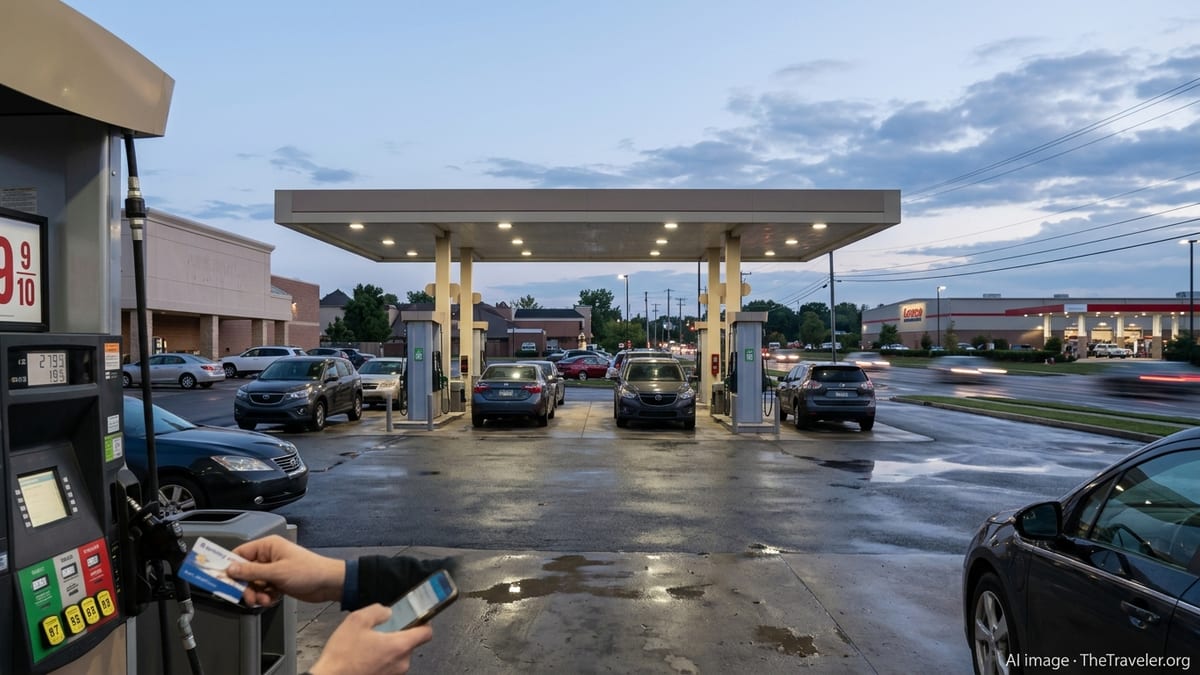
Gas station loyalty apps: Simple cents-off savings
Most major fuel brands now operate their own free loyalty programs, promising straightforward discounts that activate directly at the pump. Publicly available program details show that Shell’s Fuel Rewards remains one of the most visible options, giving members a base discount of around 3 cents per gallon and layering on rotating bonuses for frequent fill-ups or partner offers. Recent Shell marketing materials highlight limited-time promotions, such as deeper per-gallon discounts tied to partner purchases, indicating that the program increasingly relies on targeted campaigns rather than a single flat rate.
Exxon Mobil Rewards+ takes a different approach by awarding points instead of an immediate price cut. According to current program terms, drivers typically earn points for each gallon of fuel and for in-store purchases, with redemptions applied as a cash-equivalent discount at participating stations. Independent comparisons note that the value per gallon often improves for drivers who consistently buy premium fuel, since some tiers offer higher rewards for higher-octane purchases.
BP’s updated rewards ecosystem illustrates how fast this segment is evolving. Reporting on personal finance sites describes the shift from the earlier BPme structure toward newer branding such as Earnify in some markets, with tiered benefits that attempt to reward brand loyalty over time. Analysts say this complexity can make it harder for occasional users to understand their real savings, but more appealing for drivers who regularly choose the same brand and are willing to track their progress in an app.
Consumer advocates emphasize that gas-station loyalty programs are generally best suited to drivers who already favor a single brand and have several of that company’s locations nearby. For motorists who regularly switch stations based on price or convenience, the effort of managing individual apps may yield only modest savings unless a station happens to be running an unusually rich promotion.
Supermarket fuel points: Big discounts for big grocery shoppers
Grocery chains continue to be a powerful gateway to fuel savings, especially for families who concentrate most of their food spending in one place. Coverage of national supermarket programs notes that Kroger’s Fuel Points network, which includes banners such as Fry’s and King Soopers, typically offers 10 cents off per gallon for every 100 points earned on qualifying purchases. Shoppers who time redemptions carefully can stack points for larger one-time discounts, often capped at a set number of gallons per fill-up.
Other regional grocers follow a similar pattern. Safeway and affiliated banners advertise gas rewards tied to their digital loyalty platforms, where shoppers receive points on everyday purchases that can later be converted into per-gallon discounts at participating stations. Industry roundups highlight that some chains, including Hy-Vee and select East Coast grocers, continue to promote hybrid programs that deliver either fuel savings or grocery discounts, giving households flexibility depending on which cost feels most urgent in a given month.
The shift away from older, fuel-only schemes underscores how these programs are changing. Grocery trade reports show that Giant Eagle, for example, recently retired its longstanding Fuelperks+ offer in favor of a broader myPerks system that blends gas and grocery benefits. Analysts interpret moves like this as a sign that supermarkets want to keep fuel rewards attractive, but not at the expense of more profitable in-store categories and e-commerce growth.
For heavy drivers who also spend substantially on groceries, supermarket-linked fuel points can produce some of the steepest headline discounts visible on roadside price boards. Yet consumer finance writers caution that these benefits are only as good as a shopper’s discipline: points often expire after a set window, and buying extra items solely to earn fuel discounts can quickly erase any savings if those purchases were not already in the household budget.
Warehouse clubs: Everyday low pump prices plus high cash back
Membership-only warehouse clubs have emerged as strong contenders for best overall value on fuel in 2026. Recent benchmarking of national gas retailers ranks Costco at or near the top for combined price, fuel quality and consistency across markets, pointing to a pattern of per-gallon prices that often undercut nearby competitors. Members who pair those lower posted prices with certain co-branded credit cards can effectively stack savings in the form of significant cash back on fuel purchases.
Public credit card disclosures show that the Costco Anywhere Visa by Citi continues to offer elevated cash back rates on gas and EV charging up to an annual spending cap, with additional rewards on travel, restaurants and Costco purchases. Similar structures appear at other warehouse clubs: Sam’s Club cardholders, for instance, can earn high cash back on gas up to a defined yearly limit, then a lower rate after that. Shoppers on online forums frequently point out that these cards still classify many non-club stations as eligible gas purchases, allowing members to earn rewards even when they cannot reach a warehouse pump.
Financial columnists often characterize warehouse clubs as the best single-stop option for households that are both willing to pay an annual membership fee and comfortable consolidating shopping trips. Because club gas stations typically post lower base prices than many nearby competitors, members effectively gain savings before rewards are even applied. When cash back is factored in, the total discount per gallon can compare favorably with, or even exceed, the most generous supermarket fuel-point redemptions, especially for drivers who regularly hit the annual gas spending ceiling on a co-branded card.
However, geography remains a limiting factor. Large stretches of rural America lack nearby warehouse clubs, and even in metropolitan regions the time and fuel required to reach a club station can erode the advantage for drivers who do not already shop there for groceries or household goods. Experts advise that the strongest value emerges when fuel purchases are folded into established routines, such as filling up on the same trip used to restock bulk items.
Paid memberships and premium cards: Walmart+ and gas-focused credit deals
Some of the most aggressive fuel discounts now sit behind paid subscription walls or premium credit card products. Walmart+, the retail giant’s membership program, promotes a flat cents-per-gallon discount for members at thousands of participating stations nationwide, including Exxon and Mobil locations. Recent corporate materials indicate that Exxon and Mobil together represent the majority of Walmart’s fuel redemption network, giving subscribers broad coverage in many suburban and highway corridors.
In parallel, gas-focused credit cards continue to advertise per-gallon savings or elevated cash back rates that stack on top of any cents-off discounts received from station apps or supermarket fuel points. Issuers such as Exxon Mobil and Shell market co-branded cards that can add double-digit cents-per-gallon savings during introductory periods, then settle into smaller ongoing discounts tied directly to brand loyalty. Independent personal finance guides also point to general travel and cash back cards that pay two to five percent on gas at a wide range of stations, offering flexibility for drivers who do not want to be locked into a single retailer.
Evaluations of these products stress that the richest rewards often come with trade-offs. Higher-tier credit cards may charge annual fees, require excellent credit or set rotating bonus categories that change each quarter. Membership programs like Walmart+ bundle fuel savings with unrelated benefits, such as no-minimum shipping or grocery delivery, making it harder to isolate the value of the gas discount alone. For infrequent drivers, the subscription cost can quickly outweigh any cents-per-gallon savings at the pump.
Consumer advocates suggest that motorists run basic calculations before signing up. A driver who buys only a few tanks of gas each month may be better served by a no-fee cash back card and a free station app, while commuters with long daily drives or road-trip-heavy lifestyles might justify a membership if they reliably tap both the fuel and non-fuel perks. In all cases, carrying a credit card balance to chase gas rewards can erase any benefit once interest charges are included.
How to choose the best program for your driving habits
Comparisons across recent rankings point to a clear conclusion: there is no single “best” gas rewards program for every American driver. Instead, the top choice hinges on a few practical questions. Drivers who already belong to a warehouse club and live near one of its stations often see the strongest all-around value by combining low posted prices with robust cash back. Those anchored to a specific grocery chain may find that fuel points deliver the steepest visible discounts, especially during promotional events that multiply earnings on gift cards or seasonal shopping.
For motorists whose schedules require frequent long-distance driving between cities or across regions, national gas brand apps and general-purpose cash back cards may be the most reliable tools. Programs such as Shell Fuel Rewards or Exxon Mobil Rewards+ can be used at thousands of stations, and a solid gas card ensures some return even when a particular brand or partner supermarket is not available along the route. Occasional drivers, meanwhile, may prefer simple, free sign-ups that do not involve juggling expiring points, complex tiers or annual membership fees.
Experts also recommend focusing on net savings rather than headline numbers. A 30-cent-per-gallon discount that requires high annual fees or unnecessary extra spending can be less valuable than a smaller everyday price cut at a consistently cheaper station. Regional price differences, the spread between cash and credit prices and the opportunity to combine rewards across apps and cards can all shift the math for individual drivers.
With fuel markets still volatile in 2026, gas rewards programs are likely to remain a key part of many households’ strategies for keeping transportation costs manageable. For now, the drivers who save the most tend to be those who match a program to their real-world habits, track the fine print and treat rewards as a bonus on top of shopping and driving patterns they already planned to follow.