

Chicago rewards urban explorers with world class culture, architecture, and dining, but some of Illinois’s most memorable experiences begin when the skyline slips into the rearview mirror. Within a three hour drive of downtown you can trade traffic for sandstone canyons, rolling river bluffs, and 19th century streetscapes that feel a world away from the city. Starved Rock, Galena, and a handful of lesser known scenic escapes offer classic Midwestern day trips where the journey is as satisfying as the destination.
Planning Illinois Day Trips from Chicago
For most Chicago travelers, a true day trip means a destination you can reach in roughly two to three hours each way with enough time left to explore without rushing. Starved Rock State Park, Matthiessen State Park, and the Illinois River towns around them lie about 90 to 100 miles southwest of the city, typically a one hour 45 minute to two hour drive depending on traffic. Galena, set near the Mississippi River in the far northwest corner of the state, is farther at about 165 miles, but still workable as a long day trip if you make an early start.
Driving is the most practical way to reach these areas, since public transport connections are limited once you leave the Chicago metro. Interstate corridors like I 55 and I 90 often carry most of the traffic, but many travelers prefer to exit onto state highways for a slower, more scenic approach through small towns and farmland. This is especially true in the driftless region around Galena, where the terrain shifts from flat prairie to curving ridges and river valleys that reward unhurried driving.
Season plays a big role in how you experience these escapes. Spring typically brings active waterfalls and wildflowers to the canyons around Starved Rock and Matthiessen. Summer is prime time for boating on the Illinois and Mississippi Rivers and for outdoor dining in historic towns. Autumn delivers some of Illinois’s best foliage, particularly along the river bluffs and in the rolling hills of Jo Daviess County near Galena. Winter trips are quieter but still appealing for snow covered scenery and less crowded trails, provided you prepare for icy conditions.
Because many of these destinations have grown more popular in recent years, especially on weekends, timing matters. At major state parks, parking lots can fill by late morning on busy days, and rangers may temporarily pause entry until spaces open again. Leaving Chicago early, arriving near opening hours, and having a backup stop or nearby park in mind can help ensure a smoother day.
Starved Rock State Park: Classic Canyon Country
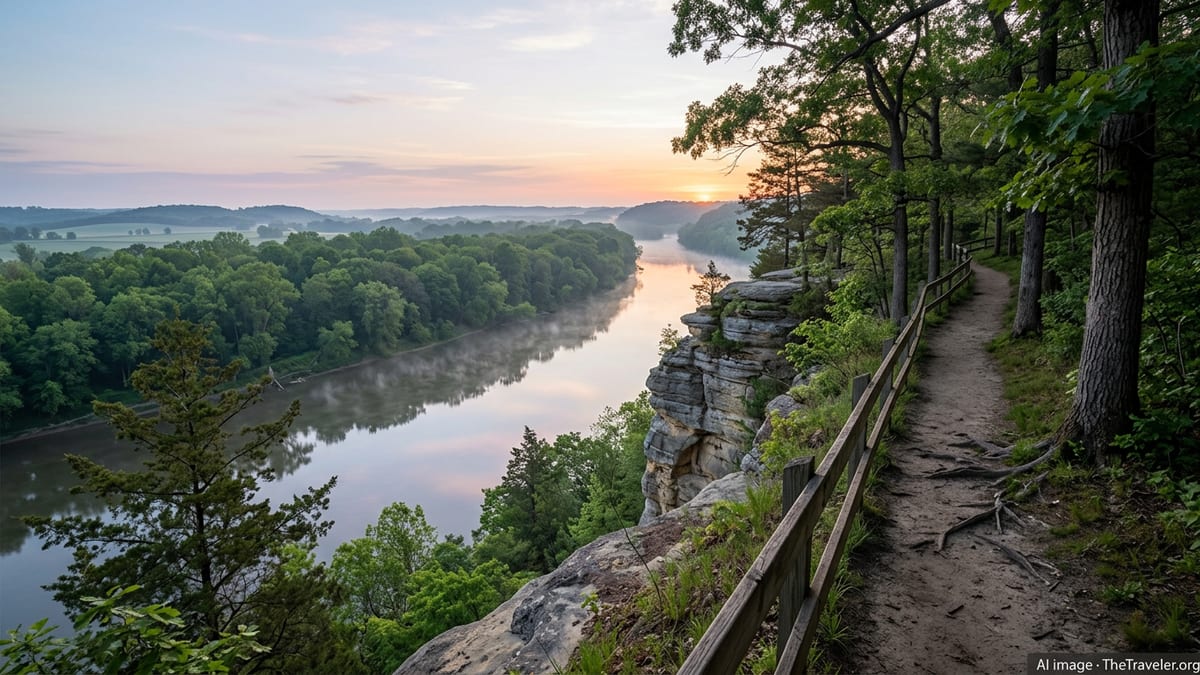
Starved Rock State Park has long been one of Illinois’s signature outdoor destinations, known for its network of sandstone canyons, waterfalls that flow in wetter months, and broad overlooks above the Illinois River. Located near the town of Utica, the park spans more than a dozen named canyons connected by miles of marked trails. Visitors coming from Chicago often begin near the main visitor center, where short paths lead to well known views such as Starved Rock, Lover’s Leap, and Eagle Cliff.
The hiking at Starved Rock ranges from very short, paved or packed gravel walks to longer, more rugged routes that link multiple canyon systems. Well placed stairways and railings near some overlooks make those sections more accessible for casual walkers, though the park still includes many stairs and uneven surfaces. In spring and after heavy rains, streams drop into narrow canyon amphitheaters, creating seasonal falls that draw photographers and families, while summer and autumn emphasize leafy shade and rock formations.
Another highlight of Starved Rock is the relationship between the park and the Illinois River. From several bluff top vistas, visitors look down on the river channel, islands, and occasional barge traffic that underscore the area’s working waterway legacy. In colder months, bald eagles often concentrate along this stretch of river, and organized viewing events in nearby communities can add interest to a winter day trip. Boating excursions and guided tours, offered in season by concessionaires based near the park, allow travelers to see the cliffs and canyons from below.
Given its popularity, Starved Rock can feel busy, particularly on fair weather weekends and during peak fall color. To minimize congestion, many day trippers arrive early, start with the most popular overlooks, then continue to less trafficked trails deeper in the park or plan a midday break in nearby towns before returning for a quieter late afternoon walk. Checking state park updates before departing helps you stay aware of any temporary closures to particular trails or parking areas due to high water or maintenance.
Matthiessen State Park and Nearby Scenic Escapes
Just south of Starved Rock, Matthiessen State Park offers a different perspective on the same sandstone landscape. Rather than focusing on broad river views, Matthiessen draws visitors down into intimate dells carved by a small stream, where narrow canyons, stone stairways, and stepped waterfalls create a more enclosed and immersive environment. Many Chicago based hikers consider it a companion stop that pairs naturally with Starved Rock on the same day or as an alternative when the larger park feels crowded.
Matthiessen’s trail system includes upper bluff routes with easier walking and lower canyon paths that require stair descents, creek crossings, and careful footing on slick rock, especially after rain. The rewards are close up views of features like Cascade Falls, Lake Falls, and the rock basin often referred to as Giant’s Bathtub. Because the park’s canyons sit close to parking areas, visitors can reach dramatic scenery relatively quickly, which appeals to families, photographers, and those who prefer shorter outings.
Beyond Matthiessen, the broader Starved Rock Country encompasses additional natural areas and riverfront spots that can round out a day trip. Smaller sites along the Illinois River and surrounding bluffs typically see fewer visitors than the flagship parks and may offer quieter trails or picnic overlooks. Travelers with a full day to spare often combine a morning of hiking in Starved Rock or Matthiessen with an afternoon drive on back roads that reveal farmsteads, prairie remnants, and small town main streets that rarely appear in guidebooks.
As with Starved Rock, conditions at Matthiessen shift with the seasons. Spring and early summer are best for steady waterfall flow, while late summer may bring lower water levels but easier creek crossings. Autumn adds color to the canyon walls and forest canopy, although leaf covered steps can be slick. Winter transforms the falls into ice formations that attract adventurous hikers and photographers who are prepared with traction devices and layered clothing.
Galena: A Historic River Town in the Hills
If Starved Rock and Matthiessen showcase canyon landscapes, Galena highlights historic architecture and rolling hills that surprise many first time visitors who associate Illinois primarily with flat farmland. Set in Jo Daviess County near the Mississippi River, Galena grew as a 19th century lead mining and river port town. Today, its preserved downtown and residential districts make it one of the state’s most distinctive small city destinations, with brick storefronts, church steeples, and hillside homes rising steeply above the Galena River.
From Chicago, most travelers reach Galena via major highways toward Rockford before turning west through increasingly hilly country. The final hour of the drive introduces curving roads, wooded ridges, and open pastures that reflect the region’s position within the driftless area, a part of the upper Midwest that glaciers left largely unflattened. Many day trippers build in extra time to stop at roadside overlooks or small pull offs that reveal layered views of valleys and farm fields.
Once in Galena, visitors can spend several hours exploring its compact core on foot. The main commercial street is lined with shops, cafes, and galleries set in 19th century buildings that retain original details such as arched windows and decorative cornices. Just beyond, residential neighborhoods showcase historic houses in a range of styles, from simple early stone structures to later Victorian era homes set on terraces overlooking the town. Several properties and civic buildings operate as museums or tours in season, allowing a closer look at the area’s mining and river trade history.
The town’s riverside location adds to the sense of place. Footbridges across the Galena River link downtown to recreational paths and parks on the opposite bank, where open lawns and viewpoints offer quieter perspectives on the historic skyline. Seasonal events, from summer festivals to holiday markets, give additional reasons to linger. Because Galena has matured into a year round getaway with inns and restaurants, day trippers may find that one visit prompts thoughts of a longer return stay.
Scenic Drives, Small Towns, and River Views
Part of the appeal of Illinois day trips from Chicago lies not only in the headline destinations but also in the routes that connect them. West of the city, state highways and county roads trace river valleys and ridgelines that contrast with the regular grid of suburban streets. Drives toward Starved Rock and Matthiessen pass through stretches of agricultural land punctuated by silos and windbreaks, while the approach to Galena adds more pronounced hills, wooded slopes, and glimpses of the Mississippi watershed.
Travelers willing to leave the interstate a bit sooner can structure their day around these scenic variations. For example, after covering the initial distance on a freeway, you might loop south or north on two lane highways that run closer to the Illinois River, pausing at overlooks or boat launches that provide short breaks from the car. Near Galena, side roads climb to ridge tops with long views across folded terrain, especially appealing around sunrise or late afternoon when low angled light emphasizes contours.
On the human scale, small towns along these routes offer windows into local life and convenient places for coffee, fuel, or a casual meal. Many communities maintain historic courthouses, churches, or main streets that can justify a short wander even if you did not set out to visit them specifically. Whether you stop for a bakery in a Fox River town or a diner in a county seat, these pauses help break up drive time and contribute to the sense of having explored more than a single attraction.
Drivers should keep in mind that rural roads can involve slower farm traffic, wildlife crossings, and weather related conditions, particularly in winter and early spring. Planning more generous travel windows than you might for an urban commute and remaining flexible about exact arrival times makes for a more relaxed trip. Having a paper map or offline navigation option as a backup is also wise, since coverage can thin in some of the most scenic stretches.
Seasonal Tips, Safety, and Practical Details
A successful Illinois day trip from Chicago begins with realistic planning about distance and daylight. In summer, long evenings give you time to hike, explore towns, and still return to the city before dark if you choose. In late autumn and winter, shorter days mean you may want to prioritize one main activity and arrange your drive so that any unfamiliar rural roads are covered in daylight when possible. Checking sunrise and sunset times for your destination date helps to shape an itinerary that feels comfortable.
Weather can change quickly across northern Illinois, especially along open prairies and river corridors. Before leaving, review both the general forecast and any specific advisories for the parks or counties you intend to visit. After heavy rains, trails in canyon parks often become muddy and may experience temporary closures near steep slopes or water crossings. In winter, ice can linger on shaded steps and rock surfaces even when air temperatures have warmed, so sturdy footwear with good traction is important.
At state parks, basic amenities typically include parking lots, restrooms at main trailheads or visitor centers, and signed trail networks. However, services like restaurants and fuel are often located in nearby towns rather than inside the parks themselves. Bringing water, snacks, and layers of clothing suited to the season makes it easier to adapt if hikes take longer than expected or if you decide to stay out for sunset views. Many experienced day trippers also pack a small first aid kit, a flashlight or headlamp, and a printed trail map in case phone batteries drain or reception fades.
Because Starved Rock, Matthiessen, and Galena have all grown more popular, a little advance research on parking, entrance hours, and any reservation systems is wise. On busy weekends, some travelers aim for shoulder times, such as early morning or later afternoon, to reduce crowding on popular trails and in downtown streets. Respecting posted regulations, staying on marked paths, and packing out everything you bring in are simple ways to help protect the very landscapes and historic districts that make these places appealing.
Putting It Together: Sample Day Trip Ideas
Many Chicago based travelers like to think of Illinois day trips as themed excursions. One natural theme pairs Starved Rock and Matthiessen as a canyon and waterfall focused outing. With an early departure, you can arrive at Starved Rock near opening time, hike a loop connecting a few major overlooks, then break for lunch in a nearby town before heading to Matthiessen for a shorter, more intimate canyon walk in the afternoon. This structure balances time on the trail with rest periods and allows you to experience two distinct park atmospheres in a single day.
Another theme emphasizes small town streets and river views. In this case, Galena often serves as the centerpiece, with the drive itself forming part of the attraction. Leaving Chicago early allows for a midmorning arrival, several hours of walking, shopping, and dining in town, and a late afternoon scenic loop that takes in nearby ridges or river overlooks before you head back east. Some travelers reverse the pattern, driving in via one route and returning along another to vary the scenery.
For those who prefer a quieter escape, you can create a day built around secondary parks, wildlife refuges, or lesser known river access points within the same broad regions. After an initial visit to Starved Rock or Galena to get your bearings, subsequent trips might focus on new trails, small historical sites, or back roads that you noticed but did not have time to explore the first time. Over months or years, this iterative approach can turn Illinois’s landscapes into familiar weekend companions rather than one time destinations.
Regardless of which theme you choose, the underlying rhythm is similar: an early city departure, an unhurried but purposeful drive, one or two anchor experiences, and space for unscheduled discoveries. Planning just enough to feel prepared while leaving room for detours often produces the kind of day that lingers in memory long after you merge again into Chicago traffic.
The Takeaway
Starved Rock, Matthiessen, and Galena illustrate how varied northern Illinois can be within a manageable drive of Chicago. From sandstone canyons and seasonal waterfalls to steep historic streets and river valley panoramas, these places challenge the idea that the Midwest is uniformly flat or predictable. They also demonstrate how much of a destination’s character comes not just from headline sights but from the textures of trails, the rhythm of small town streets, and the changing light over fields and bluffs.
Thoughtful planning makes it easier to enjoy these escapes without feeling rushed. Choosing the right season for your interests, checking basic park and road conditions, and allowing extra time for scenic pauses all contribute to a smoother experience. Just as importantly, approaching these landscapes and communities with care helps ensure that they remain welcoming for future day trippers, whether they are stepping into a canyon for the first time or returning to a favorite overlook.
In the end, the best Illinois day trips from Chicago are less about ticking off attractions and more about shifting your perspective. A morning hiking among high rock walls, an afternoon strolling past 19th century facades, or an unexpected overlook on a rural highway can provide the contrast that makes city life feel richer when you return. With a tank of gas, a bit of flexibility, and a willingness to explore beyond the interstate, you have a range of memorable journeys waiting just beyond the skyline.
FAQ
Q1. How long does it take to drive from Chicago to Starved Rock State Park?
The drive from central Chicago to Starved Rock State Park typically takes about one hour 45 minutes to two hours in normal traffic, depending on your exact starting point and route.
Q2. Can I visit both Starved Rock and Matthiessen State Park in one day trip?
Yes, many travelers visit both parks on the same day by starting early, focusing on a few key trails at each location, and planning a simple lunch in between in a nearby town.
Q3. Is Galena realistic as a day trip from Chicago, or is it better for an overnight stay?
Galena works as a long day trip if you leave early and do not mind several hours of driving, but many visitors find that its historic streets and surrounding hills reward an overnight or weekend stay.
Q4. When is the best time of year to visit Starved Rock and Matthiessen?
Spring and early summer are usually best for waterfalls and lush greenery, autumn offers colorful foliage, and winter provides quieter trails but requires more preparation for cold and ice.
Q5. Do I need any special permits or reservations to hike in these state parks?
Day use hiking at Starved Rock and Matthiessen does not typically require special permits, but it is wise to check current park information for any temporary restrictions, event days, or parking updates.
Q6. Are there easy trails suitable for families with young children?
Both Starved Rock and Matthiessen offer shorter, well marked routes from main parking areas, some with paved or improved surfaces, though parents should be prepared for stairs, uneven ground, and the need for close supervision near overlooks and water.
Q7. What should I pack for a day trip from Chicago to these destinations?
Comfortable walking shoes, weather appropriate layers, drinking water, snacks, a printed or downloaded trail map, sun protection, and a small first aid kit are useful for most seasons, with traction aids recommended in winter.
Q8. How crowded do these places get on weekends, and how can I avoid the worst of the traffic?
On pleasant weekends, parking lots at major parks and downtown Galena can fill by late morning; arriving near opening time, considering weekday visits, and being flexible with trail or parking choices help reduce delays.
Q9. Are there food and fuel options close to the parks and Galena?
Nearby towns around Starved Rock and Matthiessen offer gas stations, cafes, and casual restaurants, while Galena has a wider range of dining; however, services are limited inside the parks, so carry basics with you.
Q10. Is winter a good season for Illinois day trips from Chicago?
Winter can be rewarding for those who enjoy snow covered scenery, quieter trails, and eagle viewing along rivers, but it requires cautious driving, warm clothing, and extra attention to icy trail conditions.